
Kazuo Umezu (1936–2024)
Author of The Drifting Classroom: Perfect Edition, Vol. 1
About the Author
Series
Works by Kazuo Umezu
The Drifting Classroom: Perfect Edition Vol 1-3 Full Collection 3 Books Set by Kazuo Umezz (2020) 7 copies
Natural disaster Makoto-chan a very stray over (My first Big) ISBN: 4091096239 [Japanese Import] 3 copies
まことちゃん : 12 2 copies
まことちゃん : 15 2 copies
2 left hand right hand of God the Devil (Big Comics Special Umezu Perfection! 12) (2011) ISBN: 4091837387 [Japanese Import] (2011) 2 copies
14 Sai 1 (14歳, #1) 2 copies
Watashi wa Shingo 2 copies
Bautismo 1 copy
Fasting 絶食 1 copy
House of Mushi et al. (Big Comics Special Umezu Perfection! 3) (2005) ISBN: 4091878938 [Japanese Import] (2005) 1 copy
Fourteen 1 copy
14 Sai 2 (14歳, #2) 1 copy
Nekome No Shōjo 1 copy
洗礼 3 [Senrei 3] (Senrei, #3) 1 copy
14 Sai 12 (14歳, #12) 1 copy
14 Sai 10 (14歳, #10) 1 copy
14 Sai 5 (14歳, #5) 1 copy
洗礼 2 [Senrei 2] (Senrei, #2) 1 copy
Tagged
Common Knowledge
- Other names
- Umezz, Kazuo
- Birthdate
- 1936-09-03
- Date of death
- 2024-10-28
- Gender
- male
- Awards and honors
- Shogakukan Manga Award (1975)
- Nationality
- Japan
- Associated Place (for map)
- Japan
Members
Reviews
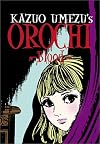
This isn't a perfect comic: some of the twists are a bit hoaky, some of the dialogue is a bit awkward (probably a translation artifact). But there's so much to like about it: the story is genuinely surprising; the horror is both built up nicely and delivered frequently; the moral complexity is rich and gets you into an uncomfortable state of mind. (Always a plus with horror stories.) And best of all, Umezu's art is beautifully gothic. From the heavily inked shadows to the spookily show more matter-of-fact isometric rooms to the psychedelic touches, it's all a notch above similar manga, and very appropriate for the story. show less
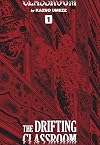
Sho is a 6th grade student somewhere in Japan. After a fight with his mom one morning, he walks to school in a huff. Shortly after class starts, his entire school is transported to a distant future where the world has become an enormous desert. Beyond the school's gates, there's nothing but sand. Everyone in the school is, reasonably, unsettled by this development, but the school's teachers become homicidally insane and have to be put down. The children then hold elections. Think "lord of show more the flies" re-done as a funny japanese sci-fi action/adventure movie.
I found a lot of humor in the over-the-top intensity: children are punched by adults, decapitated by giant insects and reduced to skeletons by flesh-eating swarms. It truly feels like the book itself is screaming at you all 700 pages -- almost every speech bubble is in jagged spikes. So much fun.
There are also some weird misogynistic themes that tamp down on the fun. There's literally a panel where a child proclaims that women are meant for breeding and shouldn't be involved in governance -- it may be satire, but I could do without conservative politics in my ultra-violent horror-comedy.
Also, although the art's very effective, there are a lot of visual shortcuts and characters drawn in awkward poses. It's not bad, it's just no junji ito virtuosity -- there aren't any panels I'd put up on my wall. show less
I found a lot of humor in the over-the-top intensity: children are punched by adults, decapitated by giant insects and reduced to skeletons by flesh-eating swarms. It truly feels like the book itself is screaming at you all 700 pages -- almost every speech bubble is in jagged spikes. So much fun.
There are also some weird misogynistic themes that tamp down on the fun. There's literally a panel where a child proclaims that women are meant for breeding and shouldn't be involved in governance -- it may be satire, but I could do without conservative politics in my ultra-violent horror-comedy.
Also, although the art's very effective, there are a lot of visual shortcuts and characters drawn in awkward poses. It's not bad, it's just no junji ito virtuosity -- there aren't any panels I'd put up on my wall. show less
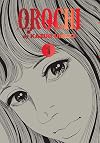
Orochi is a young woman with supernatural powers and a tendency to wander into other people's life to watch them self-destruct.
In the first tale, "Sisters," she uses mind control of some sort to convince two sisters living in a big old house that she is their maid. She then watches them fall apart and turn on each other as they count down the days to the older girl's 18th birthday, a day when a family curse will cause her to start turning ugly.
In the second tale, "Bones," Orochi is posing as show more a nurse when she promises a grieving widow that she will resurrect her dead husband. It plays out in a wildly bizarre variation of "The Monkey's Paw."
The storytelling here is too outlandish and strange for my taste, with people who don't talk or behave like normal humans and a protagonist who is a cipher with undefined supernatural abilities. Despite that, I'll probably pick up the next volume if it wanders into my local library. show less
In the first tale, "Sisters," she uses mind control of some sort to convince two sisters living in a big old house that she is their maid. She then watches them fall apart and turn on each other as they count down the days to the older girl's 18th birthday, a day when a family curse will cause her to start turning ugly.
In the second tale, "Bones," Orochi is posing as show more a nurse when she promises a grieving widow that she will resurrect her dead husband. It plays out in a wildly bizarre variation of "The Monkey's Paw."
The storytelling here is too outlandish and strange for my taste, with people who don't talk or behave like normal humans and a protagonist who is a cipher with undefined supernatural abilities. Despite that, I'll probably pick up the next volume if it wanders into my local library. show less
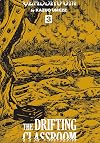
Wowwww.
In the first two editions of The Drifting Classroom, a troupe of elementary school kids battle a series of ever-crazier disasters after their school is mysteriously transported into the distant future. In this final edition, we finally find out why. Or how? Or "why"? I'm not sure.
The theme has something to do with the wastefulness of modern society, but I frankly didn't need any of it. This is a book about a miscellany of monsters annihilating children in a post-apocalyptic desert. show more One continues reading to discover the next nutso thing that happens.
Luckily, there's a lot of that. We got us some three-eyed spider people, flesh-eating starfish, oblong things, and a giant worm. Not to mention the kids split into factions and fight each other for food. A tricycle gets sent into the past by the combined power of dynamite and prayer. There's a volcano, killer robots in the ruins of a history-themed amusement park, and a little girl on crutches who's inexplicably also a two-way radio to one kids' mom.
If you get off on weird horror i like do, you too may find this thing fun & funny. show less
In the first two editions of The Drifting Classroom, a troupe of elementary school kids battle a series of ever-crazier disasters after their school is mysteriously transported into the distant future. In this final edition, we finally find out why. Or how? Or "why"? I'm not sure.
The theme has something to do with the wastefulness of modern society, but I frankly didn't need any of it. This is a book about a miscellany of monsters annihilating children in a post-apocalyptic desert. show more One continues reading to discover the next nutso thing that happens.
Luckily, there's a lot of that. We got us some three-eyed spider people, flesh-eating starfish, oblong things, and a giant worm. Not to mention the kids split into factions and fight each other for food. A tricycle gets sent into the past by the combined power of dynamite and prayer. There's a volcano, killer robots in the ruins of a history-themed amusement park, and a little girl on crutches who's inexplicably also a two-way radio to one kids' mom.
If you get off on weird horror i like do, you too may find this thing fun & funny. show less
Lists
Awards

You May Also Like


Associated Authors
Statistics
- Works
- 93
- Members
- 2,418
- Popularity
- #10,601
- Rating
- 3.7
- Reviews
- 27
- ISBNs
- 136
- Languages
- 5
- Favorited
- 7