

Shigeru Mizuki (1922–2015)
Author of Showa 1926-1939: A History of Japan (Showa: A History of Japan)
About the Author
Shigeru Mizuki was born as Shigeru Mura in Japan in 1922. He fought in Papua New Guinea during World War II and lost his left arm during a battle. He returned to Japan and initially worked as an illustrator for picture-story shows. He later become one of Japan's leading manga artists and was known show more for his Gegege no Kitaro series and autobiographical works depicting the frontline in Southeast Asia during World War II. He received the Medal with Purple Ribbon in 1991 for his contribution to academics and arts and was recognized as a Person of Cultural Merit by the government in 2010. He died of heart failure on November 30, 2015 at the age of 93. (Bowker Author Biography) show less
Image credit: Shigeru Mizuki, 2011 (by 大臣官房人事課 (平成22年度 文化功労者:文部科学省), CC BY 4.0)
Series
Works by Shigeru Mizuki
The Definitive Yokai Field Guide 8 copies
Graveyard Kitaro (1) (Kadokawa Bunko - Kashihon manga reprint (see 18-7)) (2006) ISBN: 404192913X [Japanese Import] (2006) 4 copies
Showa comics history (4) World War II first half (Kodansha Bunko) (1994) ISBN: 406185772X [Japanese Import] (1994) 3 copies
Shigeru Mizuki - Mangaka 3 copies
Birth of Kitaro 1 Gegege no Kitaro (Chuko Bunko comic version only 1-5) (2007) ISBN: 4122048214 [Japanese Import] (2007) 2 copies
昭和史:高度成長以降:Showa comics history (8) high-growth period and beyond (Kodansha Bunko) (1994) ISBN: 4061858270 [Japanese Import] (1994) 2 copies
ゲゲゲのゲーテ 1 copy
水木しげるのおばけ学校文庫 10 おばけマイコンじゅく 1 copy
水木しげる特選怪異譚 1 1 copy
Showa comics history (7) peace reconstruction (Kodansha Bunko) (1994) ISBN: 4061858262 [Japanese Import] (1994) 1 copy
ゲゲゲの鬼太郎 (2) 1 copy
神秘家列伝(下) (水木しげる漫画大全集) 1 copy
Showa comics history (5) Pacific War second half (Kodansha Bunko) (1994) ISBN: 4061857991 [Japanese Import] (1994) 1 copy
安倍晴明公伝 1 copy
神秘家列伝(中) (水木しげる漫画大全集) 1 copy
ゲゲゲの鬼太郎 v.4 1 copy
妖怪大戦争 (ポプラ社文庫―水木しげるのおばけ学校文庫) 1 copy
水木しげる: 珠玉民話集 (日本漫画家大全) 1 copy
河童の三平 [Kappa No Sanpei] 1 copy
Autobiografía. Shigeru Mizuki: Shigeru Mizuki. Autobiografía - Libro 6 (SILLON OREJERO) (2013) 1 copy
Kitaro, 5 (Comic) 1 copy
Showa a History of Japan - Shigeru Mizuki - Fcbd 2014 - Drawn & Quarterly Comic Magazine - (2014) 1 copy
水木しげるの妖怪文庫 (4) (河出文庫) 1 copy
Ge Ge Ge no Kitaro Vol.04 1 copy
Ge Ge Ge no Kitaro Vol.05 1 copy
(- Mizuki Shigeru collection Kadokawa Bunko) Gegege no Kitaro of heaven (1995) ISBN: 4041929067 [Japanese Import] (1995) 1 copy
その後のゲゲゲの鬼太郎 (2) (扶桑社文庫) 1 copy
Talk a great deal of teacher Curran Colon wandering mentioned Gegege (2010) ISBN: 4093881189 [Japanese Import] (2010) 1 copy
A L'intérieur De Kitaro 1 copy
Gegege no Kitaro, #13 1 copy
水木しげる 妖精大百科 = "Shigeru Mizuki's Fairy Encyclopedia" — Author — 1 copy
Shigeru Mizuki: Mangaka 1 copy
悪魔くん 1 copy
方丈記 (小学館文庫―マンガ古典文学) 1 copy
のんのんばあとオレ (講談社漫画文庫) 1 copy
総員玉砕せよ! 1 copy
水木しげるのおばけ学校文庫 3 ブルートレインおばけ号 1 copy
Associated Works
星の文学館 銀河も彗星も — Contributor — 1 copy
Tagged
Common Knowledge
- Canonical name
- Mizuki, Shigeru
- Legal name
- Mura, Shigeru (birth)
武良 茂 - Birthdate
- 1922-03-08
- Date of death
- 2015-11-30
- Gender
- male
- Occupations
- cartoonist
mangaka - Organizations
- Japanese Army (WWII)
- Cause of death
- multiple organ failure
- Nationality
- Japan
- Birthplace
- Sakaiminato, Osaka, Japan
- Place of death
- Tokyo, Japan
- Associated Place (for map)
- Japan
Members
Reviews
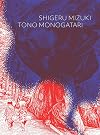
Back in 2015, I visited the rural Japanese town of Tono in Iwate prefecture, known as the “City of Folklore,” just a few years after the hundredth anniversary of the publication of the influential Japanese folklorist Kunio Yanagita’s 1910 masterwork Tono Monogatari, a slim, fascinating collection of 119 short vignettes told to him by local citizen Sasaki Kizen. At the same time, I noted that the acclaimed manga artist Shigeru Mizuki had published a comic adaption of the work to show more celebrate this anniversary, so when I noticed that it had been recently been translated into English, I was eager to read it. Mizuki takes Yanagita’s spare records of the valley's local stories, and crafts a thoughtful comic as the elderly manga artist depicts himself tramping across the Tono valley in the footsteps of Yanagita and Sasaki, making me feel like I was also visiting again.
As the creator of the seminal manga GeGeGe no Kitaro, Mizuki himself also had a significant role in popularizing the yokai and mystery of Japanese folklore both in Japan and across the world, making him an ideal conduit to explore this standard in Japanese folklore study. Along with background information provided by translator and folklorist Zack Davisson on the Shinto meanings behind these lore, the tales lend themselves to Mizuki’s comical yet grounded style. Both eerie and oddly prosaic, the tales reflect the everyday life and concerns of the people of this remote place, both their fears and their desires. Including legends of the kappa, the tengu, snow women, and other supernatural entities, other tales discuss local landmarks and eccentric townspeople while aspects of daily life like farming and hunting continue throughout. Mizuki’s sympathetic yet questioning musings are an ideal medium for revisiting Yanagita’s work and the integral place it has in Japanese folklore study. show less
As the creator of the seminal manga GeGeGe no Kitaro, Mizuki himself also had a significant role in popularizing the yokai and mystery of Japanese folklore both in Japan and across the world, making him an ideal conduit to explore this standard in Japanese folklore study. Along with background information provided by translator and folklorist Zack Davisson on the Shinto meanings behind these lore, the tales lend themselves to Mizuki’s comical yet grounded style. Both eerie and oddly prosaic, the tales reflect the everyday life and concerns of the people of this remote place, both their fears and their desires. Including legends of the kappa, the tengu, snow women, and other supernatural entities, other tales discuss local landmarks and eccentric townspeople while aspects of daily life like farming and hunting continue throughout. Mizuki’s sympathetic yet questioning musings are an ideal medium for revisiting Yanagita’s work and the integral place it has in Japanese folklore study. show less
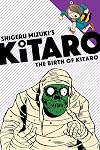
In 2013, comics publisher Drawn & Quarterly released Kitaro a volume collecting stories from Shigeru Mizuki's most well-known and beloved manga series GeGeGe no Kitaro. I absolutely loved the collection and so I was thrilled when Drawn & Quarterly announced that it would be publishing more of Mizuki's GeGeGe no Kitaro in English as part of its Enfant line of kids comics. The Birth of Kitaro, released in 2016, is the first of seven planned Kitaro volumes with stories selected, with input from show more Mizuki, by the manga's translator and yokai scholar Zack Davisson. The Birth of Kitaro collects seven stories originally published in Japan between 1966 and 1968, an essay about the history of Kitaro as well as an additional guide to yokai written by Davisson, and an utterly delightful section devoted to yokai-themed activities such as a word search, a maze, and several matching games among other fun challenges.
The tales in The Birth of Kitaro begin with the origin story of Kitaro, a powerful and mostly benevolent yokai boy. ("The Birth of Kitaro" also explains why his father, Medama Oyaji, is a disembodied/embodied eyeball.) The chapter was first published in the influential alternative manga magazine Garo. The other six stories chosen for the collection were created with a slightly younger audience in mind and were serialized in Shonen Weekly and as well as the magazine's special edition. The second chapter, "Nezumi Otoko versus Neko Musume," introduces one of the series' primary recurring characters. Nezumi Otoko, one of Kitaro's yokai friends even though he is a bit of jerk, tends to either cause trouble or get himself into trouble, needing to be chastised or rescued by Kitaro depending on the circumstances. The other stories included in The Birth of Kitaro are "Nopperabo," "Gyuki," "Yokai of the Mountain Pass," "Makura Gaeshi," and "Hideri Gami."
As much as I loved Drawn & Quarterly's original Kitaro collection, I think that I may love The Birth of Kitaro even more. All of the stories selected for the volume are a little bit creepy, a little bit scary, and a little bit gross, but they are also a great deal of fun and can be rather funny, too. I had actually forgotten just how amusing Mizuki's Kitaro manga could be; the mix of scariness and silliness in the series is marvelous. Mizuki has a terrific sense of humor and comedic timing, perfectly balancing the chuckles with the chills and thrills in the manga collected in The Birth of Kitaro. The horror and the humor work together to create an incredibly enjoyable read. It also doesn't hurt that Kitaro is a likeable lead to begin with, and that the supporting characters like Nezumi Otoko and Medama Oyaji, with their distinctive personalities and entertaining interactions, add a tremendous amount to enjoy in the series as well.
Mizuki's Kitaro manga is steeped in yokai lore which I love. Other readers picking up The Birth of Kitaro may not be as familiar with Japan's mysterious monsters and phenomena, but the volume is still very approachable and accessible. The stories themselves provide an entertaining introduction to yokai (from time to time even Kitaro must do a bit of research in order to effectively confront and deal with troublesome spirits) and for readers who are curious to learn more, Davisson's "Yokai Files" are an informative addition to the volume. The Birth of Kitaro is an excellent all-ages manga, suitable for younger readers who enjoy a bit of a scare and supernatural excitement while still being entertaining and appealing for adults. It's also a wonderful overall package, with fun and games, the manga itself, and background information all together in one place. The new Kitaro series in English is off to a fantastic start with The Birth of Kitaro; I can't wait for the next volume to be released.
Experiments in Manga show less
The tales in The Birth of Kitaro begin with the origin story of Kitaro, a powerful and mostly benevolent yokai boy. ("The Birth of Kitaro" also explains why his father, Medama Oyaji, is a disembodied/embodied eyeball.) The chapter was first published in the influential alternative manga magazine Garo. The other six stories chosen for the collection were created with a slightly younger audience in mind and were serialized in Shonen Weekly and as well as the magazine's special edition. The second chapter, "Nezumi Otoko versus Neko Musume," introduces one of the series' primary recurring characters. Nezumi Otoko, one of Kitaro's yokai friends even though he is a bit of jerk, tends to either cause trouble or get himself into trouble, needing to be chastised or rescued by Kitaro depending on the circumstances. The other stories included in The Birth of Kitaro are "Nopperabo," "Gyuki," "Yokai of the Mountain Pass," "Makura Gaeshi," and "Hideri Gami."
As much as I loved Drawn & Quarterly's original Kitaro collection, I think that I may love The Birth of Kitaro even more. All of the stories selected for the volume are a little bit creepy, a little bit scary, and a little bit gross, but they are also a great deal of fun and can be rather funny, too. I had actually forgotten just how amusing Mizuki's Kitaro manga could be; the mix of scariness and silliness in the series is marvelous. Mizuki has a terrific sense of humor and comedic timing, perfectly balancing the chuckles with the chills and thrills in the manga collected in The Birth of Kitaro. The horror and the humor work together to create an incredibly enjoyable read. It also doesn't hurt that Kitaro is a likeable lead to begin with, and that the supporting characters like Nezumi Otoko and Medama Oyaji, with their distinctive personalities and entertaining interactions, add a tremendous amount to enjoy in the series as well.
Mizuki's Kitaro manga is steeped in yokai lore which I love. Other readers picking up The Birth of Kitaro may not be as familiar with Japan's mysterious monsters and phenomena, but the volume is still very approachable and accessible. The stories themselves provide an entertaining introduction to yokai (from time to time even Kitaro must do a bit of research in order to effectively confront and deal with troublesome spirits) and for readers who are curious to learn more, Davisson's "Yokai Files" are an informative addition to the volume. The Birth of Kitaro is an excellent all-ages manga, suitable for younger readers who enjoy a bit of a scare and supernatural excitement while still being entertaining and appealing for adults. It's also a wonderful overall package, with fun and games, the manga itself, and background information all together in one place. The new Kitaro series in English is off to a fantastic start with The Birth of Kitaro; I can't wait for the next volume to be released.
Experiments in Manga show less
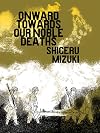
Shigeru Mizuki is one of the great manga authors, but is rarely translated into English. This is one of his classic stories, based on his personal wartime experience.
A platoon of Japanese soldiers is assigned to defend a beachhead near Rabaul, in what is now Papua New Guinea. They are subjected to a terrifying air assault followed by a landing of marines supported by tanks. Hopelessly outnumbered and outgunned, their rations dwindle to nothing, and their pitifully low weaponry is useless show more against the Americans.
Against all advice, the platoon commander decides that the platoon must perform a death-or-glory suicide charge to pay homage to the honour of their ancestors. Since the order is to suicide, anybody who survives and gets back to base is considered a traitorous insubordinate and subjected to the most severe discipline.
The hardship and brutality that the soldiers experience at the hands of their own officers is reminiscent of the wanton waste of life that heedless British commanders wreaked during the trench warfare campaigns of World War 1. It is a reminder that extreme suffering and gross disregard for human life is seen on all sides of a war. show less
A platoon of Japanese soldiers is assigned to defend a beachhead near Rabaul, in what is now Papua New Guinea. They are subjected to a terrifying air assault followed by a landing of marines supported by tanks. Hopelessly outnumbered and outgunned, their rations dwindle to nothing, and their pitifully low weaponry is useless show more against the Americans.
Against all advice, the platoon commander decides that the platoon must perform a death-or-glory suicide charge to pay homage to the honour of their ancestors. Since the order is to suicide, anybody who survives and gets back to base is considered a traitorous insubordinate and subjected to the most severe discipline.
The hardship and brutality that the soldiers experience at the hands of their own officers is reminiscent of the wanton waste of life that heedless British commanders wreaked during the trench warfare campaigns of World War 1. It is a reminder that extreme suffering and gross disregard for human life is seen on all sides of a war. show less
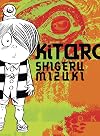
Over the last few years I have become increasingly interested in yokai--Japan's supernatural beings and monsters of myth and legend. When it comes to yokai manga the most influential creator in Japan is Shigeru Mizuki. His most famous series GeGeGe no Kitaro is considered a classic and continues to inspire others. I was absolutely thrilled when Drawn & Quarterly announced that GeGeGe no Kitaro had been licensed in English. Kitaro, released in 2013, collects stories from the first few volumes show more of Mizuki's GeGeGe no Kitaro published in Japan between 1967 and 1969. Also included in Drawn & Quarterly's Kitaro is an excellent introduction by Matt Alt (one of the co-authors of Yokai Attack!) and a yokai glossary by Zach Davisson, both of which are particularly useful for readers who aren't familiar with Kitaro or yokai, but which should also be interesting for those who are more knowledgeable.
"It is said that when the crow caws thrice, and the frog responds twice, the appearance of Kitaro is imminent." Kitaro of the Graveyard, a one-eyed yokai in the form of a young boy whose ways are mysterious and who wields great spirit powers. Generally a friendly sort of fellow, Kitaro helps protect people from more malicious yokai although unscrupulous humans might find themselves on the losing end of an encounter with him as well. Sometimes working alone and sometimes enlisting the help of other yokai, Kitaro's adventures take him all over Japan, everywhere from its most densely populated cities to its most remote islands and beyond. It is part of Kitaro's mission to defeat evil yokai. The spirits and monsters that he faces will take all of the esoteric knowledge and supernatural skills he has to vanquish them, not to mention a little luck.
The stories in Kitaro tend to be episodic and vary in length--most are around fifteen pages while the longest could easily be collected as their own graphic novels. Although the stories aren't directly related, many share recurring characters. The most notable are Kitaro himself, his father Medama Oyaji--an eyeball with a body who resides in Kitaro's empty eye socket and enjoys a good teacup bath--and Nezumi Otoko--a half-human, half-yokai troublemaker and sometimes friend. Mizuki was inspired by more than just Japanese folklore when creating Kitaro. In addition to traditional yokai and his own imagination, popular culture and more modern kaiju were also important influences. Even monsters from Western literature, film, and mythology make an appearance. As a result, Kitaro is a lively amalgamation of sources.
I found Kitaro to be utterly delightful. Although it is a horror manga dealing with powerful supernatural creatures and featuring some legitimately creepy scenarios, Kitaro is also very funny and even cheerful in tone. Kitaro does seem to gain abilities as is convenient to the story, but it is still amusing to see how he manages to get out of precarious situations. It can be a bit silly at times, and on occasion deceptively simple and straightforward, but Kitaro is also a great deal of fun. Because of its episodic nature there isn't much plot or character development, but Mizuki's creations are still memorable. I particularly appreciate all of the different traditions he draws from to create a tale that is distinctly his own. I loved Kitaro and enjoyed the volume immensely. I sincerely hope that Drawn & Quarterly will be able to release more of the series.
Experiments in Manga show less
"It is said that when the crow caws thrice, and the frog responds twice, the appearance of Kitaro is imminent." Kitaro of the Graveyard, a one-eyed yokai in the form of a young boy whose ways are mysterious and who wields great spirit powers. Generally a friendly sort of fellow, Kitaro helps protect people from more malicious yokai although unscrupulous humans might find themselves on the losing end of an encounter with him as well. Sometimes working alone and sometimes enlisting the help of other yokai, Kitaro's adventures take him all over Japan, everywhere from its most densely populated cities to its most remote islands and beyond. It is part of Kitaro's mission to defeat evil yokai. The spirits and monsters that he faces will take all of the esoteric knowledge and supernatural skills he has to vanquish them, not to mention a little luck.
The stories in Kitaro tend to be episodic and vary in length--most are around fifteen pages while the longest could easily be collected as their own graphic novels. Although the stories aren't directly related, many share recurring characters. The most notable are Kitaro himself, his father Medama Oyaji--an eyeball with a body who resides in Kitaro's empty eye socket and enjoys a good teacup bath--and Nezumi Otoko--a half-human, half-yokai troublemaker and sometimes friend. Mizuki was inspired by more than just Japanese folklore when creating Kitaro. In addition to traditional yokai and his own imagination, popular culture and more modern kaiju were also important influences. Even monsters from Western literature, film, and mythology make an appearance. As a result, Kitaro is a lively amalgamation of sources.
I found Kitaro to be utterly delightful. Although it is a horror manga dealing with powerful supernatural creatures and featuring some legitimately creepy scenarios, Kitaro is also very funny and even cheerful in tone. Kitaro does seem to gain abilities as is convenient to the story, but it is still amusing to see how he manages to get out of precarious situations. It can be a bit silly at times, and on occasion deceptively simple and straightforward, but Kitaro is also a great deal of fun. Because of its episodic nature there isn't much plot or character development, but Mizuki's creations are still memorable. I particularly appreciate all of the different traditions he draws from to create a tale that is distinctly his own. I loved Kitaro and enjoyed the volume immensely. I sincerely hope that Drawn & Quarterly will be able to release more of the series.
Experiments in Manga show less
Lists
Awards


You May Also Like


Associated Authors
Statistics
- Works
- 236
- Also by
- 1
- Members
- 2,593
- Popularity
- #9,905
- Rating
- 4.0
- Reviews
- 37
- ISBNs
- 277
- Languages
- 8
- Favorited
- 8