
Yoshihiro Tatsumi (1935–2015)
Author of The Push Man and Other Stories
About the Author
Image credit: © deb aoki/ manga.about.com
Series
Works by Yoshihiro Tatsumi
Życie. Powieść graficzna 1 copy
Associated Works
Rashōmon and Seventeen Other Stories (2006) — Cover artist, some editions — 1,247 copies, 15 reviews
Tagged
Common Knowledge
- Canonical name
- Tatsumi, Yoshihiro
- Legal name
- 辰巳ヨシヒロ
- Birthdate
- 1935-06-10
- Date of death
- 2015-03-07
- Gender
- male
- Occupations
- manga artist
- Short biography
- Decades before graphic novels and short stories for adult audiences gained popularity in the United States, Yoshihiro Tatsumi founded the genre in his native Japan. Beginning in the 1950s, he created "gekiga," meaning "dramatic pictures." Writing and illustrating these tales when the defeat in World War II was still fresh in most Japanese people's minds, Tatsumi began telling stories of ordinary people suffering quietly in urban settings such as Tokyo. Usually unable to express their psychological fears and needs verbally, these characters find release in unusual, bizarre, and even dangerous ways. Accompanying his stories with illustrations that range from the highly detailed and realistic to the expressionistic, Tatsumi has found a niche outside the mainstream while still gaining a large and respectful fan base. It was not until 2005, however, that his translated collection The Push Man, and Other Stories won him attention in North America. A young boy during World War II, Tatsumi was the son of parents who ran a laundry business. The family was so poor that the young Tatsumi attended school irregularly because education had to be paid for at the time. He found comfort in comic books, which could be read in rental book stores in which customers could pay a small hourly fee and read as many comics in that time as they wished. Becoming a fan of comic book artist Tezuka Osamu, Tatsumi learned that the artist lived close by. He visited Tezuka, who took the teenager under his wing and gave him encouragement. Eventually, Tatsumi found work with rental shop company Hinomaru Publishing in his home of Osaka, but as the economy improved in Japan and comic books and paperbacks became more affordable, the rental industry collapsed. Tatsumi left Osaka for Tokyo in 1957, where he and some of his friends started creating comics in the gekiga style. American graphic novelist Adrian Tomine is responsible for editing and designing the collections of Tatsumi's works that have reached America. The Push Man, and Other Stories contains tales originally published in Japan in 1969, and Abandon the Old in Tokyo 's stories are from the following year. Yet, critics have repeatedly noted that they read in many ways like modern compositions.
- Nationality
- Japan
- Birthplace
- Osaka, Japan
- Associated Place (for map)
- Osaka, Japan
Members
Reviews
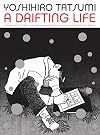
We need a new word: künstler-comic?
Well, maybe not.
Yoshihiro Tatsumi's account of his journey from schoolboy cartoons to the center of the Japanese manga industry during its heyday is a fascinating account of the artist as a young man. In it, with the consummate artistry we have come to expect, thanks to Drawn & Quarterly's ongoing edition of his work, Tatsumi lets us know what it was like to work as a manga-ka in the 1950s and 60s, and also how his country and the world changed during that show more time. The young artist who is Tatsumi's stand-in often voices his frustration at being unable, due to economic constraints, to work on long-form comics. In A Drifting Life Tatsumi, over 834 pages, is able to stretch out and do just that. Having turned the last of those many pages one is hungry for more. "I've drifted along, demanding an endless dream from gekiga," Tatsumi concludes his masterpiece, "And I . . . probably . . . always will" (ellipses in the original). Dream on, Mr. Tatsumi. show less
Well, maybe not.
Yoshihiro Tatsumi's account of his journey from schoolboy cartoons to the center of the Japanese manga industry during its heyday is a fascinating account of the artist as a young man. In it, with the consummate artistry we have come to expect, thanks to Drawn & Quarterly's ongoing edition of his work, Tatsumi lets us know what it was like to work as a manga-ka in the 1950s and 60s, and also how his country and the world changed during that show more time. The young artist who is Tatsumi's stand-in often voices his frustration at being unable, due to economic constraints, to work on long-form comics. In A Drifting Life Tatsumi, over 834 pages, is able to stretch out and do just that. Having turned the last of those many pages one is hungry for more. "I've drifted along, demanding an endless dream from gekiga," Tatsumi concludes his masterpiece, "And I . . . probably . . . always will" (ellipses in the original). Dream on, Mr. Tatsumi. show less
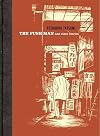
Yoshihiro Tatsumi is one of the early alternative manga practitioners. His comics use the clearly Tezuka-influenced styles of mid 1960s Japanese manga, but with a much darker twist. The stories are short and the explanations are scant. Rather, these vignettes are enigmatic little morsels that leave a distinct feeling of urban hopelessness and isolation.
A theme running throughout the stories is a strange sort of misogyny. The men are generally downtrodden and hopeless, further put down by show more loudmouthed, angry women. In one story a man impregnates a rat by masturbating into the shower drain. When the pregnant rat appears in the apartment, the man’s girlfriend is indignant and leaves him to his beastly mistress. Throughout the exchange the man says not a word. This is typical of the stories.
Also typical is some kind of ambivalent infatuation with abortion. Sewer workers find carcasses, unwanted pregnancies abound, and all of this is dealt with in an unsettling way. It’s hard to say exactly where Tatsumi comes down on these issues, but if ambiguity is a sign of genius, then Tatsumi’s work is clearly something to spend some time with.
Push Man is a good antidote to the typical manga fare, and a great example of what comics can be when relieved of their kiddy constraints. show less
A theme running throughout the stories is a strange sort of misogyny. The men are generally downtrodden and hopeless, further put down by show more loudmouthed, angry women. In one story a man impregnates a rat by masturbating into the shower drain. When the pregnant rat appears in the apartment, the man’s girlfriend is indignant and leaves him to his beastly mistress. Throughout the exchange the man says not a word. This is typical of the stories.
Also typical is some kind of ambivalent infatuation with abortion. Sewer workers find carcasses, unwanted pregnancies abound, and all of this is dealt with in an unsettling way. It’s hard to say exactly where Tatsumi comes down on these issues, but if ambiguity is a sign of genius, then Tatsumi’s work is clearly something to spend some time with.
Push Man is a good antidote to the typical manga fare, and a great example of what comics can be when relieved of their kiddy constraints. show less
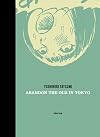
This is a different world from the one I have been used to seeing in manga. In this, the second volume in Drawn and Quarterly's collection of Yoshihiro Tatsumi's work, someone vomits in virtually every story. Sometime it is pregnancy, sometime drunkenness, sometimes self-disgust, sometimes fear, but this is a world of retching and churning.
Tatsumi himself was the first to declare the difference between his fictional-realist world and the performance of dignity that often takes precedence in show more Japan's self-conception through manga. In 1957 he coined a new term to set his work and other alternative comics traditions in Japan in opposition to manga: gekiga. These were comics for adults, distributed differently (through lending libraries) than manga, dealing with uncomfortable subjects - brutal sexuality and violent alienation.
Indeed this is a world permeated by sexual anxiety, and unmediated by dream or fantasy. It is a world in which secrets are stripped bare: in one story a window washer witnesses his daughter's affair with her boss through a newly clean window and reacts (naturally!) by ripping her clothes off when she comes home and shoving her into a shower to be scrubbed down. In another, a comics artist can only find inspiration from the bawdy graffiti scrawled in a public bathroom (whose design - a flowing canal over which the user squats - seems more metaphorically direct about the scatological quality of artistic creation than the toilets we are accustomed to would be), and is caught sketching there by a total stranger. These are lives of tangled claustrophobia, filled to painfulness with other people and yet utterly lonely. The only people who ever reach out to the isolated everymen who fill Tatsumi's pages turn out to be whores.
As you can probably tell from these brief descriptions, there is often something contrived about the plots of these stories, which make up for their obviousness in abundant unpleasantness. The great strain seems to be in creating these harsh plot-lines, in violating the taboo, rather than in making the violation intricate. Drawn and Quarterly has laid out a project that involves publishing, each year, a collection of comics from one year of Tatsumi's career. The first was The Pushman and Other Stories (1969, publ. in English by D&Q in 2005), and this book represents 1970. I hold out hope for future years, for a boldness already present, matched with an intricacy sadly missed.
[Originally posted at http://sycoraxpine.blogspot.com/2007/09/abandon-old-in-tokyo-1970.html ] show less
Tatsumi himself was the first to declare the difference between his fictional-realist world and the performance of dignity that often takes precedence in show more Japan's self-conception through manga. In 1957 he coined a new term to set his work and other alternative comics traditions in Japan in opposition to manga: gekiga. These were comics for adults, distributed differently (through lending libraries) than manga, dealing with uncomfortable subjects - brutal sexuality and violent alienation.
Indeed this is a world permeated by sexual anxiety, and unmediated by dream or fantasy. It is a world in which secrets are stripped bare: in one story a window washer witnesses his daughter's affair with her boss through a newly clean window and reacts (naturally!) by ripping her clothes off when she comes home and shoving her into a shower to be scrubbed down. In another, a comics artist can only find inspiration from the bawdy graffiti scrawled in a public bathroom (whose design - a flowing canal over which the user squats - seems more metaphorically direct about the scatological quality of artistic creation than the toilets we are accustomed to would be), and is caught sketching there by a total stranger. These are lives of tangled claustrophobia, filled to painfulness with other people and yet utterly lonely. The only people who ever reach out to the isolated everymen who fill Tatsumi's pages turn out to be whores.
As you can probably tell from these brief descriptions, there is often something contrived about the plots of these stories, which make up for their obviousness in abundant unpleasantness. The great strain seems to be in creating these harsh plot-lines, in violating the taboo, rather than in making the violation intricate. Drawn and Quarterly has laid out a project that involves publishing, each year, a collection of comics from one year of Tatsumi's career. The first was The Pushman and Other Stories (1969, publ. in English by D&Q in 2005), and this book represents 1970. I hold out hope for future years, for a boldness already present, matched with an intricacy sadly missed.
[Originally posted at http://sycoraxpine.blogspot.com/2007/09/abandon-old-in-tokyo-1970.html ] show less
These sixteen stories from 1969, republished by Drawn and Quarterly in English in 2005, brought a master of gekiga manga to recognition in North America. The stories are dark, typically with underclass protagonists with little or no hope, yet with all of the drives and will of their better-off brothers. Sexually frank, violent, and usually involving the shredding of personal vanity to the point of self-harm. Stories like “Piranha,” or “Black Smoke,” or the title story “The Push show more Man,” see protagonists pushed (literally in some cases) beyond the breaking point. Others, such as “Projectionist,” “Test Tube,” “Bedridden,” peel back the surface on real but repulsive individuals.
Uneasily riveting. show less
Uneasily riveting. show less
Lists
Awards


You May Also Like


Associated Authors
Statistics
- Works
- 32
- Also by
- 3
- Members
- 2,116
- Popularity
- #12,162
- Rating
- 3.8
- Reviews
- 70
- ISBNs
- 55
- Languages
- 8
- Favorited
- 8
