
Adrian Tomine
Author of Shortcomings
About the Author
Image credit: www.adrian-tomine.com/
Series
Works by Adrian Tomine
Joe Matt's "Jam" Sketchbook 1 copy
Pontos Fracos 1 copy
Optic Nerve #s 4,7 1 copy
Drawings and Questions 1 copy
Associated Works
An Anthology of Graphic Fiction, Cartoons, and True Stories (2000) — Contributor — 385 copies, 3 reviews
An Anthology of Graphic Fiction, Cartoons, and True Stories: v. 2 (2008) — Contributor — 169 copies, 2 reviews
Drawn & Quarterly: Twenty-five Years of Contemporary Cartooning, Comics, and Graphic Novels (2015) — Contributor — 150 copies, 5 reviews
The Only Son / There Was a Father: Two Films by Yasujiro Ozu (1936) — Cover artist, some editions — 8 copies
Tagged
Common Knowledge
- Birthdate
- 1974-05-31
- Gender
- male
- Education
- University of California, Berkeley
- Relationships
- Brennan, Sarah (wife)
- Nationality
- USA
- Places of residence
- Sacramento, California, USA
Berkeley, California, USA
Brooklyn, New York, USA - Associated Place (for map)
- California, USA
Members
Reviews
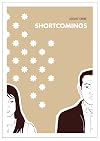
It's like an actual novel. Dialogue is realistic, characters are believable, but there's one big problem. It's Ben. At the end, he probably has the same shortcoming he started out with. I can imagine a sequel which ends identically, because he never gets it. His girlfriend explains that she stayed with him because she felt a lot of sympathy for him. We needed to have some of that sympathy. We need it to understand why she stayed with him, and we need it because, reading to the end, we're show more staying with him longer than we'd like to. Watching his loss isn't sufficient to reward us for reading to the end, because he'll never understand what's wrong despite Miko's spelling it out for him in explicit detail. It feels like it ended too soon, and yet never soon enough. show less
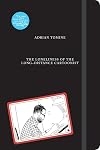
Tomine offers a look inside his head, sharing his anxieties and documenting the "embarrassing gaffes, the small humiliations, the perceived insults" of being a professional cartoonist and low-level celebrity. The navel gazing is mostly humorous and self-deprecating, and to get outside his head once in a while, he offers a few cameos of celebrities from the comic book industry and lots of anecdotes from conventions, book tours, and signings.
Its an amusing trifle, but I have to say the show more decision to reproduce it as the grid-pattern journal in which he apparently drew it annoyed me. The little blue squares on every page constantly drew my eye away from the art or left me spending too much time judging how crooked his panel lines were when they didn't cover the blue lines perfectly. I occasionally started looking too close and found the text difficult to read if each line did not run exactly through a line of squares. It's all unnecessarily distracting. show less
Its an amusing trifle, but I have to say the show more decision to reproduce it as the grid-pattern journal in which he apparently drew it annoyed me. The little blue squares on every page constantly drew my eye away from the art or left me spending too much time judging how crooked his panel lines were when they didn't cover the blue lines perfectly. I occasionally started looking too close and found the text difficult to read if each line did not run exactly through a line of squares. It's all unnecessarily distracting. show less
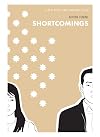
Ben Tanaka is a lapsed film studies grad student who runs a cinema on campus. He is anxious, angry, a bit self-hating, and conflicted about his desires, personal and sexual. Ben’s girlfriend, Miko, puts up with his unsupportive contribution to their relationship but her patience is wearing thin. His best friend, Alice Kim, is a grad student (they met as undergrads). She has her own issues. Her friendship with Ben is frank and, mostly, honest. She tells him when he is being an idiot, and he show more does his best to return the favour. Despite the ups and downs of their separate amorous relations, it is the friendship of Ben and Alice that persists.
This short graphic novel is both acerbic and sentimental. Ben is a difficult protagonist. Although he longs for love and sympathy, he seems, despite his age, emotionally stunted and immature. If it weren’t for Alice, who clearly sees something worthy of friendship in Ben, we might be inclined to give up on him. And it will take some serious growth for him also to not give up on himself.
Tomine’s graphic style is spare and patient but it is his characters’ self-scrutiny that stands out.
Gently recommended. show less
This short graphic novel is both acerbic and sentimental. Ben is a difficult protagonist. Although he longs for love and sympathy, he seems, despite his age, emotionally stunted and immature. If it weren’t for Alice, who clearly sees something worthy of friendship in Ben, we might be inclined to give up on him. And it will take some serious growth for him also to not give up on himself.
Tomine’s graphic style is spare and patient but it is his characters’ self-scrutiny that stands out.
Gently recommended. show less

Adrian Tomine’s Shortcomings focuses on Ben Tanaka, a movie theater manager in Berkeley, California who rejects the racialized identity that America proscribes for him. As a result of this, Ben never quite feels that he fits in with white America nor does he feel himself in spaces created by Asian-Americans and those of the Asian diaspora in the U.S. He grows increasingly hostile toward those around him, dismissing his girlfriend Miko Hayashi’s political art based on Asian-American show more identity and ignoring her both emotionally and sexually. Instead, he stares at white women, fetishizing them and spending his nights with pornography focused on white women. At the same time, he reacts violently when he sees white men dating Asian women, viewing them as sexual colonizers. Ben’s only friend, Alice, also struggles with identity as a queer Asian-American woman in grad school, trying to balance her own identity against that her parents, colleagues, and community expect of her. Though all three characters struggle to find a balance between internal and external pressures of identity, Ben fails to reach any form of comfort and catharsis while Miko and Alice find a way to move forward for themselves amid the uncertainty of the future.
The visual medium works particularly well as it requires seeing. Ben refuses to see race, but Tomine’s art shows how Ben is always observing the people around him and where they fit. He uses a security camera to watch a woman employee at the movie theater that he later tries to date. He watches pornography featuring white women, often of white women with other white women. He feels hostile when he overhears Alice with another woman since their activities are not for his consumption. Ben becomes hostile after Miko leaves when he finds out that she posed for another art student’s photography, so the she was seen by another man in the form of the photographer and subsequent men who viewed the picture. The visual style of comics and graphic novels render races differently based on visual cues, even using Japanese and Korean text for some of the word balloons, drawing the reader into the act of “seeing” race. Tomine’s graphic novel encourages the reader to sit with the discomfort of how we “see” race in the U.S. show less
The visual medium works particularly well as it requires seeing. Ben refuses to see race, but Tomine’s art shows how Ben is always observing the people around him and where they fit. He uses a security camera to watch a woman employee at the movie theater that he later tries to date. He watches pornography featuring white women, often of white women with other white women. He feels hostile when he overhears Alice with another woman since their activities are not for his consumption. Ben becomes hostile after Miko leaves when he finds out that she posed for another art student’s photography, so the she was seen by another man in the form of the photographer and subsequent men who viewed the picture. The visual style of comics and graphic novels render races differently based on visual cues, even using Japanese and Korean text for some of the word balloons, drawing the reader into the act of “seeing” race. Tomine’s graphic novel encourages the reader to sit with the discomfort of how we “see” race in the U.S. show less
Lists
Awards


You May Also Like


Associated Authors
Statistics
- Works
- 38
- Also by
- 24
- Members
- 5,284
- Popularity
- #4,710
- Rating
- 3.8
- Reviews
- 153
- ISBNs
- 101
- Languages
- 9
- Favorited
- 21