
Seth (1) (1962–)
Author of It's a Good Life, If You Don't Weaken
For other authors named Seth, see the disambiguation page.
About the Author
Image credit: Cartoonist Seth at the 2019 Texas Book Festival in Austin, Texas, United States. By Larry D. Moore, CC BY-SA 4.0, https://commons.wikimedia.org/w/index.php?curid=84606191
Series
Works by Seth
Bannock Beans and Black Tea: Memories of a Prince Edward Island Childhood in the Great Depression (2004) — Illustrator — 80 copies, 5 reviews
Associated Works
The Portable Dorothy Parker [2006 Deluxe Edition] (2006) — Cover artist, some editions — 1,631 copies, 10 reviews
The Complete Peanuts: 1950-1952 Dailies & Sundays (2004) — Cover artist, some editions — 1,351 copies, 26 reviews
An Anthology of Graphic Fiction, Cartoons, and True Stories (2000) — Contributor — 385 copies, 3 reviews
The Complete Peanuts Box Set: 1950-1954 [1950] (2004) — Cover artist, some editions — 240 copies, 2 reviews
An Anthology of Graphic Fiction, Cartoons, and True Stories: v. 2 (2008) — Contributor — 169 copies, 2 reviews
Drawn & Quarterly: Twenty-five Years of Contemporary Cartooning, Comics, and Graphic Novels (2015) — Contributor — 150 copies, 5 reviews
The Captain of the "Polestar" [short story] (2011) — Illustrator, some editions — 94 copies, 4 reviews
One Who Saw: A Ghost Story for Christmas (Seth's Christmas Ghost Stories) (2016) — Illustrator, some editions — 45 copies
The Story of a Disappearance and an Appearance [short fiction] (1913) — Illustrator, some editions — 36 copies
The Inhumans and Other Stories: A Selection of Bengali Science Fiction (2024) — Cover designer, some editions — 32 copies
The House by the Poppy Field: A Ghost Story for Christmas (Seth's Christmas Ghost Stories) (2023) — Illustrator, some editions — 31 copies
The Green Room: A Ghost Story for Christmas (Seth's Christmas Ghost Stories) (1925) — Illustrator, some editions — 31 copies
The Dead and the Countess: A Ghost Story for Christmas (Seth's Christmas Ghost Stories) (2022) — Illustrator, some editions — 26 copies
Podolo: A Ghost Story for Christmas (Seth's Christmas Ghost Stories) (2024) — Illustrator, some editions — 26 copies, 1 review
The Doll's Ghost (Seth's Christmas Ghost Stories) (2021) — Illustrator, some editions — 25 copies, 1 review
Christmas Eve on a Haunted Hulk: A Ghost Story for Christmas (Seth's Christmas Ghost Stories) (1889) — Illustrator, some editions — 25 copies
The Amethyst Cross: A Ghost Story for Christmas (Seth's Christmas Ghost Stories) (2024) — Illustrator, some editions — 25 copies, 1 review
File Under: 13 Suspicious Incidents (Reports 1-6) (All the Wrong Questions) (2014) — Illustrator — 22 copies
Captain Dalgety Returns: A Ghost Story for Christmas (Seth's Christmas Ghost Stories) (2024) — Illustrator, some editions — 21 copies, 1 review
Tagged
Common Knowledge
- Canonical name
- Seth
- Legal name
- Gallant, Gregory
- Other names
- Webb, Wilbur R.
Webb, Wilbur - Birthdate
- 1962-09-16
- Gender
- male
- Education
- Ontario College of Art
- Occupations
- cartoonist
illustrator
comic book writer
comic book artist - Awards and honors
- Ignatz Award (Outstanding Artist, 1997)
- Relationships
- Gallant, John (father)
- Nationality
- Canada
- Birthplace
- Clinton, Ontario, Canada
- Places of residence
- Guelph, Ontario, Canada
- Associated Place (for map)
- Ontario, Canada
Members
Reviews
Clyde Fans by Seth

Seth needed 20 years to complete his longest work. Not that he spent all his time working on it - he published other things in the meantime but for 14 issues of his comic book Palookaville (which took the 20 years between 1998 and 2017), the main story in each issue was Clyde Fans.
The 5 parts of the story span 40 years although some of the flashbacks go even further in time - from the founding of the business by the father to its final collapse. The story opens at the end and then goes back show more to fill in the gaps - not linearly but jumping in time.
At the opening, it is 1997 (contemporary to when this part was written) and Abe Matchcard is an old man, living in what used to be the Clyde Fans building and telling the reader about the company his father founded (and then absconded from it and the family) and its history since that day. Once upon a time, it was a thriving business - Electric Fans were in vogue and sold well and "Clyde Fans" had the best products out there. Abe's brother, Simon, was supposed to take care of the business but for reasons which were not yet revealed, he ended up a recluse instead. So Abe stepped up, grew the business - and then watched it collapse when he ignored the rise of air conditioning.
For all intents and purposes, the book could have stopped here - we know the story now, right? But that's where the details come into play - the next 4 parts fill in the things that were just hinted at (or not even hinted at in some places) - from 1957 when we finally learn what happened to Simon (parts 2 and 5) through 1966 in part 3 where the business starts falling and the boys' mother needs to be put into a nursing home to 1975 in part 4 where Abe needs to admit defeat and close the factory. And in between all of that life are the musings of Abe (and Simon in his parts of the novel) about business and people and age. The circling back at the end, filling the last of the puzzle pieces in the very last pages of the novel works unexpectedly well - even though you know what must happen, seeing it happening is emotional.
What emerges is not just a history of a family and a business but the history of small businesses - what happens when new technology comes? What happens when the big stores and companies take over? Nothing good - unless you are willing to change and even if you used to be a risk-taker, remaining one, always being ready to change gets progressively harder. Business and family are weaved together inseparably - and despite the novel being about the business, it is also a family saga. And almost anyone can recognize parts of their own in it.
If you look at the first and last pages of the novel, you will see a change in the style - the art gets more confident as time passes, more mature. But you won't see that change as the novel progresses - it happens gradually, without abrupt changes. Not that the first pages are bad but there is a hesitancy there - more than in the later parts of the novel anyway.
Possibly because of its publication history and probably partly because it was moving so slow, the comics and graphic work awards never gave it even a nod. But the mainstream noticed it when it finally emerged completed - the Giller prize jury longlisted it in 2020 - the first (and only one so far I think) graphic novel to be even considered for the award - a novel is a novel, regardless of its form.
Even if you had never read a graphic novel before, try this one. A story is a story regardless of how you tell it and Seth knows how to tell a story. show less
The 5 parts of the story span 40 years although some of the flashbacks go even further in time - from the founding of the business by the father to its final collapse. The story opens at the end and then goes back show more to fill in the gaps - not linearly but jumping in time.
At the opening, it is 1997 (contemporary to when this part was written) and Abe Matchcard is an old man, living in what used to be the Clyde Fans building and telling the reader about the company his father founded (and then absconded from it and the family) and its history since that day. Once upon a time, it was a thriving business - Electric Fans were in vogue and sold well and "Clyde Fans" had the best products out there. Abe's brother, Simon, was supposed to take care of the business but for reasons which were not yet revealed, he ended up a recluse instead. So Abe stepped up, grew the business - and then watched it collapse when he ignored the rise of air conditioning.
For all intents and purposes, the book could have stopped here - we know the story now, right? But that's where the details come into play - the next 4 parts fill in the things that were just hinted at (or not even hinted at in some places) - from 1957 when we finally learn what happened to Simon (parts 2 and 5) through 1966 in part 3 where the business starts falling and the boys' mother needs to be put into a nursing home to 1975 in part 4 where Abe needs to admit defeat and close the factory. And in between all of that life are the musings of Abe (and Simon in his parts of the novel) about business and people and age. The circling back at the end, filling the last of the puzzle pieces in the very last pages of the novel works unexpectedly well - even though you know what must happen, seeing it happening is emotional.
What emerges is not just a history of a family and a business but the history of small businesses - what happens when new technology comes? What happens when the big stores and companies take over? Nothing good - unless you are willing to change and even if you used to be a risk-taker, remaining one, always being ready to change gets progressively harder. Business and family are weaved together inseparably - and despite the novel being about the business, it is also a family saga. And almost anyone can recognize parts of their own in it.
If you look at the first and last pages of the novel, you will see a change in the style - the art gets more confident as time passes, more mature. But you won't see that change as the novel progresses - it happens gradually, without abrupt changes. Not that the first pages are bad but there is a hesitancy there - more than in the later parts of the novel anyway.
Possibly because of its publication history and probably partly because it was moving so slow, the comics and graphic work awards never gave it even a nod. But the mainstream noticed it when it finally emerged completed - the Giller prize jury longlisted it in 2020 - the first (and only one so far I think) graphic novel to be even considered for the award - a novel is a novel, regardless of its form.
Even if you had never read a graphic novel before, try this one. A story is a story regardless of how you tell it and Seth knows how to tell a story. show less

This book was 20 years in the making and tells the story of Abe and Simon Matchcard, whose father established the Clyde Fans company. Clyde does a runner, and Abe and Simon are left to maintain the business—but in the age of air conditioning, fans are no longer as viable a proposition as they used to be. Abe is the more natural salesman, while Simon prefers to hide from the world and look after their mother.
This was an amazing book. The blues and blacks and beiges lend the story a show more particularly melancholy air. It’s not just the story of two brothers with a failing family business: it’s about progress and society leaving people behind; it’s about memory and looking after ageing parents; it’s even in a way about the decline of small-town Ontario, because the flashbacks to the 1950s show towns with train service that they wouldn’t have today. It chronicles a way of life that has disappeared and is being rapidly forgotten.
I recommend this to anyone who is skeptical of the graphic-novel format—it works fantastically well at telling this story. show less
This was an amazing book. The blues and blacks and beiges lend the story a show more particularly melancholy air. It’s not just the story of two brothers with a failing family business: it’s about progress and society leaving people behind; it’s about memory and looking after ageing parents; it’s even in a way about the decline of small-town Ontario, because the flashbacks to the 1950s show towns with train service that they wouldn’t have today. It chronicles a way of life that has disappeared and is being rapidly forgotten.
I recommend this to anyone who is skeptical of the graphic-novel format—it works fantastically well at telling this story. show less
Bannock, Beans and Black Tea: Memories of a Prince Edward Island Childhood in the Great Depression by John Gallant

If the style of the drawing on the cover of this book looks familiar, you are not just seeing things. John Gallant may not be a name anyone had heard of but his son's name is well known, especially if you like graphic novels and comics. That also explains why a graphic publisher such as Drawn and Quarterly had published a non-graphic memoir.
Seth grew up hearing the stories which his father shared every time he had a chance. To the growing child, they sounded like adventures and every show more retelling added more details - as often happens with stories like that. As he was growing older, he started realizing that they are anything but - and that the humor in them is covering for desperation and hopelessness. So he decided to ask his father to start recording the stories and sending them over. Seeing them on paper, arriving sporadically, showed an even starker side of them - the humor which his father injected in the telling was all but gone - the only thing remaining was the reality of growing in poverty in a very rural part of the Prince Edward Island province - the village of New Acadia (later known as St. Charles) in the neighborhood of Rollo Bay in the 1920s and 1930s (but not on the coast itself).
John Gallant was born in 1917 in a family which would have been better off without children - the father was uneducated and frequently without a job, the mother was a housewife who seemed to care about her children but had way too many of them. There were some grandparents in the picture but they were not well-off either and the winters can be brutal in that part of the world. A lot of the early stories in this collection of autobiographical stories contain barely suppressed (and not always suppressed) loathing towards a father who had no job, no prospects, no dreams and yet wanted and had a big family.
I am not sure how much editing Seth did for this book - the stories do not sound like his usual style so I suspect we are actually hearing John's voice in a lot of it. The language and the stories are simple - the way a man who struggled to survive and never had a chance for real education talks and tells stories. But they also show where Seth got storytelling abilities (unless he helped more than it looks like he did).
Each of the stories in the book is very short, usually just a few pages but I dare you to try to read just a story at a time. There is some repetition and the story does not move entirely linearly (and some of the repetition comes from that) but reading it, it feels like the kind of stories family tell around the table or when the children come home. It was not an easy read in places, especially knowing that it happened (let's just say that the exploited children of the Dickens novels had it easy compared to some of what happened here). But it also showed me a part of Canada I am not very familiar with at a time when I am much more familiar with European and US history than Canadian (although admittedly, that may be true for most periods in history).
The short book (120 small pages with a lot of blank space) is the kind of memoirs I like reading - not those of the makers and the shakers of the world but the people who just lived in that area, in that time. These are also the kind of memoirs that rarely get published - this one would have never been published if Seth was not the artist that he is.
In addition to the cover and the editing, Seth also provided an introduction (in the form of a comic) and illustrations throughout the book (and I suspect he worked on the selection of the font and other visual elements).
Strongly recommended if you are interested in how some poor rural people lived during the Great Depression in Canada or if you like personal stories. show less
Seth grew up hearing the stories which his father shared every time he had a chance. To the growing child, they sounded like adventures and every show more retelling added more details - as often happens with stories like that. As he was growing older, he started realizing that they are anything but - and that the humor in them is covering for desperation and hopelessness. So he decided to ask his father to start recording the stories and sending them over. Seeing them on paper, arriving sporadically, showed an even starker side of them - the humor which his father injected in the telling was all but gone - the only thing remaining was the reality of growing in poverty in a very rural part of the Prince Edward Island province - the village of New Acadia (later known as St. Charles) in the neighborhood of Rollo Bay in the 1920s and 1930s (but not on the coast itself).
John Gallant was born in 1917 in a family which would have been better off without children - the father was uneducated and frequently without a job, the mother was a housewife who seemed to care about her children but had way too many of them. There were some grandparents in the picture but they were not well-off either and the winters can be brutal in that part of the world. A lot of the early stories in this collection of autobiographical stories contain barely suppressed (and not always suppressed) loathing towards a father who had no job, no prospects, no dreams and yet wanted and had a big family.
I am not sure how much editing Seth did for this book - the stories do not sound like his usual style so I suspect we are actually hearing John's voice in a lot of it. The language and the stories are simple - the way a man who struggled to survive and never had a chance for real education talks and tells stories. But they also show where Seth got storytelling abilities (unless he helped more than it looks like he did).
Each of the stories in the book is very short, usually just a few pages but I dare you to try to read just a story at a time. There is some repetition and the story does not move entirely linearly (and some of the repetition comes from that) but reading it, it feels like the kind of stories family tell around the table or when the children come home. It was not an easy read in places, especially knowing that it happened (let's just say that the exploited children of the Dickens novels had it easy compared to some of what happened here). But it also showed me a part of Canada I am not very familiar with at a time when I am much more familiar with European and US history than Canadian (although admittedly, that may be true for most periods in history).
The short book (120 small pages with a lot of blank space) is the kind of memoirs I like reading - not those of the makers and the shakers of the world but the people who just lived in that area, in that time. These are also the kind of memoirs that rarely get published - this one would have never been published if Seth was not the artist that he is.
In addition to the cover and the editing, Seth also provided an introduction (in the form of a comic) and illustrations throughout the book (and I suspect he worked on the selection of the font and other visual elements).
Strongly recommended if you are interested in how some poor rural people lived during the Great Depression in Canada or if you like personal stories. show less
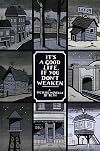
I feel slightly weird giving this book such a low rating when the artwork was really lovely, and parts of the story (much of the ending/revelation of the Kalo plot) were really clever and cool, but literally every single thing the author/protagonist did or said made me hate him more and more.* I genuinely can't tell if the author was self-aware of his own foibles and mocking them in this book, because it seems impossible that a person could actually be like that. At one point, he makes a show more derisive reference to Holden Caulfield as whiny and self-absorbed (and contemplates the possibility that he is Holden-ish), and I laughed out loud because Holden Caulfield is, for a variety of reasons, about a thousand times more sympathetic and interesting than the author/protag.
Anyway, don't read this book, go read a comic by a woman and call your mom or something.
*Spoiler: there is a single exception, which is the note he left for Annie, which I thought was quite sweet. show less
Anyway, don't read this book, go read a comic by a woman and call your mom or something.
*Spoiler: there is a single exception, which is the note he left for Annie, which I thought was quite sweet. show less
Lists
Awards


You May Also Like


Associated Authors
Statistics
- Works
- 49
- Also by
- 67
- Members
- 2,324
- Popularity
- #11,042
- Rating
- 3.9
- Reviews
- 65
- ISBNs
- 120
- Languages
- 8
- Favorited
- 3

