
Satoshi Kon (1963–2010)
Author of OPUS
About the Author
Series
Works by Satoshi Kon
Pakt z morzem 1 copy
L'eredità dei sogni 1 copy
Associated Works
Tagged
Common Knowledge
- Canonical name
- Kon, Satoshi
- Legal name
- 今敏
Kon Satoshi - Birthdate
- 1963-10-12
- Date of death
- 2010-08-24
- Gender
- male
- Education
- Musashino Art University
- Occupations
- film director
animator
manga artist
screenwriter - Awards and honors
- Winsor McCay Award (2020 (posthumously))
- Cause of death
- pancreatic cancer
- Nationality
- Japan
- Birthplace
- Kushiro, Hokkaido, Japan
- Places of residence
- Tokyo, Japan
- Place of death
- Tokyo, Japan
- Associated Place (for map)
- Tokyo, Japan
Members
Reviews
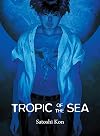
Satoshi Kon is probably best known as a phenomenal writer and director of anime, especially in the West, but he started his career working in manga. Tropic of the Sea, serialized in Young Magazine in 1990, was Kon's first long-form manga. Vertical's release of the English-language edition of Tropic of the Sea in 2013 marks the first, and hopefully not the last, of Kon's manga to be translated into the language. The volume also includes an afterword by Kon excerpted from the ninth anniversary show more edition of Tropic of the Sea published in Japan in 1999. Vertical's edition of Tropic of the Sea is actually based on an even later Japanese release of the manga from 2011. Already a fan of Kon's work in anime, I was thrilled when Tropic of the Sea was licensed. I was even more excited for the manga's release when I saw the absolutely gorgeous and captivating cover. Added to that the manga's focus on legends and the sea and I was sold.
For generations, the small fishing village of Ade has been blessed by calm seas and bountiful catches. This good fortune has been attributed to a promise made between a mermaid and a priest--the village receives protection and in return he will worship the sea and care for the mermaid's egg for sixty years before returning it to begin the cycle anew. But times are changing and very few people believe the old legend to actually be true. Yosuke Yashiro's family is responsible for guarding the egg and its shrine, but his father does the unthinkable and reveals the secret of its existence to the world. The sacred relic has now become a draw for tourists, only the most recent example of the increased commercialization of Ade. Although there have been some good things to come from the village's development, many people are upset with the extent of the changes that have been made and what they may be losing in exchange.
At first the pacing of Tropic of the Sea is fairly leisurely, appropriate for a story that takes place in a quiet seaside village, but as the manga progresses the pace steadily quickens. The role that Ozaki, Ade's most prominent commercial developer, plays as the manga's villain is somewhat predictable--desiring the mermaid's egg for his own purposes while claiming to be interested in the good of humanity--but he does have slightly more to him than first appears. One of the greatest things about Tropic of the Sea from beginning to end is Kon's artwork. A tremendous amount of attention has been give to the backgrounds and landscapes, granting the manga a very real sense of place which is crucial for the story. The illustrations also convey a feeling of mystery and wonder, awe and foreboding, surrounding the mermaids and the sea. Some of the scenes involving water are simply stunning, the realism strikingly rendered. The artwork in Tropic of the Sea is wonderful.
What impressed me the most about Tropic of the Sea, though, is how subtly complex and deceptively simple the narrative is for such a short work. Thematically, Tropic of the Sea has many overlapping layers and the story can be viewed through a number of different lenses. Tropic of the Sea explores generational dissonance, familial disputes, the values of modernity and tradition, the tension between science and religion and skepticism and belief, the human struggle both with and against nature, the power of legends and their impact on reality. (And that's just to name a few of the many elements in play.) Any of these aspects of Tropic of the Sea can be focused on individually but they are all interconnected and influence one another to form an engaging story with a surprising amount of depth. Out of the various conflicts portrayed, no one side is ever entirely in the right. I enjoyed Tropic of the Sea a great deal. It may be an earlier work, but Kon's talent was already evident.
Experiments in Manga show less
For generations, the small fishing village of Ade has been blessed by calm seas and bountiful catches. This good fortune has been attributed to a promise made between a mermaid and a priest--the village receives protection and in return he will worship the sea and care for the mermaid's egg for sixty years before returning it to begin the cycle anew. But times are changing and very few people believe the old legend to actually be true. Yosuke Yashiro's family is responsible for guarding the egg and its shrine, but his father does the unthinkable and reveals the secret of its existence to the world. The sacred relic has now become a draw for tourists, only the most recent example of the increased commercialization of Ade. Although there have been some good things to come from the village's development, many people are upset with the extent of the changes that have been made and what they may be losing in exchange.
At first the pacing of Tropic of the Sea is fairly leisurely, appropriate for a story that takes place in a quiet seaside village, but as the manga progresses the pace steadily quickens. The role that Ozaki, Ade's most prominent commercial developer, plays as the manga's villain is somewhat predictable--desiring the mermaid's egg for his own purposes while claiming to be interested in the good of humanity--but he does have slightly more to him than first appears. One of the greatest things about Tropic of the Sea from beginning to end is Kon's artwork. A tremendous amount of attention has been give to the backgrounds and landscapes, granting the manga a very real sense of place which is crucial for the story. The illustrations also convey a feeling of mystery and wonder, awe and foreboding, surrounding the mermaids and the sea. Some of the scenes involving water are simply stunning, the realism strikingly rendered. The artwork in Tropic of the Sea is wonderful.
What impressed me the most about Tropic of the Sea, though, is how subtly complex and deceptively simple the narrative is for such a short work. Thematically, Tropic of the Sea has many overlapping layers and the story can be viewed through a number of different lenses. Tropic of the Sea explores generational dissonance, familial disputes, the values of modernity and tradition, the tension between science and religion and skepticism and belief, the human struggle both with and against nature, the power of legends and their impact on reality. (And that's just to name a few of the many elements in play.) Any of these aspects of Tropic of the Sea can be focused on individually but they are all interconnected and influence one another to form an engaging story with a surprising amount of depth. Out of the various conflicts portrayed, no one side is ever entirely in the right. I enjoyed Tropic of the Sea a great deal. It may be an earlier work, but Kon's talent was already evident.
Experiments in Manga show less
(讀了中文版)
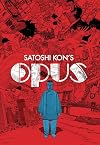
This graphic novel is very on brand for Satoshi Kon, who specialized in the hardcore meta-on-meta-on-meta action that makes up the core of this book. Within you will find reflections on the role of the artist in regards to their work, their responsibility to their characters, story, and even in the “post-script” addendum added to the end of my edition, their responsibility to their readers. I haven’t yet seen all of Satoshi Kon’s films, but I appreciate the focus show more on character in this book - the relationships between them is just as important as the textual experimentation, something that seems to overrun (albeit in a delightful way) Kon’s animated work.
It’s a real loss that this man died so young. Not only do we not get an ending to this book, we also miss out on all the amazing books and movies he could have made if he had lived to old age. show less
This graphic novel is very on brand for Satoshi Kon, who specialized in the hardcore meta-on-meta-on-meta action that makes up the core of this book. Within you will find reflections on the role of the artist in regards to their work, their responsibility to their characters, story, and even in the “post-script” addendum added to the end of my edition, their responsibility to their readers. I haven’t yet seen all of Satoshi Kon’s films, but I appreciate the focus show more on character in this book - the relationships between them is just as important as the textual experimentation, something that seems to overrun (albeit in a delightful way) Kon’s animated work.
It’s a real loss that this man died so young. Not only do we not get an ending to this book, we also miss out on all the amazing books and movies he could have made if he had lived to old age. show less
Satoshi Kon's manga Opus is a brilliant work of fiction. Probably the only work of fiction I've encountered that really gets across the interaction between a writer and their characters in the same approachable way that Opus does is the film Stranger Than Fiction. However, I think that Opus does it better.
In Stranger than Fiction,the lead of the story discovers he's a fictional character, and after eventually meeting his creator, and reading the work that will result in his death, decides show more to accept his fate.
In Opus, by comparison, mangaka Chikara Nagai ends up being confronted by the story's protagonist, Lin, over Nagai's planned ending, where Lin will sacrifice himself to defeat the story's antagonist - Masque. Lin steals the story's conclusion, forcing Nagai and one of the supporting characters from the story, Satoko, to find Lin, and to allow the story to conclude in a fashion that prevents the villain from abusing the fourth wall as well.
Ironically, the story of Opus is also incomplete. The magazine that Opus was serialized in was canceled before Kon could finish the story, and Kon was working on a final chapter for the story for a graphic novel release, but was delayed while working in the anime industry... and was unable to put the finishing touches on that chapter before his death of pancreatic cancer. This makes the final chapter, where Nagai confronts Kon himself over leaving a work half-complete both darkly comic and tragic, as this series ultimately lacks an ending for reasons very much outside of Kon's control.
Anyway, this is a fantastic work of manga, and one that is definitely worth picking up for fans of the medium, of Kon's work, and of literature alike. show less
In Stranger than Fiction,
In Opus, by comparison, mangaka Chikara Nagai ends up being confronted by the story's protagonist, Lin, over Nagai's planned ending, where Lin will sacrifice himself to defeat the story's antagonist - Masque. Lin steals the story's conclusion, forcing Nagai and one of the supporting characters from the story, Satoko, to find Lin, and to allow the story to conclude in a fashion that prevents the villain from abusing the fourth wall as well.
Ironically, the story of Opus is also incomplete. The magazine that Opus was serialized in was canceled before Kon could finish the story, and Kon was working on a final chapter for the story for a graphic novel release, but was delayed while working in the anime industry... and was unable to put the finishing touches on that chapter before his death of pancreatic cancer. This makes the final chapter, where Nagai confronts Kon himself over leaving a work half-complete both darkly comic and tragic, as this series ultimately lacks an ending for reasons very much outside of Kon's control.
Anyway, this is a fantastic work of manga, and one that is definitely worth picking up for fans of the medium, of Kon's work, and of literature alike. show less
I wished for a good story, with well-rounded characters and a surprising ending. Instead, I got an unbelievably well-structured scenario filled with coherent and relevant characters.
This is not the kind of books you can spoil: all his magic lies in the discoveries you make. Overall, this is the story of Lin, Satoko, Nagai, The Mask and... Satoshi Kon himself. I will add that there is one of the best villain I have seen, because he is, more than anything, brutally human. That's it. The show more synopsis has to stop here, so I don't spoil your experience, because yes: that manga is an experience like no other.
While you explore it, take a look at the creativeness of the author. This characteristic is expressed in the way he uses the squares or in the way he plays with the background (especially at the end of the manga), for example. Although the dialogues are pretty conventional and, sometimes, a little predictable, they are essential which, to me, is a very important factor. I hate when the author goes on and on with unimportant details about the world or his century. Here, Kon really tries, it seemed to me, to make the conversations very natural, very human-like. It makes the characters more believable and more complex. One of the most important weakness, to me, lies in the lack of power that is given to Satoko. As a woman, she is constantly overpowered by every man she meets. Still, I love the choices of characters: Kon really manages to make us believe that these individuals have a life behind them (I won't continue on that topic since it is a very key part of the story).
It is very hard to go into details about that book because it is so full of surprises and secrets. I will say it once again: I wished for a good story, I got an amazing piece of art, in many ways. show less
This is not the kind of books you can spoil: all his magic lies in the discoveries you make. Overall, this is the story of Lin, Satoko, Nagai, The Mask and... Satoshi Kon himself. I will add that there is one of the best villain I have seen, because he is, more than anything, brutally human. That's it. The show more synopsis has to stop here, so I don't spoil your experience, because yes: that manga is an experience like no other.
While you explore it, take a look at the creativeness of the author. This characteristic is expressed in the way he uses the squares or in the way he plays with the background (especially at the end of the manga), for example. Although the dialogues are pretty conventional and, sometimes, a little predictable, they are essential which, to me, is a very important factor. I hate when the author goes on and on with unimportant details about the world or his century. Here, Kon really tries, it seemed to me, to make the conversations very natural, very human-like. It makes the characters more believable and more complex. One of the most important weakness, to me, lies in the lack of power that is given to Satoko. As a woman, she is constantly overpowered by every man she meets. Still, I love the choices of characters: Kon really manages to make us believe that these individuals have a life behind them (I won't continue on that topic since it is a very key part of the story).
It is very hard to go into details about that book because it is so full of surprises and secrets. I will say it once again: I wished for a good story, I got an amazing piece of art, in many ways. show less
Lists
Awards


You May Also Like


Associated Authors
Statistics
- Works
- 30
- Also by
- 1
- Members
- 1,238
- Popularity
- #20,730
- Rating
- 4.0
- Reviews
- 22
- ISBNs
- 57
- Languages
- 8
- Favorited
- 3