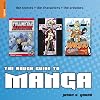
Much as the [b:The Rough Guide to Anime 1|6444768|The Rough Guide to Anime|Simon Richmond|https://d.gr-assets.com/books/1392427131s/6444768.jpg|6634821] was an excellent primer on anime as a medium, so the Rough Guide to Manga is to manga. The book does an excellent job giving a brief history of manga, both in Japan and in the US, and giving a good rundown of useful terminology for the beginner before getting into the "Manga Canon".
Further, the 50 volumes in the Manga Canon are books that I can't really argue with, covering books both recent and past, and books which I'd consider significant to the medium, whether through their influence on other works, or due to their popularity. If I was to give one criticism to the canon, in the Rough Guide to Anime there were more than a few works of anime that I had never heard of before, that the book introduced me to, notably "Night on the Galactic Railroad". The Rough Guide to Manga doesn't have as much of that.
Were it not for the fact that Penguin Books has discontinued their Rough Guides series and is going to let the books go out of print, I'd consider this the perfect book to give to someone who was new to manga and was looking for a place to start. As it is, this book is still a good gift to give, and worth recommending.
EDIT (7/17/2015): I've recently re-read the book, and while the manga canon and the history of manga sections are still incredibly useful, there are some portions that have become unfortunately (and in one show more case, fortunately) dated.
The good news - As of this writing, the manga "Rose of Versailles" has been licensed for an English language release!
The bad news - CPM Manga, ADV Manga, and Del Rey Manga have stopped operations. Some of Del Rey's stuff has been picked up by Kodansha USA, but not all of it. Further, Anime Vice has basically become just a YouTube channel, with Gia Manry having started working in the industry instead of covering it, and Tom Pinchuck taking over hosting duties for the channel. Finally, the magazine Protoculture Addicts has stopped publication. show less
Further, the 50 volumes in the Manga Canon are books that I can't really argue with, covering books both recent and past, and books which I'd consider significant to the medium, whether through their influence on other works, or due to their popularity. If I was to give one criticism to the canon, in the Rough Guide to Anime there were more than a few works of anime that I had never heard of before, that the book introduced me to, notably "Night on the Galactic Railroad". The Rough Guide to Manga doesn't have as much of that.
Were it not for the fact that Penguin Books has discontinued their Rough Guides series and is going to let the books go out of print, I'd consider this the perfect book to give to someone who was new to manga and was looking for a place to start. As it is, this book is still a good gift to give, and worth recommending.
EDIT (7/17/2015): I've recently re-read the book, and while the manga canon and the history of manga sections are still incredibly useful, there are some portions that have become unfortunately (and in one show more case, fortunately) dated.
The good news - As of this writing, the manga "Rose of Versailles" has been licensed for an English language release!
The bad news - CPM Manga, ADV Manga, and Del Rey Manga have stopped operations. Some of Del Rey's stuff has been picked up by Kodansha USA, but not all of it. Further, Anime Vice has basically become just a YouTube channel, with Gia Manry having started working in the industry instead of covering it, and Tom Pinchuck taking over hosting duties for the channel. Finally, the magazine Protoculture Addicts has stopped publication. show less
Spam Nation: The Inside Story of Organized Cybercrime-from Global Epidemic to Your Front Door by Brian Krebs
I've always found the economy behind spam kind of interesting, and this book does an interesting job at shedding light on how spam works, both in terms of who's doing it and how, and also in terms of who is buying and why.
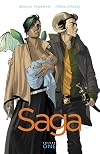
Really fun and interesting mix of science fiction and fantasy... and it also has a lot of smutty content, so this definitely isn't for the prudish. The narrative moves really fast, the characters are very fleshed out, and in particular the relationship between the two leads feels very real. Some of the designs of the other characters (particularly the TV-headed) robots, feels odd for aliens which are technically from a Science Fiction world, yet design wise they scientifically shouldn't work. This isn't a big problem (I was able to roll with FLCL), but it made the tone a little weird. Not bad weird, just weird.

I'm really not sure what to say about this book, as it's gorram crazy in a lot of fun ways. I've been meaning to read it for a while, I'm glad I read it. Also, I'll say this is certainly weird.
A very interestingly done time travel story, and Colin Baker's new companion in this story is, quite possibly, one of my favorite Doctor Who companions of all time.
A very nicely done radio drama adaptation of Le Carre's book, with a few plot holes that the film left un-addressed repaired.
I'll have a review of this going on Bureau 42 in July. In short, the manga is a good adaptation of the light novel (and anime), though the manga uses more super-deformed character designs in comedic moments than the show did. Generally, the manga feels like it plays up the comedy a little bit more than the show, though the dramatic beats *are* there.
This is certainly a mixed bag, when it comes to the storylines. On the one hand, the first Annual, with the Flyers, is very well done, as is the whole storyline with The Wheel. On the other hand, the clear "Seven Samurai"/"Magnificent Seven" storyline that kicks off the the comic's first original story after the events of A New Hope is a bit much.
There are some recipes in this cookbook that fit the criteria of Simple, Delicious, and Affordable.
Almost every chapter features multiple dishes that involve expensive cuts of meat like filet mignon, or expensive fish like salmon. Also, while the book is generally good about giving pictures of how to perform some of the more uncommon culinary techniques (like butterflying), the fact of the matter is that I wouldn't have someone try a recipe (or even look at a recipe) that involves butterflying until they'd figured out cutting, chopping, dicing and mincing. Butterflying requires dexterity and a really sharp knife, and if you don't have those (and I'd frankly expect most people to not have those), then it's not something your average reader (who Jamie claims he's shooting for) should be trying to do.
That said, the very first chapter of the book, where Jamie gives a list of (to use Alton Brown's terminology) useful and necessary hardware for your kitchen is incredibly useful and valuable. With the exception of the mortar and pestle, with this assortment of equipment, you have absolutely everything you need to learn to cook. The cupboard list is okay too, though I'd probably recommend dropping the Marmite or Vegemite for peanut butter.
Almost every chapter features multiple dishes that involve expensive cuts of meat like filet mignon, or expensive fish like salmon. Also, while the book is generally good about giving pictures of how to perform some of the more uncommon culinary techniques (like butterflying), the fact of the matter is that I wouldn't have someone try a recipe (or even look at a recipe) that involves butterflying until they'd figured out cutting, chopping, dicing and mincing. Butterflying requires dexterity and a really sharp knife, and if you don't have those (and I'd frankly expect most people to not have those), then it's not something your average reader (who Jamie claims he's shooting for) should be trying to do.
That said, the very first chapter of the book, where Jamie gives a list of (to use Alton Brown's terminology) useful and necessary hardware for your kitchen is incredibly useful and valuable. With the exception of the mortar and pestle, with this assortment of equipment, you have absolutely everything you need to learn to cook. The cupboard list is okay too, though I'd probably recommend dropping the Marmite or Vegemite for peanut butter.
So, we now know who the kid in the mask is, and whether or not he is The Friend. Specifically, the kid in the mask is Sadakiyo, and no, he's not the friend - but he's seen The Friend's face. So, the question is, who is The Friend.
This volume gives considerable more development for Eiji Nizuma, changing him from a villainous looney toon to a character who is more likeable, though his "request" makes for an odd plot thread. Additionally, this volume provides more background on the life and role of an Assistant then I knew about in the past.
In short, assistants in Anime & Manga are comparable to inkers, letterers, and (to a certain degree) colorists in western comics. Their importance to the end result is significant enough that I kind of wish assistants got credit in the tankoubons.
In short, assistants in Anime & Manga are comparable to inkers, letterers, and (to a certain degree) colorists in western comics. Their importance to the end result is significant enough that I kind of wish assistants got credit in the tankoubons.
There's a lot of overlap here with the other America's Test Kitchen cookbook I've read. Hopefully when the Cook's illustrated cookbook comes out, it'll have a bigger selection of new recipes. Still, the recipes that are here are certainly quality recipes, and I'd definitely consider the book to be a worthwhile purchase.
Having the members of the Mugai-Ryu be just as bad, if not worse, than some of the members of the Ittou-ryuu does make for an interesting way of setting up shades of grey in the story, particularly due to how utterly reprehensible some of the members if the Ittou-Ryuu have been in previous volumes in the series.
Man, Naoki Urasawa keeps finding new shoes to drop on the reader. I feel safe saying that he writes suspense fiction on par with any big-name writer of suspense fiction on the New York Times Best-Seller List.
This is considered one of the best Iron Man arcs for a very good reason. I'm glad I finally got around to reading this.
I started reading this for various reasons, partly because I've been meaning to read this for a while, and partly because the manga came up during the J-Drama series "Blue Blazes". I really enjoyed the manga, in part because while the story is somewhat serialized (in that there is continuity), it really its in with the "slice of life" genre a lot more than some of the other manga that have read that have been stuck into that genre (like K-On, like Sound of the Sky, etc.)
It's a portion of the ordinary lives of ordinary people, but rather than trying to be "literary" and putting the focus on lives of quiet desperation, as so many more pseudo-serious slice of life dramas and dramedies do, this manga gives these characters feel real without feeling boring or without moving things into the territory of the deliberately awkward family melodrama. Also, I'm pleased by the complete and total lack of (as of this volume) terminally ill people.
It's a portion of the ordinary lives of ordinary people, but rather than trying to be "literary" and putting the focus on lives of quiet desperation, as so many more pseudo-serious slice of life dramas and dramedies do, this manga gives these characters feel real without feeling boring or without moving things into the territory of the deliberately awkward family melodrama. Also, I'm pleased by the complete and total lack of (as of this volume) terminally ill people.
Interesting story, which ends on a nice cliffhanger, and with a well written group of adventurers (with [a:John Rogers|264571|John Rogers|https://s.gr-assets.com/assets/nophoto/user/m_50x66-e89fc14c32a41c0eb4298dfafe929b65.png], who Blue Beetle, along with being the show-runner for Leverage).

Japan Sinks is sort of the literary equivalent of the big disaster movie, like The Day After Tomorrow, or 2012. The cause of the catastrophe is a force of nature, and the story focuses primarily on how humanity responds to the destruction, in this case the literal sinking of Japan. In particular, the focus is somewhat on how Japan would respond to a catastrophe like this one, and also how the international community would respond, considering Japan's cultural xenophobia and how spectacularly Japan had managed to PO large portions of the international community in the past.
My complaint with the book is due to its length, it never really spends enough time on any of those points - the personal tragedies, the societal response, or the diplomatic response.
My complaint with the book is due to its length, it never really spends enough time on any of those points - the personal tragedies, the societal response, or the diplomatic response.
This is an interesting manga, with some interesting world building. Though, I think this volume plays the fujoshi pandering a little too hard.
If I had two complaints about the IDW D&D comic that John Rogers wrote, they are that Tisha Swornheart's outfit is a little too cheese-cakey (primarily with the top - I can cut the dress a little slack because it has to accommodate the tail), and that there isn't more of it. The dynamic between the characters in the book is great, and Rogers makes the whole Points of Light idea that 4th edition was built around work incredibly well in the context of telling a story through a comic book, as opposed to an RPG campaign.
This was a really good volume with some hilarious stories - Hayate having to stay outside the mansion for 3 days (and ending up broke again), Hayate bringing home a kitten and Tama (Nagi's pet tiger) getting jealous - just a big pot of comedy gold.
This book reminded me a lot of Larry Gonick's "Cartoon Guide To..." books, like "The Cartoon Guide to Computers". It does a pretty good job of explaining some important concepts in an entertaining fashion. That said, there is some important information that the book omits, and some significant geographic biases that reflect the book's applicability.
The book has a metropolitan geographic bias going with it. There are pieces of advice that are pretty much designed to work great if you're living in a city or suburb with a well organized mass transit system where the busses don't turn into pumpkins, everywhere you need to go is convenient to mass transit, and the climate is conducive to walking or biking. If you live in a suburban community that doesn't have mass transit, or the mass transit turns into pumpkins early in the morning/late in the evening/in the middle of the day, you're out of luck. Near as I can tell, the book's advice if you're stuck in those circumstances is "move" - which is not what I'd consider useful - especially if the problem isn't limited to your suburb (as I gather this a problem that is not uncommon in the southwest, midwest, and south of the US, as well as some parts of the Pacific Northwest).
All of this gives the book what I'd call an anti-car bias. While cars are certainly spendy, but one of the recurring refrains in the book is that you should get rid of your car, which, related to the above geographic concerns, I'd consider not to be valuable show more advice in most cases in the US. This is perhaps aggravated by the fact that while this book is at least willing to give lip service to the idea that you might need a car, they do not have any material in the book on how to maintain your car for less - like getting Haynes guides from the local library, getting parts from U-Pull-It places or online. If you're on a tight budget, being able to do maintenance on your own car is incredibly useful, and not having any discussion on doing this, is almost absurd. For that matter, you could probably put some good basic bicycle maintenance advice in there as well (lubricating the bike, replacing chains, etc.)
That said, there is some definitely useful stuff in here. The entertainment chapter is pretty well done, though I think that the chapter really doesn't stress enough how utterly important and useful libraries are when you're on a limited income. I generally liked the cooking section, though having a discussion on farmer's markets would be nice as well. Also, considering the cost involved, the urban agriculture portion of the book was somewhat iffy. In particular, the portion about raising farm animals felt like something that could, and should have been cut entirely, particularly since that space could probably have been used for something else. show less
The book has a metropolitan geographic bias going with it. There are pieces of advice that are pretty much designed to work great if you're living in a city or suburb with a well organized mass transit system where the busses don't turn into pumpkins, everywhere you need to go is convenient to mass transit, and the climate is conducive to walking or biking. If you live in a suburban community that doesn't have mass transit, or the mass transit turns into pumpkins early in the morning/late in the evening/in the middle of the day, you're out of luck. Near as I can tell, the book's advice if you're stuck in those circumstances is "move" - which is not what I'd consider useful - especially if the problem isn't limited to your suburb (as I gather this a problem that is not uncommon in the southwest, midwest, and south of the US, as well as some parts of the Pacific Northwest).
All of this gives the book what I'd call an anti-car bias. While cars are certainly spendy, but one of the recurring refrains in the book is that you should get rid of your car, which, related to the above geographic concerns, I'd consider not to be valuable show more advice in most cases in the US. This is perhaps aggravated by the fact that while this book is at least willing to give lip service to the idea that you might need a car, they do not have any material in the book on how to maintain your car for less - like getting Haynes guides from the local library, getting parts from U-Pull-It places or online. If you're on a tight budget, being able to do maintenance on your own car is incredibly useful, and not having any discussion on doing this, is almost absurd. For that matter, you could probably put some good basic bicycle maintenance advice in there as well (lubricating the bike, replacing chains, etc.)
That said, there is some definitely useful stuff in here. The entertainment chapter is pretty well done, though I think that the chapter really doesn't stress enough how utterly important and useful libraries are when you're on a limited income. I generally liked the cooking section, though having a discussion on farmer's markets would be nice as well. Also, considering the cost involved, the urban agriculture portion of the book was somewhat iffy. In particular, the portion about raising farm animals felt like something that could, and should have been cut entirely, particularly since that space could probably have been used for something else. show less
I'd say that if I had had the money to register for the Hugo Awards this year, I would have had a dead heat between this book and Ancillary Justice. Both books are impressive SF investigative thrillers, and both have gripping stories with interesting characters and equally interesting ideas. In the case of Neptune's Brood, the idea is basically building a Space Opera thriller around the old investigative axiom of "Follow the money," and it works incredibly well. It's got adventure, pirates, mermaids, zombies, and transhumanism, all wrapped up in one glorious adventure.
I'm almost glad that I didn't have the ability to vote for the Hugo Awards this year, as I wouldn't know which one to choose.
I'm almost glad that I didn't have the ability to vote for the Hugo Awards this year, as I wouldn't know which one to choose.
I really enjoyed this book. It's definitely something you have to take as it is though. There were a few moments where I mentally went "wait a minute, you're downplaying all the other companies who made RPGs", until I basically remembered that the focus of the book is on Dungeons & Dragons. I'm still definitely glad I read it.
I'm not the biggest fan of Onizuka's response to the student's bullying. Yes, the perpetrators needed to be taken down a peg, but I wouldn't consider that to be the best way to do it.
Also, I do kind of wish that Onizuka knew more about Social Studies.
Also, I do kind of wish that Onizuka knew more about Social Studies.
Good conclusion to this adaptation of the first book. From what I understand, the second book is being adapted in a separated series, which I'm definitely going to read at some point in the future.
I'm also disappointed that Issac and Miria didn't show up.
This volume gets to probably one of my favorite parts of the story, both in the TV show and here in the manga (I haven't read the novel yet) - the confrontation in downtown Ikebukuro. This is really the point in the story where Mikado really comes into his own as a character, and shows his hidden depths that show he isn't your typical non-committal Light Novel protagonist.
Dungeons & Dragons: Forgotten Realms Classics Omnibus Volume 1 (D&D Forgotten Realms Classics Omnibus) by Jeff Grubb
Interesting start to the series. In particular, I think the first 12 issues handle the "big names" among Forgotten Realms characters (Elminster, Alias), fairly well. I'm looking forward to the next volume. Expect a longer review on Bureau42.com
I kind of wish, in terms of the narrative, Onizuka had gotten his certification and taught at the high school he'd substituted at. We spent a bit of time in the first volume focusing on that school, and I would like to have spent more time there. As it is, putting the rest of the series in a private school and having Onizuka live there means that, hopefully, Fujisawa will be able to make the school as much of a character as some of its students.
I've found the best Urban Fantasy novels are also great detective novels, except instead of ballistics, DNA testing, and the other tools of the science detectives trade that Sherlock Holmes & the like bust out, there's magic. The Peter Grant novels succeed at this fantastically. Aaronovitch creates excellent characters and riveting mysteries that really pull you in.