
Mamoru Oshii
Author of Ghost in the Shell [1995 film]
About the Author
Image credit: Mamoru Oshii at Lucca Comics & Games 2015 / Photo by Niccolò Caranti
Works by Mamoru Oshii
Patlabor Ultimate [Blu-ray] 5 copies
Assault Girls 3 copies
Patlabor 1&2 2 copies
Mamoru Oshii's Talking Head 2 copies
Assault Girls 1 copy
Angel's eggs (1985) 1 copy
Patlabor TV: Collection 4 1 copy
Associated Works
Ten Billion Days and One Hundred Billion Nights (1967) — Commentary, some editions — 163 copies, 10 reviews
Tagged
Common Knowledge
- Canonical name
- Oshii, Mamoru
- Legal name
- 押井守
- Birthdate
- 1951-08-08
- Gender
- male
- Occupations
- film director
television director
novelist
mangaka
screenwriter - Nationality
- Japan
- Associated Place (for map)
- Japan
Members
Reviews

Well this one was very interesting read. Gotta say that Japanese authors seem to be more in touch with realities of politics and approaches to security than it is case with what you might call Western comics that tend to go into what I consider preaching/condescending approach that borders either on utopia or grim dark future.
I came across Kerberos saga through South Korean remake Illang. After finding out it was based on Japanese manga/radio-plays and series of movies I wanted to know more. show more And then I came across volume 1 translated to English by Dark Horse (very hard to find btw).
World setting, although set in future, is like a cross-over between early 1930's mixed with the futuristic man-carrying armor and ever present MG42 machine guns used as a an automatic rifles, heck even armored cars are basically (at least visually) copies of German WW2 Sd.Kfz wheeled vehicle versions and that helicopter that is main topic in one of chapters looks very much like weird hybrid of Stuka JU87, Cobra attack helicopter and MV22 Osprey.
So when you look at it, setting is definitely alternative history.
Story is something that is prominent in Japanese more adult manga - public security and militarization of the police. Same as conflict between Section 9 and rest of security forces in Ghost in the Shell and same as conflict between Deunan and her team and rest of services in Appleseed here we have following situation: due to ever increasing domestic terrorism controlled by a very capable and unscrupulous organization called Sect (women, children .... they are all weapons for them) Tokyo Capitol Police decides to create a counter force - so called Panzers (since they use body armor) organized under the division called Kerberos. Kerberos is different from all others because they are highly militarized (as a matter of fact they are army in everything but name) and they are very distinct from their colleagues serving in standard police outfits.
Kerberos acts like for example Brazilian BOPE, meaning they are not your standard policemen/policewomen - they are trained and equipped for war and as such they enter the area and execute their action. Acting with their own air and vehicle support together with intelligence service arm they have become thorn in a side of other security services. And so as we watch the developments of Kerberos' actions (chapters are standalone stories, describing internal and external conflicts, how member of the unit cope with execution and aftermath of their tasks) we also witness ruthless conflict and killings between the security services themselves as they try to keep their position in the overall security apparatus where Kerberos is prominent because they are organized as a true all round military force.
Very interesting story. Unfortunately Volume 1 ends on a high note (bloody cliffhangers :)) and I truly hope Volume 2 gets translated to English at some point in the future.
Art is excellent, it reminded me of AKIRA and GITS. Level of details on some of the panels is truly amazing, especially riots in the first chapter. It goes without saying that level of details on technical side is also great.
For fans of thrillers and secret services highly recommended. show less
I came across Kerberos saga through South Korean remake Illang. After finding out it was based on Japanese manga/radio-plays and series of movies I wanted to know more. show more And then I came across volume 1 translated to English by Dark Horse (very hard to find btw).
World setting, although set in future, is like a cross-over between early 1930's mixed with the futuristic man-carrying armor and ever present MG42 machine guns used as a an automatic rifles, heck even armored cars are basically (at least visually) copies of German WW2 Sd.Kfz wheeled vehicle versions and that helicopter that is main topic in one of chapters looks very much like weird hybrid of Stuka JU87, Cobra attack helicopter and MV22 Osprey.
So when you look at it, setting is definitely alternative history.
Story is something that is prominent in Japanese more adult manga - public security and militarization of the police. Same as conflict between Section 9 and rest of security forces in Ghost in the Shell and same as conflict between Deunan and her team and rest of services in Appleseed here we have following situation: due to ever increasing domestic terrorism controlled by a very capable and unscrupulous organization called Sect (women, children .... they are all weapons for them) Tokyo Capitol Police decides to create a counter force - so called Panzers (since they use body armor) organized under the division called Kerberos. Kerberos is different from all others because they are highly militarized (as a matter of fact they are army in everything but name) and they are very distinct from their colleagues serving in standard police outfits.
Kerberos acts like for example Brazilian BOPE, meaning they are not your standard policemen/policewomen - they are trained and equipped for war and as such they enter the area and execute their action. Acting with their own air and vehicle support together with intelligence service arm they have become thorn in a side of other security services. And so as we watch the developments of Kerberos' actions (chapters are standalone stories, describing internal and external conflicts, how member of the unit cope with execution and aftermath of their tasks) we also witness ruthless conflict and killings between the security services themselves as they try to keep their position in the overall security apparatus where Kerberos is prominent because they are organized as a true all round military force.
Very interesting story. Unfortunately Volume 1 ends on a high note (bloody cliffhangers :)) and I truly hope Volume 2 gets translated to English at some point in the future.
Art is excellent, it reminded me of AKIRA and GITS. Level of details on some of the panels is truly amazing, especially riots in the first chapter. It goes without saying that level of details on technical side is also great.
For fans of thrillers and secret services highly recommended. show less

Okay, let's see if I can come up with a halfway decent description for this... This takes place on a world in which eight tribes, collectively known as the Garm, were created by the goddess Danaan. For unknown reasons, Danaan abandoned her creations, who then proceeded to fight against each other. In the movie's present, only three tribes still exist: Columba (who rules over the skies), Briga (who rules over the land), and Kumtak (barely managing to survive as slaves among the Briga).
Wydd is show more a Kumtak elder who finds Nascien, the last surviving Druid, and becomes determined to go to the land of the Druids and learn why the Garm exist and why Danaan left them. He, Nascien, and a Gula (a sacred dog that looks like a basset hound) attempt to escape, resulting in a battle between Briga and Columba forces. Two surviving soldiers, a Briga named Skellig and a Columba named Khara, reluctantly agree to help Wydd and Nascien in their quest.
Sometimes I buy movies that I'm almost certain won't be good because some detail makes me want to see them. This was one of those movies. I happened to see that it was directed by Mamoru Oshii (the director of Ghost in the Shell), and so I figured why not?
I spent a good chunk of this movie saying to myself, "I have no idea what's going on." Things happened well before you had any of the context necessary to understand what was going on or why, and there were a lot of things that were just...never explained. I wouldn't have made it through the first half of the movie if it hadn't been for the occasional on-screen text telling me which tribe I was looking at, and I still couldn't tell you who some of the characters were or what their purpose was. And if you're the sort of person who wants to grow attached to movie characters, this would be an especially disappointing movie - there was some effort made to show "relationship development" (Khara once tried to have a conversation with Skellig about his first memory), but it wasn't particularly effective or convincing.
If you're seen Mamoru Oshii's Ghost in the Shell before, hoo boy will parts of this movie be familiar, though. The music, technology, battles, and aesthetics are all very Ghost in the Shell. The opening credits were "woman floating in stuff, with cables attached to her" (but very indistinct, so although I think there was nudity you didn't actually see anything), Khara seemed to be inspired by Motoko Kusanagai, and Oshii even managed to fit a basset hound into the story.
The Ghost in the Shell franchise can be prone to philosophizing at its audience, but it generally at least looks and sounds good while it's doing it. For that reason, I suspect I'd have liked this a bit better if it had been an anime movie. Yes, I know the bulk of the movie essentially counted as animation (CGI). It was also often blurry and indistinct, I'm guessing so that all the CGI would blend better with the live action elements. The next movie I watch is going to look amazingly crisp by comparison.
I thought the beetle-based aircraft looked and sounded good, and most of the cast sounded so good they could've easily been the dub cast for an anime version of this. That said, the story was disjointed and overly complex, especially considering how little actually happened. And if you do manage to get invested in what's going on, the very "to be continued" ending will likely frustrate the heck out of you.
It wasn't the worst thing I've ever seen, but that's not really saying much. And it certainly did feel very much like a Mamoru Oshii movie, warts and all. I forgot, until I started watching this, that I tend to appreciate Oshii's movies more for their aesthetics than their characters and stories.
Extras:
A trailer for the movie.
(Original review posted on A Library Girl's Familiar Diversions.) show less
Wydd is show more a Kumtak elder who finds Nascien, the last surviving Druid, and becomes determined to go to the land of the Druids and learn why the Garm exist and why Danaan left them. He, Nascien, and a Gula (a sacred dog that looks like a basset hound) attempt to escape, resulting in a battle between Briga and Columba forces. Two surviving soldiers, a Briga named Skellig and a Columba named Khara, reluctantly agree to help Wydd and Nascien in their quest.
Sometimes I buy movies that I'm almost certain won't be good because some detail makes me want to see them. This was one of those movies. I happened to see that it was directed by Mamoru Oshii (the director of Ghost in the Shell), and so I figured why not?
I spent a good chunk of this movie saying to myself, "I have no idea what's going on." Things happened well before you had any of the context necessary to understand what was going on or why, and there were a lot of things that were just...never explained. I wouldn't have made it through the first half of the movie if it hadn't been for the occasional on-screen text telling me which tribe I was looking at, and I still couldn't tell you who some of the characters were or what their purpose was. And if you're the sort of person who wants to grow attached to movie characters, this would be an especially disappointing movie - there was some effort made to show "relationship development" (Khara once tried to have a conversation with Skellig about his first memory), but it wasn't particularly effective or convincing.
If you're seen Mamoru Oshii's Ghost in the Shell before, hoo boy will parts of this movie be familiar, though. The music, technology, battles, and aesthetics are all very Ghost in the Shell. The opening credits were "woman floating in stuff, with cables attached to her" (but very indistinct, so although I think there was nudity you didn't actually see anything), Khara seemed to be inspired by Motoko Kusanagai, and Oshii even managed to fit a basset hound into the story.
The Ghost in the Shell franchise can be prone to philosophizing at its audience, but it generally at least looks and sounds good while it's doing it. For that reason, I suspect I'd have liked this a bit better if it had been an anime movie. Yes, I know the bulk of the movie essentially counted as animation (CGI). It was also often blurry and indistinct, I'm guessing so that all the CGI would blend better with the live action elements. The next movie I watch is going to look amazingly crisp by comparison.
I thought the beetle-based aircraft looked and sounded good, and most of the cast sounded so good they could've easily been the dub cast for an anime version of this. That said, the story was disjointed and overly complex, especially considering how little actually happened. And if you do manage to get invested in what's going on, the very "to be continued" ending will likely frustrate the heck out of you.
It wasn't the worst thing I've ever seen, but that's not really saying much. And it certainly did feel very much like a Mamoru Oshii movie, warts and all. I forgot, until I started watching this, that I tend to appreciate Oshii's movies more for their aesthetics than their characters and stories.
Extras:
A trailer for the movie.
(Original review posted on A Library Girl's Familiar Diversions.) show less
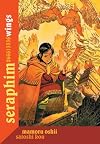
3.5
Philosophical.
Political.
Pretentious.
These are the three "P"'s we've come to expect from anything Oshi-spawned – and this book doesn't disappoint. It's a complex piece of science fiction layered with religious symbolism and a convoluted plot. All the things that tend to drive me nuts. However, it was very enjoyable. Though, frankly, it's only in the last third that it really starts to get going, which is a shame since the story doesn't actually conclude. This is a majorly posthumus work show more - I mean, this thing is way less than even half finished. Originally, I assumed that the project didn't go forward because of Satoshi's death, but it turns out this was written way back in the 90s! And all this time the project has remained unfinished due to creative differences and conflict over ownership.
(sigh) Why can't we all just get along? (sigh)
And it's a real shame, because it's only in that last bit you really start to see Satoshi's influence come through in the writing (weird dream sequences).
The concept is really interesting, but the story doesn't really get going until the end of the book. Part of the reason it also takes a while to gain traction is the characters. Visually, you can differentiate between them, but in terms of what they say there's really very little to provide them with any real development. I'm confident though that this could have been a real corker had it been finished.
Well worth the read if you're a fan of either Oshi or Kon, but don't expect to be blown away. The story ends abruptly and without any form of conclusion (unlike Opus), there is however a nice little article/mini-analysis at the back.
Story – 3
Art – 4
Article/Analysis – 3.5 show less
Philosophical.
Political.
Pretentious.
These are the three "P"'s we've come to expect from anything Oshi-spawned – and this book doesn't disappoint. It's a complex piece of science fiction layered with religious symbolism and a convoluted plot. All the things that tend to drive me nuts. However, it was very enjoyable. Though, frankly, it's only in the last third that it really starts to get going, which is a shame since the story doesn't actually conclude. This is a majorly posthumus work show more - I mean, this thing is way less than even half finished. Originally, I assumed that the project didn't go forward because of Satoshi's death, but it turns out this was written way back in the 90s! And all this time the project has remained unfinished due to creative differences and conflict over ownership.
(sigh) Why can't we all just get along? (sigh)
And it's a real shame, because it's only in that last bit you really start to see Satoshi's influence come through in the writing (weird dream sequences).
The concept is really interesting, but the story doesn't really get going until the end of the book. Part of the reason it also takes a while to gain traction is the characters. Visually, you can differentiate between them, but in terms of what they say there's really very little to provide them with any real development. I'm confident though that this could have been a real corker had it been finished.
Well worth the read if you're a fan of either Oshi or Kon, but don't expect to be blown away. The story ends abruptly and without any form of conclusion (unlike Opus), there is however a nice little article/mini-analysis at the back.
Story – 3
Art – 4
Article/Analysis – 3.5 show less
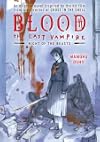
There's a lot in this book. A lot of talking. Lots and lots of talking. I think that somewhere the message gets lost. We all have the chance to evolve into beasts.
Awards


You May Also Like


Associated Authors
Statistics
- Works
- 52
- Also by
- 2
- Members
- 879
- Popularity
- #29,122
- Rating
- 3.7
- Reviews
- 11
- ISBNs
- 50
- Languages
- 5
- Favorited
- 1