

Hayao Miyazaki
Author of Spirited Away [2001 film]
About the Author
Image credit: Thomas Schulz
Series
Works by Hayao Miyazaki
Kiki's Delivery Service [1989 film] (1989) — Director; Screenwriter; Producer — 565 copies, 5 reviews
Nausicaä of the Valley of the Wind [1984 film] (1984) — Director; Screenwriter — 447 copies, 2 reviews
My Neighbor Totoro Film Comic: All-in-One Edition (My Neighbor Totoro: All-in-One Edition) (2024) 41 copies, 1 review
Kiki's Delivery Service Film Comic, Vol. 1 (1) (Kiki’s Delivery Service Film Comics) (1989) 35 copies, 1 review
Kiki's Delivery Service Film Comic, Vol. 3 (3) (Kiki’s Delivery Service Film Comics) (1989) 25 copies
Kiki's Delivery Service Film Comics, Volume 2 (Kiki's Delivery Service Film Comics) (1989) 23 copies
Kiki's Delivery Service Film Comic, Vol. 4 (4) (Kiki’s Delivery Service Film Comics) (1989) 18 copies
My Neighbor Totoro - Hayao Miyazaki work (This Is animation) (2008) ISBN: 4091038123 [Japanese Import] (1988) 7 copies
Nausicaä aus dem Tal der Winde: Doppelband-Edition 1: Epische Umwelt-Saga vom Studio-Ghibli-Gründer über eine mutige Krieger-Prinzessin (2025) 7 copies
Nausicaä aus dem Tal der Winde: Doppelband-Edition 2: Epische Umwelt-Saga vom Studio-Ghibli-Gründer über eine mutige Krieger-Prinzessin. (2025) 6 copies
The Art of Naruto Uzumaki 6 copies
Nausicaä aus dem Tal der Winde: Doppelband-Edition 3: Epische Umwelt-Saga vom Studio-Ghibli-Gründer über eine mutige Krieger-Prinzessin (2025) 6 copies
Lupin The 3rd : Castle of Cagliostro, The - Complete Storyboards by Hayao Miyazaki Studio Ghibli (2003) 5 copies
Whisper of the Heart (Mimi o Sumaseba) Hayao Miyazaki / Studio Ghibli Complete Storyboards Book [Japanese Edition] (2001) 4 copies
Nausicaä do Vale do Vento Vol. 1 4 copies
Nausicaa nº 01 4 copies
崖の上のポニョ 3 copies
シネマ・コミック12 千と千尋の神隠し (文春ジブリ文庫) 2 copies
Mein Nachbar Totoro 2 copies
Kikis kleiner Lieferservice 2 copies
Nausicaä från Vindarnas dal 3 2 copies
Manga Album 14 - Nausicaa 1 copy
Naušika z Větrného údolí. 1 1 copy
風之谷4 1 copy
Manga Album 9 - Nausicaa 1 copy
Manga Album 2 - Nausicaa 1 copy
Manga Album 3 - Nausicaa 1 copy
Manga Album 4 - Nausicaa 1 copy
Manga Album 8 - Nausicaa 1 copy
Manga Album 7 - Nausicaa 1 copy
Manga Album 6 - Nausicaa 1 copy
Manga Album 5 - Nausicaa 1 copy
Manga Album 1 - Nausicaa 1 copy
風之谷5 1 copy
アルプスの少女ハイジ 1 copy
コロの大さんぽ 1 copy
千と千尋の神隠し(Vol.3) 1 copy
千と千尋の神隠し(Vol.2) 1 copy
千と千尋の神隠し 1 copy
天空之城 1 copy
シネマ・コミック10 もののけ姫 (文春ジブリ文庫) 1 copy
Totoro: hang xom cua toi 1 copy
Le Château ambulant DVD 1 copy
Miyazaki Moebius. 2 artistes dont les dessins prennent vie — Author — 1 copy
Spirited Away Vol. 3 1 copy
Le Garçon et Le Héron [DVD] 1 copy
Nausicaä 1 copy
Nausicaä Anno II Numero 16 1 copy
Nausicaä Anno II Numero 17 1 copy
Nausicaä Anno III Numero 22 1 copy
Nausicaä Anno III Numero 19 1 copy
Nausicaä Anno III Numero 20 1 copy
Nausicaä Anno III Numero 21 1 copy
Nausicaä Anno III Numero 23 1 copy
Nausicaä vol. 6 1 copy
Nausicaä Anno II Numero 14 1 copy
Sherlock Hound - Case File 1 1 copy
Totoro 1 copy
中年は荒野を目指すぞ 1 copy
Nausicaä Anno II Numero 15 1 copy
Nausicaä Anno II Numero 13 1 copy
Nausicaä Anno I Numero 4 1 copy
Nausicaä Anno I Numero 6 1 copy
Nausicaä Anno I Numero 5 1 copy
Nausicaä Anno I Numero 3 1 copy
Nausicaä Anno II Numero 12 1 copy
Nausicaä Anno I Numero 2 1 copy
Nausicaä Anno 1 Numero 1 1 copy
Nausicaä Anno II Numero 18 1 copy
Nausicaä Anno II Numero 7 1 copy
Nausicaä Anno II Numero 8 1 copy
Nausicaä Anno II Numero 9 1 copy
Nausicaä Anno II Numero 10 1 copy
Nausicaä Anno II Numero 11 1 copy
Starting Point (1979-1996) 1 copy
Chuu Zumou 1 copy
Kimitachi ha dou Ikiru ka 1 copy
HOWLS MOVING CASTLE 1 copy
Conan, el niño del futuro 1 copy
Yuki’s Sun 1 copy
Le garçon et le héron [film] 1 copy
Warriors of the Wind 1 copy
Panda! Go Panda! 1 copy
Associated Works
Joe Hisaishi: A Symphonic Celebration - Music of the Studio Ghibli Films of Hayao Miyazaki (2023) — Cover artist — 3 copies
Tagged
Common Knowledge
- Canonical name
- Miyazaki, Hayao
- Legal name
- 宮崎 駿 (Miyazaki Hayao)
- Other names
- みやざき はやお
秋津 三朗 (Akitsu Saburō)
照樹 務 (Teruki Tsutomu) - Birthdate
- 1941-01-05
- Gender
- male
- Education
- Gakushuin University
- Occupations
- animated film director
screenwriter
character designer - Organizations
- Studio Ghibli
- Awards and honors
- British Fantasy Society, Karl Edward Wagner Award (2009)
Chesley Award for Lifetime Achievement (2017)
World Fantasy Award (Life Achievement, 2019) - Relationships
- Miyazaki, Goro (son)
- Nationality
- Japan (birth)
- Birthplace
- Tokyo, Japan
- Places of residence
- Japan
- Map Location
- Japan
Members
Reviews
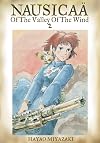
My experience of reading Nausicaa this time round is a bit of a jolt. I collected the old Viz issues assiduously when they came out, and read and reread them, but there were big gaps in my collection and big gaps of time between new issues. When I got these collections over a few years for my son I never got around to sitting down and reading the whole lot until now, and it is really hard to stop once started.
Nausicaa and Asbel escape from the forest only to be captured by a lurking Dorok show more ship which is part of a trap being sprung on Kushana's southern maneuver. The flotilla is crossing the forest, stopping at a clearing of acid lakes, where it encounters a Dorok force who are torturing a baby Ohmu to draw a mass of the adult insects down on the encampment. Nausicaa is appalled at the reckless cruelty of the trap and escapes, as much to stop the torture as to save the flotilla.
The orchestration of events surrounding the descent of the swarm of Ohmu on Kushana's troops is one of the wonders of all sequential narrative. Complex, tricky, with multiple moving parts, it unfolds with clarity and suspense and a sense of rushing, impending doom and destruction. It's a mesmerising, riveting sequence, all the more so as it shows aspects of Nausicaa's, Kushana's and Kurosowa's characters that make them all desperately compelling. Master Yupa has his own adventures, discovering an even darker side to the trap with even darker implications. show less
Nausicaa and Asbel escape from the forest only to be captured by a lurking Dorok show more ship which is part of a trap being sprung on Kushana's southern maneuver. The flotilla is crossing the forest, stopping at a clearing of acid lakes, where it encounters a Dorok force who are torturing a baby Ohmu to draw a mass of the adult insects down on the encampment. Nausicaa is appalled at the reckless cruelty of the trap and escapes, as much to stop the torture as to save the flotilla.
The orchestration of events surrounding the descent of the swarm of Ohmu on Kushana's troops is one of the wonders of all sequential narrative. Complex, tricky, with multiple moving parts, it unfolds with clarity and suspense and a sense of rushing, impending doom and destruction. It's a mesmerising, riveting sequence, all the more so as it shows aspects of Nausicaa's, Kushana's and Kurosowa's characters that make them all desperately compelling. Master Yupa has his own adventures, discovering an even darker side to the trap with even darker implications. show less
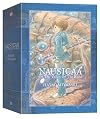
Another reviewer here called it "the War and Peace of manga"; how perfect.
Nausicaä of the Valley of the Wind is a sweeping tale of agape. Nausicaä’s heart for all creatures –– human, animal, plant, even the parasitic Toxic Jungle –– is full to bursting, vibrant and selfless. It's awe-inspiring; we need paragons of virtue like her in fiction. It almost pushes the comparison from War and Peace, which is full of the most scattered, realistically messy heroes and heroines possible, show more to The Lord of the Rings, which really gives mythic proportions of virtue to its characters, as a form of showing us not what life is like, but what we are capable of as humans, as bearers of the flame of humanity, a flame which will live forever - which must live. show less
Nausicaä of the Valley of the Wind is a sweeping tale of agape. Nausicaä’s heart for all creatures –– human, animal, plant, even the parasitic Toxic Jungle –– is full to bursting, vibrant and selfless. It's awe-inspiring; we need paragons of virtue like her in fiction. It almost pushes the comparison from War and Peace, which is full of the most scattered, realistically messy heroes and heroines possible, show more to The Lord of the Rings, which really gives mythic proportions of virtue to its characters, as a form of showing us not what life is like, but what we are capable of as humans, as bearers of the flame of humanity, a flame which will live forever - which must live. show less
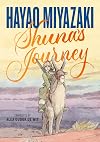
Shuna's Journey is a gorgeous watercolor emonogatari—an illustrated story with a format that's probably closest to what we in the West would associate with children's picture books (although not always in subject or age group, etc.), because it lacks speech bubbles and small panels. Miyazaki published the volume in 1983, just before Studio Ghibli launched.
The book tells the story of a young prince named Shuna who lives in a land constantly on the brink of starvation and who sets out on a show more journey to find a golden grain in the West able to feed his people forever. Along the way, he encounters man-eating ghouls and slave traders and a moon that races across the sky. To bring this golden grain back to his people, Shuna will have to steal from the Land of the God-Folk—and suffer the consequences.
The story is also loosely based on a Tibetan legend, The Prince Who Turned into a Dog, about Tibet's first encounter with barley. It also shares many similarities to Nausicaa and Princess Mononoke, which had been created or thought up around the same time—personally, I feel like the setting and design borrow a lot from Nausicaa, and the characters from Princess Mononoke (that, or the other way around, of course).
I had to read this twice, because I found the translator's notes to be so eye opening and thought provoking that I knew the second reading would have a different effect on me—and I was right. To be honest, I'm pretty sure that the first time reading this I was more focused on the beautiful watercolor illustrations than anything else. It really is a stunning graphic novel. But the deeper themes behind the more overt slave trade and kindness being repaid (which I'll leave you to read in the notes) are easier to miss through a casual read. And while the translator says that it was very fitting for Miyazaki's time, it also seems important for today's time, too.
Shuna's Journey definitely has the feeling of one of Miyazaki's older works and is filled with his trademark, beautiful style. The ending might provide more questions than answers, but it's a nice story that very much entranced me (although … his using women in burqas as the design for man-eating ghouls really took me out of the story …). I hope the other work mentioned in the notes gets translated as well! show less
The book tells the story of a young prince named Shuna who lives in a land constantly on the brink of starvation and who sets out on a show more journey to find a golden grain in the West able to feed his people forever. Along the way, he encounters man-eating ghouls and slave traders and a moon that races across the sky. To bring this golden grain back to his people, Shuna will have to steal from the Land of the God-Folk—and suffer the consequences.
The story is also loosely based on a Tibetan legend, The Prince Who Turned into a Dog, about Tibet's first encounter with barley. It also shares many similarities to Nausicaa and Princess Mononoke, which had been created or thought up around the same time—personally, I feel like the setting and design borrow a lot from Nausicaa, and the characters from Princess Mononoke (that, or the other way around, of course).
I had to read this twice, because I found the translator's notes to be so eye opening and thought provoking that I knew the second reading would have a different effect on me—and I was right. To be honest, I'm pretty sure that the first time reading this I was more focused on the beautiful watercolor illustrations than anything else. It really is a stunning graphic novel. But the deeper themes behind the more overt slave trade and kindness being repaid (which I'll leave you to read in the notes) are easier to miss through a casual read. And while the translator says that it was very fitting for Miyazaki's time, it also seems important for today's time, too.
Shuna's Journey definitely has the feeling of one of Miyazaki's older works and is filled with his trademark, beautiful style. The ending might provide more questions than answers, but it's a nice story that very much entranced me (although … his using women in burqas as the design for man-eating ghouls really took me out of the story …). I hope the other work mentioned in the notes gets translated as well! show less
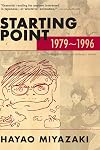
"Starting Point: 1979-1996" by Hayao Miyazaki offers readers an intimate and illuminating look into the early years of the legendary animator's career. As the co-founder of Studio Ghibli and the creative genius behind beloved classics such as "My Neighbor Totoro" and "Princess Mononoke," Miyazaki's retrospective provides a captivating narrative of his artistic evolution.
The book delves into Miyazaki's thoughts, inspirations, and challenges, offering a behind-the-scenes glimpse into the show more creation of some of the most iconic animated films of our time. Miyazaki's reflections on the intersection of art, storytelling, and the human experience are both profound and enlightening.
One of the strengths of "Starting Point" lies in Miyazaki's candidness about his creative process. Readers gain insight into the struggles and triumphs that shaped his storytelling philosophy. From the environmental themes in his work to his commitment to hand-drawn animation, Miyazaki's dedication to his craft is evident throughout the pages.
The inclusion of interviews, essays, and concept art adds depth to the narrative, allowing fans to appreciate the meticulous details that go into each frame of a Miyazaki film. The book is a treasure trove for animation enthusiasts, providing a comprehensive overview of Miyazaki's influences, ideologies, and the evolution of Studio Ghibli.
Miyazaki's engaging writing style and the translated work maintain the essence of his voice, making it an accessible and enjoyable read even for those unfamiliar with the intricacies of animation. The anecdotes and personal stories shared by Miyazaki create a sense of connection between the creator and the audience, fostering a deeper appreciation for the magic that unfolds on the screen.
In "Starting Point: 1979-1996," Hayao Miyazaki invites readers on a captivating journey through the formative years of his illustrious career. It's a must-read for anyone seeking to understand the mind behind the magic, offering a rare glimpse into the heart and soul of one of animation's true visionaries. show less
The book delves into Miyazaki's thoughts, inspirations, and challenges, offering a behind-the-scenes glimpse into the show more creation of some of the most iconic animated films of our time. Miyazaki's reflections on the intersection of art, storytelling, and the human experience are both profound and enlightening.
One of the strengths of "Starting Point" lies in Miyazaki's candidness about his creative process. Readers gain insight into the struggles and triumphs that shaped his storytelling philosophy. From the environmental themes in his work to his commitment to hand-drawn animation, Miyazaki's dedication to his craft is evident throughout the pages.
The inclusion of interviews, essays, and concept art adds depth to the narrative, allowing fans to appreciate the meticulous details that go into each frame of a Miyazaki film. The book is a treasure trove for animation enthusiasts, providing a comprehensive overview of Miyazaki's influences, ideologies, and the evolution of Studio Ghibli.
Miyazaki's engaging writing style and the translated work maintain the essence of his voice, making it an accessible and enjoyable read even for those unfamiliar with the intricacies of animation. The anecdotes and personal stories shared by Miyazaki create a sense of connection between the creator and the audience, fostering a deeper appreciation for the magic that unfolds on the screen.
In "Starting Point: 1979-1996," Hayao Miyazaki invites readers on a captivating journey through the formative years of his illustrious career. It's a must-read for anyone seeking to understand the mind behind the magic, offering a rare glimpse into the heart and soul of one of animation's true visionaries. show less
Lists
Awards


You May Also Like


Associated Authors
Statistics
- Works
- 333
- Also by
- 5
- Members
- 19,838
- Popularity
- #1,092
- Rating
- 4.4
- Reviews
- 223
- ISBNs
- 549
- Languages
- 17
- Favorited
- 45