

Moto Hagio
Author of A Drunken Dream and Other Stories
About the Author
Image credit: Moto Hagio(by Actionist, 2008)
Series
Works by Moto Hagio
Associated Works
一等星の詩 「最果タヒ展 われわれはこの距離を守るべく生まれた、夜のために在る6等星なのです。」オフィシャルブック — Contributor — 1 copy
Tagged
Common Knowledge
- Legal name
- 萩尾, 望都
- Birthdate
- 1949-05-12
- Gender
- female
- Occupations
- manga artist
- Organizations
- Science Fiction & Fantasy Writers of Japan
Japan Cartoonists Association - Awards and honors
- Seiun Award (Manga, 1980)
Inkpot Award (2010)
Seiun Award (Manga, 1985) - Relationships
- Satou, Shio (assistant)
Takemiya, Keiko (former roommate)
Thorn, Rachel Matt (editor) - Nationality
- Japan
- Birthplace
- Omuta, Fukuoka Prefecture, Japan
- Places of residence
- Saitama Prefecture, Japan
- Associated Place (for map)
- Japan
Members
Reviews

I've been meandering through the translated oeuvre of shōjo manga master Moto Hagio for several years now; my latest read is the first half of Otherworld Barbara. It's interesting-- my introduction to her work was a series of short pieces collected in A Drunken Dream and Other Stories (1977-2008), and from there each book I've read has been longer than the last: A, A′ (1997) was four short stories, but they were linked; Heart of Thomas (1974) was a single 500-page story.* Otherworld show more Barbara will run over 700 by its end, I think.
I mention this not (just) because I love trivia, but because it's hard to judge Otherworld Barbara as a story on its first 378 pages. There's a lot going on here: a dreamworld where cannibalism is a normal practice that leads to immortality, a real world where people can dive into dreams, a father estranged from his son, an old woman pining for youth, a conference about the mysteries of Mars, a funeral, a line of robot dolls, an island that appears and disappears. It was a little tough to orient myself at first (not aided by the fact that I still struggle to recognize characters in manga consistently), but once I started to get a handle, I was drawn in. As always, Hagio's storytelling is prone to hugely dramatic emotions, gloomy tragedy, traumatic backstories... and goofy farce. I have no idea how it's all going to integrate, but I'm beginning to grasp the connections, and I'm on the edge of my seat to see how she pulls it off. Bring on vol. 2.
* You will note this is my progression through Hagio, not her progression, as I haven't been reading her work in its order of publication. Note also that I read her short story "They Were Eleven" (1975) between A, A′ and Heart of Thomas, which breaks my supposed pattern. show less
I mention this not (just) because I love trivia, but because it's hard to judge Otherworld Barbara as a story on its first 378 pages. There's a lot going on here: a dreamworld where cannibalism is a normal practice that leads to immortality, a real world where people can dive into dreams, a father estranged from his son, an old woman pining for youth, a conference about the mysteries of Mars, a funeral, a line of robot dolls, an island that appears and disappears. It was a little tough to orient myself at first (not aided by the fact that I still struggle to recognize characters in manga consistently), but once I started to get a handle, I was drawn in. As always, Hagio's storytelling is prone to hugely dramatic emotions, gloomy tragedy, traumatic backstories... and goofy farce. I have no idea how it's all going to integrate, but I'm beginning to grasp the connections, and I'm on the edge of my seat to see how she pulls it off. Bring on vol. 2.
* You will note this is my progression through Hagio, not her progression, as I haven't been reading her work in its order of publication. Note also that I read her short story "They Were Eleven" (1975) between A, A′ and Heart of Thomas, which breaks my supposed pattern. show less
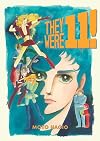
This volume contains two stories, the original "They Were 11!", and a sequel featuring the same characters but a totally different premise. The first is a classic "lost in space" disaster story. I thought it was well done, and the challenges they faced were interesting/unique. It really felt like a classic SF story. What would you do if there was an extra person in your midst? And would that be your most pressing issue in the face of other dangers?
The first story has a big cast of show more characters. Not all of them are standouts, but more of them than I expected got good development. The treatment ofFrol's gender was interesting, especially for something written in the 70's. I also liked the inclusion of two different races who are born androgynous and become gendered later in life. It made things feel more normalized, and I think it just makes sense in a world where many different races from different planets are all gathered together. The overall conclusion of the first story felt very satisfying!
The second story is one of diplomatic tensions, starring some of the characters from the first story. I liked the treatment ofTada and Frol's relationship--how it's very clear Frol hasn't chosen a gender for sure yet. They're such a funny character for how impulsive and flighty they are, with both good and bad results. I appreciated the decision by the translator to use they/them pronouns. My guess is that the original Japanese omitted pronouns altogether, so I think in this situation this is a good solution to that.
The political/war storyline in the second part was interesting, as was learning about King's planet and how their relationship is formed with their "twin" planet. It uses the SF element to create a unique tension between the two kingdoms, as well as the characters of King and Fourth. Though overall, it's more of a political story with SF elements. I found myself wondering how things would get resolved, and I was satisfied with how it ended.
Moto Hagio is a talented author who clearly is able to write diverse genres and settings. I'm really glad this book got an english release! Ajani Oloye's translation fit the characters well and flowed smoothly/sounded natural. The overall release is good quality! show less
The first story has a big cast of show more characters. Not all of them are standouts, but more of them than I expected got good development. The treatment of
The second story is one of diplomatic tensions, starring some of the characters from the first story. I liked the treatment of
The political/war storyline in the second part was interesting, as was learning about King's planet and how their relationship is formed with their "twin" planet. It uses the SF element to create a unique tension between the two kingdoms, as well as the characters of King and Fourth. Though overall, it's more of a political story with SF elements. I found myself wondering how things would get resolved, and I was satisfied with how it ended.
Moto Hagio is a talented author who clearly is able to write diverse genres and settings. I'm really glad this book got an english release! Ajani Oloye's translation fit the characters well and flowed smoothly/sounded natural. The overall release is good quality! show less
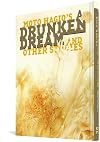
Moto Hagio is one of the godmothers of shojo manga, and this collection of short comics shattered many of my preconceptions about the genre.
The stories in this collection are exquisitely drawn and psychologically complex. They share a tendency toward powerful, almost melodramatic emotion that reminds me of modern YA fiction, but heck, I like that aesthetic. I would have loved Moto Hagio unreservedly when I was a teenager myself. A few of the stories just knock it out of the park in terms of show more craft and psychological acuteness - "Hanshin Half-God" and "Iguana Girl" are two of the best short comics I've read.
Dear Fantagraphics, please publish more shojo manga from the 70s and 80s! show less
The stories in this collection are exquisitely drawn and psychologically complex. They share a tendency toward powerful, almost melodramatic emotion that reminds me of modern YA fiction, but heck, I like that aesthetic. I would have loved Moto Hagio unreservedly when I was a teenager myself. A few of the stories just knock it out of the park in terms of show more craft and psychological acuteness - "Hanshin Half-God" and "Iguana Girl" are two of the best short comics I've read.
Dear Fantagraphics, please publish more shojo manga from the 70s and 80s! show less

Access a version of the below that includes illustrations on my blog.
The Heart of Thomas is the most recent English translation of a piece of shōjo manga by Moto Hagio, and reading it means I've finally read all of Hagio's work available in English. (For a brief period, anyway; there's a translation of Otherworld Barbara coming out this fall.) It's the first long-form work by her to be translated into English; previous volumes have collected her short fiction. It's also her first piece of show more realist fiction in English, with no fantasy or science fiction elements.
Heart of Thomas is about a boy at an all-boy German boarding school who commits suicide; from what I had read, I expected to be because of homophobia. Heart of Thomas is a very different book than that, though, and much more complicated. Thomas actually dies right in the opening chapter, and the book chronicles the effects his death has on the community, especially Juli, with whom Thomas wanted to be involved, and a boy named Erich who comes to the school just days after Thomas's death and looks a lot like him. Many of the boys at Schlotterbach are interested in other boys; there's no hint of homophobia, and the male-male romantic and sexual relationships are diverse in their types.
There are a lot of characters; in addition to Thomas, Erich, and Juli, there's Ante (a young manipulator who competed with Thomas for Juli's attentions), Oskar (a world-weary older boy who is Juli's only confidante), and many more. Hagio is impressive in the depth of her characterization: the 500 pages of this book are a slow unspooling of information about the characters, and situations that initially seem obviously are slowly revealed to be more complicated as time passes. Each and every character turns out to have a subjectivity that's not obvious when the book begins, but influences their actions and feelings throughout. In their ways, each boy here is damaged and hurt, and some of the sections where we find out what's going on are riveting and painful. It's over 500 pages long, but it never feels padded or dull; Hagio keeps things going at exactly the right pace.
If the book is summed up by anything, it's by this exchange:
JULI: If someone loves you, do you have to love him back?
ERICH: Well... no, but...
JULI: Exactly.
There's no easy solutions here, because few of the characters are in love with ones who love them back; indeed, I think every love here is unrequited: but by the book's end, some of the characters have opened up enough to reciprocate and form real relationships, even if they're not necessarily romantic or sexual. It's a beautiful book, in both word and image, and Hagio even throws in a few jokes for good measure. I've really enjoyed everything I've read by her, and Heart of Thomas continues that trend. Here's hoping for more translations soon. show less
The Heart of Thomas is the most recent English translation of a piece of shōjo manga by Moto Hagio, and reading it means I've finally read all of Hagio's work available in English. (For a brief period, anyway; there's a translation of Otherworld Barbara coming out this fall.) It's the first long-form work by her to be translated into English; previous volumes have collected her short fiction. It's also her first piece of show more realist fiction in English, with no fantasy or science fiction elements.
Heart of Thomas is about a boy at an all-boy German boarding school who commits suicide; from what I had read, I expected to be because of homophobia. Heart of Thomas is a very different book than that, though, and much more complicated. Thomas actually dies right in the opening chapter, and the book chronicles the effects his death has on the community, especially Juli, with whom Thomas wanted to be involved, and a boy named Erich who comes to the school just days after Thomas's death and looks a lot like him. Many of the boys at Schlotterbach are interested in other boys; there's no hint of homophobia, and the male-male romantic and sexual relationships are diverse in their types.
There are a lot of characters; in addition to Thomas, Erich, and Juli, there's Ante (a young manipulator who competed with Thomas for Juli's attentions), Oskar (a world-weary older boy who is Juli's only confidante), and many more. Hagio is impressive in the depth of her characterization: the 500 pages of this book are a slow unspooling of information about the characters, and situations that initially seem obviously are slowly revealed to be more complicated as time passes. Each and every character turns out to have a subjectivity that's not obvious when the book begins, but influences their actions and feelings throughout. In their ways, each boy here is damaged and hurt, and some of the sections where we find out what's going on are riveting and painful. It's over 500 pages long, but it never feels padded or dull; Hagio keeps things going at exactly the right pace.
If the book is summed up by anything, it's by this exchange:
JULI: If someone loves you, do you have to love him back?
ERICH: Well... no, but...
JULI: Exactly.
There's no easy solutions here, because few of the characters are in love with ones who love them back; indeed, I think every love here is unrequited: but by the book's end, some of the characters have opened up enough to reciprocate and form real relationships, even if they're not necessarily romantic or sexual. It's a beautiful book, in both word and image, and Hagio even throws in a few jokes for good measure. I've really enjoyed everything I've read by her, and Heart of Thomas continues that trend. Here's hoping for more translations soon. show less
Lists
Awards


You May Also Like


Associated Authors
Statistics
- Works
- 141
- Also by
- 4
- Members
- 1,119
- Popularity
- #22,958
- Rating
- 4.0
- Reviews
- 35
- ISBNs
- 180
- Languages
- 4
- Favorited
- 9