

Keiko Takemiya
Author of To Terra...Volume 1
About the Author
Series
Works by Keiko Takemiya
The Pharaoh's Tomb (4) 2 copies
The Doorway to Summer 2 copies
Takemiya Keiko SF Short Story Collection (2) (Chuko Paperback - comic version) (1996) ISBN: 4122027071 [Japanese Import] (1996) 2 copies
The Pharaoh's Tomb (3) 2 copies
Takemiya Keiko SF Short Story Collection (3) (Chuko Paperback - comic version) (1996) ISBN: 412202708X [Japanese Import] (1996) 2 copies
イズァローン伝説 (2) (フラワーコミックス) 1 copy
Tagged
Common Knowledge
- Other names
- 竹宮 惠子
- Birthdate
- 1950-02-13
- Gender
- female
- Occupations
- manga artist
- Organizations
- Kyoto Seika University
- Relationships
- Hagio, Moto (former roommate)
- Nationality
- Japan
- Birthplace
- Tokushima, Japan
- Places of residence
- Kamakura, Kanagawa, Japan
- Associated Place (for map)
- Japan
Members
Reviews

I'm making my way through Hana to Yume's publishing backlog, and this was the first title I was able to find an English translation of, and boy was it a disappointing start.
The Door into Summer is a rape story, full stop. It's not sweet or romantic or really even successfully 'moody' - and it's frustrating to find plot summaries that talk about the 40-year-old woman 'seducing' the 15-year-old boy, because that's not the case. She rapes him.
The artist doesn't seem to understand what kind of show more story she's telling. The assault scene is depicted in a horrfying manner, and then only reflected on as part of this boy's natural maturation. The boy's friends all lose their respect for him, but it's shown to be his actions that they're responding to, as if his will was respected at all to begin with! Worse, there's a second attempted assault later on by another character, by a boy this time, who holds a knife to the protagonist's throat before he's eventually pushed off - because we can't have a gay character in the 70s without depicting him as a predator too!
The obsession with rape in the shoujo genre has done enough damage to its audience, and to the medium as well. Can we at least be honest about what these stories are depicting? If I never see another rape-as-romance story again it'll be too soon. show less
The Door into Summer is a rape story, full stop. It's not sweet or romantic or really even successfully 'moody' - and it's frustrating to find plot summaries that talk about the 40-year-old woman 'seducing' the 15-year-old boy, because that's not the case. She rapes him.
The artist doesn't seem to understand what kind of show more story she's telling. The assault scene is depicted in a horrfying manner, and then only reflected on as part of this boy's natural maturation. The boy's friends all lose their respect for him, but it's shown to be his actions that they're responding to, as if his will was respected at all to begin with! Worse, there's a second attempted assault later on by another character, by a boy this time, who holds a knife to the protagonist's throat before he's eventually pushed off - because we can't have a gay character in the 70s without depicting him as a predator too!
The obsession with rape in the shoujo genre has done enough damage to its audience, and to the medium as well. Can we at least be honest about what these stories are depicting? If I never see another rape-as-romance story again it'll be too soon. show less
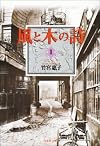
Kaze is a bit of a history lesson for me. It’s one of those series (originally published in 1976) you come across constantly if you do any reading about BL or the history of manga. You will slam up against this series eventually. Way back in the days of flouncy shirts, 14-year-old Serge, the son of a French nobleman and a Roma prostitute, comes to a boarding school in the French countryside, the same school his father attended, with all its attendant expectations. There he shares a room show more with preternaturally beautiful Gilbert, the school’s vaurien, and various adolescent hijinx ensue. Except the adolescent hijinx are more along the lines of pornographic, vaguely illegal town. Book One starts with Gilbert having some sexy times with Breau. Naked sexy times. I actually can’t believe that this was published more than thirty years ago. Because damn! You get underage gay sex and racism in the first five pages. And it just goes on from there.
In a way, it’s very much the story of adolescence. There are the worries about the future, the need to be accepted, the concern that you were made wrong, the conflict between what you want and what you want people to see. And there is family history, who you are versus where you come from, what your family wants from you versus what you want for you. Serge comes in mid-game, when everyone else at the school has already taken up their positions. So he tries to navigate these murky waters while remaining true to his own heart, and find out who he really is. Classic shojo stuff.
But it is also an unabashed product of its times. This is when the Year 24 Group (of which Takemiya is considered a member) were hard at work, shifting the perceptions of girls, what comics for girls should be and who comics for girls should be written by. Doujinshi zine-style manga and Comiketto (the biannual comic market in Tokyo), though still in their infancy, were rocking some serious boats. The previously romantic asexual world of shojo girls’ manga was moving in some crazy new directions, taking on serious issues that had been basically taboo until that point. And onto this stage, Kaze to Ki no Uta. It is simultaneously a parody of its predecessor shojo manga and a loving tribute. And it is, above all else, opening a road forward. No, for real.
This series has been on my reading list for a long time, but I always put it off because I felt like I had read so much about it that I didn’t need to bother with actually reading it. I knew about how it broke new ground, challenged perceptions, blah blah blah. But actually reading it is obviously different from reading about it. And ten pages into it, I completely understood why people were still talking about it. It is a series that still merits discussion.
And that’s not just because of the daring themes and topics that Takemiya tackles. Although her approach to homophobia and racism is still unbelievably relevant. But combined with her carefully considered panels and artwork, those daring themes have all that much more impact. I could drown in these pages. When Serge slumps down on the floor, lays his head on his bed and sobs after a particularly brutal encounter with Gilbert, the background drops into black with icicle shards of black and grey dripping down around him and his bed. It is the perfect artistic encapsulation of his despair. And Takemiya really excels at capturing the feelings of her characters like this. Panels of blooming love are framed in blossoming flowers. Characters break free of their panels when particularly exuberant or excited. Metaphoric images like the petals falling off of the flower in lieu of showing the detailed rape of a character.
Kaze to me exemplifies the best of the world of manga, a story made stronger by its artwork and artwork made stronger by the story it tells. I am basically raving about this book, but I really can’t get over how unbelievably incredible it is. I can’t imagine reading this as a teenager. If I was feeling the same kind of things that Serge feels, it would be like a punch in the face. It’s still like a punch in the face even though I am pretty far removed from that world of discovering my own sexuality. I feel a little cheated that I didn’t get to have comics that were telling this kind of story when I was young. I mean, I loved Spiderman, but I could have used a little dark advice from the world of boy-on-boy action. show less
In a way, it’s very much the story of adolescence. There are the worries about the future, the need to be accepted, the concern that you were made wrong, the conflict between what you want and what you want people to see. And there is family history, who you are versus where you come from, what your family wants from you versus what you want for you. Serge comes in mid-game, when everyone else at the school has already taken up their positions. So he tries to navigate these murky waters while remaining true to his own heart, and find out who he really is. Classic shojo stuff.
But it is also an unabashed product of its times. This is when the Year 24 Group (of which Takemiya is considered a member) were hard at work, shifting the perceptions of girls, what comics for girls should be and who comics for girls should be written by. Doujinshi zine-style manga and Comiketto (the biannual comic market in Tokyo), though still in their infancy, were rocking some serious boats. The previously romantic asexual world of shojo girls’ manga was moving in some crazy new directions, taking on serious issues that had been basically taboo until that point. And onto this stage, Kaze to Ki no Uta. It is simultaneously a parody of its predecessor shojo manga and a loving tribute. And it is, above all else, opening a road forward. No, for real.
This series has been on my reading list for a long time, but I always put it off because I felt like I had read so much about it that I didn’t need to bother with actually reading it. I knew about how it broke new ground, challenged perceptions, blah blah blah. But actually reading it is obviously different from reading about it. And ten pages into it, I completely understood why people were still talking about it. It is a series that still merits discussion.
And that’s not just because of the daring themes and topics that Takemiya tackles. Although her approach to homophobia and racism is still unbelievably relevant. But combined with her carefully considered panels and artwork, those daring themes have all that much more impact. I could drown in these pages. When Serge slumps down on the floor, lays his head on his bed and sobs after a particularly brutal encounter with Gilbert, the background drops into black with icicle shards of black and grey dripping down around him and his bed. It is the perfect artistic encapsulation of his despair. And Takemiya really excels at capturing the feelings of her characters like this. Panels of blooming love are framed in blossoming flowers. Characters break free of their panels when particularly exuberant or excited. Metaphoric images like the petals falling off of the flower in lieu of showing the detailed rape of a character.
Kaze to me exemplifies the best of the world of manga, a story made stronger by its artwork and artwork made stronger by the story it tells. I am basically raving about this book, but I really can’t get over how unbelievably incredible it is. I can’t imagine reading this as a teenager. If I was feeling the same kind of things that Serge feels, it would be like a punch in the face. It’s still like a punch in the face even though I am pretty far removed from that world of discovering my own sexuality. I feel a little cheated that I didn’t get to have comics that were telling this kind of story when I was young. I mean, I loved Spiderman, but I could have used a little dark advice from the world of boy-on-boy action. show less
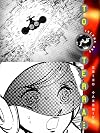
This is kind of a slow-paced manga. This volume does a lot of world-building with regards to Terran society and Mu society, as well as our two leads views of their respective societies, Jomy Marcus Shin for the Mu, and Keith Anyan for the Terrans.
(This part may sound spoiler-ish, but it really isn't).
That said, thus far the story does a pretty good job of making the Terran society oppressive enough that you understand why the Mu rebelled, while also making the Terrans sympathetic - their show more society is oppressive, but it's a society that chose to become oppressive for a specific reason - to make a society that could remain cohesive in spite of humanity's diaspora to the stars, and could also remain united and focused on the task of restoring and repairing the damaged ecosystem of Earth - and would be in agreement on how to prevent it from being despoiled once again, after the planet had been rebuilt. Their greatest sin isn't practicing eugenics, or having a non-traditional family unit (though their attempts to eliminate emotions from society is definitely something I'd consider a bad thing), as much as their greatest sin is treating the Mu, because they're ESPers, and are therefore different, as freaks to be (essentially) dissected and studied, rather than as being human beings like everyone else, and putting humans over their order.
So, I'm definitely interested in reading future books, and seeing how this conflict goes down. This is definitely a situation where both sides are shades of grey, rather than the situation being black-and-white, and I look fore-ward to seeing this play out. show less
(This part may sound spoiler-ish, but it really isn't).
That said, thus far the story does a pretty good job of making the Terran society oppressive enough that you understand why the Mu rebelled, while also making the Terrans sympathetic - their show more society is oppressive, but it's a society that chose to become oppressive for a specific reason - to make a society that could remain cohesive in spite of humanity's diaspora to the stars, and could also remain united and focused on the task of restoring and repairing the damaged ecosystem of Earth - and would be in agreement on how to prevent it from being despoiled once again, after the planet had been rebuilt. Their greatest sin isn't practicing eugenics, or having a non-traditional family unit (though their attempts to eliminate emotions from society is definitely something I'd consider a bad thing), as much as their greatest sin is treating the Mu, because they're ESPers, and are therefore different, as freaks to be (essentially) dissected and studied, rather than as being human beings like everyone else, and putting humans over their order.
So, I'm definitely interested in reading future books, and seeing how this conflict goes down. This is definitely a situation where both sides are shades of grey, rather than the situation being black-and-white, and I look fore-ward to seeing this play out. show less

Space opera manga about a peaceful planet being surreptitiously taken over by malevolent machine invaders. The first volume has me very intrigued about where the story's going, so I'm glad I already have volumes two and three out from the library.
Lists
Awards

You May Also Like


Associated Authors
Statistics
- Works
- 88
- Members
- 736
- Popularity
- #34,514
- Rating
- 3.9
- Reviews
- 7
- ISBNs
- 151
- Languages
- 4
- Favorited
- 4