

Cornelia H. Butler
Author of WACK! Art and the Feminist Revolution
About the Author
Works by Cornelia H. Butler
Associated Works
Tagged
Common Knowledge
- Birthdate
- 1963-02-01
- Gender
- female
Members
Reviews
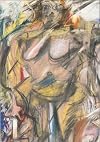
Willem de Kooning, one of the great pioneers of Abstract Expressionism, experimented with the human form throughout his career. An artist deeply skeptical about Western ideals of beauty, he focused on anatomical fragmentation and spatial ambiguity to express the fleeting nature of the individual. This strikingly designed book, published in conjunction with an exhibition originating at The Museum of Contemporary Art, Los Angeles, explores de Kooning's drawings of the female form between 1940 show more and 1955. It reveals an artist who struggled to eliminate traditional barriers between drawing and painting as he explored ambiguities between the figure and its background.
De Kooning relied on early-twentieth-century abstraction in his initial attempts to redefine the figure, drawing and re-drawing the same line until he resolved the image. Beginning in 1947-49, he synthesized abstraction and figuration, dismembering figures and rearranging them with seeming randomness. As his figural compositions developed, geometric configurations transformed into architectural elements (suggesting windows, doors, mirrors, paintings, and furniture) to create ambiguous space. In 1951, de Kooning abruptly returned to depictions of women. Using turbulent brushwork, he turned female figures into monumental, intentionally vulgar, wildly distorted images whose parts read alternately as flat pattern and fully rounded forms. The effect is an almost violent sensuality.
The artist's later style differed dramatically from that of earlier decades. Familiar shapes and hues suggest that women remain in his works, yet they are distorted beyond recognition as if seen from underwater. As put by Thomas Hess, the artist's friend and critic, "Woman, for de Kooning, is the human equivalent of water; more than a vessel, she embodies it in planes of rippling flesh." show less
De Kooning relied on early-twentieth-century abstraction in his initial attempts to redefine the figure, drawing and re-drawing the same line until he resolved the image. Beginning in 1947-49, he synthesized abstraction and figuration, dismembering figures and rearranging them with seeming randomness. As his figural compositions developed, geometric configurations transformed into architectural elements (suggesting windows, doors, mirrors, paintings, and furniture) to create ambiguous space. In 1951, de Kooning abruptly returned to depictions of women. Using turbulent brushwork, he turned female figures into monumental, intentionally vulgar, wildly distorted images whose parts read alternately as flat pattern and fully rounded forms. The effect is an almost violent sensuality.
The artist's later style differed dramatically from that of earlier decades. Familiar shapes and hues suggest that women remain in his works, yet they are distorted beyond recognition as if seen from underwater. As put by Thomas Hess, the artist's friend and critic, "Woman, for de Kooning, is the human equivalent of water; more than a vessel, she embodies it in planes of rippling flesh." show less
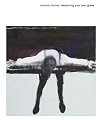
In her expressionistic drawings and paintings of the last three decades, acclaimed South African artist Marlene Dumas has focused on the human figure, probing themes of love, desire, despair and confusion in order to slyly critique social and political attitudes toward women, children, people of color and others who have historically been victimized. From her evocative portraits, based on photographs of friends and family as well as figures culled from printed pornography, to her large-scale show more images highlighting charged relationships within groups, Dumas' work explores the contradictions behind the physical reality of the body, merging acute social commentary with personal experience and art-historical antecedent to create unsettling and ambiguous psychological statements.
Accompanying Dumas' first major mid-career survey in the U.S., with stops in three major American cities, (one yet to be announced) this substantial, fully-illustrated publication features a newly commissioned essay by renowned scholar Richard Shiff, placing the artist's work in relation to both American figurative painting since the 1980s and Abstract Expressionism. The book also includes curator Cornelia H. Butler's examination of Dumas' photographic sources and shorter texts by Lisa Gabrielle Mark and Matthew Monahan. Writings by the artist, as well as an extensive illustrated exhibition history and bibliography, complete this comprehensive examination of the work of one of the most thought-provoking artists working today.
Born in Capetown, South Africa, in 1953, Marlene Dumas has lived in Amsterdam since 1976. Over the last three decades she has had numerous solo exhibitions throughout Europe and the U.S., including the Tate Gallery, London; the Institute of Contemporary Art, Boston; and the Centre Georges Pompidou, Paris. In 1995 she represented The Netherlands at the 46th Venice Biennale show less
Accompanying Dumas' first major mid-career survey in the U.S., with stops in three major American cities, (one yet to be announced) this substantial, fully-illustrated publication features a newly commissioned essay by renowned scholar Richard Shiff, placing the artist's work in relation to both American figurative painting since the 1980s and Abstract Expressionism. The book also includes curator Cornelia H. Butler's examination of Dumas' photographic sources and shorter texts by Lisa Gabrielle Mark and Matthew Monahan. Writings by the artist, as well as an extensive illustrated exhibition history and bibliography, complete this comprehensive examination of the work of one of the most thought-provoking artists working today.
Born in Capetown, South Africa, in 1953, Marlene Dumas has lived in Amsterdam since 1976. Over the last three decades she has had numerous solo exhibitions throughout Europe and the U.S., including the Tate Gallery, London; the Institute of Contemporary Art, Boston; and the Centre Georges Pompidou, Paris. In 1995 she represented The Netherlands at the 46th Venice Biennale show less

This is an amazing exhibition catalog because it's not just images of what was in the show. It contains some really interesting information and it is an incredible resource of info on the subject of feminist art.
Catching up with the foremothers with this collection of essays and images. Especially helpful/interesting to me as I consider and develop my grad ideas—The Woman Who Never Was: Self-Representation, Photography, and First-Wave Feminist Art by Abigail Solomon-Godeau.
Awards

You May Also Like


Associated Authors
Statistics
- Works
- 26
- Also by
- 3
- Members
- 609
- Popularity
- #41,275
- Rating
- 4.0
- Reviews
- 7
- ISBNs
- 29
- Languages
- 1