
Robert Storr
Author of Gerhard Richter: Forty Years of Painting
About the Author
Robert Storr is dean of the Yale University School of Art and Consulting Curator of Modern and Contemporary Art at the Philadelphia Museum of Art.
Works by Robert Storr
Think with the Senses Feel with the Mind Art in the Present Tense: La Biennale di Venezia (International Exhibition of Visual Arts) (2007) 48 copies
On the Edge: Contemporary Art from the Werner and Elaine Dannheisser Collection (1998) 20 copies, 1 review
Order, Chaos, and the Space Between: Contemporary Latin American Art from the Diane and Bruce Halle Collection (2013) 8 copies
Art Journal 2 copies
Francesco Clemente 2 copies
Mark Williams: Works on Paper 2 copies
Philip Guston Drawings 2 copies
Projects: Ann Hamilton 1 copy
Sergio Lombardo. Monocromi (1958-1961). Catalogo della mostra (Roma, 21 settembre-29 novembre 2016). Ediz. italiana e inglese (2018) 1 copy
Ron Gorchov : May 1990 1 copy
Jasper Johns: Crosshatch 1 copy
Focal Points: Between a Rock and a Hard Place: Race and Representation in the American Citadel of Modern Art (2024) 1 copy
Dorothea Rockburne 1 copy
Joan Mitchell 1 copy
Luc Tuymans Mwana kitoko 1 copy
Robert Mangold 1 copy
Associated Works
Tagged
Common Knowledge
- Canonical name
- Storr, Robert
- Birthdate
- 1949
- Gender
- male
- Education
- Art Institute of Chicago (MFA|1978)
Swarthmore College (BA|1972) - Occupations
- curator
critic
painter
writer
academic administrator
professor - Organizations
- Yale School of Art
New York University, Institute of Fine Arts
Museum of Modern Art - Awards and honors
- Ordre des Arts et des Lettres (Officier, 2010)
Ordre des Arts et des Lettres (Chevalier, 2000) - Nationality
- USA
- Birthplace
- Portland, Maine, USA
- Associated Place (for map)
- Maine, USA
Members
Reviews
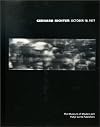
This catalogue is in addition to the exhibition at de MoMa on the paintings of the lives and deaths of the Baader-Meinhof group. The late 1960s, the Baader-Meinhof group had become Germany's most feared terrorists. Although the prisoners' deaths were pronounced suicides, the authorities were suspected of murder.
The fifteen works in October 18, 1977 evoke fragments from the lives and deaths of the Baader-Meinhof group. Richter has worked in a range of styles over the years, including show more painterly and geometric abstraction as well as varieties of realism based on photography; the slurred and murky motifs of this work derive from newspaper and police photographs or television images. Shades of gray dominate, the absence of color conveying the way these second-hand images from the mass media sublimate their own emotional content. An almost cinematic repetition gives an impression, as if in slow motion, of the tragedy's inexorable unfolding. Produced during a prosperous, politically conservative era eleven years after the events, and insisting that this painful and controversial subject be remembered, these paintings are widely regarded as among the most challenging works of Richter's career. show less
The fifteen works in October 18, 1977 evoke fragments from the lives and deaths of the Baader-Meinhof group. Richter has worked in a range of styles over the years, including show more painterly and geometric abstraction as well as varieties of realism based on photography; the slurred and murky motifs of this work derive from newspaper and police photographs or television images. Shades of gray dominate, the absence of color conveying the way these second-hand images from the mass media sublimate their own emotional content. An almost cinematic repetition gives an impression, as if in slow motion, of the tragedy's inexorable unfolding. Produced during a prosperous, politically conservative era eleven years after the events, and insisting that this painful and controversial subject be remembered, these paintings are widely regarded as among the most challenging works of Richter's career. show less
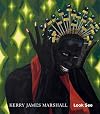
With a career spanning almost three decades, Kerry James Marshall is well known for his complex and multilayered portrayals of youths, interiors, nudes, housing estate gardens, land- and seascapes, all of which synthesize different traditions and genres while seeking to counter stereotypical representations of black people in society. Working across various mediums, from paintings and comic-style drawings to sculptural installations, photographs, and videos, the artist conflates actual and show more imagined events from African-American history, integrating a range of stylistic influences to address the limited historiography of black art.
Produced on the occasion of Marshall’s first exhibition at David Zwirner in London in 2014 and designed by JNL Design in Chicago, Look See features beautiful reproductions of every painting on view in the show as well as numerous details, preparatory drawings, installation photographs, new scholarship by Robert Storr and a conversation between the artist and Angela Choon, a Senior Partner at the gallery. As suggested by the show’s title, these portraits use the etymological differences between looking and seeing as their point of departure, featuring subjects whose dissociated stares seem as defiant as they are mystifying. In keeping with his signature approach, Marshall has painted his figures in strikingly opaque black pigments, both fashioning and abstracting their presences in order to assimilate the limitations and contradictions of style, subject, and chronology inherent in art-historical narratives written from a white, Western perspective. Taken all together, the range of materials included in Look See constitutes a vibrant and comprehensive portrait of Marshall’s original and ever-evolving practice.
Kerry James Marshall
With a career spanning almost three decades, Kerry James Marshall is well known for his paintings depicting actual and imagined events from African-American history. His complex and multilayered portrayals of youths, interiors, nudes, housing estate gardens, land- and seascapes synthesize different traditions and genres, while seeking to counter stereotypical representations of black people in society. Marshall also produces drawings in the style of comic books, sculptural installations, photography, and video. As with his paintings, these works accumulate various stylistic influences to address the historiography of black art, while at the same time drawing attention to the fact that they are not inherently partisan because their subjects are black. show less
Produced on the occasion of Marshall’s first exhibition at David Zwirner in London in 2014 and designed by JNL Design in Chicago, Look See features beautiful reproductions of every painting on view in the show as well as numerous details, preparatory drawings, installation photographs, new scholarship by Robert Storr and a conversation between the artist and Angela Choon, a Senior Partner at the gallery. As suggested by the show’s title, these portraits use the etymological differences between looking and seeing as their point of departure, featuring subjects whose dissociated stares seem as defiant as they are mystifying. In keeping with his signature approach, Marshall has painted his figures in strikingly opaque black pigments, both fashioning and abstracting their presences in order to assimilate the limitations and contradictions of style, subject, and chronology inherent in art-historical narratives written from a white, Western perspective. Taken all together, the range of materials included in Look See constitutes a vibrant and comprehensive portrait of Marshall’s original and ever-evolving practice.
Kerry James Marshall
With a career spanning almost three decades, Kerry James Marshall is well known for his paintings depicting actual and imagined events from African-American history. His complex and multilayered portrayals of youths, interiors, nudes, housing estate gardens, land- and seascapes synthesize different traditions and genres, while seeking to counter stereotypical representations of black people in society. Marshall also produces drawings in the style of comic books, sculptural installations, photography, and video. As with his paintings, these works accumulate various stylistic influences to address the historiography of black art, while at the same time drawing attention to the fact that they are not inherently partisan because their subjects are black. show less
Felix Gonzalez-Torres, one of the most influential artists of his generation, lived and worked resolutely according to his own idealistic principles, determined to "make this a better place for everyone." He combined elements of Conceptual art, Minimalism, political activism, and poetic beauty in an ever-expanding arsenal of media, including public billboards, give-away piles of candy and posters, and ordinary objects--clocks, mirrors, light fixtures--used to startling effect. His work show more challenged the notions of public and private space, originality, authorship and--most significantly--the authoritative structures in which he and his viewers functioned. Editor Julie Ault has amassed the first comprehensive monograph to span Gonzalez-Torres's career. In the spirit of his method, she rethinks the very idea of what a monograph should be. The book, which places strong emphasis on the written word, contains newly commissioned texts by Robert Storr and Miwon Kwon among other notables, as well as significant critical essays, exhibition statements, transcripts from lectures, personal correspondence, and writings that influenced Gonzalez-Torres and his work. Ample visual documentation adds another important layer of content. We see works not just in their completed state, but often in process, which for Gonzalez-Torres could mean the process of disappearing as viewers interacted with them. A crucial reference. show less

Published on the occasion of the exhibition Gerhard Richter. 40 Years of Painting at the Museum of Modern Art, New York, this publication represents a broad range of Gerhard Richter's paintings of the last 40 years.
Gerhard Richter's diverse body of work questions broadly held attitudes about the inherent importance of stylistic consistency for an artist. It ranges from photo-based pictures all across the board to gestural abstraction. The 'natural' evolution of individual artistic show more sensibility, the spontaneous component of creativity and the relationship of technological means and mass media imagery to traditional studio methods and formats. Richter has always kept his distance from revolutionaries and conservatives alike regarding what painting “should” be. This has resulted in what has been among the most convincing renewal of painting's vitality in late 20th- and early 21st-century art.
This publication consists of a critical essay by curator Robert Storr, a rare interview with the artist himself, a chronology, an exhibition history, and nearly 300 colour and duotone reproductions. show less
Gerhard Richter's diverse body of work questions broadly held attitudes about the inherent importance of stylistic consistency for an artist. It ranges from photo-based pictures all across the board to gestural abstraction. The 'natural' evolution of individual artistic show more sensibility, the spontaneous component of creativity and the relationship of technological means and mass media imagery to traditional studio methods and formats. Richter has always kept his distance from revolutionaries and conservatives alike regarding what painting “should” be. This has resulted in what has been among the most convincing renewal of painting's vitality in late 20th- and early 21st-century art.
This publication consists of a critical essay by curator Robert Storr, a rare interview with the artist himself, a chronology, an exhibition history, and nearly 300 colour and duotone reproductions. show less
Lists
Bull Tongue (1)
Awards

You May Also Like


Associated Authors
Statistics
- Works
- 121
- Also by
- 13
- Members
- 1,935
- Popularity
- #13,309
- Rating
- 4.1
- Reviews
- 15
- ISBNs
- 136
- Languages
- 6