
Michael Auping
Author of Philip Guston: Retrospective
Works by Michael Auping
Abstraction Geometry Painting: Selected Geometric Abstract Painting in America Since 1945 (1989) 49 copies, 1 review
The Venice installation : United States Pavilion, the 44th Venice Biennale, May 27-September 30, 1990 (1990) 49 copies, 1 review
Tagged
Common Knowledge
- Birthdate
- 1949-10-17
- Gender
- male
- Education
- Associate of Arts, Santa Ana College, 1969
Bachelor, California State University, Fullerton, 1971
Master of Arts, California State University, Long Beach, 1975. - Short biography
- Michael G. Auping has been listed as a noteworthy Curator by Marquis Who's Who. Michael Auping is the Chief Curator of the Modern Art Museum of Fort Worth, Texas.
- Nationality
- USA
- Birthplace
- Portland, Oregon, USA
- Associated Place (for map)
- Oregon, USA
Members
Reviews

Philip Guston (1913-1980) had been a successful abstract painter for almost two decades when he boldly returned to figurative work in the late 1960s. His uncompromising late paintings, which broke taboos, baffled his admirers, and shocked the art establishment, ultimately inspired succeeding generations of artists, invigorating painting with a new sense of mission.
This book, the most comprehensive survey of Guston's art to date, was originally published on the occasion of a major show more international exhibition. It brings together for the first time the different bodies of the artist's work, exposing the connective threads between each of his developmental stages. In-depth essays by a noted group of critics and art historians explore Guston's early influences and the emergence of symbols that resurfaced and played prominent roles in his late work. They provide insight into Guston's philosophy regarding abstraction, his role within its development, and the social and art historical context from which his so-called "Klan" paintings emerged. 197 illustrations, 158 in color. show less
This book, the most comprehensive survey of Guston's art to date, was originally published on the occasion of a major show more international exhibition. It brings together for the first time the different bodies of the artist's work, exposing the connective threads between each of his developmental stages. In-depth essays by a noted group of critics and art historians explore Guston's early influences and the emergence of symbols that resurfaced and played prominent roles in his late work. They provide insight into Guston's philosophy regarding abstraction, his role within its development, and the social and art historical context from which his so-called "Klan" paintings emerged. 197 illustrations, 158 in color. show less
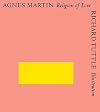
Agnes Martin (1912–2004) wrote Religion of Love, a late statement on her work and thought, sometime in the 1990s. Composed of short, aphoristic statements and paragraphs, it lucidly states her art credo and life advice: "Love makes us want to do all the good things. Get up in the morning and work for life." "The part of the mind that's aware of perfection tells us everything that is good." "You can contact the mind by asking for help." Somewhat uncharacteristically, Martin asked her friend show more Richard Tuttle to illustrate it. As Tuttle writes in his introduction, "on the one hand, it reconfirms her most classical thought (Beauty is the mystery of life), and, on the other, adds new thought with an urgency only found in a mature artist of her age and persuasion." This beautiful, slim volume constitutes both an important artist's statement and a great collaboration. show less

The Summer 2022 issue of Gagosian Quarterly features Takashi Murakami’s 108 Bonnō MURAKAMI.FLOWERS (2022) and Andreas Gursky’s V & R II (2022) on its two different covers. Inside the issue, Murakami and RTFKT Studios discuss the future of digital art and Gursky speaks with writer Max Dax alongside a presentation of the artist’s latest photographs. Elsewhere, Fiona Alison Duncan profiles six book editors changing the standards of publishing; Julian Rose delves into the architecture of show more Donald Judd; Aria Darcella honors Annie Flanders, the founder of Details magazine; and much more. show less
Since his first road trip in 1956, driving from Oklahoma City to Los Angeles, Ed Ruscha has continued to muse on America as seen from the road: "I like being in the car, and seeing things from that vantage point," he has said. "Sometimes I give myself assignments to go out on the road and explore different ideas. My books are an example of that." Consisting of around 75 works spanning the artist's entire career, Ed Ruscha: Road Tested includes many of the famous aforementioned artist's show more books, including Twenty-Six Gasoline Stations, Real Estate Opportunities, Some Los Angeles Apartments, Thirty-Four Parking Lots and the groundbreaking artist's book Every Building on the Sunset Strip; some of Ruscha's most iconic paintings, such as the "Standard Stations" and the "Hollywood Signs," as well as paintings inspired by street names and road signs; and his exploration of the topography of greater Los Angeles in paintings that depict aerial grids of the city, as well as various southern California horizons and sunsets. Also examined here is the rarely seen Ruscha film Miracle (1975), which tells the story of a mechanic whose obsessive repair of the carburetor on a 1965 Mustang dooms his date with a beautiful woman. The first-ever treatment of a primary theme in the artist's career, Road Tested at last gives Ed Ruscha his own road show. show less
You May Also Like


Associated Authors
Statistics
- Works
- 51
- Members
- 995
- Popularity
- #25,893
- Rating
- 3.9
- Reviews
- 12
- ISBNs
- 65
- Languages
- 2