
Ingo F. Walther (1940–2007)
Author of Vincent Van Gogh: Vision and Reality (Taschen Art Series)
About the Author
Image credit: taschen
Series
Works by Ingo F. Walther
Masterpieces of Illumination: The World's Most Famous Manuscripts 400 to 1600 (1980) 607 copies, 6 reviews
Painting of the Romantic Era: Painting of the Romantic Epoch (Epochs & Styles) (1999) — Editor — 56 copies
Art Of The 20th Century 9 copies
Malerei des Impressionismus 1860 - 1920. Band 2. Der Impressionismus in Europa und Nordamerika (1994) 7 copies
Paris, Berlin 1900 – 1933. Übereinstimmungen und Gegensätze. Frankreich – Deutschland (1979) 4 copies
Fernando Botero 2 copies
Gotische Buchmalerei : Minnesänger ; alle 25 Miniaturen der "Weingartner Liederhandschrift" in Originalgrö e (1978) 2 copies
Picasso 1 copy
L'Impressionisme 1 copy
Associated Works
Chaim Soutine 1893-1943: Complete Works [2-volume set] (1981) — Translator, some editions — 74 copies, 1 review
Les Realismes, 1919-1939: [exposition], Centre Georges Pompidou, 17 decembre 1980-20 avril 1981, Staatliche Kunsthalle Berlin, 10 mai-30 juin 1981 (French Edition) (1980) — Editor, some editions — 29 copies, 1 review
Tagged
Common Knowledge
- Canonical name
- Walther, Ingo F.
- Birthdate
- 1940-11-25
- Date of death
- 2007-04-21
- Gender
- male
- Education
- University of Frankfurt am Main
University of Munich - Occupations
- professor
art historian - Nationality
- Germany
- Birthplace
- Berlin, Germany
- Place of death
- Fürstenfeldbruck, Bavaria, Germany
- Associated Place (for map)
- Germany
Members
Reviews
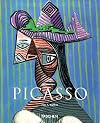
Another in the excellent Taschen series on individual artists that retails at a phenomenally low price. I nearly gave it the full five stars but there are one or two attempts to over-explain the works that just halted me from that accolade.
Nevertheless, this is an excellent introduction to Picasso that I think is superior to the older Roland Penrose introduction in the Phaidon series which has just a touch too much hagiography for my taste. In fact, Walther's book made me appreciate Picasso show more as an artist and as a man far more than did the attempt of Penrose to deify him. This was a man who was, indeed, greater than his image. I ended up actually liking him a great deal regardless of the art!
I am still not convinced that the work in his old age was overly-significant except to himself but it has its integrity. It may even be argued that a genius with a sustained commitment to recording his declining powers and the effects of old age is doing a curious and unique service to humanity and that perhaps we should consider this late body of work of importance for that reason alone. We live with a prejudice (which I share) for innovation and youth but there is little justification for that position other than cultural ideology.
The reproductions are excellent and much more balanced than in the Phaidon collection, with more emphasis on telling the story of Picasso in the round and much less on the 'great works' syndrome. This story is one of remarkable creativity based on one simple truth - that art has no purpose other than the expression of the artist's artistry. Picasso never seems to have believed the propaganda surrounding him, never seems to have tried to search for meanings and saw his work as fundamentally the artistic expression of himself.
This is a form of egoism, of course, but not necessarily one of pride. Rather it is one of exploration of doubt. If we non-artists can dream of constructing ourselves as a work of art, Picasso's art is the outward expression of that purpose - the recorded expression in art of one man over time. This makes his recorded work an account of a man who had amazing talent from early youth to great old age - not a continuous vision in form but a continuous vision in underlying content. The works of the old age are thus wholly consonant in fundamental intent with what went on before.
A sub-text of the book and so reflective of Picasso's ouevre is that, for all his innovation, he was an artist very much within the Western tradition, despite the influence of so-called primitivist non-European sculpture on 'Les Demoiselles d'Avignon' and other works. Again, this becomes clear in direct references to the 'great' masters of the Western tradition in his old age (not to my taste) but also in the classicism of the period between Cubism and the radical works of the 1930s.
There is great beauty in the apparent ugliness and disproportion of Picasso's work. I keep coming back not to the obvious paintings like Guernica but to the almost Vatican-purple, blues and blacks of 'Still Life with Steer's Skull' of 1942 which is almost the materialisation of the electric in colour. This book is highly recommended as a very sound introduction to the artist. show less
Nevertheless, this is an excellent introduction to Picasso that I think is superior to the older Roland Penrose introduction in the Phaidon series which has just a touch too much hagiography for my taste. In fact, Walther's book made me appreciate Picasso show more as an artist and as a man far more than did the attempt of Penrose to deify him. This was a man who was, indeed, greater than his image. I ended up actually liking him a great deal regardless of the art!
I am still not convinced that the work in his old age was overly-significant except to himself but it has its integrity. It may even be argued that a genius with a sustained commitment to recording his declining powers and the effects of old age is doing a curious and unique service to humanity and that perhaps we should consider this late body of work of importance for that reason alone. We live with a prejudice (which I share) for innovation and youth but there is little justification for that position other than cultural ideology.
The reproductions are excellent and much more balanced than in the Phaidon collection, with more emphasis on telling the story of Picasso in the round and much less on the 'great works' syndrome. This story is one of remarkable creativity based on one simple truth - that art has no purpose other than the expression of the artist's artistry. Picasso never seems to have believed the propaganda surrounding him, never seems to have tried to search for meanings and saw his work as fundamentally the artistic expression of himself.
This is a form of egoism, of course, but not necessarily one of pride. Rather it is one of exploration of doubt. If we non-artists can dream of constructing ourselves as a work of art, Picasso's art is the outward expression of that purpose - the recorded expression in art of one man over time. This makes his recorded work an account of a man who had amazing talent from early youth to great old age - not a continuous vision in form but a continuous vision in underlying content. The works of the old age are thus wholly consonant in fundamental intent with what went on before.
A sub-text of the book and so reflective of Picasso's ouevre is that, for all his innovation, he was an artist very much within the Western tradition, despite the influence of so-called primitivist non-European sculpture on 'Les Demoiselles d'Avignon' and other works. Again, this becomes clear in direct references to the 'great' masters of the Western tradition in his old age (not to my taste) but also in the classicism of the period between Cubism and the radical works of the 1930s.
There is great beauty in the apparent ugliness and disproportion of Picasso's work. I keep coming back not to the obvious paintings like Guernica but to the almost Vatican-purple, blues and blacks of 'Still Life with Steer's Skull' of 1942 which is almost the materialisation of the electric in colour. This book is highly recommended as a very sound introduction to the artist. show less

As the title says, every known painting by Vincent van Gogh is presented here, nearly all in color, well-reproduced and many full-page. But more than that, the authors analyze van Gogh's life story throughout every stage of his artistic development (and this is a more complex and multi-layered artistic growth than I had realized). I was especially fascinated by his fascination with Japanese art, and the last few months of his life. This was his most productive period (he painted over 80 show more works in his last 2 months), with probably some of his best work, and perhaps his happiest period. And yet he shot himself on July 27, 1890, dying 2 days later, his last words reportedly "I wish it were all over now". The author tries quite a lot of psychoanalysis through Vincent's letters and art, and he may be on the mark when he says that the artist killed himself when he realized that he could never again have the simple life he craved (although he only sold one painting in his lifetime, he had been gaining growing recognition in the art world). Also, he may have wanted to help his brother Theo's flagging fortunes by means of the old artistic truism, that an artist's works rise dramatically in value after his death. And he did dote on his brother and nephew. The works here that stand out most to me are: pg 138; "Skull With Burning Cigarette", painted during a period of fairly routine human portraits, this stands out as no other picture in van Gogh's body of work. It was used as the book cover of a David Sedaris book, and I didn't even realize until now that it was a van Gogh. pg. 520, "Starry Night", his most famous work and a vivid one that swirls as though it will move off the canvas in a shower of color. pg. 690, "Wheat Field with Crows", painted near the end of his life, and often analyzed for clues to Vincent's frame of mind before he killed himself, with its disturbing imagery of crows flapping into the foreground toward the viewer over a turbulent field of wheat with a gash of a road cutting through it, to ultimately disappear. This is one of the most emotionally powerful paintings I know, and one can see the point that this is not the work of a stable soul. show less
Could they have made the type in this book any smaller? I get that it’s meant to be a condensed overview of Picasso’s work, but they shouldn’t make the type so small that it becomes difficult to read unless it’s meant to be a minimal amount and basically supplementary to the images (which in this case, it’s clearly not). That being said, the book did meet its goal in providing a brief and accessible overview of the artist; the author went into just enough detail that we gained a show more reasonable glimpse into Picasso’s life and development as an artist, and a reasonable range of imagery accompanied the text. I fully meant to get Taschen’s full publication on Picasso rather than this condensed version, but it’s still a good starter on the subject and it definitely convinced me to delve further into exploring this artist. show less
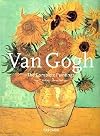
As much as I love having a complete collection of Van Gogh's work in a single volume, I was not completely impressed with this book. Unlike Taschen's publication which covers the work of Leonardo Da Vinci, this paperback version isn't split into two volumes (even though it is intellectually split) so it becomes pretty unwieldy without the strength of a proper binding. It's not quite as physically big as I expect an art book of this magnitude to be as well, so I feel that some of the show more reproduction size was a bit too small to get a proper feeling for the luscious texture of Van Gogh's brushwork. Further hindering full-size reproductions was the overabundance of text, which traces what feels like every second of the artist's life - a useful quality for a biography, but I honestly couldn't care less about a lot of the detail that the writer went in to and found it to be extremely overwhelming. After about 100 pages I gave up on reading completely and focused instead on just enjoying the paintings, since that's what I came for anyways! show less
Lists
You May Also Like


Associated Authors
Statistics
- Works
- 48
- Also by
- 7
- Members
- 6,580
- Popularity
- #3,726
- Rating
- 4.1
- Reviews
- 40
- ISBNs
- 445
- Languages
- 20
- Favorited
- 2