
Rose-Marie Hagen (1928–2022)
Author of Bruegel: The Complete Paintings
About the Author
Series
Works by Rose-Marie Hagen
Tagged
Common Knowledge
- Canonical name
- Hagen, Rose-Marie
- Birthdate
- 1928
- Date of death
- 2022
- Gender
- female
- Education
- University of Lausanne
- Occupations
- art historian
- Organizations
- American University
- Relationships
- Hagen, Rainer (husband)
- Nationality
- Switzerland
- Associated Place (for map)
- Switzerland
Members
Reviews
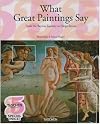
I didn’t get very far when I studied art history at high school. I ended up in a school with so few students, I had to take art history by correspondence. And apart from an exciting and informative two days in the city centre getting an intensive seminar program, the rest of the support wasn’t there.
Books like this are kind of addictive. A chapter per painting that goes deep – for me anyway – into the many facets of a work of art. The commentary on the early works are especially show more interesting, given that they belong to another time and place so unlike ours that the work of art becomes a pinhole through which that world can be explored. Artists have always it seems had much to say about the world around them - even if at the surface level we are just looking at a picture. The one that most impressed me from that point of view was the Pieter Brugel the Elder work from 1566 titled The Census in Bethlehem.
Here is what I learned. At its surface is a winter scene in a village somewhere in the low countries. Snow covers the ground, the watercourse is frozen over, the trees are bare. The work is panoramic in breadth but also uses perspective to take you deep into the town and take in its details and history. On that point, I learned (by following what I think is the vanishing point to the top right of the painting), we seen the ruins of the medieval castle. One reason why we know we’re in the 16thC, is that the ordered Feudal world where a few nobles once governed the masses of peasants, has already fallen into ruin. Another sign of a post-medieval world comes from the details of money exchange at the tavern in the foreground left. Money didn't greatly circulated in previous times - it lacked spiritual gravitas. We are also likely in tax time. The Flemish lands were then part of Spain under the Hapsburg Phillip II who liked to tax these countries at four times the rate of his own people down south to pay for the kingdom. We are about to enter into the long period of conflict before separation from Spain decades later in the 17thC.
Why are there so many people in the painting? It looks like a festival, and it’s bloody freezing. But you see, houses were small used as much for animals and storage with a third space for a hearth with bedding where everyone slept and ate by the fire. There’s no room to hang around indoors it seems. Kids play on the ice, adults tend to business or spend time at the tavern (front left). And of course, as this is a close to nativity scene, Joseph and Mary wander into the foreground of the frame like any other member of the townsfolk. This is no longer medieval art, they go about their business without their customary halos and they are not the only characters in the frame. The world is moving at pace all around them, there is an alternative interpretation of religion in society once the secular world gained authority during renaissance times.
So I learned that this work contains so many dimensions, social, historical, political. And each category has layers within that, too. Staring at a canvas that yields very little, the viewer can easily see what they want to see in a work. But learning what’s really going on, gave me a rush of clarity. Can’t wait to see some of the works now. I’ll have to somehow get to the Oldmasters Museum in Brussels first.
So, that's just one painting. Each analysis is well written, educational, illuminating, engaging. Here are a few others including Jean Fouquet's early representation of the Borg Queen from Star Trek
And Gozzolli's Procession of the Magi
And Mantegna's Ludovico Gonzaga Family portrait which I hope to see next year in Mantua show less
Books like this are kind of addictive. A chapter per painting that goes deep – for me anyway – into the many facets of a work of art. The commentary on the early works are especially show more interesting, given that they belong to another time and place so unlike ours that the work of art becomes a pinhole through which that world can be explored. Artists have always it seems had much to say about the world around them - even if at the surface level we are just looking at a picture. The one that most impressed me from that point of view was the Pieter Brugel the Elder work from 1566 titled The Census in Bethlehem.
Here is what I learned. At its surface is a winter scene in a village somewhere in the low countries. Snow covers the ground, the watercourse is frozen over, the trees are bare. The work is panoramic in breadth but also uses perspective to take you deep into the town and take in its details and history. On that point, I learned (by following what I think is the vanishing point to the top right of the painting), we seen the ruins of the medieval castle. One reason why we know we’re in the 16thC, is that the ordered Feudal world where a few nobles once governed the masses of peasants, has already fallen into ruin. Another sign of a post-medieval world comes from the details of money exchange at the tavern in the foreground left. Money didn't greatly circulated in previous times - it lacked spiritual gravitas. We are also likely in tax time. The Flemish lands were then part of Spain under the Hapsburg Phillip II who liked to tax these countries at four times the rate of his own people down south to pay for the kingdom. We are about to enter into the long period of conflict before separation from Spain decades later in the 17thC.
Why are there so many people in the painting? It looks like a festival, and it’s bloody freezing. But you see, houses were small used as much for animals and storage with a third space for a hearth with bedding where everyone slept and ate by the fire. There’s no room to hang around indoors it seems. Kids play on the ice, adults tend to business or spend time at the tavern (front left). And of course, as this is a close to nativity scene, Joseph and Mary wander into the foreground of the frame like any other member of the townsfolk. This is no longer medieval art, they go about their business without their customary halos and they are not the only characters in the frame. The world is moving at pace all around them, there is an alternative interpretation of religion in society once the secular world gained authority during renaissance times.
So I learned that this work contains so many dimensions, social, historical, political. And each category has layers within that, too. Staring at a canvas that yields very little, the viewer can easily see what they want to see in a work. But learning what’s really going on, gave me a rush of clarity. Can’t wait to see some of the works now. I’ll have to somehow get to the Oldmasters Museum in Brussels first.
So, that's just one painting. Each analysis is well written, educational, illuminating, engaging. Here are a few others including Jean Fouquet's early representation of the Borg Queen from Star Trek
And Gozzolli's Procession of the Magi
And Mantegna's Ludovico Gonzaga Family portrait which I hope to see next year in Mantua show less
4 to 5 pages of context for each choosen painting. Well writen, it gives you an idea of the paiting background, the history behind it and, using inserts por specific parts of the painting, calls your attention to details. I found the approach very interesting, a con I found is sometimes the quality of the printing isn't all that good (some blurred pages). Anyway, I do like it.
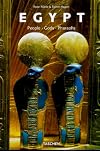
Very beautifully illustrated, this large book presents the story of Egypt from prehistory through early contact with western archaeologists. The focus is what has been learned through archaeological exploration throughout each historical period. Sections on grave robbing and the role of women are particularly interesting. Includes some sexually explicit illustrations.
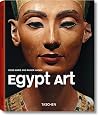
This book has 45 pages of gorgeous full page illustrations of ancient Egyptian art objects from 2700 BC to 24 AD, each page accompanied by a page of text.
Nice pictures, but the mentions of reincarnation in the text worry me. I'm not sure, but I don't think the Egyptians believed in reincarnation.
Nice pictures, but the mentions of reincarnation in the text worry me. I'm not sure, but I don't think the Egyptians believed in reincarnation.
Lists
You May Also Like


Associated Authors
Statistics
- Works
- 20
- Members
- 2,308
- Popularity
- #11,122
- Rating
- 3.9
- Reviews
- 11
- ISBNs
- 124
- Languages
- 10