
Gilles Néret (1933–2005)
Author of Klimt
About the Author
Series
Works by Gilles Néret
Erotica 19th Century: From Courbet to Gauguin (TASCHEN Icons Series) (English, German and French Edition) (2001) 77 copies
Kleine Reihe Kunst: TEN in ONE. Impressionismus. Die Geburt des Lichtes in der Malerei (2020) 4 copies
L'Art des années 30 : Peinture - Sculpture - Architecture - Design - Décor - Graphisme - Photographie - Cinéma (1987) 4 copies
Rubens 1 copy
LEMPICKE 1 copy
Arte Erótica 1 copy
Salvador Dali: 1904-1989. 1 copy
Dessous (Icons) 1 copy
Gustav Klimt 1862-1018 1 copy
Rodin Sculptures et Dessins 1 copy
Malewitsch 1 copy
Tagged
Common Knowledge
- Canonical name
- Néret, Gilles
- Birthdate
- 1933
- Date of death
- 2005-08-03
- Gender
- male
- Occupations
- art historian
journalist
literary author
curator
publisher - Awards and honors
- Élie-Faure Prize (1981)
- Short biography
- Gilles Néret (1933–2005) was an art historian, journalist, writer, and museum correspondent. He organized several art retrospectives in Japan and founded the SEIBU Museum and the Wildenstein Gallery in Tokyo. He directed art reviews such as L'Œil and Connaissance des Arts and received the Élie Faure Prize in 1981 for his publications.
- Nationality
- France
- Places of residence
- London, England, UK
Japan - Place of death
- Paris, France
- Map Location
- France
Members
Reviews
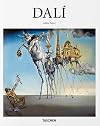
Sometimes I find it funny that art should be arranged into movements, since it's a form that should fundamentally defy classification, with any attempt at doing so seeming rather pretentious; but our natural tendency toward order and categorization prevents us from accepting this. I suppose, however, that the term surrealism gives some voice to the creativity and strangeness of Dali's artistic abilities (though in a great illustration of the arbitrary nature of any art movement, he was show more himself "expelled" from the Surrealists).
I'm no art critic nor do I know how to write about art, so the best I can give here is my point of view. Dali's paintings by their very provocativeness and defiance of (and later homage to) natural laws of physics, as well as modern aesthetics, are endlessly fascinating to unpack and analyze. He both acknowledges the standards that people bring to art appraisal, while making the point that such standards are subjective and perhaps should not exist in the first place; he has a similar view on whether art should or should not "make sense." Had he allowed himself to be locked down by such restrictions, which always fluctuate based on the time period, the world would have been deprived of so much fearless, scandalous creative power. So, even though I don't necessarily like the subject matter of some of his works, I can respect the tenacity, openness and multifaceted nature of the mind behind their creation. A point of view that I wish the so-called Surrealists of his time could have shared - you can't exactly call yourself a "revolutionary" movement if you're easily offended by those who dare to break the mold.
A few other unexpected discoveries I made from this book:
(1) His mastery of the trompe l'oeil technique is absurdly good. My only prior memory of his art being The Persistence of Memory, I was stunned by how well he could create optical illusions in his paintings, with the seemingly effortless placement of a few properly shaped objects, or through the combination of a multitude of tiny components like in Gala Placidia. It's amazing to consider how he came up with such a concept, let alone how he executed it so flawlessly.
(2) Dali is at least as good of a writer as he is a painter, if not better. As writing is also a form of art, it must have been another great avenue for him to express his views on life, religion/mysticism, etc. Although not everything he's written has been autobiographical, the few excerpts I read from The Secret Life of Salvador Dali and Diary of a Genius ranged from sharp-witted to poetic to philosophical, and sometimes all three, which again illustrates the brilliance of the mind behind the art.
(3) Unlike other artists, Dali has provided background/interpretation on some of his works, which on one level gives us an easy understanding of his more confusing (and/or scandalous) paintings, but on the other makes me wonder how he ever managed to perceive and incorporate so much symbolism into his art. The soft watches in The Persistence of Memory came from an image of melting Camembert and how people are slaves to their rigid timepieces. He depicts drawers and cupboards opening out of bodies as a representation of Freud's psychoanalytic theories. Eggs are a common motif, a symbol of a "pre-natal" world; and his wife Gala is a recurring image in his work, taking on a religious significance in some instances. Later, discoveries on the nature of the atom heavily influence his subject matter as well. In short, it's amazing to me how one man could so artistically combine the inner and outer universe of his existence.
Thanks to this book, I can now extend my list of Dali favorites to include the following paintings:
- The Persistence of Memory
- The Disintegration of the Persistence of Memory
- Eggs on the Plate (without the Plate)
- Archaeological Reminiscence of Millet's "Angelus"
- A Couple with their Heads Full of Clouds
- Metamorphosis of Narcissus
- "Geopoliticus" Child Watching the Birth of the New Man
- Soft Self-Portrait with Grilled Bacon
- Gala Placidia
- Nuclear Cross
- Exploding Raphaelesque Head
And now I'm on my way to watch "An Andalusian Dog", which I'm sure will weird me out given what I've heard of it, but sometimes it takes a little weird to make you appreciate your normal everyday existence - and to give a little shock to your creativity. show less
I'm no art critic nor do I know how to write about art, so the best I can give here is my point of view. Dali's paintings by their very provocativeness and defiance of (and later homage to) natural laws of physics, as well as modern aesthetics, are endlessly fascinating to unpack and analyze. He both acknowledges the standards that people bring to art appraisal, while making the point that such standards are subjective and perhaps should not exist in the first place; he has a similar view on whether art should or should not "make sense." Had he allowed himself to be locked down by such restrictions, which always fluctuate based on the time period, the world would have been deprived of so much fearless, scandalous creative power. So, even though I don't necessarily like the subject matter of some of his works, I can respect the tenacity, openness and multifaceted nature of the mind behind their creation. A point of view that I wish the so-called Surrealists of his time could have shared - you can't exactly call yourself a "revolutionary" movement if you're easily offended by those who dare to break the mold.
A few other unexpected discoveries I made from this book:
(1) His mastery of the trompe l'oeil technique is absurdly good. My only prior memory of his art being The Persistence of Memory, I was stunned by how well he could create optical illusions in his paintings, with the seemingly effortless placement of a few properly shaped objects, or through the combination of a multitude of tiny components like in Gala Placidia. It's amazing to consider how he came up with such a concept, let alone how he executed it so flawlessly.
(2) Dali is at least as good of a writer as he is a painter, if not better. As writing is also a form of art, it must have been another great avenue for him to express his views on life, religion/mysticism, etc. Although not everything he's written has been autobiographical, the few excerpts I read from The Secret Life of Salvador Dali and Diary of a Genius ranged from sharp-witted to poetic to philosophical, and sometimes all three, which again illustrates the brilliance of the mind behind the art.
(3) Unlike other artists, Dali has provided background/interpretation on some of his works, which on one level gives us an easy understanding of his more confusing (and/or scandalous) paintings, but on the other makes me wonder how he ever managed to perceive and incorporate so much symbolism into his art. The soft watches in The Persistence of Memory came from an image of melting Camembert and how people are slaves to their rigid timepieces. He depicts drawers and cupboards opening out of bodies as a representation of Freud's psychoanalytic theories. Eggs are a common motif, a symbol of a "pre-natal" world; and his wife Gala is a recurring image in his work, taking on a religious significance in some instances. Later, discoveries on the nature of the atom heavily influence his subject matter as well. In short, it's amazing to me how one man could so artistically combine the inner and outer universe of his existence.
Thanks to this book, I can now extend my list of Dali favorites to include the following paintings:
- The Persistence of Memory
- The Disintegration of the Persistence of Memory
- Eggs on the Plate (without the Plate)
- Archaeological Reminiscence of Millet's "Angelus"
- A Couple with their Heads Full of Clouds
- Metamorphosis of Narcissus
- "Geopoliticus" Child Watching the Birth of the New Man
- Soft Self-Portrait with Grilled Bacon
- Gala Placidia
- Nuclear Cross
- Exploding Raphaelesque Head
And now I'm on my way to watch "An Andalusian Dog", which I'm sure will weird me out given what I've heard of it, but sometimes it takes a little weird to make you appreciate your normal everyday existence - and to give a little shock to your creativity. show less
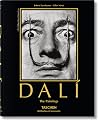
This is the best collection of Dali's paintings I have ever found. It has dozens of massive full color, full page prints. It does not contain all of them, but several hundred works are represented. To gain a deep understanding of Dali's symbolism you will also need to read supplemental works. You can gain some quick tidbits from the footnotes and commentary but this is largely a visual coffee table style volume. However, like any true surrealist, his art can be appreciated purely show more aesthetically, with little interpretation of the striking symbols.
You will find several of the large works missing from this collection, but it would be difficult to imagine a more comprehensive single volume.
It is easy to see that his work progressed in stages, from hyper-realism in studies and sketches to phalanxes of surrealism throughout the early and later paintings. Influences arise from Cubism and the various locales he visited. The ever-present Gala remains the worshipful motif. Bleak landscapes and mental anguish belie the weird mustache and bread sculptures. It was very difficult to pinpoint the line between genius and insanity in most of the works, until I read up on the analyses and meanings behind the elephant obelisks and bleeding saints. Even when perusing his autobiographies, you may struggle to grasp some of his ridiculous ideas. Undeniably though, beneath the eccentricity, verifiable brilliance frequently blossomed. This is a massive tome of elegant prints, well-worth the cover price if you are at all interested in one of the most enigmatic and alluring artists of all time. show less
You will find several of the large works missing from this collection, but it would be difficult to imagine a more comprehensive single volume.
It is easy to see that his work progressed in stages, from hyper-realism in studies and sketches to phalanxes of surrealism throughout the early and later paintings. Influences arise from Cubism and the various locales he visited. The ever-present Gala remains the worshipful motif. Bleak landscapes and mental anguish belie the weird mustache and bread sculptures. It was very difficult to pinpoint the line between genius and insanity in most of the works, until I read up on the analyses and meanings behind the elephant obelisks and bleeding saints. Even when perusing his autobiographies, you may struggle to grasp some of his ridiculous ideas. Undeniably though, beneath the eccentricity, verifiable brilliance frequently blossomed. This is a massive tome of elegant prints, well-worth the cover price if you are at all interested in one of the most enigmatic and alluring artists of all time. show less
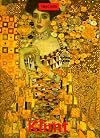
I’ve read enough publications from Taschen’s art portfolio that I’ve become incredibly sceptical about the authorial quality, but I was happy to not find myself immediately annoyed with this book. It’s much smaller in volume than most of the other art books I’ve read, so the temptation to skip reading in lieu of absorbing strictly the artwork was much lessened and I was determined to read the book cover to cover. I did achieve this goal, but unfortunately found myself frustrated show more again due to the author’s hyper-focus on the aspects of sexuality that he perceived in Klimt’s work. Obviously there are many aspects of his interpretations that I agree with (for example that Klimt’s women were extremely forward in their aspect for the time period, and the way that he presented nude figures was certainly unique), but his over-use of certain terminology became tedious and at times seemed to imply a sense of disdain for female sexuality and the female form as presented by Klimt. Obviously Néret’s academic subject when it came to art critique was centered around eroticism, but I came into this book expecting an broad (but brief) overview of Klimt’s work not a detailed critique of a singular theme. Taschen may know how to style and print beautiful books, but the recurrent theme of inadequate authors seriously gets on my nerves. show less
As much as I enjoy Dali’s artwork, this book was not very good… Most of the problems stem from the fact that they shrunk the book down to half-page size, so the text and images became very small and very little of the detail in the artwork could be enjoyed. It did not help matters that I found the writing style to be rather obtuse and impossible to become engaged in. I’m sure Dali had a fascinating life, but the presentation was so subpar that I don’t feel like I got much out of show more reading this book. show less
Awards
You May Also Like


Associated Authors
Statistics
- Works
- 91
- Members
- 7,896
- Popularity
- #3,074
- Rating
- 3.9
- Reviews
- 48
- ISBNs
- 492
- Languages
- 19
- Favorited
- 1