
J. H. Williams, III
Author of The Sandman: Overture
About the Author
Image credit: comicbookresources
Series
Works by J. H. Williams, III
Promethea #24 - Cross, Star, Moon, Shapes in the Sand (Everything Goes Wrong) (2003) — Illustrator — 8 copies
Promethea #28 - Don't They Know It's the End of the World? (It Ended When You Said Goodbye) (2004) — Illustrator — 8 copies
Batwoman, Vol. 2 #19 2 copies
Chase: Letdowns / Pickups 1 copy
Chase: Shadowing the Bat 1 copy
Batwoman Intégrale - Tome 1 1 copy
Associated Works
Heroes: The World's Greatest Super Hero Creators Honor The World's Greatest Heroes 9-11-2001 (2001) — Illustrator — 25 copies, 1 review
Batgirl Secret Files & Origins #1 — Contributor — 5 copies
Spooky Tales — Illustrator — 4 copies
Inhumans [2003] #03 — Cover artist — 3 copies
Inhumans [2003] #05 — Cover artist — 2 copies
Inhumans [2003] #06 — Cover artist — 2 copies
Inhumans [2003] #02 — Cover artist — 2 copies
Inhumans [2003] #01 — Cover artist — 2 copies
Inhumans [2003] #04 — Cover artist — 1 copy
Tagged
Common Knowledge
- Canonical name
- Williams, J. H., III
- Birthdate
- 1965
- Gender
- male
- Nationality
- USA
- Places of residence
- California, USA
- Associated Place (for map)
- California, USA
Members
Reviews
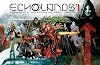
It took me a week to slog through this crap as one chapter at a shot was all I could endure.
Bad enough this opening book in the series is an overlong and tedious chase scene with unbearably busy art with multiple clashing styles on each page, but the whole thing is presented in one of the most awkward and annoying formats for a book: a wobbly panoramic spread that opens up to be only seven inches tall but nearly two feet wide. Reading it anywhere but firmly on a flat surface is an annoying show more and clumsy chore. It's the sort of book that if dropped once while open, the bound pages are sure to start splitting from the cover.
Really, it's more a Where's Waldo? picture book than a story as it is purely Easter eggs. Hey, that guy looks like he was drawn by Jack Kirby! Hey, that guy from Chicago looks like Flattop from Dick Tracy! Hey, Dracs and Steins look like Universal movie monsters! Hey, pirates! Hey, Japanese robots! Hey, zombies!
Just to really drive home how self-indulgent this project is, the end matter has over two dozen pages listing all the music J. H. Williams III listened to while working on the art. Mostly vinyl, of course! And he specifies the color of vinyl! And which ones were picked by his wife! OMG!
And this is just Book One? No. Never again. show less
Bad enough this opening book in the series is an overlong and tedious chase scene with unbearably busy art with multiple clashing styles on each page, but the whole thing is presented in one of the most awkward and annoying formats for a book: a wobbly panoramic spread that opens up to be only seven inches tall but nearly two feet wide. Reading it anywhere but firmly on a flat surface is an annoying show more and clumsy chore. It's the sort of book that if dropped once while open, the bound pages are sure to start splitting from the cover.
Really, it's more a Where's Waldo? picture book than a story as it is purely Easter eggs. Hey, that guy looks like he was drawn by Jack Kirby! Hey, that guy from Chicago looks like Flattop from Dick Tracy! Hey, Dracs and Steins look like Universal movie monsters! Hey, pirates! Hey, Japanese robots! Hey, zombies!
Just to really drive home how self-indulgent this project is, the end matter has over two dozen pages listing all the music J. H. Williams III listened to while working on the art. Mostly vinyl, of course! And he specifies the color of vinyl! And which ones were picked by his wife! OMG!
And this is just Book One? No. Never again. show less
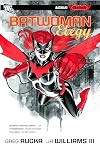
When DC first announced they were bringing back Batwoman, I was skeptical that it wasn't a publicity stunt to resurrect an old character with a new spin (she's a lesbian now, guys!) to grab headlines. I'm pleased to report I was totally wrong.
Usually when I review DC's Batman compilations, I feel the need to break them down issue-by-issue to acknowledge the fact that there are bad issues and good issues. Elegy works really well as a cohesive whole - I couldn't tell you what my least favorite show more issue was, as I'm not sure where one begins and another ends.
JH Williams III is as amazing as he as ever been. Look at the hidden words in Kate's memories when she's been poisoned! Check out how the panel borders and layouts change when Kate stops being Kate and starts being Batwoman! The fight-sequence-in-one-page when Kate jumps onto the plane! Hell, even just Kate dancing with Maggie Sawyer (DC: you need some more new lesbian characters) is wonderfully done. I could go on and on. There's a reason they're putting him together with Gaiman for another run at The Sandman.
The plot is really great - the twist is one that you don't see coming, but looking back, you can see where Rucka planted the clues. The origin story issues are just absolutely phenomenal -- as Rachel Maddow points out in her introduction to the collection, the sequence where Kate comes out to her father is absolutely heartbreaking. Rucka just delivers on Kate as a character every step of the way here, and does a great job of giving her her own "Yes, father" moment when she manages to save herself from a mugger before Batman even shows up.
I'm baffled why DC doesn't take more steps to integrate Kate into the larger Bat-family. She's a helluva character, and this is a helluva book. (Plus, I'd get a charge out of the moment when Bruce and her show up to some charity ball in the same tux.) show less
Usually when I review DC's Batman compilations, I feel the need to break them down issue-by-issue to acknowledge the fact that there are bad issues and good issues. Elegy works really well as a cohesive whole - I couldn't tell you what my least favorite show more issue was, as I'm not sure where one begins and another ends.
JH Williams III is as amazing as he as ever been. Look at the hidden words in Kate's memories when she's been poisoned! Check out how the panel borders and layouts change when Kate stops being Kate and starts being Batwoman! The fight-sequence-in-one-page when Kate jumps onto the plane! Hell, even just Kate dancing with Maggie Sawyer (DC: you need some more new lesbian characters) is wonderfully done. I could go on and on. There's a reason they're putting him together with Gaiman for another run at The Sandman.
The plot is really great - the twist is one that you don't see coming, but looking back, you can see where Rucka planted the clues. The origin story issues are just absolutely phenomenal -- as Rachel Maddow points out in her introduction to the collection, the sequence where Kate comes out to her father is absolutely heartbreaking. Rucka just delivers on Kate as a character every step of the way here, and does a great job of giving her her own "Yes, father" moment when she manages to save herself from a mugger before Batman even shows up.
I'm baffled why DC doesn't take more steps to integrate Kate into the larger Bat-family. She's a helluva character, and this is a helluva book. (Plus, I'd get a charge out of the moment when Bruce and her show up to some charity ball in the same tux.) show less
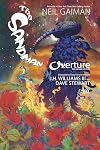
It was with a certain dull dour melancholy that I anticipated reading this. I'm not sure if I was thinking that this would be the sad end of my Sandman reread or that this would be a dull echo of Sandman at its height, a sincere but pale, as it were, imitation. Holy guacamole. That didn't even last a single page.
To be clear, Gaiman does not let the reader down. This isn't a retread of Sandman at all, this is a whole different type and style of Sandman story. Morpheus is proactive, for a show more start, in a way he generally isn't in the long run of the series, and we get some sense of why that is. This is an epic, action-packed space opera, a huge conflict that Dream must fight with Dream's own weapons and tactics, and he does and it's a giddy delight. It's a prelude, but it draws back in a score of threads laid out in the main series and refines them into a fast-paced eye-popping wide-screen thrill ride.
Not just that, but the mythical world of the Endless is deepened and expanded - we meet Mum and Dad! We meet versions of Dream from all over the universe! We hear the story of Aliana (but weren't there three gods? Oh Gaiman, you minx!) There's a giant talking Dream cat! A western! A city of stars!
But galloping gondolas it's JH Williams who takes all the prizes, who elevates the whole thing to a level that surpasses almost everything that went before, except that's not fair because it's like none of the other stories that went before. The art flows and pops and bends time and space on the page. It stretches and bends and still manages to tell a completely coherent story. Literally the only problem with the storytelling using this amazingly complex and vivid art is that once or twice the glossy paper stuck and I skipped two pages by accident.
No dour melancholy or doubt can survive contact with these pages, from the giddy delight of long-laid plot seeds effortlessly flowering and clicking into place like some sort of clockwork mechanical growing flower things to the sweeping action and the mind-bending profusion of ideas and the brilliant colours and the teeming inventions of landscape and alien lives and impossible incomprehensible realms and Destiny saying 'what?'
This is an exciting, exhilarating, comic, an utterly new execution of utterly familiar characters and ideas that enriches what has gone before by prefiguring what is to come. Gaiman and Williams have completely outdone themselves, as have the colourists and the letterer and presumably the vast processing intelligences that fill solar systems with their whirring, god-like, editing brains. It's a fantastic high note to end the reread and I'm already anticipating a future return to the story with the Overture at the start to see how it reshapes and alters the story. show less
To be clear, Gaiman does not let the reader down. This isn't a retread of Sandman at all, this is a whole different type and style of Sandman story. Morpheus is proactive, for a show more start, in a way he generally isn't in the long run of the series, and we get some sense of why that is. This is an epic, action-packed space opera, a huge conflict that Dream must fight with Dream's own weapons and tactics, and he does and it's a giddy delight. It's a prelude, but it draws back in a score of threads laid out in the main series and refines them into a fast-paced eye-popping wide-screen thrill ride.
Not just that, but the mythical world of the Endless is deepened and expanded - we meet Mum and Dad! We meet versions of Dream from all over the universe! We hear the story of Aliana (but weren't there three gods? Oh Gaiman, you minx!) There's a giant talking Dream cat! A western! A city of stars!
But galloping gondolas it's JH Williams who takes all the prizes, who elevates the whole thing to a level that surpasses almost everything that went before, except that's not fair because it's like none of the other stories that went before. The art flows and pops and bends time and space on the page. It stretches and bends and still manages to tell a completely coherent story. Literally the only problem with the storytelling using this amazingly complex and vivid art is that once or twice the glossy paper stuck and I skipped two pages by accident.
No dour melancholy or doubt can survive contact with these pages, from the giddy delight of long-laid plot seeds effortlessly flowering and clicking into place like some sort of clockwork mechanical growing flower things to the sweeping action and the mind-bending profusion of ideas and the brilliant colours and the teeming inventions of landscape and alien lives and impossible incomprehensible realms and Destiny saying 'what?'
This is an exciting, exhilarating, comic, an utterly new execution of utterly familiar characters and ideas that enriches what has gone before by prefiguring what is to come. Gaiman and Williams have completely outdone themselves, as have the colourists and the letterer and presumably the vast processing intelligences that fill solar systems with their whirring, god-like, editing brains. It's a fantastic high note to end the reread and I'm already anticipating a future return to the story with the Overture at the start to see how it reshapes and alters the story. show less
Dream's family is so messed up. I really wish I could just leave that as my review, but dang. We get to see Dream's Father and Mother in this one. We also get to see Dream's messed up siblings, Desire, Destiny, Delirium, Despair, Destruction, and Death as well. And we get to see some new characters such as Hope I was fascinated by.
"The Sandman: Overture" is book #0 in the series. When I bought the first 5 books eons ago, I never got this one because it looks like it came out after I got show more these. This volume stars with something wrong on a planet and a plant seemingly about to burst into flames. Dream, consults with the oldest Aspect of himself and someone known as "Glory of the First Circle" where he learns that the cause of what he feels is wrong is that a star has gone insane and it is going to spread and destroy the entire universe. Glory also tells Dream it's all his fault. We get to read along about how things were born/created, how Dream keeps getting captured, and how things unfold because of something Dream failed to do.
I do love Dream. He keeps insisting that he is not lonely, that he does not feel guilt, that he is in many ways not human, but he is. The things he goes through in this one in order to undo the end of the known world was great. I loved his conversations with his parents, a cat (no spoilers) and Hope. Dream trying to undo and put things back no matter what it meant for him shows why you can't help rooting for him.
Dream's parents are a mess. Time and Night were interesting and I wonder if they pop up again.
The writing is so good and I love Gaiman's take on how the universe came to be and how one day all things must end.
The illustrations are so beautiful. And this graphic novel is more interactive than the other ones. Some panels open up and you have to carefully unfold them. Sometimes you are forced to turn the novel upside down to read what a character is saying. It draws you in so nicely.
The ending of course leaves us with Morpheus/Dream right before volume 1. show less
"The Sandman: Overture" is book #0 in the series. When I bought the first 5 books eons ago, I never got this one because it looks like it came out after I got show more these. This volume stars with something wrong on a planet and a plant seemingly about to burst into flames. Dream, consults with the oldest Aspect of himself and someone known as "Glory of the First Circle" where he learns that the cause of what he feels is wrong is that a star has gone insane and it is going to spread and destroy the entire universe. Glory also tells Dream it's all his fault. We get to read along about how things were born/created, how Dream keeps getting captured, and how things unfold because of something Dream failed to do.
I do love Dream. He keeps insisting that he is not lonely, that he does not feel guilt, that he is in many ways not human, but he is. The things he goes through in this one in order to undo the end of the known world was great. I loved his conversations with his parents, a cat (no spoilers) and Hope. Dream trying to undo and put things back no matter what it meant for him shows why you can't help rooting for him.
Dream's parents are a mess. Time and Night were interesting and I wonder if they pop up again.
The writing is so good and I love Gaiman's take on how the universe came to be and how one day all things must end.
The illustrations are so beautiful. And this graphic novel is more interactive than the other ones. Some panels open up and you have to carefully unfold them. Sometimes you are forced to turn the novel upside down to read what a character is saying. It draws you in so nicely.
The ending of course leaves us with Morpheus/Dream right before volume 1. show less
Lists
Awards


You May Also Like


Associated Authors
Statistics
- Works
- 129
- Also by
- 30
- Members
- 10,608
- Popularity
- #2,242
- Rating
- 4.0
- Reviews
- 243
- ISBNs
- 194
- Languages
- 9
- Favorited
- 3