
Jesus Saiz
Author of The OMAC Project
About the Author
Works by Jesus Saiz
Steve Rogers: Captain America: Free Comic Book Day 2016 — Illustrator — 19 copies
Doctor Strange (2018-) #2 1 copy
Doctor Strange (2018-) #1 1 copy
Associated Works
Tagged
Common Knowledge
There is no Common Knowledge data for this author yet. You can help.
Members
Reviews
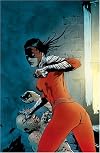
Dark without feeling forced, Manhunter manages to bring together memorable characters and a great concept. Although the lawyer-by-day-vigilante-by-night idea may seem played out, Kate Spencer feels unique. She's inexperienced without being naive. She's tough as nails without being a cold bitch. She's worried about her fractured family without becoming mawkish or saccharine.
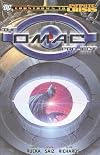
This is some scary shit! Of course it came from the mind of Batman. The last page is the best, but this was pretty dark and exciting the whole time. I'm just mad the super douchey chauvinist pig green lantern guy didn't get punched more. What is up with that guy? I haven't encounter him before.
I'm ready for the Infinite Crisis.
I'm ready for the Infinite Crisis.

First off, let's look at those credits: twenty artists worked on the eight issues collected here. Twenty. I guess superhero comics are not an auteur medium.
Secondly, let's reminisce. Though I didn't read a whole lot of superhero comics back in 2005, I was becoming aware of them, and I remember the first time I saw the title "Countdown to Infinite Crisis." I thought it was a parody comic. Then I realized-- the title was real. Which was horrifying.
That said, the story of that title collected show more here turns out to be rather good. Nine years later I think it's okay to say that this is the story where Blue Beetle dies. Now, as a big fan of the Justice League International days, I really like Blue Beetle. I like to think he's what I'd be if I became a superhero: chubby, well-meaning, a little bit insecure, trying his best every day. "Countdown to Infinite Crisis" shows him off at his best, tracing a mystery no one else can be bothered with (except for the ever-loyal Booster Gold) across the Earth. All things said, it's a good mystery story, and despite being a fan of the JLI days, I even think the twist about the villain works. When Blue Beetle is shot in the head, you feel it in the gut.
"Countdown to Infinite Crisis" is followed by three chapters of "The OMAC Project," which runs two parallel stories: while Batman, Wonder Woman, and Booster Gold try to figure out who killed Blue Beetle (and what was worth killing him over), Sasha Bordeaux starts to fret about her role in the mysterious "Checkmate" organization. I guess Sasha was in some Batman stories I haven't read, but you actually don't need to know that for this story to work; Greg Rucka is skilled enough a writer to make her plight instantly sympathetic. Her attempt to get to Batman and let the truth out is a great thriller story, the kind of stuff Rucka is really adept at. I also like how this story spins out of Identity Crisis, showing a more-- and justly-- paranoid Batman. There are real repercussions for that story, which stops it from being the shilling shocker it's sometimes characterized as.
Something I particularly liked about "The OMAC Project" is the way that Rucka and letterer Phil Balsman use the computer lettering of the Brother Mk. I satellite, sometimes on the edge of the narrative, sometimes on top of it, sometimes interrupting speech bubbles. It's used to clever and sometimes chilling effect, and the way it can run in parallel to the main story on the page is the kind of thing I'd assert you can only do in comics. The repeated motif of the satellite's eye logo is also well used: an all-seeing eye, a Panopticon for the postmodern age.
"The OMAC Project" is interrupted halfway through by "Sacrifice, Part 4 of 4." Bizarrely, parts 1-3 are synopsized and you can go read them in another book-- after you've read the end here, I guess. The book actually gets away with it, though; the synopsis proves enough to get you through this story: famously, the one where Wonder Woman kills Maxwell Lord. I have to say, it's built up to pretty compellingly; this is no callous murder, but a genuine life-or-death situation that there is truthfully no other way out of. Of course, both Rucka and Lord contorted to make that the case, but it promises some interesting repercussions, which I guess will be in some other book. I only wish it had better art: ten of the book's twenty artists are used on this one 22-page story, and it is not to the tale's benefit.
The last three parts of "The OMAC Project" shift the focus from the now-dead Maxwell Lord to the supercomputer he stole from Batman, Brother Mk. I, which has now rebranded itself "Brother Eye" and elected to purge the Earth of superhumans. Since Batman lost control of it, it's gained the ability to turn any human who's taken a certain nanite-infused vaccine into a One-Many Army Corps (of old Jack Kirby fame). An army of OMACs comes at the Earth, which makes for a couple great splash pages from Jesus Saiz. (Indeed, I liked his art throughout the book; he does great facial expressions and body language, though it's baffling that he draws a second Checkmate agent who looks almost exactly like Sasha.)
Though I think the OMAC army's defeat comes a little too cursorily, there are a lot of great moments along the way, especially when Booster Gold leads his old JLI teammates (Guy Gardner, Fire, Mary Marvel, Metamorpho, Martian Manhunter, and Rocket Red) into battle to avenge Blue Beetle. This era may have been pilfered for shock value and retconned to death by this whole story, but the old team is still being treated with respect, thankfully.
Like Day of Vengeance, I'm left with little idea of where this is all going as it counts down to the Infinite Crisis, but I'm interested and ready to find out, and even if this goes nowhere, Greg Rucka and Jesus Saiz constructed a really enjoyable and thrilling ride.
DC Comics Crises: « Previous in sequence | Next in sequence » show less
Secondly, let's reminisce. Though I didn't read a whole lot of superhero comics back in 2005, I was becoming aware of them, and I remember the first time I saw the title "Countdown to Infinite Crisis." I thought it was a parody comic. Then I realized-- the title was real. Which was horrifying.
That said, the story of that title collected show more here turns out to be rather good. Nine years later I think it's okay to say that this is the story where Blue Beetle dies. Now, as a big fan of the Justice League International days, I really like Blue Beetle. I like to think he's what I'd be if I became a superhero: chubby, well-meaning, a little bit insecure, trying his best every day. "Countdown to Infinite Crisis" shows him off at his best, tracing a mystery no one else can be bothered with (except for the ever-loyal Booster Gold) across the Earth. All things said, it's a good mystery story, and despite being a fan of the JLI days, I even think the twist about the villain works. When Blue Beetle is shot in the head, you feel it in the gut.
"Countdown to Infinite Crisis" is followed by three chapters of "The OMAC Project," which runs two parallel stories: while Batman, Wonder Woman, and Booster Gold try to figure out who killed Blue Beetle (and what was worth killing him over), Sasha Bordeaux starts to fret about her role in the mysterious "Checkmate" organization. I guess Sasha was in some Batman stories I haven't read, but you actually don't need to know that for this story to work; Greg Rucka is skilled enough a writer to make her plight instantly sympathetic. Her attempt to get to Batman and let the truth out is a great thriller story, the kind of stuff Rucka is really adept at. I also like how this story spins out of Identity Crisis, showing a more-- and justly-- paranoid Batman. There are real repercussions for that story, which stops it from being the shilling shocker it's sometimes characterized as.
Something I particularly liked about "The OMAC Project" is the way that Rucka and letterer Phil Balsman use the computer lettering of the Brother Mk. I satellite, sometimes on the edge of the narrative, sometimes on top of it, sometimes interrupting speech bubbles. It's used to clever and sometimes chilling effect, and the way it can run in parallel to the main story on the page is the kind of thing I'd assert you can only do in comics. The repeated motif of the satellite's eye logo is also well used: an all-seeing eye, a Panopticon for the postmodern age.
"The OMAC Project" is interrupted halfway through by "Sacrifice, Part 4 of 4." Bizarrely, parts 1-3 are synopsized and you can go read them in another book-- after you've read the end here, I guess. The book actually gets away with it, though; the synopsis proves enough to get you through this story: famously, the one where Wonder Woman kills Maxwell Lord. I have to say, it's built up to pretty compellingly; this is no callous murder, but a genuine life-or-death situation that there is truthfully no other way out of. Of course, both Rucka and Lord contorted to make that the case, but it promises some interesting repercussions, which I guess will be in some other book. I only wish it had better art: ten of the book's twenty artists are used on this one 22-page story, and it is not to the tale's benefit.
The last three parts of "The OMAC Project" shift the focus from the now-dead Maxwell Lord to the supercomputer he stole from Batman, Brother Mk. I, which has now rebranded itself "Brother Eye" and elected to purge the Earth of superhumans. Since Batman lost control of it, it's gained the ability to turn any human who's taken a certain nanite-infused vaccine into a One-Many Army Corps (of old Jack Kirby fame). An army of OMACs comes at the Earth, which makes for a couple great splash pages from Jesus Saiz. (Indeed, I liked his art throughout the book; he does great facial expressions and body language, though it's baffling that he draws a second Checkmate agent who looks almost exactly like Sasha.)
Though I think the OMAC army's defeat comes a little too cursorily, there are a lot of great moments along the way, especially when Booster Gold leads his old JLI teammates (Guy Gardner, Fire, Mary Marvel, Metamorpho, Martian Manhunter, and Rocket Red) into battle to avenge Blue Beetle. This era may have been pilfered for shock value and retconned to death by this whole story, but the old team is still being treated with respect, thankfully.
Like Day of Vengeance, I'm left with little idea of where this is all going as it counts down to the Infinite Crisis, but I'm interested and ready to find out, and even if this goes nowhere, Greg Rucka and Jesus Saiz constructed a really enjoyable and thrilling ride.
DC Comics Crises: « Previous in sequence | Next in sequence » show less

Access a version of the below that includes illustrations on my blog.
Kate Spencer is a divorced district attorney in Los Angeles, who becomes tired of the fact that that supervillains always break out of jail and kill again after she's put them away. So she decides to take the law into her own hands and track down escaped villains... and kill them. She steals superpowered equipment from the evidence locker and bullies a former henchman in witness protection into providing her with technical show more support. In the meantime, she has to balance her superheroics with being a mother.
Street Justice feels like a lot of set-up. I like Manhunter so far, but I would argue that not much has been done with the premise. There are the ingredients for a compelling story, but that story has not yet been told. On their surface, the stories here are pretty simple: Kate decides to become Manhunter and battles Copperhead, Kate tangles with the Shadow Thief while her son is in hospital, Kate tries to avoid the Justice League while they track down the murderer of Firestorm. Each of the stories is pretty simple in and of itself.
It's impossible not to see the influence of Alias on this book: both are about women in law-enforcement professions, and both women are depicted as more "real" than your average superheroine, with various foibles like drugs (Jessica drank a lot, while Kate smokes) and attitude problems and being embroiled in things like bad relationships. Writer Marc Andreyko stated in his introduction that he wanted a "fully-clothed, average-busted woman," though artist Jesus Saiz seems to have compensated for this by making her outfit improbably skintight and including a lot of ass shots. (Though, Jesus Saiz is a pretty solid artist in general whose work I feel is usually confined to miniseries, so I'm happy to see him get an ongoing here.)
What makes Manhunter work so far is the small things: Kate wondering how does Black Canary "do this in fishnets and heels" when she struggles in a supersuit, the Shadow Thief leaving a tip for his waitress, there being witness protection for supervillain henchmen (and the flashback panels showing ex-henchman Rich in different outfits as he transfers from Two-Face to Killer Frost to Black Manta), and Kate's gay assistant hitting on Aquaman when the Justice League comes to LA. Kate is definitely not an unflawed character (seriously, she is an awful mother, but then again, Batman is an awful father), but she is a "relatable" one and I look forward to seeing what Andreyko and company do with her now that the basic setup has been established.
Manhunter: « Previous in sequence | Next in sequence » show less
Kate Spencer is a divorced district attorney in Los Angeles, who becomes tired of the fact that that supervillains always break out of jail and kill again after she's put them away. So she decides to take the law into her own hands and track down escaped villains... and kill them. She steals superpowered equipment from the evidence locker and bullies a former henchman in witness protection into providing her with technical show more support. In the meantime, she has to balance her superheroics with being a mother.
Street Justice feels like a lot of set-up. I like Manhunter so far, but I would argue that not much has been done with the premise. There are the ingredients for a compelling story, but that story has not yet been told. On their surface, the stories here are pretty simple: Kate decides to become Manhunter and battles Copperhead, Kate tangles with the Shadow Thief while her son is in hospital, Kate tries to avoid the Justice League while they track down the murderer of Firestorm. Each of the stories is pretty simple in and of itself.
It's impossible not to see the influence of Alias on this book: both are about women in law-enforcement professions, and both women are depicted as more "real" than your average superheroine, with various foibles like drugs (Jessica drank a lot, while Kate smokes) and attitude problems and being embroiled in things like bad relationships. Writer Marc Andreyko stated in his introduction that he wanted a "fully-clothed, average-busted woman," though artist Jesus Saiz seems to have compensated for this by making her outfit improbably skintight and including a lot of ass shots. (Though, Jesus Saiz is a pretty solid artist in general whose work I feel is usually confined to miniseries, so I'm happy to see him get an ongoing here.)
What makes Manhunter work so far is the small things: Kate wondering how does Black Canary "do this in fishnets and heels" when she struggles in a supersuit, the Shadow Thief leaving a tip for his waitress, there being witness protection for supervillain henchmen (and the flashback panels showing ex-henchman Rich in different outfits as he transfers from Two-Face to Killer Frost to Black Manta), and Kate's gay assistant hitting on Aquaman when the Justice League comes to LA. Kate is definitely not an unflawed character (seriously, she is an awful mother, but then again, Batman is an awful father), but she is a "relatable" one and I look forward to seeing what Andreyko and company do with her now that the basic setup has been established.
Manhunter: « Previous in sequence | Next in sequence » show less
You May Also Like
Associated Authors
Statistics
- Works
- 13
- Also by
- 17
- Members
- 707
- Popularity
- #35,839
- Rating
- 3.5
- Reviews
- 17
- ISBNs
- 14
- Languages
- 2