
Edward Callow
Author of Phynodderree and Other Legends of the Isle of Man
About the Author
Works by Edward Callow
Tagged
Common Knowledge
There is no Common Knowledge data for this author yet. You can help.
Members
Reviews
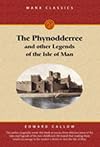
This small paperback reprints Edward Callow’s 1882 edition, which is “based on his early childhood memories and interviews with the Manx people of the time [recounts] the ancient tales of the Phynodderree, the Buggane of St. Trinian’s, the Fairy Cup of Malew, and The Great Sword of Macabuin.” The reprint contains the 60 wood engravings by W. J. Watson. Some are full-page illustrations of scenes from the stories, and others are drolleries of fairies and other supernatural creatures.
show more I bought this book when I was visiting the Isle of Man during an academic seminar called The Irish Sea Cultural Province. A focus of this seminar was to learn about the Isle of Man as a contact zone between Celtic, Scandinavian, British, and English cultures in the medieval period. The legends told in this book do that perfectly, with a lot of travel between these areas, even as the author is focusing on the Man’s “otherworld” of fairies and bugganes (and their contact with humans). The author places each legend within Manx geography, describing the events as occurring in specific locations, like Castle Rushton, the port at Peel, or the sea passage to the Calf of Man.
Each of the four stories recounts a familiar Celtic “fairy” story, but with its own Manx perspective. “The Phynodderree” tells the story of forbidden love between a human and a fairy. “Tom Kewley and the Lannanshee” puts a spin on the typical story of a human who attends the fairy court. “King Olave the Second and the Great Sword of Macabuin” mythologizes an encounter between the historical Olaf the Black (13th century) and a supernatural blacksmith. Finally, “The Buggane’s Vow” demonstrates the tensions between folk belief and Christianity, as the buggane and St. Trinian battle over the building of a church. These four tales were fun to read, and I learned more about Manx culture. I have a couple of other books that deal with Manx myths and legends. This one has inspired me to dig into them. show less
show more I bought this book when I was visiting the Isle of Man during an academic seminar called The Irish Sea Cultural Province. A focus of this seminar was to learn about the Isle of Man as a contact zone between Celtic, Scandinavian, British, and English cultures in the medieval period. The legends told in this book do that perfectly, with a lot of travel between these areas, even as the author is focusing on the Man’s “otherworld” of fairies and bugganes (and their contact with humans). The author places each legend within Manx geography, describing the events as occurring in specific locations, like Castle Rushton, the port at Peel, or the sea passage to the Calf of Man.
Each of the four stories recounts a familiar Celtic “fairy” story, but with its own Manx perspective. “The Phynodderree” tells the story of forbidden love between a human and a fairy. “Tom Kewley and the Lannanshee” puts a spin on the typical story of a human who attends the fairy court. “King Olave the Second and the Great Sword of Macabuin” mythologizes an encounter between the historical Olaf the Black (13th century) and a supernatural blacksmith. Finally, “The Buggane’s Vow” demonstrates the tensions between folk belief and Christianity, as the buggane and St. Trinian battle over the building of a church. These four tales were fun to read, and I learned more about Manx culture. I have a couple of other books that deal with Manx myths and legends. This one has inspired me to dig into them. show less
Statistics
- Works
- 6
- Members
- 15
- Popularity
- #708,119
- Rating
- 4.0
- Reviews
- 1
- ISBNs
- 3