
Andrew Wilton
Author of Turner in His Time
Works by Andrew Wilton
The Age of Rossetti, Burne-Jones and Watts: Symbolism in Britain, 1860-1910 (1997) 101 copies, 1 review
Turner, 1775-1851 [cat. exp., London, Tate Gallery, The Royal Academy of Arts, 16 nov 1974 – 2 mars 1975] (1974) 95 copies
Turner in the British Museum : drawings and watercolours : [cat. exp., London, British Museum, 1975] (1975) 56 copies
Grand Tour : The Lure of Italy in the Eighteenth Century (cat. exp.) Tate Gallery, London, 10 October 1996 - 5 January 1997; Palazzo delle Esposizioni, Rome, 5 February - 7 April… (1996) 38 copies, 2 reviews
The Swagger Portrait: Grand Manner Portraiture in Britain from Van Dyck to Augustus John, 1630-1930 (1992) 26 copies, 1 review
J. M. W. Turner [exposition], Galeries nationales du Grand Palais, Paris, 14 octobre 1983-16 janvier 1984 : à l'occasion du cinquantième anniversaire du British council (1983) — Author — 14 copies
Five Centuries Of British Painting 4 copies
Turner in his Time 1 copy
Turner en voyage france, belgique, luxembourg, allemagne, italie, suisse: - TRADUIT DE L'ANGLAIS - BRITISH MUSEUM (ART (A)) (1992) 1 copy
Turner (60 chefs-d'oeuvre) 1 copy
Associated Works
J.M.W. Turner, R.A. : the artist and his house at Twickenham — Foreword — 3 copies
Tagged
Common Knowledge
- Canonical name
- Wilton, Andrew
- Legal name
- Wilton, James Andrew Rutley
- Birthdate
- 1942-07-02
- Gender
- male
- Education
- Trinity College, University of Cambridge (M.A.|1964)
- Occupations
- museum curator
art historian - Organizations
- British Museum
Yale Center for British Art
Tate Gallery - Nationality
- UK
- Birthplace
- Farnham, Surrey, England, UK
- Associated Place (for map)
- England, UK
Members
Reviews

Being a catalog of an exhibition which posits that late nineteenth century English studio painting, often lazily referred to as Pre-Raphaelite, instead had more affinity with the Symbolism which was emerging in the eighties and nineties on the continent. Thesis proven in spades in my humble opinion. This is a dense book not to be taken on lightly; one must wade through five essays before one gets to the art, and the captions to that are far longer, with many tangents, than most other art show more books, or indeed exhibition catalogs. The emphasis here is very clearly on D. G. Rossetti, Edward Burne-Jones, G.F. Watts, and Simeon Solomon; Leighton is mentioned often but not well represented in the art, and Alma-Tadema is barely mentioned, Jas. Waterhouse not at all. There are tangents on sculpture and book design which I could have done without, especially the latter. It remains a fine compendium of the artists named, and its thesis deserves to become mainstream scholarly thinking in this area. show less
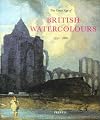
Excellent catalogue of an exhibition at the Royal Academy, with contextual essays by the leading experts, and masses of full-colour illustrations. Provides a really solid foundation for an understanding of the Golden Age of British watercolour - Peter de Wint, Sandby, Girtin, David Cox, Constable and Turner to name just a few of the artists represented. A good book on a sadly underappreciated subject.

“Our memory sees more than our eyes in this country.” Horace Walpole about the British Grand Tourist visiting Italy, 1740
Full of fascinating facts for those interested in the phenomenon of the tour primarily of Italy undertaken by the aristocracy and wealthy during the eighteenth century, in particular the thirty odd years up to Napoleon’s invasion of Italy in the 1790’s.
• The educational aspect of the Grand Tour was initially seen as the Antique, the ruins and remains of Classical show more Rome, as well as establishing commercial and diplomatic contacts.
• As a separate mercantile maritime nation, even though in decline, the Republic of Venice already had relatively strong links with Britain.
• Although we may now visit Italy to also see Renaissance art, the Grand Tourist was primarily interested in the ruins and statues from classical Rome.
• Herculaneum and Pompeii were only rediscovered during the eighteenth century, with excavations gradually revealing the sites.
• Although Grand Tourists were of all European nationalities, the majority were from Britain.
• As Britons were predominantly Protestant, there were difficulties in visiting Rome in the early eighteenth century, especially whilst the Pope supported the Jacobite claim to the British throne (after James II was usurped in the “Glorious Revolution” of 1688).
From the book:
The Grand Tour, the journey made by noblemen and gentlemen of many nations to Italy in search of antique and modern culture, reached its apogee in the eighteenth century and came to an end with the Napoleonic Wars in the 1790s. This catalogue looks at this vital aspect of European civilisation in the age of the Enlightenment from the point of view of several countries and includes the work of foremost artists of the period, amongst them Canaletto, Fragonard, Pompeo Batoni, Joseph Wright of Derby and Joshua Reynolds.
The vast majority of Grand Tourists were British, and the show emphasises their key role as patrons and collectors.
An international team of experts has been brought together to contribute detailed catalogue entries on over two hundred paintings, sculptures, watercolours, prints and objets d'art from Europe and America.
In the 1980’s I twice traveled to Italy (interrailling) visiting Florence, Rome and Venice primarily for their art galleries and churches. In some small way I was undertaking my own “Grand Tour”, and although my memories from forty years ago are now faint, they were lasting as the experience provided me with some context when subsequently visiting the stately homes and art galleries in Britain.
This catalogue accompanied the Tate exhibition which I visited on 25 November 1996, and whilst I now remember nothing of the exhibition itself, I still found reading this catalogue in 2023 informative.
The book has three introductory essays providing background and then has a short essay, sometimes with further short essays, before each section of the catalogue. Although the names of lots of tourists, artists, ambassadors, dealers etc, are included (which can be overwhelming), this is necessary to help understand the exhibits, and I found that the names were recurring, so that you could follow some careers. The sections of the catalogue are:
• Dreaming of Italy - this includes the works of pre-eighteenth century artists that framed the expectations of the Grand Tourists with examples of paintings by Claude, Poussin, Salvator Rosa. Also examples of the contemporary vedutas (landscape views) of Italy most famously painted by Canaletto.
• The Travellers - portraits of the tourists etc who visited Italy and commissioned works to record their visits (usually in Rome) and self portraits by the artists. The most famous example of this is probably Goethe in the Campagna by Tischbein, because it is memorably used as the cover art for editions of Goethe’s Italian Journey. There are also examples of caricatures, including one by a young Joshua Reynolds.
• The Journey - with an essay that really just lists the development of travel guides. As well as illustrations of guidebooks, this section also includes illustrations of the Grand Tourists whilst travelling, including being carried in “a chair without legs” over the Mount Cenis pass into Italy.
• The Places - the major tourist destinations of Florence, Rome , Naples and Venice have remained unchanged, and although Rome is the highlight, the ruinous state of the classical parts of Rome can be startling in some of the paintings.
• Festivals and Folklore - paintings and prints to record religious festivals, carnivals and processions to welcome very important foreign dignitaries.
• The Antique - including illustrations of pictures of dealers and antiquaries involved in providing Grand Tourists with restored classical sculptures and copies, as well as examples of the sculptures and copies. If the Grand Tourist was rich enough, and sufficiently interested, then originals were acquired as souvenirs, otherwise copies, paintings or prints. From the mid eighteenth century artwork was made for Grand Tourists from Herculaneum and Pompeii, which were only being rediscovered and the Greek ruins such as Paestum further south in Italy and Sicily (Magna Graecia), were only starting to be visited (due to the difficulty of transport and fear of brigands).
• Memories of Italy - further cataloguing the souvenirs brought back by Grand Tourists, which as well as the above paintings included small bronze and porcelain (biscuit-ware) copies of Roman statuary, micromosaics, cork models and painted fans. show less
Full of fascinating facts for those interested in the phenomenon of the tour primarily of Italy undertaken by the aristocracy and wealthy during the eighteenth century, in particular the thirty odd years up to Napoleon’s invasion of Italy in the 1790’s.
• The educational aspect of the Grand Tour was initially seen as the Antique, the ruins and remains of Classical show more Rome, as well as establishing commercial and diplomatic contacts.
• As a separate mercantile maritime nation, even though in decline, the Republic of Venice already had relatively strong links with Britain.
• Although we may now visit Italy to also see Renaissance art, the Grand Tourist was primarily interested in the ruins and statues from classical Rome.
• Herculaneum and Pompeii were only rediscovered during the eighteenth century, with excavations gradually revealing the sites.
• Although Grand Tourists were of all European nationalities, the majority were from Britain.
• As Britons were predominantly Protestant, there were difficulties in visiting Rome in the early eighteenth century, especially whilst the Pope supported the Jacobite claim to the British throne (after James II was usurped in the “Glorious Revolution” of 1688).
From the book:
The Grand Tour, the journey made by noblemen and gentlemen of many nations to Italy in search of antique and modern culture, reached its apogee in the eighteenth century and came to an end with the Napoleonic Wars in the 1790s. This catalogue looks at this vital aspect of European civilisation in the age of the Enlightenment from the point of view of several countries and includes the work of foremost artists of the period, amongst them Canaletto, Fragonard, Pompeo Batoni, Joseph Wright of Derby and Joshua Reynolds.
The vast majority of Grand Tourists were British, and the show emphasises their key role as patrons and collectors.
An international team of experts has been brought together to contribute detailed catalogue entries on over two hundred paintings, sculptures, watercolours, prints and objets d'art from Europe and America.
In the 1980’s I twice traveled to Italy (interrailling) visiting Florence, Rome and Venice primarily for their art galleries and churches. In some small way I was undertaking my own “Grand Tour”, and although my memories from forty years ago are now faint, they were lasting as the experience provided me with some context when subsequently visiting the stately homes and art galleries in Britain.
This catalogue accompanied the Tate exhibition which I visited on 25 November 1996, and whilst I now remember nothing of the exhibition itself, I still found reading this catalogue in 2023 informative.
The book has three introductory essays providing background and then has a short essay, sometimes with further short essays, before each section of the catalogue. Although the names of lots of tourists, artists, ambassadors, dealers etc, are included (which can be overwhelming), this is necessary to help understand the exhibits, and I found that the names were recurring, so that you could follow some careers. The sections of the catalogue are:
• Dreaming of Italy - this includes the works of pre-eighteenth century artists that framed the expectations of the Grand Tourists with examples of paintings by Claude, Poussin, Salvator Rosa. Also examples of the contemporary vedutas (landscape views) of Italy most famously painted by Canaletto.
• The Travellers - portraits of the tourists etc who visited Italy and commissioned works to record their visits (usually in Rome) and self portraits by the artists. The most famous example of this is probably Goethe in the Campagna by Tischbein, because it is memorably used as the cover art for editions of Goethe’s Italian Journey. There are also examples of caricatures, including one by a young Joshua Reynolds.
• The Journey - with an essay that really just lists the development of travel guides. As well as illustrations of guidebooks, this section also includes illustrations of the Grand Tourists whilst travelling, including being carried in “a chair without legs” over the Mount Cenis pass into Italy.
• The Places - the major tourist destinations of Florence, Rome , Naples and Venice have remained unchanged, and although Rome is the highlight, the ruinous state of the classical parts of Rome can be startling in some of the paintings.
• Festivals and Folklore - paintings and prints to record religious festivals, carnivals and processions to welcome very important foreign dignitaries.
• The Antique - including illustrations of pictures of dealers and antiquaries involved in providing Grand Tourists with restored classical sculptures and copies, as well as examples of the sculptures and copies. If the Grand Tourist was rich enough, and sufficiently interested, then originals were acquired as souvenirs, otherwise copies, paintings or prints. From the mid eighteenth century artwork was made for Grand Tourists from Herculaneum and Pompeii, which were only being rediscovered and the Greek ruins such as Paestum further south in Italy and Sicily (Magna Graecia), were only starting to be visited (due to the difficulty of transport and fear of brigands).
• Memories of Italy - further cataloguing the souvenirs brought back by Grand Tourists, which as well as the above paintings included small bronze and porcelain (biscuit-ware) copies of Roman statuary, micromosaics, cork models and painted fans. show less
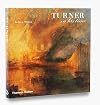
Arranged chronologically the book is divided into six chapters; chapter one covers the first twenty five years of Turner’s life with the other five chapters covering ten years each. Well written and very readable the text provides an insight into Turner the man and Turner the artist, and includes numerous quotations from Turner and his contemporaries; it succeeds among other things in bringing alive the artist as a person.
Concluding the book is an extensive Chronology; Inventory of the show more Late Residence of J.M.W. Turner; Turner’s Library; Bibliography; a detailed List of Illustrations and an Index.
The book is fully illustrated throughout, with the images usually on or close to the page on which they are discussed. In total there are 186 illustrations of which 164 are in colour. The illustrations not in colour are mostly engravings and the like, period photographs or the work of other artists. The majority of the illustrations of Tuner’s work are full page (or as large as the picture format will allow on the page with a margin), with some full-page or page-and-half bleed images along with a few double page images. There are a few actual-size details of paintings; very informative. The quality of the pictures is excellent, often revealing the texture of the paint, and the colour very good. Very usefully each picture is accompanied by a brief description or commentary, but irritatingly not with the details of the pictures dimensions; surely with the great range in size of Turner’s work these should be included alongside the image, (there are of course to be found in the List of Illustrations).
This is a large handsome volume, almost square in format, which provides a very good survey of the artist and his work. It covers all aspects of Tuner’s output, including his oils, water colours and examples from his sketch-books. The choice of work ranges from the very well known to the “I didn’t know Turner painted that!” Very interesting are the few examples of his very early work, including a water colour produced when he was about eleven years old. Providing as it does a comprehensive overview of the artist and his work, this is a very worthwhile publication. show less
Concluding the book is an extensive Chronology; Inventory of the show more Late Residence of J.M.W. Turner; Turner’s Library; Bibliography; a detailed List of Illustrations and an Index.
The book is fully illustrated throughout, with the images usually on or close to the page on which they are discussed. In total there are 186 illustrations of which 164 are in colour. The illustrations not in colour are mostly engravings and the like, period photographs or the work of other artists. The majority of the illustrations of Tuner’s work are full page (or as large as the picture format will allow on the page with a margin), with some full-page or page-and-half bleed images along with a few double page images. There are a few actual-size details of paintings; very informative. The quality of the pictures is excellent, often revealing the texture of the paint, and the colour very good. Very usefully each picture is accompanied by a brief description or commentary, but irritatingly not with the details of the pictures dimensions; surely with the great range in size of Turner’s work these should be included alongside the image, (there are of course to be found in the List of Illustrations).
This is a large handsome volume, almost square in format, which provides a very good survey of the artist and his work. It covers all aspects of Tuner’s output, including his oils, water colours and examples from his sketch-books. The choice of work ranges from the very well known to the “I didn’t know Turner painted that!” Very interesting are the few examples of his very early work, including a water colour produced when he was about eleven years old. Providing as it does a comprehensive overview of the artist and his work, this is a very worthwhile publication. show less
Lists
You May Also Like


Associated Authors
Statistics
- Works
- 38
- Also by
- 1
- Members
- 1,267
- Popularity
- #20,252
- Rating
- 4.3
- Reviews
- 11
- ISBNs
- 78
- Languages
- 5