
Harry Braverman (1920–1976)
Author of Labor and Monopoly Capital: The Degradation of Work in the Twentieth Century
About the Author
Image credit: Marxists’ Internet Archive
Works by Harry Braverman
Labor and Monopoly Capital: The Degradation of Work in the Twentieth Century (1974) 550 copies, 5 reviews
Travail et capitalisme monopoliste: la degradation du travail au XXe siecle (Economie et socialisme) (1976) 1 copy
Sovjets framtid 1 copy
Emek ve Tekelci Sermaye 1 copy
Tagged
Common Knowledge
- Other names
- Frankel, Harry (pseudonym)
- Birthdate
- 1920-12-09
- Date of death
- 1976-08-02
- Gender
- male
- Occupations
- economist
political writer - Short biography
- Harry Braverman, who sometimes used the pseudonym Harry Frankel) was born in New York City and became active in the American Trotskyist movement in 1937. He joined the newly-founded Socialist Workers Party, although he was eventually expelled from the group. During the early 1960s, Harry Braverman worked as an editor for the Grove Press, where he was instrumental in publishing The Autobiography of Malcolm X. His own most important work was Labor and Monopoly Capital: The Degradation of Work in the Twentieth Century (1974).
- Nationality
- USA
- Birthplace
- New York, New York, USA
- Place of death
- Honesdale, Pennsylvania, USA
- Associated Place (for map)
- USA
Members
Reviews
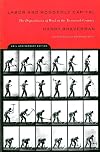
Braverman's book is subtitled "The Degradation of Work in the Twentieth Century", but it is still very relevant in the twenty-first. It shows the effects of the development of capitalism on the nature of work (the labour process) and on the composition of the working class since Marx's time.
Braverman shows how several factors combine to make the labour process an alienating one under capitalism: capitalist management and control; the way the capitalists use new technology; the division of show more labour; and the separation of the "conception" or planning side of work from its "execution". Underlying all these, of course, is the lack of control by workers over the means of production.
He shows how the capitalists try to deskill as far as possible every new type of skilled job that is thrown up by their ever-changing system, so that they can both reduce wage levels and also more easily control the alienated labour of the workers.
Finally, Braverman was also one of the first Marxists to show in detail how white collar workers have become part of the working class, and how even many "professional" jobs are being proletarianised. show less
Braverman shows how several factors combine to make the labour process an alienating one under capitalism: capitalist management and control; the way the capitalists use new technology; the division of show more labour; and the separation of the "conception" or planning side of work from its "execution". Underlying all these, of course, is the lack of control by workers over the means of production.
He shows how the capitalists try to deskill as far as possible every new type of skilled job that is thrown up by their ever-changing system, so that they can both reduce wage levels and also more easily control the alienated labour of the workers.
Finally, Braverman was also one of the first Marxists to show in detail how white collar workers have become part of the working class, and how even many "professional" jobs are being proletarianised. show less
As a blue collar worker, this book is blowing my fucking mind.
A very readable book. Harry is the poster boy that explains how social polities, social thinking and the fair distribution of economic resources works, smart man who rises from uneducated, blue collar worker to academic.
I still think that the idea that capital always moves towards monopolistic practice and rent seeking is like poetry when I think about it. Today more relevant than in the author's day.
Braverman writes well, in clear concise prose. Pity the markets seem to have won the show more battle over the control of resources, once again for the benefit of the few.
I read this at university back in around 1986. It still rings delightfully in my ears.
If you can't read Karl in the original, this may be what you need. show less
I still think that the idea that capital always moves towards monopolistic practice and rent seeking is like poetry when I think about it. Today more relevant than in the author's day.
Braverman writes well, in clear concise prose. Pity the markets seem to have won the show more battle over the control of resources, once again for the benefit of the few.
I read this at university back in around 1986. It still rings delightfully in my ears.
If you can't read Karl in the original, this may be what you need. show less

The marxian labor economics book to read if you're reading only one.
Lists
Favourite Books (1)
Labor History (1)
Awards


You May Also Like


Associated Authors
Statistics
- Works
- 8
- Members
- 559
- Popularity
- #44,692
- Rating
- 4.4
- Reviews
- 5
- ISBNs
- 14
- Languages
- 5
- Favorited
- 1