
Frédéric Lordon
Author of Willing Slaves of Capital: Spinoza and Marx on Desire
About the Author
Works by Frédéric Lordon
D'un retournement l'autre : Comédie sérieuse sur la crise financière en trois actes et en alexandrins (2011) 14 copies, 1 review
El capitalismo o el planeta : cómo construir una hegemonía anticapitalista para el siglo XXI (2022) 7 copies, 1 review
Associated Works
Tagged
Common Knowledge
- Birthdate
- 1962-01-15
- Education
- École nationale des Ponts et Chaussées
- Nationality
- France
- Associated Place (for map)
- France
Members
Reviews
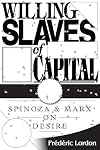
I started reading ‘Willing Slaves of Capital’ in the first class carriage of a train home from my Christmas holiday, having had the rare luck to find a cheap advance ticket. It seemed like a fitting milieu. As translated French political philosophy goes, this is not too hard to follow. I haven’t read any Spinoza, yet Lordon explains him clearly enough that I didn’t feel the lack. His thesis uses Spinoza's concepts of desire to build on Marxian analysis of labour exploitation. In the show more 21st century, we do not merely sell our labour for subsistence, resenting it all the while. Instead, neoliberalism teaches us to find joy in our subjugation and meaning in our obligatory tasks. Lordon explains this in terms of ‘epithumogenesis’, a delightful term meaning ‘development of a regime of desire’. The desires of the employee are carefully aligned to the master-desire of the organisation - usually, maximising shareholder returns. I found this analysis interesting and useful, although there were understandably areas it missed, inevitable in such a short book. One was personal identification with the job, which I consider a slightly different thing to aligned desires. Likewise the obligation to be ambitious; satisfaction with the current job is not allowed, you must always be doing more work to demonstrate your fitness for an entirely theoretical more senior position. (My resentment towards academia might be showing here.)
Lordon nonetheless makes some important points, including this on the increasing liquidity of labour:
The obvious British case study is the zero hours contract, which provides liquid labour as required. Lordon also asks whether it’s really so bad if employees have been successfully trained to enjoy their jobs. Yes, it is.
Thus employee enjoyment is only permitted when it falls within the master-desire of the organisation and doesn’t seek to question or change the organisation itself. This synthesis of Spinoza obviously has implications for Marx’s theories of class conflict, which Lordon handles as follows:
Lordon also includes a solid explanation of desire alignment on a continuum, with the fit becoming close the more senior the employee. I was less convinced by the critique of Marx’s notions of value, using a comparison to Spinoza’s. I couldn’t escape the sense that the two were discussing fundamentally different things, to different ends. Lordon does not mention what seemed to me a significant aim of Marx’s theories on value: an explanation of prices not based solely on willingness to pay. This is vital as prices should not be a concept inseparable from free market economics. While there are definitely grounds to criticise Marx about value, Spinoza’s desire-based idea of value is pure free market economics and thus adds nothing of substance.
The final chapter considers the prospects for capitalism giving way to something new (‘re-communism’) and what this would mean for work. I found it notable that Lordon didn’t consider any of strains that technology is placing on capitalism, making his assessment of its weaknesses seem curiously pessimistic (or optimistic, if you’re rooting for The End of History). Lordon suggests that providing employees with creative freedom could bring it down; I’m more convinced by Paul Mason’s argument in [b:Postcapitalism: A Guide to Our Future|24878857|Postcapitalism A Guide to Our Future|Paul Mason|https://images.gr-assets.com/books/1437580637s/24878857.jpg|44526761]. Nonetheless, Lordon’s arguments are novel, thought-provoking, and occasionally inspiring. He’s certainly right that neoliberal capitalism tries to teach us to love our own exploitation. This is a somewhat abstract and esoteric book, yet it makes pragmatic and useful points. show less
Lordon nonetheless makes some important points, including this on the increasing liquidity of labour:
Once limited to asset markets, and to a very specific property of them, the scheme of liquidity irresistibly overflows and spread throughout the whole of capitalist society, evidently primarily serving those in a position to assert their desire as master-desire. Even though no market, especially not that of labour, can attain the degree of flexibility-reversibility of financial markets, liquidity draws the bullseye and pushes the master-desires towards obtaining the structural transformations that would allow them to get as close as they can. The most typical example is that of the capitalist argument that the only way to lower unemployment is to completely liberate layoffs from any regulatory framework.
The obvious British case study is the zero hours contract, which provides liquid labour as required. Lordon also asks whether it’s really so bad if employees have been successfully trained to enjoy their jobs. Yes, it is.
For however successful it is, the process of epithumogenesis has the effect, and in fact the intention, of fixing the enlistee’s desire to a certain number of objects to the exclusion of others. Within capitalist organisations, the very function of hierarchical subordination is to assign each individual a defined set task according to the division of labour, namely, to an activity object that each must convert into an object of desire. [...] Subjection, even when it is happy, consists fundamentally in locking employees in a restricted domain of enjoyment.
Thus employee enjoyment is only permitted when it falls within the master-desire of the organisation and doesn’t seek to question or change the organisation itself. This synthesis of Spinoza obviously has implications for Marx’s theories of class conflict, which Lordon handles as follows:
But this [new] definition of class does not possess the simplicity of the initial bipolar scheme, since belonging to the ‘employee-class’ (the class of ‘labour’) is no longer itself as strongly predetermining as it used to be; crucially, it no longer has the homogeneity that enabled it (at times) to act as a historical driving force. Nevertheless, this relative fragmentation of the class structure and the ensuing blurring of the social landscape in no way prevents re-homogenisations from taking place, but these must follow a different logic, notably, the affective logic of discontent.
Lordon also includes a solid explanation of desire alignment on a continuum, with the fit becoming close the more senior the employee. I was less convinced by the critique of Marx’s notions of value, using a comparison to Spinoza’s. I couldn’t escape the sense that the two were discussing fundamentally different things, to different ends. Lordon does not mention what seemed to me a significant aim of Marx’s theories on value: an explanation of prices not based solely on willingness to pay. This is vital as prices should not be a concept inseparable from free market economics. While there are definitely grounds to criticise Marx about value, Spinoza’s desire-based idea of value is pure free market economics and thus adds nothing of substance.
The final chapter considers the prospects for capitalism giving way to something new (‘re-communism’) and what this would mean for work. I found it notable that Lordon didn’t consider any of strains that technology is placing on capitalism, making his assessment of its weaknesses seem curiously pessimistic (or optimistic, if you’re rooting for The End of History). Lordon suggests that providing employees with creative freedom could bring it down; I’m more convinced by Paul Mason’s argument in [b:Postcapitalism: A Guide to Our Future|24878857|Postcapitalism A Guide to Our Future|Paul Mason|https://images.gr-assets.com/books/1437580637s/24878857.jpg|44526761]. Nonetheless, Lordon’s arguments are novel, thought-provoking, and occasionally inspiring. He’s certainly right that neoliberal capitalism tries to teach us to love our own exploitation. This is a somewhat abstract and esoteric book, yet it makes pragmatic and useful points. show less
El capitalismo o el planeta : cómo construir una hegemonía anticapitalista para el siglo XXI by Frédéric Lordon
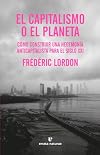
El capitalismo está destruyendo a la humanidad. Es así de claro. La destruye, incluso, por duplicado. En primer lugar, devasta incontables vidas mediante la angustia y la precariedad, al poner la supervivencia de una gran mayoría de individuos en manos de dos amos locos: el mercado y el empleo. En segundo lugar, aniquila las existencias y el futuro de miles de millones de personas convirtiendo el planeta en un lugar inhabitable: sobrecalentado, hipercontaminado y expuesto a todo tipo de show more fenómenos meteorológicos extremos y pandemias.
Debemos asumir esta realidad. Y extraer sus consecuencias inapelables: 1/ como demuestra la historia, los capitalistas (especialmente ese 1 % de la población que controla la inmensa mayoría de la riqueza mundial) jamás admitirán su responsabilidad homicida ni renunciarán a sus inabarcables privilegios; 2/ tras cuarenta años de neoliberalismo, el espacio socialdemócrata que le servía de «contención» se ha debilitado hasta la insignifcancia: las únicas alternativas hoy en día son el agravamiento o el derrocamiento; 3/ por lo tanto, la única transición posible y capaz de salvar a la humanidad es hacia fuera: hacia algo distinto del capitalismo que garantice nuestras vidas y el planeta.
¿Otro libro más sobre una utopía global inalcanzable? ¿O sobre la huida de unos pocos hacia una microsociedad autárquica? Todo lo contrario. De hecho, estamos hartos de esos libros. Aquí se trata de demostrar no solo que la salida del capitalismo es tan posible como necesaria, sino de analizar, fase por fase, con ideas y propuestas concretas, cómo organizar una sociedad y una economía a gran escala que no estén basadas en la explotación, el trabajo asalariado y la rentabilidad.
Nos dijeron que la única alternativa al capitalismo era el gulag, la cartilla de racionamiento y la paleta de colores grises. Y, como niños antes de irnos a la cama, les creímos. Ahora sabemos, sin duda alguna, que el capitalismo nos destruye. Y que, por lo tanto, hay que destruir el capitalismo. show less
Debemos asumir esta realidad. Y extraer sus consecuencias inapelables: 1/ como demuestra la historia, los capitalistas (especialmente ese 1 % de la población que controla la inmensa mayoría de la riqueza mundial) jamás admitirán su responsabilidad homicida ni renunciarán a sus inabarcables privilegios; 2/ tras cuarenta años de neoliberalismo, el espacio socialdemócrata que le servía de «contención» se ha debilitado hasta la insignifcancia: las únicas alternativas hoy en día son el agravamiento o el derrocamiento; 3/ por lo tanto, la única transición posible y capaz de salvar a la humanidad es hacia fuera: hacia algo distinto del capitalismo que garantice nuestras vidas y el planeta.
¿Otro libro más sobre una utopía global inalcanzable? ¿O sobre la huida de unos pocos hacia una microsociedad autárquica? Todo lo contrario. De hecho, estamos hartos de esos libros. Aquí se trata de demostrar no solo que la salida del capitalismo es tan posible como necesaria, sino de analizar, fase por fase, con ideas y propuestas concretas, cómo organizar una sociedad y una economía a gran escala que no estén basadas en la explotación, el trabajo asalariado y la rentabilidad.
Nos dijeron que la única alternativa al capitalismo era el gulag, la cartilla de racionamiento y la paleta de colores grises. Y, como niños antes de irnos a la cama, les creímos. Ahora sabemos, sin duda alguna, que el capitalismo nos destruye. Y que, por lo tanto, hay que destruir el capitalismo. show less
Oct 10, 2022Spanish
D'un retournement l'autre : Comédie sérieuse sur la crise financière, en quatre actes et en alexandrins by Frédéric Lordon
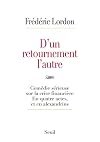
Sous la forme d'une pièce de théâtre écrite en alexandrin, Frederic Lordon, dresse un constat accablant et destructeur du monde de la finance, démontre la logique mortifère d'un monde capitaliste qui n'est soit disant "libéral" et faisant confiance aux marchés que lorsque le système est gagnant. Il souligne la totale manipulation des politiques par les financiers et leur total désintérêt pour les "autres", le peuple, les perdants !
Rien de bien nouveau dans le constat du désastre show more humain, sociologique, économique qu'entraîne le système libéral.
L'intérêt de ce recueil, repose sur le choix de l'auteur de prendre le parti pris de l'art, au travers du théâtre et de la versification, pour appuyer sa démonstration et sa pensée, d'affect, de sensibilité, pour faire réagir. Le livre est conclut par un post-scriptum de l'auteur qui explique très clairement sa pensée et ce choix.
Autre intérêt de ce petit livre qui se lit très facilement est de se remémorer le fil des évènements de cette crise de 2008, de ré-entendre les arguments des élites financières, des experts économiques et des conseillers économiques qu'ils nous ont déversé à longueur d'antenne sur cette crise, ses coupables, les seules solutions possibles sinon nous courions à l'apocalypse !
On pardonnera à Frederic Lodron les quelques petits écarts à la rime et à la versification, le texte est très drôle à lire, fait réfléchir et est un bon condensé d'analyse économique et politique.
A la veille des élections nationales, à lire pour se déciller les yeux ! show less
Rien de bien nouveau dans le constat du désastre show more humain, sociologique, économique qu'entraîne le système libéral.
L'intérêt de ce recueil, repose sur le choix de l'auteur de prendre le parti pris de l'art, au travers du théâtre et de la versification, pour appuyer sa démonstration et sa pensée, d'affect, de sensibilité, pour faire réagir. Le livre est conclut par un post-scriptum de l'auteur qui explique très clairement sa pensée et ce choix.
Autre intérêt de ce petit livre qui se lit très facilement est de se remémorer le fil des évènements de cette crise de 2008, de ré-entendre les arguments des élites financières, des experts économiques et des conseillers économiques qu'ils nous ont déversé à longueur d'antenne sur cette crise, ses coupables, les seules solutions possibles sinon nous courions à l'apocalypse !
On pardonnera à Frederic Lodron les quelques petits écarts à la rime et à la versification, le texte est très drôle à lire, fait réfléchir et est un bon condensé d'analyse économique et politique.
A la veille des élections nationales, à lire pour se déciller les yeux ! show less
Jul 5, 2011French
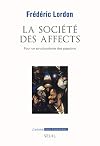
> Frédéric Lordon, La Société des affects Paris, l>e Seuil, col). « L'ordre philosophique », 2013, 288 p., 22 €
Se reporter au compte rendu de Guillaume LE BLANC
In: Revue Esprit, No. 403 (3/4) (Mars-avril 2014), pp. 228-229… ; (en ligne),
URL : https://esprit.presse.fr/article/alice-beja/uri-eisenzweig-naissance-litteraire-...
> La société des affects. Pour un structuralisme des passions. (L'ordre philosophique) by Frédéric Lordon
Se reporter au compte rendu de Johann MICHEL
In: show more Revue française de science politique Vol. 63, No. 6 (Décembre 2013), pp. 1212-1213 show less
Se reporter au compte rendu de Guillaume LE BLANC
In: Revue Esprit, No. 403 (3/4) (Mars-avril 2014), pp. 228-229… ; (en ligne),
URL : https://esprit.presse.fr/article/alice-beja/uri-eisenzweig-naissance-litteraire-...
> La société des affects. Pour un structuralisme des passions. (L'ordre philosophique) by Frédéric Lordon
Se reporter au compte rendu de Johann MICHEL
In: show more Revue française de science politique Vol. 63, No. 6 (Décembre 2013), pp. 1212-1213 show less
Jan 1, 2021French
Lists
Awards
You May Also Like


Associated Authors
Statistics
- Works
- 25
- Also by
- 1
- Members
- 416
- Popularity
- #58,579
- Rating
- 3.8
- Reviews
- 5
- ISBNs
- 49
- Languages
- 7
- Favorited
- 1