
Jill Thompson
Author of Death: At Death's Door
About the Author
Jill Thompson is a comicbook artist. She graduated in 1987 from the American Academy of Art in Chicago and has been working as a cartoonist and illustrator ever since. Jill has risen to the top of her field and has garnered acclaim for her work on WONDER WOMAN, SWAMP THING, BLACK ORCHID and the show more award winning title SANDMAN with Neil Gaiman. In 1997, Jill's first children's book, THE SCARY GODMOTHER was released to critical acclaim. Subsequent books in the series include Scary Godmother-The Revenge of Jimmy, Scary Godmother-The Mystery Date and Scary Godmother-The Boo Flu. Select Scary Godmother stories have been translated into Spanish by La Factoria, into Italian by Kappa Edizione and into German by Ehapa. Jill travels the US and beyond meeting fans and speaking about comics, literacy and art. She enjoys working with other writers and artists from time to time and most recently has collaborated with former wrestler turned author Mick Foley and illustrated MICK FOLEY'S HALLOWEEN HIJINX which debuted at number seven on the New York Times children's book best seller's list. (Bowker Author Biography) show less
Series
Works by Jill Thompson
The Invisibles Vol. 1 #08 — Illustrator — 7 copies
The Invisibles Vol. 1 #07 — Illustrator — 7 copies
The Invisibles Vol. 1 #06 — Illustrator — 5 copies
The Invisibles Vol. 3 #04 — Illustrator — 4 copies
The Invisibles Vol. 3 #03 — Illustrator — 4 copies
Seekers Into the Mystery # 14 — Illustrator — 3 copies
CORUM BULL & THE SPEAR #1-4 MICHAEL MOORCOCK's complete story (CORUM THE BULL AND THE SPEAR (1985 FIRST)) (1989) 2 copies
The Little Endless portfolio 1 copy
Seekers Into the Mystery # 12 — Illustrator — 1 copy
Scary Godmother 0 1 copy
Associated Works
Alice's Adventures in Wonderland / Through the Looking-Glass (1865) — Cover artist, some editions — 29,552 copies, 317 reviews
The Unbeatable Squirrel Girl Vol. 1: Squirrel Power (2015) — Variant Cover (3), some editions — 1,021 copies, 65 reviews
9-11: The World's Finest Comic Book Writers & Artists Tell Stories to Remember (2002) — Illustrator — 256 copies, 1 review
Chicks Dig Comics: A Celebration of Comic Books by the Women Who Love Them (2012) — Contributor — 90 copies, 5 reviews
Strip AIDS U.S.A.: A Collection of Cartoon Art to Benefit People With AIDS (1988) — Contributor — 65 copies
Bad Doings & Big Ideas: A Bill Willingham Deluxe Edition (2011) — Illustrator — 48 copies, 3 reviews
House of Mystery Vol. 2 # 02 — Illustrator — 3 copies
Future Quest #2 — Cover artist, some editions — 2 copies
Back Issue #54 — Interviewee — 2 copies
Action Girl Comics # 13 — Contributor — 1 copy
Action Girl Comics #1-19 — Contributor — 1 copy
Tagged
Common Knowledge
- Other names
- THOMPSON, Jill
- Birthdate
- 1966-11-20
- Gender
- female
- Education
- American Academy of Art (BA|1987)
- Occupations
- writer
illustrator - Organizations
- DC Comics
- Awards and honors
- Eisner Award (Best Painter/Multimedia Artist, 2001, 2004, 2007, 2009, 2010, 2017)
Eisner Award (Best Single Issue, 2015, 2017)
Eisner Award (Best Short Story, 2005)
Eisner Award (Best Publication for Early Readers, 2001)
Eisner Award (Best Publication for Teens, 2010)
Eisner Award (Best Graphic Album: New, 2017) (show all 7)
Eisner Award (Best Humor Publication, 2000) - Relationships
- Azzarello, Brian (spouse)
- Short biography
- Jill Thompson is a graduate of the American Academy of Art in Chicago. She has been working professional as a comic book creator since she was a teenager and her work has been published around the world. She is the creator of the Scary Godmother, which has graced comics, stage, and screen, as well as the graphic novel series for younger reader, Magic Trixie. Jill considers herself fortunate to have collaborated on comics such as Wonder Woman, Sandman, The Invisibles, Finals, Beasts of Burden, and many, many more.
Jill is the proud recipient of 7 Eisner Awards. She loves creating comics and has no plans of stopping anytime soon. [from Wonder Woman : the True Amazon] - Nationality
- USA
- Birthplace
- Forest Park, Illinois, USA
- Associated Place (for map)
- Illinois, USA
Members
Reviews
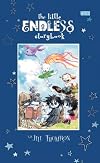
Summary: The Little Endless Storybooks are just that, children's storybooks, illustrated with lovely watercolors by Jill Thompson, that feature the kid versions of the Endless first featured in Sandman #40. In The Little Endless Storybook, Delirium has gotten lost, and it's up to her companion and guardian, the dog Barnabas, to find her. He visits each of her siblings in turn, but she's nowhere to be found!
Review: Aww, this was cute. I didn't realize before I got it that it really was a show more kids' storybook, rather than what I think of as a more regular graphic novel. It's pitched to kids in its language as well, although I don't know how much sense it'd make to someone who isn't already familiar with the Endless from the regular Sandman canon - which is decidedly not kids' stuff. The pictures are gorgeous and full of detail (and color, since Delirium is a major player), with plenty for both kids and adults to look at.
Most of the fun in this series, I think, is in the miniaturized versions of the Endless, in how they interact with each other, and how their interactions compare to those of their adult forms. (I think Little Destruction is my favorite, although I always wished he got more screen time in the canon versions as well.) The first book gives each of the Endless their own chance to shine, but they don't really interact with each other, which is a shame. In any case, it's a cute, lighthearted read, that made me really want to go back and re-read the Sandman proper. 3.5 out of 5 stars.
Recommendation: Probably only for Sandman fans, the Little Endless Storybooks are nonessential but definitely fun additions to the collection. show less
Review: Aww, this was cute. I didn't realize before I got it that it really was a show more kids' storybook, rather than what I think of as a more regular graphic novel. It's pitched to kids in its language as well, although I don't know how much sense it'd make to someone who isn't already familiar with the Endless from the regular Sandman canon - which is decidedly not kids' stuff. The pictures are gorgeous and full of detail (and color, since Delirium is a major player), with plenty for both kids and adults to look at.
Most of the fun in this series, I think, is in the miniaturized versions of the Endless, in how they interact with each other, and how their interactions compare to those of their adult forms. (I think Little Destruction is my favorite, although I always wished he got more screen time in the canon versions as well.) The first book gives each of the Endless their own chance to shine, but they don't really interact with each other, which is a shame. In any case, it's a cute, lighthearted read, that made me really want to go back and re-read the Sandman proper. 3.5 out of 5 stars.
Recommendation: Probably only for Sandman fans, the Little Endless Storybooks are nonessential but definitely fun additions to the collection. show less

Magic Trixie, a mischievous little witch with domestic issues - in the first installment of her story, Magic Trixie, she confronts her jealousy of her baby sister, Abby Cadabra, while in the second, Magic Trixie Sleeps Over, she deals with the problem of bedtime rituals - returns in this third adventure, once again faced with a common childhood experience: the desire for a pet. Having fallen in love with the dragons at the circus, Magic Trixie wants one herself, and although everyone from show more her cousin Tansy (whose boyfriend is a Dragon Rider!) to her parents and grandparents insist that dragons can't be kept as a pets, she can't stop thinking about them. Unfortunately, this fixation gets in the way, when she is transmogrifying Abby Cadabra's diapers, and suddenly her baby sister has been turned into a dragon! What will her parents say? And how will Stitches, her beloved feline companion, who has come to believe that Magic Trixie is no longer interested in him, react...?
Another engaging installment in Jill Thompson's graphic novel series, aimed at younger readers, about the antics of a somewhat bratty, but ultimately lovable little witch, Magic Trixie and the Dragon expands upon the enchanted world its heroine inhabits, while also offering a satisfying tale of a young girl, her family and friends, and her beloved cat. I liked the inclusion and depiction of the CIA (the Cryptozoological Institute of Atlantis), which studies and preserves mythological and magical creatures, and found the sub-plot in which an unhappy Stitches runs away very poignant. Magic Trixie's apology, in which she explains that she doesn't consider Stitches a pet at all, but a good friend and companion, had me tearing up (what can I say? I have a black cat myself, and he's a darling), while the conclusion, with its promise of more trouble, had me chuckling.
I don't know, all told, that I would consider these books a personal favorite, when it comes to this genre, but they definitely make for fun reading, and I would recommend them to young graphic-novel fans with a taste for witchy fiction. show less
Another engaging installment in Jill Thompson's graphic novel series, aimed at younger readers, about the antics of a somewhat bratty, but ultimately lovable little witch, Magic Trixie and the Dragon expands upon the enchanted world its heroine inhabits, while also offering a satisfying tale of a young girl, her family and friends, and her beloved cat. I liked the inclusion and depiction of the CIA (the Cryptozoological Institute of Atlantis), which studies and preserves mythological and magical creatures, and found the sub-plot in which an unhappy Stitches runs away very poignant. Magic Trixie's apology, in which she explains that she doesn't consider Stitches a pet at all, but a good friend and companion, had me tearing up (what can I say? I have a black cat myself, and he's a darling), while the conclusion, with its promise of more trouble, had me chuckling.
I don't know, all told, that I would consider these books a personal favorite, when it comes to this genre, but they definitely make for fun reading, and I would recommend them to young graphic-novel fans with a taste for witchy fiction. show less
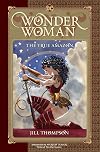
Wonder Woman: The True Amazon is an elegant and beautifully painted one volume storybook-style origin story for the Amazon Princess Diana. Its is written and illustrated by Jill Thompson,an Eisner Award-winning American comic book writer and illustrator (her work is wonderful). The comic itself is certainly beautiful and emotionally engaging. The story is an interesting take on Wonder Woman's origins dealing with the idea that she wasn't always the most compassionate superhero out there but show more instead she was a selfish girl all too aware of her gifts. Diana's compassion is certainly why I think she is my favorite superhero, and why many people love her, but I think this story illustrates that to become compassionate and in order to make a commitment to Peace and Justice the way Diana does
one must truly understand loss, suffering, and come to terms with issues of the ego. Compassion is the transcendence of the self after all. The story does make it seem like Diana doesn't have a choice when it comes to pursuing compassion, peace, and justice because in a way, she is atoning for her sins but perhaps she quickly does come to love mankind and become the noble superhero we adore. show less
one must truly understand loss, suffering, and come to terms with issues of the ego. Compassion is the transcendence of the self after all. The story does make it seem like Diana doesn't have a choice when it comes to pursuing compassion, peace, and justice because in a way, she is atoning for her sins but perhaps she quickly does come to love mankind and become the noble superhero we adore. show less
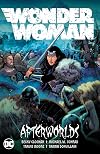
I dropped out of the Wonder Woman series a few volumes back out of boredom and have skipped ahead to see if Becky Cloonan can bring some new energy to the title.
Soooooo . . . Wonder Woman has gotten herself dead or she's ascending to godhood or something at the end of Dark Knights: Dark Metal (not to be confused with her subsequent death for Dark Crisis mind you) -- and now finds herself in the afterlife. But not the afterlife of Greek mythology; no, no, she's in Valhalla. Turns out some show more rogue god is causing problems across the pantheons, so Wonder Woman has to set aside the rest and relaxation of death and get back to work tracking this big bad villain across the multiverse, with stops inTartarus, Earth-11, the Phantom Zone, the Fifth Dimension, Gemworld, and a limbo called the In-Between . Fortunately she's helped by a cute squirrel (!).
It's a kinda cheesy, kinda fun road trip, and it all becomes a metaphor for healing the rift between the extremism of MAGA blindered nostalgia and Antifa anarchist revolution. Y'know, the kind of big, hopeful gesture WW is known for.
It's good enough, I'm going to keep on and check out some of the spin-off titles with Nubia and the new Wonder Girl. show less
Soooooo . . . Wonder Woman has gotten herself dead or she's ascending to godhood or something at the end of Dark Knights: Dark Metal (not to be confused with her subsequent death for Dark Crisis mind you) -- and now finds herself in the afterlife. But not the afterlife of Greek mythology; no, no, she's in Valhalla. Turns out some show more rogue god is causing problems across the pantheons, so Wonder Woman has to set aside the rest and relaxation of death and get back to work tracking this big bad villain across the multiverse, with stops in
It's a kinda cheesy, kinda fun road trip, and it all becomes a metaphor for healing the rift between the extremism of MAGA blindered nostalgia and Antifa anarchist revolution. Y'know, the kind of big, hopeful gesture WW is known for.
It's good enough, I'm going to keep on and check out some of the spin-off titles with Nubia and the new Wonder Girl. show less
Lists
Pipoca & Nanquim (1)
Awards


You May Also Like


Associated Authors
Statistics
- Works
- 82
- Also by
- 78
- Members
- 3,772
- Popularity
- #6,718
- Rating
- 4.2
- Reviews
- 131
- ISBNs
- 93
- Languages
- 8
- Favorited
- 12

