
Ted Naifeh
Author of The Shadow of the Torturer
About the Author
Image credit: Credit: Georges Seguin, 2007
Series
Works by Ted Naifeh
Broom with a View 4 copies
Courtney Crumrin 2 copies
Gene Wolfe's The Shadow of the Torturer Volume 1 (Of 6): The Torturer's Apprentice (Comic Book) (Volume One of the Book of the Sun) (1991) 2 copies
Courtney Crumrin In The Twilight Kingdom Vol. 3 #3 (Courtney Crumrin and The Night Things) (2004) 2 copies
Gene Wolfe's The Shadow of the Torturer #2 - Chapter Two: The Traitress (1991) — Illustrator — 1 copy
Gene Wolfe's The Shadow of the Torturer #3 - Chapter Three: The Challenge (1991) — Illustrator — 1 copy
How Loathsome #s 1-5 1 copy
Courtney Crumrin Tales #1 1 copy
Associated Works
Mouse Guard: Labyrinth and Other Stories (Free Comic Book Day 2014) (2014) — Contributor — 131 copies, 2 reviews
Mouse Guard: Labyrinth and Other Stories (Free Comic Book Day 2012) (2012) — Contributor — 86 copies, 1 review
Tagged
Common Knowledge
- Birthdate
- 1971-06-20
- Gender
- male
- Nationality
- USA
- Places of residence
- Houston, Texas, USA
- Associated Place (for map)
- Texas, USA
Members
Discussions
Looking for Centipede Press Shadow of the Torturer in Fine Press Forum (December 2018)
The Shadow of the Torturer in The Weird Tradition (December 2012)
The Book of the New Sun Vol 1 - The Shadow of the Torturer in Group Reads - Sci-Fi (September 2008)
Reviews
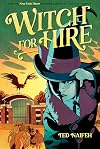
I’m not sure how this graphic novel got onto my stack, since it wasn’t on my official TBR, but I’m super glad that I picked it up! Naifeh’s story follows Cody as she enters high school and is quickly relegated to the loser table - the bane of the lunchroom where the school’s misfits are forced to hang out until they find their own social group. Pro-tip: the nerd crowd is way more fun in the long run, something it seems no one in highschool knows except for the leader of the group show more and perennial loser, Faye Faulker. It doesn’t help matters that Faye wears a witch hat to school and professes to practice what she preaches, but Cody quickly falls under her spell of “too cool to be cool” and readers who recognize a fellow weird soul can quietly cheer the pair along. The moral of the story isn’t just about surviving highschool and making friends (even if they’re professed losers) though, and veers quickly into the realm of the supernatural that the title of the book promises. Being a shy and easily intimidated kid, Cody has fallen under the sway of Shy Shelbi, an online bully who is actually a Curse Creature - a being who lives to cause mayhem, destruction, and cruelty through manipulation. My generation of teens missed this particular supernatural creature, since we were just being introduced to the concept of online message boards and chat features, but they are all too common with the Gen-Z kids and have become an interesting (if terrifying) myth of the digital age. Naifeh’s story taps into a cultural subconscious that is recognizable for the new generation, and supported with strongly written characters and a perfect light-gothic art style he elevates his story to being a solid entry into the urban mythic genre. show less

This book was everything I heard it would be: mysterious, thought provoking, full of allegory, cryptic, and a tool for exercising my imagination. I am glad I read it now, while I'm in my 30's, rather than my high school Star Wars fiction years, when I would have no tolerance for such obscure linguistic riddles. Thanks college for toughening me up. My current motivation spawned from reading through the new Monte Cook RPG book Numenera. Cook cites The New Sun series as the major inspiration show more for his game setting. That's when I said to myself "Well, I guess its time I took this on." And I'm glad I did. The other series of books that instantly remind me of Gene Wolfe's style is The Gormenghast Series by Mervyn Peake. Both have that strange and weird sense of unhealthy otherness going on. It's creepy. Not like Lovecraft creepy, but more like "inevitable future of doom" creepy and I can't get enough of it. I look forward to reading the rest of this series. show less

When this book first appeared back in the early 1980s, I disregarded it, as fantasy wasn't my thing and this definitely looked like fantasy. But then a number of people whose opinions I respected said that it was worth reading, and so I relented. And of course, it isn't fantasy, but a story set in a distant future when the sun is dying and human civilizations have lost all sense of time. We don't find this out immediately, but Wolfe's world-building is so clever that he gradually gives us show more clues as to where we are, both in space and time. Humanity has been to the stars and come back, and mainly forgotten what it did out there. So despite what looks like a classic fantasy setting, despite there being figures with swords and archaic speech, the reader has to keep alert, because references to 'pistols' almost certainly mean energy weapons, and 'ship' may refer to a vessel on the water or one travelling to distant suns.
The first time I read it, I seem to remember not really grasping the objective of the book, and the power and achievement of the author only sank in as I progressed through its sequels in the series making up 'The Book of the New Sun'. But that was more than 35 years ago. Recently, I was browsing some back issues of an academic journal and came across a series of papers on Gene Wolfe and his novels; and I thought perhaps I'd better revisit these books, and catch up with what else he'd written in the same universe later, whilst I still had time. Think of this as a bucket list read, then.
So what do we have here? On the face of it, a simple story. Severian is an apprentice torturer, of the Guild of Torturers in the great Citadel in the city of Nessus, which may be somewhere in South America or possibly South Africa. He may be destined for high office in the Guild, until the day he betrays the Guild and allows one of those committed to them to be subjected to excruciations to take her own life and thus escape her fate. For this, he is expelled from the Guild; but it is politically convenient for him to be sent to the distant city of Thrax, where he would take up his duties as their resident torturer and so expiate his guilt to the Guild. This first book tells Severian's story up to the point where he reaches the gate in the city wall of Nessus.
You will gather from that description that we are not looking at a high-powered, thrill-a-minute adventure story. Neither are we talking about a novel of horror, despite the title, though there are accounts of Severian's trade which discuss the calling of torturer with some degree of professional detachment. Rather, we are shown the society of the city of Nessus, its inhabitants, and get an insight into what living in such a society might be like. Along the way, we have the benefit of Severian's inner musings; he is telling his tale in hindsight, reflecting on his history. Severian is not a cruel man - indeed, if he were, he would not have been allowed to become a torturer, for torturers are not allowed to take pleasure in their work - but he gives clues that he may be an unreliable witness.
But if there is little action (though the story does advance in terms of the people Severian meets and the situations he gets into - fighting a duel, falling in love, carrying out an execution and starring in a play), the description of the setting is memorable. The city seems huge to Severian and its ways strange, he having been sequestered in the Citadel for most of his life; so he is something of an innocent abroad, and everything is new to him. And above all that, the dying sun casts its feeble light. The descriptions of the scenes and settings are reminiscent of Mervyn Peake's 'Gormenghast', but this is a sombre setting, its colours and shadows reminiscent of the English painter Joseph Wright, renowned for his canvasses of contrast between light and shade.
I enjoyed this start to my re-read, and am looking forward to the next volume in the series, 'The Claw of the Conciliator'. show less
The first time I read it, I seem to remember not really grasping the objective of the book, and the power and achievement of the author only sank in as I progressed through its sequels in the series making up 'The Book of the New Sun'. But that was more than 35 years ago. Recently, I was browsing some back issues of an academic journal and came across a series of papers on Gene Wolfe and his novels; and I thought perhaps I'd better revisit these books, and catch up with what else he'd written in the same universe later, whilst I still had time. Think of this as a bucket list read, then.
So what do we have here? On the face of it, a simple story. Severian is an apprentice torturer, of the Guild of Torturers in the great Citadel in the city of Nessus, which may be somewhere in South America or possibly South Africa. He may be destined for high office in the Guild, until the day he betrays the Guild and allows one of those committed to them to be subjected to excruciations to take her own life and thus escape her fate. For this, he is expelled from the Guild; but it is politically convenient for him to be sent to the distant city of Thrax, where he would take up his duties as their resident torturer and so expiate his guilt to the Guild. This first book tells Severian's story up to the point where he reaches the gate in the city wall of Nessus.
You will gather from that description that we are not looking at a high-powered, thrill-a-minute adventure story. Neither are we talking about a novel of horror, despite the title, though there are accounts of Severian's trade which discuss the calling of torturer with some degree of professional detachment. Rather, we are shown the society of the city of Nessus, its inhabitants, and get an insight into what living in such a society might be like. Along the way, we have the benefit of Severian's inner musings; he is telling his tale in hindsight, reflecting on his history. Severian is not a cruel man - indeed, if he were, he would not have been allowed to become a torturer, for torturers are not allowed to take pleasure in their work - but he gives clues that he may be an unreliable witness.
But if there is little action (though the story does advance in terms of the people Severian meets and the situations he gets into - fighting a duel, falling in love, carrying out an execution and starring in a play), the description of the setting is memorable. The city seems huge to Severian and its ways strange, he having been sequestered in the Citadel for most of his life; so he is something of an innocent abroad, and everything is new to him. And above all that, the dying sun casts its feeble light. The descriptions of the scenes and settings are reminiscent of Mervyn Peake's 'Gormenghast', but this is a sombre setting, its colours and shadows reminiscent of the English painter Joseph Wright, renowned for his canvasses of contrast between light and shade.
I enjoyed this start to my re-read, and am looking forward to the next volume in the series, 'The Claw of the Conciliator'. show less

I tried to read this about two years ago and didn’t make it past the first few chapters. I picked it up again recently and couldn’t put it down. Because of that, I feel almost obligated to add a warning that as much as I find this to be an incredible book now, I would only recommend it to a very specific branch of readers; those that value the writing itself above everything, and the plot, or romance, or whatever else existing only to provide the means for the author to write more.
With show more that out of the way, this is a masterpiece. The plot meandered, and this is stylistically something that won’t resonate with many different types of readers, but I found it quite possibly one of the—if not the—greatest book I’ve yet read. The world you’re thrown into is unexplained and intrinsically odd, with the reader being left to pick out meaning from terms and cultural expressions that almost align with a futuristic parallel of some humanities future (take “Urth” in place of Earth). I loved that, and therefore loved this book, but can see how polarizing and unapproachable that may be to a casual reader. This is something that should live on any fantasy reader’s shelf, in perfect reach for when the right moment and right mood align, even if that’s years from when it’s originally purchased. show less
With show more that out of the way, this is a masterpiece. The plot meandered, and this is stylistically something that won’t resonate with many different types of readers, but I found it quite possibly one of the—if not the—greatest book I’ve yet read. The world you’re thrown into is unexplained and intrinsically odd, with the reader being left to pick out meaning from terms and cultural expressions that almost align with a futuristic parallel of some humanities future (take “Urth” in place of Earth). I loved that, and therefore loved this book, but can see how polarizing and unapproachable that may be to a casual reader. This is something that should live on any fantasy reader’s shelf, in perfect reach for when the right moment and right mood align, even if that’s years from when it’s originally purchased. show less
Lists
Graphic Novels (1)
1980 great books (1)
Awards


You May Also Like


Associated Authors
Statistics
- Works
- 92
- Also by
- 18
- Members
- 7,572
- Popularity
- #3,224
- Rating
- 3.8
- Reviews
- 346
- ISBNs
- 188
- Languages
- 14
- Favorited
- 8