
Dawn Casey
Author of The Best Easter Egg Hunt Ever
About the Author
Image credit: via Nosy Crow
Works by Dawn Casey
The Children's Forest (Crafts and Family Activities): Stories and songs, wild food, crafts and celebrations ALL YEAR ROUND (2019) 32 copies
Tagged
Common Knowledge
Members
Reviews
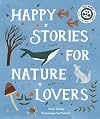
A must-read for every human being, nature lover or not.
All of us know the desperate condition the planet is in. Forest fires, severe hurricanes, extreme rains and floods – weather patterns are changing like never before. The future looks scary the way it is right now, assuming there is a long-term future. But to avoid humans from giving up on the planet, there is a need for reports filled with a ray of hope than with overwhelming dread. That’s where such books make a world of difference. show more
The eight stories contained in this book have one specialty. Unlike usual picture books based on nature, the stories aren’t entirely fictional and aren’t taken from folktales or mythical lore. Instead, every single story has a basis in reality – they are all real-life anecdotes written in a narrative format. From the return of grey wolves to the Yellowstone National Park to the restoration in the numbers of humpback whales, the stories depict not just the devastation humankind has wreaked on nature, but also how nature has the ability to repair and restore itself when it is allowed some breathing space.
I was delighted to see the story celebrating the tiger conservation efforts in India. The tiger is my absolute favourite animal, and seeing its numbers climb upwards has been one of the more rewarding experiences in my life. We still have a long way to go before the tiger can be considered safe in status, but making a start is still better than doing nothing at all
Within just 32 pages, the book manages to cover a diverse representation of nature, covering stories about trees, birds, water creatures, animals and farming! The introductory note is touching, revealing the importance and interconnectivity of nature. The book ends with a ‘What You Can Do’ section, containing many practical points that children (and carers) can implement without much worry.
The artwork is simply gorgeous, so soothing to the eyes and so perfect for the content. Not surprisingly for a nature-based book, it is rich and earthy in its colour tone.
The book is aimed at little readers aged 5-8 and the language level suits this group perfectly.
Definitely a book to be read and treasured. It highlights the importance of conservation and responsible human behaviour in an uplifting manner, thereby imbuing hope in these times of gloom. After all, it’s never too late, unless we do nothing about it.
In a true gesture of “walking the talk”, the book has been printed on recycled paper made from 100% post-consumer waste. This is the right way to go for all books in future.
4.5 stars.
My thanks to Quarto Publishing Group – Ivy Kids and NetGalley for the DRC of “Happy Stories for Nature Lovers”. This review is voluntary and contains my honest opinion about the book.
———————————————
Connect with me through:
My Blog | The StoryGraph | Facebook | Twitter show less
All of us know the desperate condition the planet is in. Forest fires, severe hurricanes, extreme rains and floods – weather patterns are changing like never before. The future looks scary the way it is right now, assuming there is a long-term future. But to avoid humans from giving up on the planet, there is a need for reports filled with a ray of hope than with overwhelming dread. That’s where such books make a world of difference. show more
The eight stories contained in this book have one specialty. Unlike usual picture books based on nature, the stories aren’t entirely fictional and aren’t taken from folktales or mythical lore. Instead, every single story has a basis in reality – they are all real-life anecdotes written in a narrative format. From the return of grey wolves to the Yellowstone National Park to the restoration in the numbers of humpback whales, the stories depict not just the devastation humankind has wreaked on nature, but also how nature has the ability to repair and restore itself when it is allowed some breathing space.
I was delighted to see the story celebrating the tiger conservation efforts in India. The tiger is my absolute favourite animal, and seeing its numbers climb upwards has been one of the more rewarding experiences in my life. We still have a long way to go before the tiger can be considered safe in status, but making a start is still better than doing nothing at all
Within just 32 pages, the book manages to cover a diverse representation of nature, covering stories about trees, birds, water creatures, animals and farming! The introductory note is touching, revealing the importance and interconnectivity of nature. The book ends with a ‘What You Can Do’ section, containing many practical points that children (and carers) can implement without much worry.
The artwork is simply gorgeous, so soothing to the eyes and so perfect for the content. Not surprisingly for a nature-based book, it is rich and earthy in its colour tone.
The book is aimed at little readers aged 5-8 and the language level suits this group perfectly.
Definitely a book to be read and treasured. It highlights the importance of conservation and responsible human behaviour in an uplifting manner, thereby imbuing hope in these times of gloom. After all, it’s never too late, unless we do nothing about it.
In a true gesture of “walking the talk”, the book has been printed on recycled paper made from 100% post-consumer waste. This is the right way to go for all books in future.
4.5 stars.
My thanks to Quarto Publishing Group – Ivy Kids and NetGalley for the DRC of “Happy Stories for Nature Lovers”. This review is voluntary and contains my honest opinion about the book.
———————————————
Connect with me through:
My Blog | The StoryGraph | Facebook | Twitter show less

Busy cleaning her house one winter's night, Babushka doesn't see the star in the sky, or hear her neighbors cries of awe. But when three richly-dressed men stop at her home to rest, she feeds them her soup and listens to their tales of a newborn baby, the Prince of Peace and Lord of Light, whom they seek. Declining their invitation to accompany them on their quest, she soon comes to regret her decision, and gathering all manner of gifts, sets out in their footsteps. In the process, she show more encounters many children in need, dispensing gifts to them along her way...
This story, which is often erroneously presented as a traditional Russian folktale, has been presented in a number of other picture book versions, including Ruth Robbins and Nicolas Sidjakov's Caldecott Medal-winning Baboushka and the Three Kings, Charles Mikolaycak's Babushka: An Old Russian Folktale, Arthur Scholey and Helen Cann's Baboushka: A Christmas Folktale from Russia, and Elena Pasquali and Lucia Mongioj's The Tale of Baboushka: A Traditional Christmas Story. I say erroneously because apparently this story does not have its roots in Russian lore, and does not actually reflect a Russian tradition involving a holiday gift-giver. The story is very similar to traditional folktales from Italy (see Tomie dePaola's The Legend of Old Befana), as well as the Dominican Republic (see Julia Alvarez & Ruddy Núñez' El mejor regalo del mundo: La Leyenda De La Vieja Belen / The Best Gift of All: The Legend of La Vieja Belen), but I have it from reliable sources that there is no Russian variant of the story. Rather, this Russified version of the tale comes from American author Edith M. Thomas' 1907 poem Babushka (A Russian Legend), taken from her collection, Children of Christmas. I am unsure as to Thomas' sources, but apparently there was also a play based upon her poem.
In any case, although not actually a Russian tale, I have retained this on my "Russian folklore" shelf, simply because it is so often described and cataloged that way, and because it is of interest, I think, to those interested in the subject. Leaving all that aside, I found this version by British author/illustrator team Dawn Casey and Amanda Hall quite lovely, and I enjoyed reading the story, and perusing the soft, pastel illustrations, done in watercolor and crayon. Although I cannot recommend it as a folktale, I do recommend it to those seeking Christmas fairy tales for younger children. show less
This story, which is often erroneously presented as a traditional Russian folktale, has been presented in a number of other picture book versions, including Ruth Robbins and Nicolas Sidjakov's Caldecott Medal-winning Baboushka and the Three Kings, Charles Mikolaycak's Babushka: An Old Russian Folktale, Arthur Scholey and Helen Cann's Baboushka: A Christmas Folktale from Russia, and Elena Pasquali and Lucia Mongioj's The Tale of Baboushka: A Traditional Christmas Story. I say erroneously because apparently this story does not have its roots in Russian lore, and does not actually reflect a Russian tradition involving a holiday gift-giver. The story is very similar to traditional folktales from Italy (see Tomie dePaola's The Legend of Old Befana), as well as the Dominican Republic (see Julia Alvarez & Ruddy Núñez' El mejor regalo del mundo: La Leyenda De La Vieja Belen / The Best Gift of All: The Legend of La Vieja Belen), but I have it from reliable sources that there is no Russian variant of the story. Rather, this Russified version of the tale comes from American author Edith M. Thomas' 1907 poem Babushka (A Russian Legend), taken from her collection, Children of Christmas. I am unsure as to Thomas' sources, but apparently there was also a play based upon her poem.
In any case, although not actually a Russian tale, I have retained this on my "Russian folklore" shelf, simply because it is so often described and cataloged that way, and because it is of interest, I think, to those interested in the subject. Leaving all that aside, I found this version by British author/illustrator team Dawn Casey and Amanda Hall quite lovely, and I enjoyed reading the story, and perusing the soft, pastel illustrations, done in watercolor and crayon. Although I cannot recommend it as a folktale, I do recommend it to those seeking Christmas fairy tales for younger children. show less
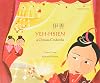
Yeh-hsien has only one friend, a beautiful red fish, who she visits every day. Unfortunately, her cruel stepmother tricks the fish and kills it out of spite. However, the fish’s bones magically allow Yeh-hsien to make and receive wishes, including to attend a large festival, which alters the course of her life.
Although I am not the hugest fan of fairytales, it was interesting to read another variation of the Cinderella story. Despite cultural differences in the details, there’s more of a show more common throughline than not. The writing was evocative, and I could very nearly smell the food fragrances at the festival. The illustrations are also compelling to look at, with lots of bright colors. This edition is written in both Cantonese and English, making it accessible to many readers. show less
Although I am not the hugest fan of fairytales, it was interesting to read another variation of the Cinderella story. Despite cultural differences in the details, there’s more of a show more common throughline than not. The writing was evocative, and I could very nearly smell the food fragrances at the festival. The illustrations are also compelling to look at, with lots of bright colors. This edition is written in both Cantonese and English, making it accessible to many readers. show less

Realizing that his people have no calendar, and therefore no way to measure time, the Jade Emperor (and King of Heaven) decides to create one, using a twelve-year cycle. But although he wants to name each year after an animal, he isn't sure what order he should use, in that naming, and decides to hold a great race. The winning animal's year will come first, and each subsequent racer's next, in the cycle of the years. And so begins "The Great Race," in which the twelve animals of the Chinese show more zodiac compete for the honor of coming first, and in which clever Rat - though the smallest of the animals - has a plan...
This Chinese folktale - which explains not only the order of the years, in the Chinese lunar calendar, but also the animosity between Rat and Cat - has also been retold by Dorothy O. Van Woerkom, in her The Rat, the Ox, and the Zodiac: A Chinese Legend. Dawn Casey's version is engaging, and I can certainly see that the colorful illustrations by Ann Wilson - a mixture of collage and acrylic paint - will appeal to younger children, but I think I prefer the Van Woerkom version. After all - it's illustrated by the brilliant Errol Le Cain! Still, this is an engaging adaptation, and one I recommend to young folktale lovers, particularly those with a taste for animal stories and pourquoi tales. show less
This Chinese folktale - which explains not only the order of the years, in the Chinese lunar calendar, but also the animosity between Rat and Cat - has also been retold by Dorothy O. Van Woerkom, in her The Rat, the Ox, and the Zodiac: A Chinese Legend. Dawn Casey's version is engaging, and I can certainly see that the colorful illustrations by Ann Wilson - a mixture of collage and acrylic paint - will appeal to younger children, but I think I prefer the Van Woerkom version. After all - it's illustrated by the brilliant Errol Le Cain! Still, this is an engaging adaptation, and one I recommend to young folktale lovers, particularly those with a taste for animal stories and pourquoi tales. show less
Lists
Awards


You May Also Like


Associated Authors
Statistics
- Works
- 46
- Members
- 1,256
- Popularity
- #20,421
- Rating
- 3.7
- Reviews
- 44
- ISBNs
- 207
- Languages
- 26
- Favorited
- 1