
Stella Blackstone
Author of Bear in a Square
About the Author
Disambiguation Notice:
Stella Blackstone is the pen name of Tessa Strickland (although she authored some books under her legal name as well).
Series
Works by Stella Blackstone
Associated Works
Tagged
Common Knowledge
- Legal name
- Strickland, Tessa
- Other names
- Blackstone, Stella
- Gender
- female
- Occupations
- editor
teacher - Short biography
- Tessa Strickland was the editor-in-chief of Barefoot Books, the publishing house that she cofounded with Nancy Traversy; she retired at the end of 2016. Strickland and Traversy founded the press as a home business when they were both young mothers in England in 1992 and later moved Barefoot to Cambridge, Mass.
- Nationality
- England
- Disambiguation notice
- Stella Blackstone is the pen name of Tessa Strickland (although she authored some books under her legal name as well).
- Associated Place (for map)
- England
Members
Reviews
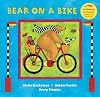
I enjoyed the obvious rhyme scheme of this story. The repeated lines “Where are you going bear, please wait for me” signified the strong relationship between the boy and the bear. I gathered that the bear represented a strong personality and someone who loves to explore. The illustrations and the repeated line above made me, as the reader, feel that the boy isn’t as adventurous but likes to tag along with his bear friend. This can be related in friendships because sometimes children show more with opposite personalities connect and build strong relationships.
The images were culturally appropriate. For example, when the bear and boy traveled to the river, castle, seaside and market, other animals were represented, as were different ethnicities in people. The buyers and sellers at the market were all different races and dressed differently. I liked this small detail because it made the setting realistic and it was humorous to me that the author gave this bear such humanistic qualities.
I liked that the author chose a bear and not another child for the African American boy to play with. It made the story more entertaining, unique, and can interest readers who love animals. I think the big idea was that there is no adventure too big or too small and it doesn’t matter the company. This is described in the story because the bear and boy traveled from somewhere remote like a river, to somewhere extravagant like a castle and then outer space. I also enjoyed that the reader can think of the bear as the boys imaginary friend. I did not realize this until the end of the book, which made me think more into the author’s word choice and made me investigate, which was enjoyable. show less
The images were culturally appropriate. For example, when the bear and boy traveled to the river, castle, seaside and market, other animals were represented, as were different ethnicities in people. The buyers and sellers at the market were all different races and dressed differently. I liked this small detail because it made the setting realistic and it was humorous to me that the author gave this bear such humanistic qualities.
I liked that the author chose a bear and not another child for the African American boy to play with. It made the story more entertaining, unique, and can interest readers who love animals. I think the big idea was that there is no adventure too big or too small and it doesn’t matter the company. This is described in the story because the bear and boy traveled from somewhere remote like a river, to somewhere extravagant like a castle and then outer space. I also enjoyed that the reader can think of the bear as the boys imaginary friend. I did not realize this until the end of the book, which made me think more into the author’s word choice and made me investigate, which was enjoyable. show less
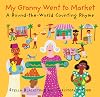
I bought My Granny Went to the Market: A Round- the- world Counting Rhyme, because my mother in law is an avid folk art collector and I think it will resonate personally with my children after they become familiar with her house -filled to the brim with treasures from around the world. After spending some time with the book, however, I cant get enough of the fanciful, candy colored paintings that depict a grandmother sailing around the world on a magic carpet to collect artwork such as masks show more and drums from different cultures.
In addition to teaching counting through these collected objects (yet in a pleasantly subtly manner), this book does a great job of teaching cultural awareness. Corr’s images celebrate the diversity of our planet’s creative pulse, yet they also show humans as collective makers, which is a spirit I hope to instill in my own children. I think art is one of the best ways to highlight the similarities of humankind and show us all as connected beings, and this seemingly simplistic counting book does exactly that. show less
In addition to teaching counting through these collected objects (yet in a pleasantly subtly manner), this book does a great job of teaching cultural awareness. Corr’s images celebrate the diversity of our planet’s creative pulse, yet they also show humans as collective makers, which is a spirit I hope to instill in my own children. I think art is one of the best ways to highlight the similarities of humankind and show us all as connected beings, and this seemingly simplistic counting book does exactly that. show less
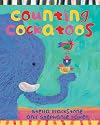
I have read this book over and over to my son on many nights to help him fall asleep. This is not my favorite book; however, my son Cameron had always seen much value in this book, so I continue to read it to him. It brings joy to him, and every night when I ask with encouragement what book are we going to read tonight, he smiles and picks this one. It is a counting book with beautiful pictures inside. Each page reveals a different animal to count with two cockatoos. I would read this to my show more class as well in a pre-k or kindergarten class to help them become familiar with numbers as words and counting in sequence. show less
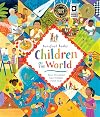
Where to even start?! This book grabbed my children from page one - asking questions, picking out who looked like them, spotting differences we could talk about... this book gives me ALL the feels. Tonight we spent over 30 minutes - just to get through the book - expanding briefly on eyes, food, and languages. Each and every page is a treasure trove of talking points and sharing moments! I know we will spend many hours together enjoying this amazing book!
Lists
Awards


You May Also Like


Associated Authors
Statistics
- Works
- 71
- Also by
- 4
- Members
- 6,704
- Popularity
- #3,651
- Rating
- 3.8
- Reviews
- 117
- ISBNs
- 595
- Languages
- 24