
George Herriman (1880–1944)
Author of Krazy & Ignatz 1925-1926: "There is a Heppy Land Furfur A-waay"
About the Author
Image credit: c. 1916. Photographer unknown.
Series
Works by George Herriman
Krazy & Ignatz 1937-1938: "Shifting Sands Dusts its Cheeks in Powdered Beauty" (2006) 157 copies, 1 review
Geo. Herriman's Krazy and Ignatz: Howling Among the Halls of Night (Krazy and Ignatz, Vol. 4) (1989) 36 copies, 1 review
Geo. Herriman's Krazy and Ignatz: The Limbo of Unconsciousness (Krazy and Ignatz, Vol. 3) (1989) 36 copies, 1 review
Krazy and Ignatz: Pilgrims on the Road to Nowhere: Komplete Kat Komics, 1920 (Krazy & Ignatz, Vol. 5, 1920) (1990) 34 copies, 1 review
Geo. Herriman's Krazy and Ignatz: Sure As Moons Is Cheeses (Krazy and Ignatz, Vol 6, 1921) (1990) 34 copies, 1 review
Geo. Herriman's Krazy and Ignatz: The Other-Side to the Shore of Here (Krazy and Ignatz, Vol. 2-1917) (1990) 33 copies, 1 review
The Library of American Comics Essentials, Volume 1: Baron Bean - The Complete First Year (2012) — Author — 21 copies, 1 review
The Library of American Comics Essentials, Volume 6: Baron Bean - The Complete Second Year (2015) — Author — 6 copies
Krazy & Ignatz Volume Seven: 1922 2 copies
Krazy Kat Komix 2 copies
KRAZY KAT -2º VOLUME - 1936 -1937 2 copies
Archy and Mehitabel 1 copy
Krazy Kat: 1936 - 1937 1 copy
Krazy Kat Vol.2 (1936-1937) 1 copy
Krazy Kat Komix #02 1 copy
Krazy Kat Kartoon Kollection 1 copy
Krazy Kat Komix, 01 1 copy
Krazy Kat Komix [vol] 5 1 copy
Krazy and Ignatz: Volume 4 1 copy
Krazy Cat 1 copy
Krazy Kat comics 1 copy
Krazy Kat 1988 Kalendar 1 copy
Krazy and Ignatz: Book 4 1 copy
Krazy Kat Komix, 1976, No 5 1 copy
Krazy & Ignatz, 1925-1934 1 copy
Krazy Kat 1921-1931 1 copy
Krazy Komiks Postcard Set 1 copy
Krazy Kat Komix #5 1 copy
Associated Works
The Lives and Times of Archy and Mehitabel (1927) — Illustrator, some editions — 407 copies, 8 reviews
An Anthology of Graphic Fiction, Cartoons, and True Stories (2000) — Contributor — 385 copies, 3 reviews
Comics About Cartoonists: Stories About the World's Oddest Profession (2013) — Contributor — 18 copies
Raw No. 6: The Graphix Magazine That Overestimates the Taste of the American Public (1984) — Contributor — 14 copies
Comics Revue #244 — Cover artist — 1 copy
Comics Revue #186 — Contributor — 1 copy
Tagged
Common Knowledge
- Canonical name
- Herriman, George
- Legal name
- Herriman, George Joseph
- Birthdate
- 1880-08-22
- Date of death
- 1944-04-25
- Gender
- male
- Education
- St Vincent's Academy
- Occupations
- cartoonist
- Relationships
- Cummings, E. E. (friend)
- Nationality
- USA
- Birthplace
- New Orleans, Louisiana, USA
- Places of residence
- New York, New York, USA
Los Angeles, California, USA - Place of death
- Los Angeles, California, USA
- Associated Place (for map)
- USA
Members
Reviews
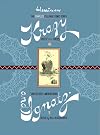
Compilation of classic newspaper strips from the late twenties.
"In Krazy Kat the poetry originated from a certain lyrical stubbornness in the author, who repeated his tale ad infinitum, varying it always but sticking to its theme. It was thanks only to this that the mouse's arrogance, the dog's unrewarded compassion, and the cat's desperate love could arrive at what many critics felt was a genuine state of poetry, an uninterrupted elegy based on sorrowing innocence."
Umberto Eco
Krazy Kat show more shouldn't really work, at least not beyond a few strips, as the 'plot' is so thin. Essentially, Krazy Kat loves Ignatz the mouse, who only wants to throw a brick at him, while Officer Pupp (as suggested by the name, a dog) tries to prevent this crime or punish the culprit.
While it shouldn't work, it does. The execution being so successful that when the Comics Journal, in 1999, listed the 100 best American comics and comic strips of the 20th century Herriman's creation was top of the pile.
As an illustrator Herriman approachable initially appears quite simplistic but look more closely and you can see how clever it is - full of visual jokes, subtle variations, the expert use of detail and, as importantly, no detail. Like the best art it repays repeated viewings. Herriman, the writer, is very playful - utilising a significant amount of alliteration, punning, deliberate mis-spellings and mis-understandings. It is fun and witty, and complements the visuals perfectly.
The sophistication of Herriman's creation can be seen in how he is able to work variations again and again on the same theme - we, the reader, know that the payoff is Ignatz throwing the brick and hitting Krazy on the head, and Krazy believing it to be a manifestation of love. (I'm surprised no-one has written an essay on the nature of Krazy and Ignatz's relationship as symbolic of domestic violence). Much of the enjoyment is in the anticipation of the brick, which may never be thrown or miss; sometimes Ignatz will get arrested even though he has done nothing, sometimes he gets away with his crime - this is something very human about the tripartite relationship the main characters are trapped in. And occasionally Herriman will produce a strip of poignant lyricism that transcends the media of the cartoon strip.
If you get a chance to visit Coconino Country then it is well worth a visit. show less
"In Krazy Kat the poetry originated from a certain lyrical stubbornness in the author, who repeated his tale ad infinitum, varying it always but sticking to its theme. It was thanks only to this that the mouse's arrogance, the dog's unrewarded compassion, and the cat's desperate love could arrive at what many critics felt was a genuine state of poetry, an uninterrupted elegy based on sorrowing innocence."
Umberto Eco
Krazy Kat show more shouldn't really work, at least not beyond a few strips, as the 'plot' is so thin. Essentially, Krazy Kat loves Ignatz the mouse, who only wants to throw a brick at him, while Officer Pupp (as suggested by the name, a dog) tries to prevent this crime or punish the culprit.
While it shouldn't work, it does. The execution being so successful that when the Comics Journal, in 1999, listed the 100 best American comics and comic strips of the 20th century Herriman's creation was top of the pile.
As an illustrator Herriman approachable initially appears quite simplistic but look more closely and you can see how clever it is - full of visual jokes, subtle variations, the expert use of detail and, as importantly, no detail. Like the best art it repays repeated viewings. Herriman, the writer, is very playful - utilising a significant amount of alliteration, punning, deliberate mis-spellings and mis-understandings. It is fun and witty, and complements the visuals perfectly.
The sophistication of Herriman's creation can be seen in how he is able to work variations again and again on the same theme - we, the reader, know that the payoff is Ignatz throwing the brick and hitting Krazy on the head, and Krazy believing it to be a manifestation of love. (I'm surprised no-one has written an essay on the nature of Krazy and Ignatz's relationship as symbolic of domestic violence). Much of the enjoyment is in the anticipation of the brick, which may never be thrown or miss; sometimes Ignatz will get arrested even though he has done nothing, sometimes he gets away with his crime - this is something very human about the tripartite relationship the main characters are trapped in. And occasionally Herriman will produce a strip of poignant lyricism that transcends the media of the cartoon strip.
If you get a chance to visit Coconino Country then it is well worth a visit. show less
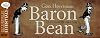
This is Volume 1 of IDW's The Library of American Comics Essentials, which plans to periodically reprint comic strips from the past of significant historical or artistic interest. The format is designed to match the proportions of a daily comic strip, one to a page, so as to mimic the experience newspaper readers had of reading the strips one day at a time. I'd prefer a larger book with more strips to a page, but at least this makes for a nice reproduction size. And this first choice is an show more excellent one. George Herriman is known, of course, for his iconic "Krazy Kat". But it was predated by "Baron Bean", a strip I'd only known of through a few articles and reprints in comic anthologies, and written off as not particularly significant. I stand corrected. Baron Bean is a pretender to a title (nobility was all the rage in the day), trying to trade off on his supposed barony for a free meal. When he is joined in the strip by Grimes, a gentleman's valet of sorts who is content to live off the leavings of the Baron's layabout life, I am reminded of "Mutt and Jeff", but better written and drawn, and funnier. If Herriman had never created "Krazy Kat", he probably would have still been held in high regard for "Baron Bean". show less
Compilation of classic newspaper strips from the late twenties.
Krazy Kat show more shouldn't really work, at least not beyond a few strips, as the 'plot' is so thin. Essentially, Krazy Kat loves Ignatz the mouse, who only wants to throw a brick at him, while Officer Pupp (as suggested by the name, a dog) tries to prevent this crime or punish the culprit.
While it shouldn't work, it does. The execution being so successful that when the Comics Journal, in 1999, listed the 100 best American comics and comic strips of the 20th century Herriman's creation was top of the pile.
As an illustrator Herriman approachable initially appears quite simplistic but look more closely and you can see how clever it is - full of visual jokes, subtle variations, the expert use of detail and, as importantly, no detail. Like the best art it repays repeated viewings. Herriman, the writer, is very playful - utilising a significant amount of alliteration, punning, deliberate mis-spellings and mis-understandings. It is fun and witty, and complements the visuals perfectly.
The sophistication of Herriman's creation can be seen in how he is able to work variations again and again on the same theme - we, the reader, know that the payoff is Ignatz throwing the brick and hitting Krazy on the head, and Krazy believing it to be a manifestation of love. (I'm surprised no-one has written an essay on the nature of Krazy and Ignatz's relationship as symbolic of domestic violence). Much of the enjoyment is in the anticipation of the brick, which may never be thrown or miss; sometimes Ignatz will get arrested even though he has done nothing, sometimes he gets away with his crime - this is something very human about the tripartite relationship the main characters are trapped in. And occasionally Herriman will produce a strip of poignant lyricism that transcends the media of the cartoon strip.
If you get a chance to visit Coconino Country then it is well worth a visit show less
"In Krazy Kat the poetry originated from a certain lyrical stubbornness in the author, who repeated his tale ad infinitum, varying it always but sticking to its theme. It was thanks only to this that the mouse's arrogance, the dog's unrewarded compassion, and the cat's desperate love could arrive at what many critics felt was a genuine state of poetry, an uninterrupted elegy based on sorrowing innocence."
Umberto Eco
Krazy Kat show more shouldn't really work, at least not beyond a few strips, as the 'plot' is so thin. Essentially, Krazy Kat loves Ignatz the mouse, who only wants to throw a brick at him, while Officer Pupp (as suggested by the name, a dog) tries to prevent this crime or punish the culprit.
While it shouldn't work, it does. The execution being so successful that when the Comics Journal, in 1999, listed the 100 best American comics and comic strips of the 20th century Herriman's creation was top of the pile.
As an illustrator Herriman approachable initially appears quite simplistic but look more closely and you can see how clever it is - full of visual jokes, subtle variations, the expert use of detail and, as importantly, no detail. Like the best art it repays repeated viewings. Herriman, the writer, is very playful - utilising a significant amount of alliteration, punning, deliberate mis-spellings and mis-understandings. It is fun and witty, and complements the visuals perfectly.
The sophistication of Herriman's creation can be seen in how he is able to work variations again and again on the same theme - we, the reader, know that the payoff is Ignatz throwing the brick and hitting Krazy on the head, and Krazy believing it to be a manifestation of love. (I'm surprised no-one has written an essay on the nature of Krazy and Ignatz's relationship as symbolic of domestic violence). Much of the enjoyment is in the anticipation of the brick, which may never be thrown or miss; sometimes Ignatz will get arrested even though he has done nothing, sometimes he gets away with his crime - this is something very human about the tripartite relationship the main characters are trapped in. And occasionally Herriman will produce a strip of poignant lyricism that transcends the media of the cartoon strip.
If you get a chance to visit Coconino Country then it is well worth a visit show less
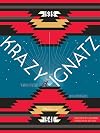
Another treasure trove of color Sunday Kat strips. In my mind, this volume stands out as being even more poetic than earlier volumes in this excellent series, as Herriman seems to feel freer than ever to pursue his idiosyncratic and inspiring muse. The Krazy Kat strips are legendary for good reason, having so successfully transcended limitations of the comics medium that we are stuck with even today, and when one considers that these strips were originally published almost 70 years ago, the show more scope of Herriman's accomplishment is all the more stunning. show less
Lists
Yet another list (1)
Awards


You May Also Like


Associated Authors
Statistics
- Works
- 118
- Also by
- 60
- Members
- 3,172
- Popularity
- #8,054
- Rating
- 4.3
- Reviews
- 33
- ISBNs
- 112
- Languages
- 8
- Favorited
- 28
