
Seton Lloyd (1902–1996)
Author of The Art of the Ancient Near East
About the Author
Seton Lloyd was the first Director of the British Institute of Archaeology at Ankara and subsequently Professor of Western Asiatic Archaeology at the University of London. His many books include Foundations in the Dust, Early Anatolia, and The Art of the Ancient Near East.
Series
Works by Seton Lloyd
Associated Works
The Dawn of Civilization: The First World Survey of Human Cultures in Early Times (1961) — Contributor — 127 copies, 2 reviews
To Illustrate the Monuments: Essays on Archaeology Presented to Stuart Piggott on the Occasion of his Sixty-Fifth Birthday (1976) — Contributor — 8 copies
Tagged
Common Knowledge
- Canonical name
- Lloyd, Seton
- Legal name
- Lloyd, Seton Howard Frederick
- Birthdate
- 1902-05-30
- Date of death
- 1996-01-07
- Gender
- male
- Education
- Uppingham School
Architectural Association School of Architecture - Occupations
- archaeologist
- Organizations
- British School of Archaeology, Iraq
University of London
British Institute of Archaeology in Ankara - Awards and honors
- Order of the British Empire (Commander)
- Nationality
- UK
- Birthplace
- Birmingham, England, UK
- Places of residence
- London, England, UK
Iraq
Ankara, Turkey - Place of death
- Faringdon, Oxfordshire, England, UK
- Associated Place (for map)
- England, UK
Members
Reviews
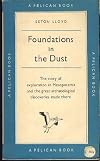
This is an account of the archaeological excavations in Mesopotamia over the ~150 years starting from the early 1800s, which uncovered the culturally advanced Sumerian, Assyrian, and Babylonian civilisations that succeeded one another between the fourth and first millenia BC.
How this book differs from a straight account of the discovery of Mesopotamian history is that it is more a series of colourful character portraits of Iraq and Baghdad themselves, and the succession of highly show more individual explorers, Oriental scholars, and archaeologists who uncovered the major sites that have provided us with much of what we know about these ancient civilisations. As well as their archaeological exploits, we learn of their swashbuckling adventures, political intrigues, domestic details, and professional rivalries. We also learn about the progression of archaeology over this period of time from almost an unscientific looting of portable antiquities to a more controlled and scientific uncovering of the details of their context. We find out the challenges that accompany this kind of work in difficult environments, and the rewards that are to be had from this kind of research.
As an introduction to this part of history, this is a good overview of a large amount of material, which is entertaining as well as exciting in its telling. For more detail on the specific discovery of certain cities and civilisations there is a good bibliography of the accounts of the discoveries made by the individuals involved, who are frequently quoted here in this book. As a whole it presents an exciting period of archaeology in an engaging manner which should be enough to spark interest in this area if you don't already know much about it. show less
How this book differs from a straight account of the discovery of Mesopotamian history is that it is more a series of colourful character portraits of Iraq and Baghdad themselves, and the succession of highly show more individual explorers, Oriental scholars, and archaeologists who uncovered the major sites that have provided us with much of what we know about these ancient civilisations. As well as their archaeological exploits, we learn of their swashbuckling adventures, political intrigues, domestic details, and professional rivalries. We also learn about the progression of archaeology over this period of time from almost an unscientific looting of portable antiquities to a more controlled and scientific uncovering of the details of their context. We find out the challenges that accompany this kind of work in difficult environments, and the rewards that are to be had from this kind of research.
As an introduction to this part of history, this is a good overview of a large amount of material, which is entertaining as well as exciting in its telling. For more detail on the specific discovery of certain cities and civilisations there is a good bibliography of the accounts of the discoveries made by the individuals involved, who are frequently quoted here in this book. As a whole it presents an exciting period of archaeology in an engaging manner which should be enough to spark interest in this area if you don't already know much about it. show less

Almost "better" than a mere historical recitation, the author provides the ancedotal, often excerpting original letters or journals.
The first 12 chapters are fascinating documentation of the effort of European acheologists to loot the antiquities from the indigenous Iraqis, and under the noses of the Turkic overlords [173]. But there are no certainties in antiquities or Iraq. As agent for the British Museum, Wallis Budge recovered cuneiform tablets illicitly sold to Bagdad street dealers show more by the workmen and guards hired by Christian Rassam, the native-speaker serving as British consul.
Concludes a detailed presentation by noting that only a "small fraction of what remains to be found" has been located. [209] show less
The first 12 chapters are fascinating documentation of the effort of European acheologists to loot the antiquities from the indigenous Iraqis, and under the noses of the Turkic overlords [173]. But there are no certainties in antiquities or Iraq. As agent for the British Museum, Wallis Budge recovered cuneiform tablets illicitly sold to Bagdad street dealers show more by the workmen and guards hired by Christian Rassam, the native-speaker serving as British consul.
Concludes a detailed presentation by noting that only a "small fraction of what remains to be found" has been located. [209] show less

Lists
You May Also Like


Associated Authors
Statistics
- Works
- 27
- Also by
- 2
- Members
- 851
- Popularity
- #30,066
- Rating
- 3.8
- Reviews
- 3
- ISBNs
- 43
- Languages
- 6