
Samuel Noah Kramer (1897–1990)
Author of Inanna, Queen of Heaven and Earth: Her Stories and Hymns from Sumer
About the Author
Image credit: Myspace
Works by Samuel Noah Kramer
History Begins at Summer: Twenty-Seven Firsts in Man's Recorded History (1956) 334 copies, 10 reviews
Studies in Literature from the Ancient Near East: Dedicated to Samuel Noah Kramer (American Oriental Series) (1984) 5 copies
Associated Works
The Ancient Near East: An Anthology of Texts and Pictures (1958) — Contributor — 522 copies, 2 reviews
Ancient Near Eastern Texts Relating to the Old Testament (1950) — Contributor — 370 copies, 1 review
Der Garten in Eden : 7 Jahrtausende Kunst und Kultur an Euphrat und Tigris (1978) — Contributor — 11 copies
Tagged
Common Knowledge
- Canonical name
- Kramer, Samuel Noah
- Legal name
- Kramer, Samuel Noah
- Other names
- Kramer, Simcha (birth name)
Kramer, S. N. - Birthdate
- 1897-09-28
- Date of death
- 1990-11-26
- Gender
- male
- Education
- University of Pennsylvania (Ph.D|1929)
Temple University
Dropsie College of Philadelphia - Occupations
- professor
Assyriologist
curator - Organizations
- University of Pennsylvania
American Oriental Society
Archeological Institute of America - Awards and honors
- American Academy of Arts & Sciences (1971)
American Philosophical Society (1949)
John Frederick Lewis Prize (1944)
John Simon Guggenheim Memorial Foundation Fellowship - Short biography
- Samuel Noah Kramer (September 28, 1897 - November 26, 1990) was one of the world's leading Assyriologists and a world-renowned expert in Sumerian history and Sumerian language.
- Cause of death
- throat cancer
- Nationality
- Russian Empire (birth)
USA (naturalized) - Birthplace
- Zhashkiv, Kyiv Governorate, Russian Empire
- Places of residence
- Philadelphia, Pennsylvania, USA
- Place of death
- Philadelphia, Pennsylvania, USA
- Associated Place (for map)
- Pennsylvania, USA
Members
Reviews
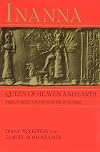
A collection of mythological stories about the Sumerian Goddess Inanna, gleaned from stone tablets from 2000 BCE. The stories begin with Inanna rescuing a Huluppu tree from the wild waters of the Euphrates River. Other stories relate to Inanna gaining wisdom from the god Enki after getting him drunk on beer, her courtship and love with the shepherd Dumuzi, her descent into the Underworld and its consequences, and several hymns of praise in her honour.
The second half of the book is an show more academic examination of the stories, starting with a Sumerian history and cultural background from cuneiform translator Samuel Noah Kramer, an exegeseis of the tales themselves by folklorist Diane Wolkstein and descriptions of the various artworks photographed in the book.
I found it fascinating not only because the stories were strong: Innana's strength and character shine through undimmed by the intervening millenia; but also for the cross-disciplinary academic collegiality of the authors and the story of the excavation and translation of the tablets themselves. show less
The second half of the book is an show more academic examination of the stories, starting with a Sumerian history and cultural background from cuneiform translator Samuel Noah Kramer, an exegeseis of the tales themselves by folklorist Diane Wolkstein and descriptions of the various artworks photographed in the book.
I found it fascinating not only because the stories were strong: Innana's strength and character shine through undimmed by the intervening millenia; but also for the cross-disciplinary academic collegiality of the authors and the story of the excavation and translation of the tablets themselves. show less
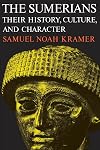
In The Sumerians (1963) Samuel Noah Kramer cites the “unusually creative intellect and a venturesome, resolute spirit” of the ancient inhabitants of the land between the Rivers Tigris and Euphrates. These attributes allowed them to be the first people ever to build a complex society as we would recognize it today, to dwell in cities, to turn arid land into lush, productive farmland, and as a result successfully to store excess grain. And most sweeping and transformational of all, they show more developed writing. At roughly the middle of the third millennium BCE, the Sumerians first stepped across the threshold between prehistory and history, and the entire human race followed.
No other known culture of the time, or prior to it, left a record, including the Egyptians. Much of what archeologists have dug up are administrative and account-keeping minutiae, which is very logical, given the surplus grain and agricultural produce which was held in trust by the authorities in the world’s first cities. But Kramer also covers the heroic epics, the lyric poetry, the disputations (for the Sumerians were a pushy, adversarial lot, and individuals strived to be the first among their peers), the proverbs, and the votive verses which they produced.
They developed the practice over time of codifying their laws in written compendia, a practice copied by the Hebrews, Greeks, and Romans, and all societies to this day. The Sumerians also very apparently influenced the Hebrews, who a thousand years after the height of the Sumerian civilization, busied themselves compiling the early books of the Bible. Consider:
— Both cultures envision strikingly similar processes of creation, with land being separated from the sea by divine agency;
— Both traditions viewed the creation of the human race as clay being given the “breath of life”;
— Both foundation myths include paradise motifs, the Hebrews citing it explicitly as the original home of Adam and Eve. Many Sumerian characteristics and descriptions find their echoes in Genesis;
— Both legends contain a devastating Flood, and they contain numerous striking parallels;
— The Cain and Abel motif in the Bible is a much-abridged version of a frequently repeated favorite theme of many Sumerian writers and poets.
There are other echoes and apparent influences as well: the personal god, ethical and moral standards, the divine retribution theme, where an angry god annihilates the nation of his people, usually by an outside conquering force, and the Job motif of suffering and submission. The two sources even begin with the same introductory plot.
Not all comprehensive surveys engage the reader as effectively as this one, nor do they paint so vivid a picture of their subject. For an academic treatise, this is as enjoyable as it is comprehensive.
https://bassoprofundo1.blogspot.com/2025/01/the-sumerians-by-samuel-noah-kramer.... show less
No other known culture of the time, or prior to it, left a record, including the Egyptians. Much of what archeologists have dug up are administrative and account-keeping minutiae, which is very logical, given the surplus grain and agricultural produce which was held in trust by the authorities in the world’s first cities. But Kramer also covers the heroic epics, the lyric poetry, the disputations (for the Sumerians were a pushy, adversarial lot, and individuals strived to be the first among their peers), the proverbs, and the votive verses which they produced.
They developed the practice over time of codifying their laws in written compendia, a practice copied by the Hebrews, Greeks, and Romans, and all societies to this day. The Sumerians also very apparently influenced the Hebrews, who a thousand years after the height of the Sumerian civilization, busied themselves compiling the early books of the Bible. Consider:
— Both cultures envision strikingly similar processes of creation, with land being separated from the sea by divine agency;
— Both traditions viewed the creation of the human race as clay being given the “breath of life”;
— Both foundation myths include paradise motifs, the Hebrews citing it explicitly as the original home of Adam and Eve. Many Sumerian characteristics and descriptions find their echoes in Genesis;
— Both legends contain a devastating Flood, and they contain numerous striking parallels;
— The Cain and Abel motif in the Bible is a much-abridged version of a frequently repeated favorite theme of many Sumerian writers and poets.
There are other echoes and apparent influences as well: the personal god, ethical and moral standards, the divine retribution theme, where an angry god annihilates the nation of his people, usually by an outside conquering force, and the Job motif of suffering and submission. The two sources even begin with the same introductory plot.
Not all comprehensive surveys engage the reader as effectively as this one, nor do they paint so vivid a picture of their subject. For an academic treatise, this is as enjoyable as it is comprehensive.
https://bassoprofundo1.blogspot.com/2025/01/the-sumerians-by-samuel-noah-kramer.... show less

History Begins at Sumer was the first book I've read about Sumer, and it's fifty years old so I'm sure there are more up to date books and considering the very specialized purpose there must also be more complete books on the subject. What I loved about this is that it was written by an honest-to-god Sumerologist that was very much in the middle of the research happening. Some of the chapters were about texts that had only been translated by him at the time. It also seemed to me that there's show more always a bit more passion when the writer has such a close relationship to the material.
Each chapter is dedicated to a notable bit of history or development in Sumer drawing exclusively from primary sources, often focusing on just one in a chapter. This gave me a wonderful introduction to a wide cross section of Sumerian culture without the sacrifice of nuance and analysis that so often occurs in books that attempt to present a complete history of such epic subjects.
Reading History Begins at Sumer certainly hasn't left me a mini expert in Sumeria, that really isn't the point of the book. It has however whet my appetite to continue reading the ancient history of the area and gave me enough of the foundation in the subject to make me feel more comfortable picking up more formidable books on the subject. show less
Each chapter is dedicated to a notable bit of history or development in Sumer drawing exclusively from primary sources, often focusing on just one in a chapter. This gave me a wonderful introduction to a wide cross section of Sumerian culture without the sacrifice of nuance and analysis that so often occurs in books that attempt to present a complete history of such epic subjects.
Reading History Begins at Sumer certainly hasn't left me a mini expert in Sumeria, that really isn't the point of the book. It has however whet my appetite to continue reading the ancient history of the area and gave me enough of the foundation in the subject to make me feel more comfortable picking up more formidable books on the subject. show less
Profound, funny and horrifying in turn - and sometimes simultaneously. What more can one want from a myth cycle?
(I will admit that I kind of want to tag this "wondrous vulva" though; that's a phrase I'll never forget!)
(I will admit that I kind of want to tag this "wondrous vulva" though; that's a phrase I'll never forget!)
Lists
1970s (1)
Awards


You May Also Like


Associated Authors
Statistics
- Works
- 41
- Also by
- 5
- Members
- 3,360
- Popularity
- #7,591
- Rating
- 3.9
- Reviews
- 43
- ISBNs
- 83
- Languages
- 11
- Favorited
- 2