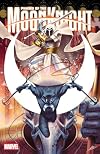
Free League Blade Runner The Roleplaying Game: Replicant Rebellion Expansion - Dystopian Adventure by lefavijoe

Like the mirror image of the core Blade Runner game, this one assumes a Rebellion against the status quo undertaken by both Replicants and humans. The rebellion is nebulous, not just humans vs. replicants. The game explores living in the shadows with few resources, underground communications, drops, agents, cells. It is like Cyberpunk meeting 'One Battle After Another'. The players here are not well-resourced like the LAPD of the Blade Runner universe. It seems like an interesting concept and I'd like to play it some day.
Green Crime: Inside the Minds of the People Destroying the Planet, and How to Stop Them by Julia Shaw

Shaw applies her criminology skills to green crimes. They are real crimes with real victims - all of us, but often take place away from enforcement. The author argues these crimes occur because of ease, impunity, greed, rationalisation, conformity and desperation. She examines case studies of Con Men (Volkswagen emissions fraud), Murderers (Brazilian environmental activists murdered by local landowners), Trafickers (a Chinese syndicate smuggling poached animals), Outlaws (illegal fishing in international waters, detected by Sea Shepherd), Thieves (illegal miners in South Africa) and the Negligent (Deepwater Horizon oil spill in the Gulf of Mexico, caused by BP and Halliburton). She praises the investigators and enforcers who stand between us and the perpetrators of these green crimes.
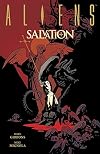
I haven't read any Aliens graphic novels, but I was attracted by the names of veterans Dave Gibbons and Mike Mignola.
This story reads like a more traditional horror story with science-fictional trappings from the Aliens universe. A religious character is saved by an insane captain after a 'delivery' to a remote planet goes horribly wrong.
There is an explicitly religious overlay. The main character talks to God. The Company is compared to the Devil and the Aliens (which inevitably show up) are like demons. When the rescue ship finally arrives it is plastered with Christian imagery. It was an interesting approach to the Aliens universe, and quite an enjoyable tale.
This story reads like a more traditional horror story with science-fictional trappings from the Aliens universe. A religious character is saved by an insane captain after a 'delivery' to a remote planet goes horribly wrong.
There is an explicitly religious overlay. The main character talks to God. The Company is compared to the Devil and the Aliens (which inevitably show up) are like demons. When the rescue ship finally arrives it is plastered with Christian imagery. It was an interesting approach to the Aliens universe, and quite an enjoyable tale.

I've read this book many times and I don't have much to add to the many reviews. It is a great fairy-tale like story, with an overlay of grey motivations for supposedly 'good' characters such as the Wood Elf King and Thorin Oakenshield. On the latest read I was gathering quotes related to fairy-tales and roleplaying games. Tolkien's dwarves and of course hobbits have become the standard template for fantasy role-playing games everywhere.
I was particularly interested this time around in references to 'The Necromancer' (Sauron) and noted that Tolkien had quite an awareness of what was going on in wider Middle-Earth when he wrote 'The Hobbit', though I heard that the text was amended slightly in later editions to make that accommodation. Certainly I didn't notice those references last time I read 'The Hobbit', many years ago.
Here's a snippet of Thorin suggesting to Gandalf attacking the Necromancer at Bilbo's 'Unexpected Party':
"We have long ago paid the goblins of Moria," said Thorin; "we must give a thought to the Necromancer."
"Don't be absurd! He is an enemy far beyond the powers of all the dwarves put together, if they could all be collected again from the four corners of the world. The one thing your father wished was for his son to read the map and use the key. The dragon and the Mountain are more than big enough tasks for you!"
I was particularly interested this time around in references to 'The Necromancer' (Sauron) and noted that Tolkien had quite an awareness of what was going on in wider Middle-Earth when he wrote 'The Hobbit', though I heard that the text was amended slightly in later editions to make that accommodation. Certainly I didn't notice those references last time I read 'The Hobbit', many years ago.
Here's a snippet of Thorin suggesting to Gandalf attacking the Necromancer at Bilbo's 'Unexpected Party':
"We have long ago paid the goblins of Moria," said Thorin; "we must give a thought to the Necromancer."
"Don't be absurd! He is an enemy far beyond the powers of all the dwarves put together, if they could all be collected again from the four corners of the world. The one thing your father wished was for his son to read the map and use the key. The dragon and the Mountain are more than big enough tasks for you!"

This was the first role-playing game I was ever exposed to, aged probably 7 or 8 when my older brother was given a copy in 1979 or 1980. I re-read this in April 2026. I had just started playing 'Dolmenwood', an Old School Revival game heavily derivative of Basic D&D, and I wanted to revisit the source material. This Eric Holmes edition predates the Tom Moldvay Basic Dungeons & Dragons -- it is simply called 'Dungeons & Dragons'. It's clear that the Moldvay D&D is the direct ancestor of Dolmenwood (and its parent Old School Essentials), but Holmes' D&D is the ancestor of Moldvay's.
The structure of the book is a bit looser than that of more modern RPGs. Headings are fewer and long paragraphs can conceal rules. For example, this interesting snippet is found under the description of Magic Spells (p.13):
"This rule [that spell casters forget their spells when they cast them] places great limitations on the magic-user's power, but there are ways to partially overcome them. One is to have the spell written out on a magical scroll. Scrolls are written in magic runes that fade from the page as they are read, so a scroll also can only be used once. Magic-users may make a scroll of a spell they already "know" (ie. have in their magic book) at a cost of 100 gold pieces and 1 week's work for each spell of the first leve, 200 gold pieces and 2 weeks for a second level spell (if the magic-user is third level), etc."
The same 'Magic Spells' heading contains notes about the requirements for show more casting a spell (ie, must not be bound and gagged), the above-mentioned memory effect, how to research new spells and how many spells a magic-user starts with -- a 'chance to know' each spell in the entire list, with a minimum and maximum based on the magic-user's Intelligence.
Third level magic user spells were listed but not described "to give some idea of the range of magical possibilities" (p.16). This is a bit of a tease, but fair because the game only allows characters to reach 3rd level - you'd need to be a fifth level magic-user to cast 3rd level spells.
Other interesting rules that aren't the same as other old school Dungeons & Dragons:
- all weapons do 1d6 damage
- Dexterity determines fighting order, with ties broken by 1d6
- Descending Armour Class - the lower the AC the better the protection
- There are five alignments: Lawful Good, Lawful Evil, Neutral, Chaotic Good, Chaotic Evil
- High ability scores do very little except give you bonuses for experience
Experience points are awarded based on gold recovered and creatures killed or outwitted. There's a proviso for defeating weaker monsters which I don't recall seeing in other D&D versions:
"If the defeated monster is lower in level than the character who overcomes him, less experience is gained. The experience points for the kill are multiplied by a fraction: monster level/character's level. For example if a third level fighting man killed a first level orc he generates ⅓ the experience points." (p.11)
In the section 'Dungeon Mastering as a Fine Art' there is a some useful advice for new DMs about pacing, dramatics, preparation, and giving your players opportunities to turn around and go back to the surface. "Many gamesters start with a trip across country to get to the entrance of the dungeon -- a trip apt to be punctuated by attacks by brigands or wandering monsters, or marked by strange and unusual encounters. The party then enters the underworld, tries to capture the maximum treasure with the minimal risk and escape alive … Do not hesitate to have lawful or helpful characters chance by at times, your adventurers may need a little help!" Oh yes, and I don't know how many dungeons have been inspired by the awesome 'Stone Mountain' diagram in the 'Sample Cross Section of Levels' in this part of the book (p.39)!
"The imaginary universe of Dungeons & Dragons obviously [except to Gary Gygax and TSR, who never admitted it] lies not too far from the Middle Earth of J.R.R. Tolkien's great 'Lord of the Rings' trilogy. The D & D universe also impinges on the fantasy worlds of Fritz Leiber, Robert E. Howard, Gardner F. Fox, classical mythology and any other source of inspiration the Dungeon Master wants to use." (p.41)
Finally the 'Tower of Zenopus' sample adventure is a nice flavourful starting example which seems to have been an influence on the later 'Sinister Secret of Saltmarsh' module, in that it has an abandoned ruin, supposedly haunted near a port town (literally Portown in this book) with an evil wizard and smugglers in sea caves below. show less
The structure of the book is a bit looser than that of more modern RPGs. Headings are fewer and long paragraphs can conceal rules. For example, this interesting snippet is found under the description of Magic Spells (p.13):
"This rule [that spell casters forget their spells when they cast them] places great limitations on the magic-user's power, but there are ways to partially overcome them. One is to have the spell written out on a magical scroll. Scrolls are written in magic runes that fade from the page as they are read, so a scroll also can only be used once. Magic-users may make a scroll of a spell they already "know" (ie. have in their magic book) at a cost of 100 gold pieces and 1 week's work for each spell of the first leve, 200 gold pieces and 2 weeks for a second level spell (if the magic-user is third level), etc."
The same 'Magic Spells' heading contains notes about the requirements for show more casting a spell (ie, must not be bound and gagged), the above-mentioned memory effect, how to research new spells and how many spells a magic-user starts with -- a 'chance to know' each spell in the entire list, with a minimum and maximum based on the magic-user's Intelligence.
Third level magic user spells were listed but not described "to give some idea of the range of magical possibilities" (p.16). This is a bit of a tease, but fair because the game only allows characters to reach 3rd level - you'd need to be a fifth level magic-user to cast 3rd level spells.
Other interesting rules that aren't the same as other old school Dungeons & Dragons:
- all weapons do 1d6 damage
- Dexterity determines fighting order, with ties broken by 1d6
- Descending Armour Class - the lower the AC the better the protection
- There are five alignments: Lawful Good, Lawful Evil, Neutral, Chaotic Good, Chaotic Evil
- High ability scores do very little except give you bonuses for experience
Experience points are awarded based on gold recovered and creatures killed or outwitted. There's a proviso for defeating weaker monsters which I don't recall seeing in other D&D versions:
"If the defeated monster is lower in level than the character who overcomes him, less experience is gained. The experience points for the kill are multiplied by a fraction: monster level/character's level. For example if a third level fighting man killed a first level orc he generates ⅓ the experience points." (p.11)
In the section 'Dungeon Mastering as a Fine Art' there is a some useful advice for new DMs about pacing, dramatics, preparation, and giving your players opportunities to turn around and go back to the surface. "Many gamesters start with a trip across country to get to the entrance of the dungeon -- a trip apt to be punctuated by attacks by brigands or wandering monsters, or marked by strange and unusual encounters. The party then enters the underworld, tries to capture the maximum treasure with the minimal risk and escape alive … Do not hesitate to have lawful or helpful characters chance by at times, your adventurers may need a little help!" Oh yes, and I don't know how many dungeons have been inspired by the awesome 'Stone Mountain' diagram in the 'Sample Cross Section of Levels' in this part of the book (p.39)!
"The imaginary universe of Dungeons & Dragons obviously [except to Gary Gygax and TSR, who never admitted it] lies not too far from the Middle Earth of J.R.R. Tolkien's great 'Lord of the Rings' trilogy. The D & D universe also impinges on the fantasy worlds of Fritz Leiber, Robert E. Howard, Gardner F. Fox, classical mythology and any other source of inspiration the Dungeon Master wants to use." (p.41)
Finally the 'Tower of Zenopus' sample adventure is a nice flavourful starting example which seems to have been an influence on the later 'Sinister Secret of Saltmarsh' module, in that it has an abandoned ruin, supposedly haunted near a port town (literally Portown in this book) with an evil wizard and smugglers in sea caves below. show less
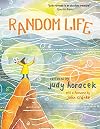
Judy Horacek's musings on politics, feminism and silliness. One of my favourites was two seagulls being immensely polite and gentlemanly toward one another over the last chip on the beach.

A Dungeon Crawl Classics funnel adventure to be used as a precursor to The Caverns of Thracia.
It's a short, mostly linear dungeon, certainly deadly enough to thin the ranks of hapless 0-level villagers. There's a bit of history to uncover, including a forgotten god and some old Thracia dwellers.
It's a short, mostly linear dungeon, certainly deadly enough to thin the ranks of hapless 0-level villagers. There's a bit of history to uncover, including a forgotten god and some old Thracia dwellers.
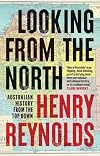
Reynold's thesis is that the North of Australia had a very different colonisation pattern to the south; that after a rocky and murderous start chronic labour shortages meant white acceptance of Indigenous, Pacific Islander and Chinese labour, at least before the White Australia Policy took over in 1901. The white man was never in majority in the north, and in many cases even among early pastoralists and miners First Nations people lived as they had always done. Since the landmark Mabo decision in 1992, which struck down the British legal fiction of Terra Nullius (the 'uninhabited' continent), 70% of northern Australia has been claimed by indigenous groups. Decolonisation is well underway there, though few in the capital cities of the south are aware.
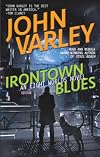
On Luna, Christopher Bach and his genetically enhanced bloodhound Sherlock run a fake noir detective agency. A case takes him into the dreaded Irontown, where he has some history.
There are references to other science fiction authors such as George RR Martin and Robert Heinlein scattered throughout. Some is told from Sherlock's perspective.
This was the first 'Eight Worlds' book I've read, and it was certainly a well-told tale. I liked Sherlock's bits the most.
There are references to other science fiction authors such as George RR Martin and Robert Heinlein scattered throughout. Some is told from Sherlock's perspective.
This was the first 'Eight Worlds' book I've read, and it was certainly a well-told tale. I liked Sherlock's bits the most.
Science Under Siege: How to Fight the Five Most Powerful Forces that Threaten Our World by Michael E. Mann
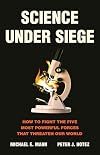
Climate Scientist Michael Mann and disease expert Peter Hotz talk discuss the gathered forces of anti-science propaganda which combine with climate change and future pandemics to create a real threat - the 1-2-3 Punch. I agree with the sentiment of this book but the execution is lacking.
The five bad actors are: Plutocrats, Petrostates, 'Pros' (academics who have sold out to the other four), Propagandists and the Press.
The problem I had with this book is that is written from the febrile United States in 2025. The crazy politics of that country infects the book with a rushing anti-conservative anger. Nothing it mentions is incorrect, and it is all referenced, but the tone *seems* partisan and would certainly not convince anyone from the 'other side'. That divided US politics is what makes the book less convincing and harder to read.
Written as it is by two scientists from different disciplines, there is an attempt to balance climate and pandemic misinformation examples. This muddies things. Misinformation by the Five 'Ps' is easier to explain for climate denial than for pandemic misinformation. It comes down to money for rich vested interests, using delaying and misdirection to extend lucrative fossil fuel operations. But for pandemic misinformation the motives of some of the Ps are less clear - some sort of libertarianism? The authors don't know either.
Finally the 'what can we do about it all' isn't super helpful. It uses some Lord of the Rings analogies, says we shouldn't show more give up, and then goes on about various governmental and non-governmental organisations which should be set up to combat anti-science information, or regulations on social media. As if *that* would happen in 2025 US politics.
I was hoping for more of an insight into how the misinformation is spread, the hows and whys of the bots and trolls; and therefore possibly identifying some weakness in that approach, which has clearly worked a treat for a decade or more. As it is, it's still a murky fight ahead. Stay true. show less
The five bad actors are: Plutocrats, Petrostates, 'Pros' (academics who have sold out to the other four), Propagandists and the Press.
The problem I had with this book is that is written from the febrile United States in 2025. The crazy politics of that country infects the book with a rushing anti-conservative anger. Nothing it mentions is incorrect, and it is all referenced, but the tone *seems* partisan and would certainly not convince anyone from the 'other side'. That divided US politics is what makes the book less convincing and harder to read.
Written as it is by two scientists from different disciplines, there is an attempt to balance climate and pandemic misinformation examples. This muddies things. Misinformation by the Five 'Ps' is easier to explain for climate denial than for pandemic misinformation. It comes down to money for rich vested interests, using delaying and misdirection to extend lucrative fossil fuel operations. But for pandemic misinformation the motives of some of the Ps are less clear - some sort of libertarianism? The authors don't know either.
Finally the 'what can we do about it all' isn't super helpful. It uses some Lord of the Rings analogies, says we shouldn't show more give up, and then goes on about various governmental and non-governmental organisations which should be set up to combat anti-science information, or regulations on social media. As if *that* would happen in 2025 US politics.
I was hoping for more of an insight into how the misinformation is spread, the hows and whys of the bots and trolls; and therefore possibly identifying some weakness in that approach, which has clearly worked a treat for a decade or more. As it is, it's still a murky fight ahead. Stay true. show less
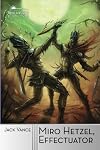
Miro Hetzel is an Effectuator, an interplanetary private eye, and a good one. Two tales are presented here: the longer 'The Dogtown Tourist Agency' and 'Freitzke's Turn'. The first is better and mixes the science fictional and detective elements quite well. The second is a bit patchy but certainly explores some odd ideas. Miro is brave yet very careful, and always thinking one step ahead.
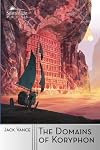
It started out as an interesting look at colonialism in the Gaean Reach. Two hundred years ago, the Outkers descended from space to claim ownership of one of Koryphon's continents, forcing the Uldras, the nomadic inhabitants into the 'Treaty of Submission'. The story focuses on the inhabitants of one of these 200 year old 'domains', Morningswake, now under pressure from the 'Redemptionists' who want to give the domains back to the native people. Schaine Madduc and her brother Kelse find their father murdered by wild Uldra, after discovering a great 'joke' connected with one of the planet's indigenous life forms, the Ervin. Much of the book is taken up with a quest to find this joke by Schaine's would-be lover Elvo Glissam; a native called Kurgech with good instincts; and the ultimately laconic and self-assured Gerd Jamasze -- a kind of Crocodile Dundee of Koryphon.
The book was a bit disjointed. The first part is from Schaine's point of view but then kind of loses interest in her and moves to Elvo Glissam, then loses interest in him too as it moves to a conclusion. That conclusion was disappointing in its response to the colonial premise of the book, but resolving decolonisation is probably too much to expect.
The book was a bit disjointed. The first part is from Schaine's point of view but then kind of loses interest in her and moves to Elvo Glissam, then loses interest in him too as it moves to a conclusion. That conclusion was disappointing in its response to the colonial premise of the book, but resolving decolonisation is probably too much to expect.
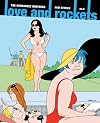
Quite a spare installment of Love and Rockets which requires the reader to know all of the characters.
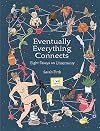
A self-proclaimed 'elder Millennial' muses about life, desire, curiosity and art in eight elegantly linked pieces. Full colour, well-drawn and imagined. Not your usual self-obsessed melancholy comics-artist, maybe because she thinks a lot about the world outside of herself.

A complex work about an expert general who works with the Culture as a kind of mercenary to further their ends. Zakalwe drifts between various engagements, at most alive when fighting or leading armies; but also seeking relief (or fleeing) from something inside himself. The book moves elliptically between various key conflicts in his life and his relationship with the Culture through agent Diziet Sma. As with some other Culture novels, the main character observes it from outside, noting its positives and negatives. However it is mostly a study of Zakalwe himself, and the nature of war. The conclusion made sense if you squinted at it sideways.
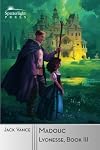
The conclusion to the Lyonesse trilogy. I have read it many times. This time I took more note of the structure. The book is centred around Madouc, changeling princess of Lyonesse, though there is a large chunk devoted to Shimrod and Murgen. King Aillas appears very little, Glyneth not at all; though Prince Dhrun makes several appearances. Madouc lives a life at Haidion similar to that of her supposed mother Suldrun, similarly hemmed in by convention and decorum. Unlike Suldrun, Madouc is irrepressible and is generally allowed to do her own thing. King Casmir knows the truth about her parentage -- and broods about his actual grandson Prince Dhrun -- but still plans to marry Madouc off for advantage. Madouc comes to know her parentage, and Dhrun's, which is of high interest to Casmir. The Elder Isles are mostly at peace during this period and Madouc departs Lyonesse Town, not entirely with Casmir's blessing, to find her parentage. Behind the scenes though, strange things are happening in the realm of the magicians. and there is derring do between Shimrod, Murgen, Melancthe, Torqual, Desmei and Tamurello which affects all the Elder Isles.
A wonderful read, again.
A wonderful read, again.
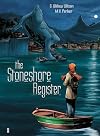
A stranger comes to work as a journalist in a remote pacific northwest town whose skyline is dominated by a huge carved stone giant. Nobody knows the giant's origin and nobody seems curious, to the stranger's astonishment. Gradually the stranger and the town adjust to one another.

I've read this many times but only just now written a review.
The Green Pearl folows on directly from the events of Lyonesse. It has three main plots, opening with Casmir and Aillas’ spy war between Lyonesse and Troicinet. There’s Aillas’ military and statecraft adventures in North and South Ulfland with the Ska and a brief 'fairytale' journey through the northernmost reaches of North Ulfland on the edges of the Forest of Tantrevalles. The magicians, Shimrod and Murgen try to keep an eye on Tamurello, with Melancthe causing trouble in between. Both Shimrod and Aillas experience disillusion about a former erotic fancy. Finally there is the intersection of magic, spies and the kingdoms when Visbhume abducts Glyneth into Tanjecterly. The green pearl itself -- "a whorl of depravity" according to Murgen -- is more of a framing device for the story, and a reminder of the continuing subtle influence of magicians on the Elder Isles, despite Murgen's edict of non-interference with politics.
The Green Pearl folows on directly from the events of Lyonesse. It has three main plots, opening with Casmir and Aillas’ spy war between Lyonesse and Troicinet. There’s Aillas’ military and statecraft adventures in North and South Ulfland with the Ska and a brief 'fairytale' journey through the northernmost reaches of North Ulfland on the edges of the Forest of Tantrevalles. The magicians, Shimrod and Murgen try to keep an eye on Tamurello, with Melancthe causing trouble in between. Both Shimrod and Aillas experience disillusion about a former erotic fancy. Finally there is the intersection of magic, spies and the kingdoms when Visbhume abducts Glyneth into Tanjecterly. The green pearl itself -- "a whorl of depravity" according to Murgen -- is more of a framing device for the story, and a reminder of the continuing subtle influence of magicians on the Elder Isles, despite Murgen's edict of non-interference with politics.

It is hard to believe I have not reviewed this book, having read it many times before and just finished re-reading it again. It is an amazing work of fantasy. It adds politics and the affairs of great magicians, humour and eroticism to fairy stories. It is set in the 'Elder Isles', a now-sunken area between Ireland and Galicia which comprises ten kingdoms. Princess Suldrun of Lyonesse is imprisoned in a garden by her father, the ambitious King Casmir, who plots to rule all of the Elder Isles. Into Suldrun's garden washes Prince Aillas of Troicinet after an accident at sea. She cares for him and the pair fall in love. But this triggers events which affect not only the lovers but the magicians, fairies and kings of the Elder Isles.
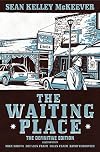
1990s coming of age story set in a small northern American town. The themes are frustration with and eventual acceptance of small town life, navigating early relationships, and struggling to let go of the past. Nicely drawn with realistic characters.
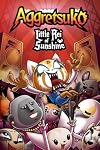
Aggretsuko is a very fun animation which is like a cross between Hello Kitty and Dilbert, with angry death-metal karaoke in between. This comic is a derivative ticket-clip of the franchise. It's fun to see the characters again but that's about all that be said for this book.
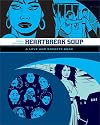
Such an assured beginning to the Love and Rockets story. We are introduced to the people of Palomar when Luba moves in and starts a rival bath house. The stories flow and people age and de-age in a way that only comics can do. Palomar is a comic book version of Macondo from 'One Hundred Years of Solitude', and that book is referenced directly and sylistically. I had only read later installments of the Hernandez Brothers world but this one fits perfectly like a piece of a jigsaw puzzle, and made complete sense. The characters are all very developed at all of their ages. Impressive story telling.
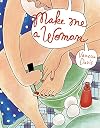
A collection of slice-of-life cartoons from an American Jewish woman. Well-drawn and observed, and amusing.
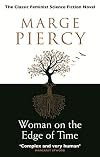
It got two stars because I had really work to finish it, and the ending was..? Connie Ramos is a woman who has been ground down by men and has been institutionalised. She is contacted by a person -- Luciente -- from a possible future where all persons work together to undo the damage of the capitalist world without sexism or racism. Connie finds herself able to mentally visit this future, and - briefly - its alternate dystopian twin. Meanwhile in her own world she has less and less control over her own life.
I found Luciente's future interesting but - disconnected. I didn't get enough context about how our world could or would change into hers, and how Connie might help that process. When Connie glimpsed the dystopia world it was all too brief and not given the treatment of Luciente's utopia. I thought Connie might do something to help or hinder Luciente's future. She did harden her attitude and she may have prevented the development of mind-control technology with her final deed.
I found Luciente's future interesting but - disconnected. I didn't get enough context about how our world could or would change into hers, and how Connie might help that process. When Connie glimpsed the dystopia world it was all too brief and not given the treatment of Luciente's utopia. I thought Connie might do something to help or hinder Luciente's future. She did harden her attitude and she may have prevented the development of mind-control technology with her final deed.
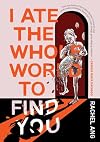
A collection of five moody stories by a Melbourne artist, rendered in shadowy charcoal colours. There are dislocation, double images, underwater swirls, empty and overlapping text balloons to show the uncertainty and discombobulation of the characters, mainly analogues of the author. Uncertain relationships, abuse, diffidence flow through the stories.
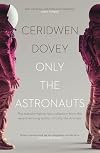
Tales of early Solar System exploration history, told from the point of view of objects from that history, including the International Space Station, Voyager 2, 'Starman' the mannequin in Elon Musk's spacebound Tesla, and the abandoned tampons from the first woman in space (NASA engineers asked her if 100 tampons was the 'right number').
It's well-researched and told. I learned of a number of interesting references such as the Questions from Heaven, by an old Chinese poet. My favourite story was 'Requiem', a farewell to the ISS.
It's well-researched and told. I learned of a number of interesting references such as the Questions from Heaven, by an old Chinese poet. My favourite story was 'Requiem', a farewell to the ISS.
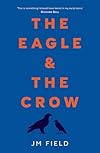
A really interesting book about the Kamillaroi (an Australian indigenous group) moeity system and how it helps to identify family who have been separated by vast distances and preserve a small community against too much inbreeding. The author is a mathematician and Kamillaroi man who wants to preserve his culture. He argues that knowledge of the system of 'light bloods' and 'heavy bloods' is a gift which could allow reconstruction of a scattered family; in fact probably has done so several times in tens of thousands of years of practice. Also the colonisers could not steal or wreck this knowledge (because they did not understand it at all). The technical chapters of the book are interspersed with poetic writing. I learned a lot although as a descendant of colonisers I am far from the target of this book.

Cassie and her semi-human friends Boxer and Ralph escape from Parkland, a kind of species zoo, and find out the truth about their world. It's a dystopia but not quite in the end.
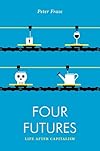
A thought experiment for post-capitalism with two axes: abundance/scarcity and equality/hierarchy, explored through science fictions.
Abundance/equality -- communism, like Star Trek
Abundance/hierarchy -- rentism (intellectual property controlled by the few)
Scarcity/equality -- socialism, with some Kim Stanley Robinson references. Everyone digs in to ameliorate climate harms
Scarcity/hierarchy -- Exterminism. There's only enough for the few; get rid of the rest. Like Elysium.
The author points out that we are already on the road to one or more of these, and that we can choose to some extent.
Abundance/equality -- communism, like Star Trek
Abundance/hierarchy -- rentism (intellectual property controlled by the few)
Scarcity/equality -- socialism, with some Kim Stanley Robinson references. Everyone digs in to ameliorate climate harms
Scarcity/hierarchy -- Exterminism. There's only enough for the few; get rid of the rest. Like Elysium.
The author points out that we are already on the road to one or more of these, and that we can choose to some extent.