
Loïc Dauvillier
Author of Hidden: A Child's Story of the Holocaust
About the Author
Image credit: Loïc Dauvillier lors de Quai des Bulles à Saint-Malo le 27 octobre 2012
Series
Works by Loïc Dauvillier
Monsieur Lapin T3: Les Ballons 2 copies
Tagged
Common Knowledge
- Birthdate
- 1971-01-03
- Gender
- male
- Occupations
- Editeur
Scénariste (Bande dessinée) - Nationality
- France
- Birthplace
- Cambrai, Nord, Hauts-de-France, France
- Map Location
- France
Members
Reviews
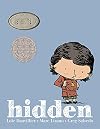
A little girl staying over at her grandmother's house wakes up and finds her grandmother in the living room, sad. Elsa asks her grandmother if it was a nightmare ("you could say that") and says that when she has nightmares, it helps to talk about them. With this invitation, the grandmother shares her history: she was a child in France in the 1940s. She had to wear a Jewish star to school, then stopped going to school altogether; her parents were taken in the night, but hid her, and a show more neighbor took her in. Members of the Resistance helped them escape to the countryside, where they lived on a farm, and later, they were reunited with the neighbor's husband and with Dounia/Simone's mother - but her father never returned from the camps.
Just as the adults in her life tried to protect her from painful knowledge, adult Dounia never told her son her story. In a touching coda at the end of the book, she tells him that she told Elsa, and he replies, "I know that the reason you never told me was that you wanted to protect me. I don't blame you....I just wanted to let you know that I'm very happy and very proud that you told her."
See also: Catherine's War (YA), Number the Stars
Quotes
I didn't understand how being Jewish made me different from the other girls in my class. (15)
It was hard...but we were together. (23)
p. 53: page is divided into four panels with the gutters making an X shape; each panel shows a different season, to illustrate time passing
I didn't know what a camp was...and no one would explain it to me. They weren't being mean. They wanted to protect me. (63) show less
Just as the adults in her life tried to protect her from painful knowledge, adult Dounia never told her son her story. In a touching coda at the end of the book, she tells him that she told Elsa, and he replies, "I know that the reason you never told me was that you wanted to protect me. I don't blame you....I just wanted to let you know that I'm very happy and very proud that you told her."
See also: Catherine's War (YA), Number the Stars
Quotes
I didn't understand how being Jewish made me different from the other girls in my class. (15)
It was hard...but we were together. (23)
p. 53: page is divided into four panels with the gutters making an X shape; each panel shows a different season, to illustrate time passing
I didn't know what a camp was...and no one would explain it to me. They weren't being mean. They wanted to protect me. (63) show less
This book is incredible. It tells the story of a young girl whose life is derailed by the Holocaust in such a beautifully simple way. Dounia, who lives a simple, yet happy life with her parents is unphased when her father brings home golden star-shaped badges for her family to wear to become "sherrifs". However, in the pages following we see the toll the star takes on her life when it leads to the persecution of her family and neighbors. Dounia must face months alone, not knowing if her show more parents are alive, with strangers posing as her parents. Dounia demonstrates bravery and eloquence waiting to reunite with them again.
I used this story to teach a unit on the Holocaust and I had several kids want to check it out right away. It is honest without being graphic, and sad with glints of hope. show less
I used this story to teach a unit on the Holocaust and I had several kids want to check it out right away. It is honest without being graphic, and sad with glints of hope. show less
One dark night young Elsa wakes and wanders down the hallway to find her grandmother, Dounia, awake and crying. Douina begins to tell Elsa the story of why she is crying, a story that she has not shared with anyone else in a very long time. It is 1942 and Elsa is a young Jewish girl in Paris, enjoying life and friends and being with her family. When everything changes. She has to wear a star on all of her clothes and she and her family are constantly afraid of the German soldiers in town. show more The Nazis have come. And one dark night Douina’s parents hide her as the soldiers have come for her and her parents are taken to the camps. It is the night that Douina learns of a powerful hatred that exists and of the hope and compassion of strangers to help fight it off. It is the night that Douina’s life change for ever.
This story…this story is unlike anything else that you’ve ever read before. And I know many people are going, “But we’ve read so many survival stories. And yes they’re moving but another one?” And to that I say, this one is different. This one is told from a child’s perspective. Not only that it’s told from the perspective of a child that was able to be hidden away from the concentration camps, but still suffered from so much of the hate that is in our world. But touched by hope and compassion of strangers as well. This is one of those stories that is appropriate for all ages, as a way to help explain hatred that still persists today, so that we may learn one day how to overcome it. It is a story that will help explain why parts of a family suddenly vanished forever and why many made moves to new countries. It is a story that has the ability to change lives.
The Holocaust is one of those events that none of us ever like talking about, but one that we all need to understand. And we’re often faced with the question of how do we tell young people about it? How do we explain the hatred of someone because they weren’t the right religion? And the answer is, read this book with them. Dounia is our guide in this book and she helps her young granddaughter understand that while there was hatred, and mistrust in the world, that there were good people willing to risk everything to help a stranger. People that were willing to die to keep others safe. And while it is heartbreaking, it is encouraging as well to see the good mixed in with the bad.
I find it difficult to describe the artwork in this story, because it is so like and unlike anything that I have seen before. The illustrations have a sketchy type quality to them that hints at a bustling energy and life, similar to what we see in the Peanuts comic strip. All of the characters also have oversize heads on smaller bodies, again similar to early Peanuts. And yet…and yet we get a real sense of the age of each character, the lines on their faces, the way the shift their bodies and move, and more importantly we can see their essence bared for the world to see. In just a few short lines we know who the good and bad people are, that can either give us pain or hope. The artist chose a more subdued color palette (and rightly so) to go with this story, with darker blues, greens, and browns where the world almost feels washed out to capture the sadness of the tale that we’re hearing.
This is a story that you’ll want to read with a box of tissues next to you. And it’s one that you’ll want to pass on to others to read as well. It’s meant to be shared, so that we remember a horrific time in our world, and the bravery of the young and old that survived it. Before I wrap up, I’m going to share a quote. One that is not from the story, but fits the bravery of what we see. It is a quote from a an Austrian sergeant, who was conscripted into the German army during World War II. This sergeant, this man, went out of his way to save Jewish people, the people he was charged with killing. His name was Anton Schmid. For his efforts the Nazis killed him. But he left parting words that resonate with me and capture some of the characters that we see in this story:
“I only acted as a human being and desired doing harm to no one. Everybody must die some day. One can die as an executioner or as a helper. I want to die as a helper.”
I give the book 5 out of 5 stars and it will be one of my top books to recommend for the upcoming year.
ARC provided by Gina at FirstSecond show less
This story…this story is unlike anything else that you’ve ever read before. And I know many people are going, “But we’ve read so many survival stories. And yes they’re moving but another one?” And to that I say, this one is different. This one is told from a child’s perspective. Not only that it’s told from the perspective of a child that was able to be hidden away from the concentration camps, but still suffered from so much of the hate that is in our world. But touched by hope and compassion of strangers as well. This is one of those stories that is appropriate for all ages, as a way to help explain hatred that still persists today, so that we may learn one day how to overcome it. It is a story that will help explain why parts of a family suddenly vanished forever and why many made moves to new countries. It is a story that has the ability to change lives.
The Holocaust is one of those events that none of us ever like talking about, but one that we all need to understand. And we’re often faced with the question of how do we tell young people about it? How do we explain the hatred of someone because they weren’t the right religion? And the answer is, read this book with them. Dounia is our guide in this book and she helps her young granddaughter understand that while there was hatred, and mistrust in the world, that there were good people willing to risk everything to help a stranger. People that were willing to die to keep others safe. And while it is heartbreaking, it is encouraging as well to see the good mixed in with the bad.
I find it difficult to describe the artwork in this story, because it is so like and unlike anything that I have seen before. The illustrations have a sketchy type quality to them that hints at a bustling energy and life, similar to what we see in the Peanuts comic strip. All of the characters also have oversize heads on smaller bodies, again similar to early Peanuts. And yet…and yet we get a real sense of the age of each character, the lines on their faces, the way the shift their bodies and move, and more importantly we can see their essence bared for the world to see. In just a few short lines we know who the good and bad people are, that can either give us pain or hope. The artist chose a more subdued color palette (and rightly so) to go with this story, with darker blues, greens, and browns where the world almost feels washed out to capture the sadness of the tale that we’re hearing.
This is a story that you’ll want to read with a box of tissues next to you. And it’s one that you’ll want to pass on to others to read as well. It’s meant to be shared, so that we remember a horrific time in our world, and the bravery of the young and old that survived it. Before I wrap up, I’m going to share a quote. One that is not from the story, but fits the bravery of what we see. It is a quote from a an Austrian sergeant, who was conscripted into the German army during World War II. This sergeant, this man, went out of his way to save Jewish people, the people he was charged with killing. His name was Anton Schmid. For his efforts the Nazis killed him. But he left parting words that resonate with me and capture some of the characters that we see in this story:
“I only acted as a human being and desired doing harm to no one. Everybody must die some day. One can die as an executioner or as a helper. I want to die as a helper.”
I give the book 5 out of 5 stars and it will be one of my top books to recommend for the upcoming year.
ARC provided by Gina at FirstSecond show less
Title: Hidden
Author: Loic Dauvillier and Greg Salsedo
Illustrator: Alexis Siegel
Release Date: April 1, 2014 (Originally 2012)
Publisher: First Second (originally Le Lombard)
Source: NetGalley
Genre(s): Historical Fiction, Children’s Fiction, Graphic Novel, Holocaust
Review Spoilers: Low
I love when comic books are used to tell a story that you probably wouldn’t expect from the medium. Recently I reviewed March by Congressman John Lewis which begins the chronicle of his experiences as a young show more civil rights leader. In that review I mentioned that when I grew up one of the first graphic novels I ever read was Maus. For me, Maus set the standard for comics for a long time. A lot of people still question graphic novels as a form of literature but I never have. And books like March and Hidden just continue to validate my faith in the medium.
Hidden is a book written, I think, for a much younger audience and unlike a lot of books or stories about the Holocaust it has a happier general feeling to it which I actually appreciated. It’s the kind of book that – unlike Maus – I could see using in a classroom for elementary or middle school students.
The book follows a young French girl whose family is Jewish as antisemitism and Nazi influence begins to spread through occupied France. Because she’s young her family does their best to sort of shield her from the way things are. They can’t really explain why people – including her teachers – have started to hate her or why her closest friend and his family have left the country. Her father even pretends that the yellow Star of David they have to wear is a Sheriff’s badge and not something to identify them. But the charades can only last so long and suddenly her parents are taken away by the police and she finds her self being passed along into the care of numerous people who are risking their lives to help her.
It’s a very powerful story and it’s being told by the girl when she is much older to her granddaughter one night when both of the can’t sleep. It bounces back and forth as the older woman now tries to explain everything to the younger generation without getting too serious or sad. I thought it was a great dynamic and that it added a lot to the story to have multiple generations involved.
This was pretty much a perfect little graphic novel and I really enjoyed it. I cried a few times – especially towards the end. Definitely one of my favorite read recently.
Final Thoughts:
A fantastic Holocaust story for younger readers that touches readers of all ages. You’ll be moved by the story but not bogged down too much by the heaviness of the topic. There is a lot more hope and love in this book than anything else and it helps to explain a very terrible time in history to younger children in a way that they can appreciate and understand. I absolutely loved this book and recommend it to anyone looking for a good historical fiction read for the young people in their lives. show less
Author: Loic Dauvillier and Greg Salsedo
Illustrator: Alexis Siegel
Release Date: April 1, 2014 (Originally 2012)
Publisher: First Second (originally Le Lombard)
Source: NetGalley
Genre(s): Historical Fiction, Children’s Fiction, Graphic Novel, Holocaust
Review Spoilers: Low
I love when comic books are used to tell a story that you probably wouldn’t expect from the medium. Recently I reviewed March by Congressman John Lewis which begins the chronicle of his experiences as a young show more civil rights leader. In that review I mentioned that when I grew up one of the first graphic novels I ever read was Maus. For me, Maus set the standard for comics for a long time. A lot of people still question graphic novels as a form of literature but I never have. And books like March and Hidden just continue to validate my faith in the medium.
Hidden is a book written, I think, for a much younger audience and unlike a lot of books or stories about the Holocaust it has a happier general feeling to it which I actually appreciated. It’s the kind of book that – unlike Maus – I could see using in a classroom for elementary or middle school students.
The book follows a young French girl whose family is Jewish as antisemitism and Nazi influence begins to spread through occupied France. Because she’s young her family does their best to sort of shield her from the way things are. They can’t really explain why people – including her teachers – have started to hate her or why her closest friend and his family have left the country. Her father even pretends that the yellow Star of David they have to wear is a Sheriff’s badge and not something to identify them. But the charades can only last so long and suddenly her parents are taken away by the police and she finds her self being passed along into the care of numerous people who are risking their lives to help her.
It’s a very powerful story and it’s being told by the girl when she is much older to her granddaughter one night when both of the can’t sleep. It bounces back and forth as the older woman now tries to explain everything to the younger generation without getting too serious or sad. I thought it was a great dynamic and that it added a lot to the story to have multiple generations involved.
This was pretty much a perfect little graphic novel and I really enjoyed it. I cried a few times – especially towards the end. Definitely one of my favorite read recently.
Final Thoughts:
A fantastic Holocaust story for younger readers that touches readers of all ages. You’ll be moved by the story but not bogged down too much by the heaviness of the topic. There is a lot more hope and love in this book than anything else and it helps to explain a very terrible time in history to younger children in a way that they can appreciate and understand. I absolutely loved this book and recommend it to anyone looking for a good historical fiction read for the young people in their lives. show less
Lists
Awards


You May Also Like


Associated Authors
Statistics
- Works
- 26
- Members
- 568
- Popularity
- #44,050
- Rating
- 4.0
- Reviews
- 53
- ISBNs
- 36
- Languages
- 5
