
Nelson Foley
Author of The Bridge to Rembrandt
Works by Nelson Foley
Common Knowledge
There is no Common Knowledge data for this author yet. You can help.
Members
Reviews
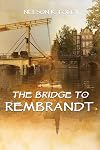
Take a step back in time with this time-traveling adventure that will bring you a side of Amsterdam you may have never considered before. Most of what I know about Amsterdam is what you’d expect a typical American tourist to, so I found this step back in time to be a fascinating journey. Foley made it feel like you were right there, walking beside Robert as he tries to find his way back to his own time. I love the idea of two people whose paths cross over many lifetimes, always coming back show more together, and Rembrandt’s art being tied in was a nice artsy twist. This isn’t really sci-fi, despite the time travel, as it focuses more on the story, the characters, and the decisions they make, especially Robert. It was interesting to see how Robert changed his choices as he met Saskia over and over again, and how differently he handled things with his wife, as well. Highly recommend! show less
The Bridge to Rembrandt starts like a trapdoor opening under your feet. One second Robert is crossing a bridge in Amsterdam, thinking about a girlfriend he’s late to meet, and the next he’s in a world where she looks him dead in the eye and has never met him. That stomach-drop feeling never really lets up, and honestly, I kind of loved that. It’s disorienting in the way a good magic trick is disorienting. You keep checking your pockets for your watch.
What hooked me wasn’t just the show more time travel, which is clever and steadily raises the stakes, but the way the book keeps tangling love and art and bad decisions. Robert is not a spotless hero. He’s messy in very human ways: a little selfish, a little desperate, very in love with a woman who keeps reappearing across the centuries like a recurring melody. Saskia shows up in different skins and circumstances, and every encounter made me tilt my head and think, okay, so what does love look like in this iteration. That question carries the book.
The structure is simple to follow but surprisingly addictive. Each jump pushes Robert further back through Amsterdam’s past, and each landing has the grit of real history. Plague bells. Riots threading the streets. Canals that look pretty until you realize how many secrets they’ve swallowed. The art thread is not window dressing either. Rembrandt is more than a name-check; the way his work echoes through the narrative gives the novel this smoky, studio light. I kept pausing to picture the paint, the shadows, the hands that made them. It’s romantic, but not soft.
There’s a thriller heartbeat underneath. Robert is diabetic and the clock on his insulin is a real one. I got anxious in that itchy way, the way you start counting doses like you would count steps when you’re nervous. That tension snaps the story tight whenever the romance starts to float away. Also, a tiny shout at the book for a detail I didn’t expect: an early jump that is only a few years backward. It’s such a neat on-ramp. You get the rules without needing a chalkboard montage.
Confession time: I don’t always love time travel logic. This one kept me onboard. When it gets a bit talky, the next scene usually answers with movement. There’s one thread about foreknowledge that felt undercooked to me, and a side character or two who are more scaffolding than person, but the core trio of elements — Robert, Saskia, Amsterdam — do the heavy lifting so well that I shrugged and kept reading. If you’re here for equations, maybe not your stop. If you’re here for feelings, choices, and consequences with a strong sense of place, this sings.
The tone is straightforward but not dry. When the book goes for emotion, it often lands it clean. A few lines surprised me by being tender without fuss, which I appreciate. And the ending. I won’t spoil it, but I sat back with that warm, slightly dizzy satisfaction you get when a writer trusted the story enough to finish it honestly.
So yes, I’m solidly in the four-to-five-star zone. Call it a very happy four and a half, rounding up in my head because I’m still thinking about the way love keeps finding a way to meet itself again. I read the last pages late at night and felt that small, grateful ache. Worth the time. Worth the lost sleep. show less
What hooked me wasn’t just the show more time travel, which is clever and steadily raises the stakes, but the way the book keeps tangling love and art and bad decisions. Robert is not a spotless hero. He’s messy in very human ways: a little selfish, a little desperate, very in love with a woman who keeps reappearing across the centuries like a recurring melody. Saskia shows up in different skins and circumstances, and every encounter made me tilt my head and think, okay, so what does love look like in this iteration. That question carries the book.
The structure is simple to follow but surprisingly addictive. Each jump pushes Robert further back through Amsterdam’s past, and each landing has the grit of real history. Plague bells. Riots threading the streets. Canals that look pretty until you realize how many secrets they’ve swallowed. The art thread is not window dressing either. Rembrandt is more than a name-check; the way his work echoes through the narrative gives the novel this smoky, studio light. I kept pausing to picture the paint, the shadows, the hands that made them. It’s romantic, but not soft.
There’s a thriller heartbeat underneath. Robert is diabetic and the clock on his insulin is a real one. I got anxious in that itchy way, the way you start counting doses like you would count steps when you’re nervous. That tension snaps the story tight whenever the romance starts to float away. Also, a tiny shout at the book for a detail I didn’t expect: an early jump that is only a few years backward. It’s such a neat on-ramp. You get the rules without needing a chalkboard montage.
Confession time: I don’t always love time travel logic. This one kept me onboard. When it gets a bit talky, the next scene usually answers with movement. There’s one thread about foreknowledge that felt undercooked to me, and a side character or two who are more scaffolding than person, but the core trio of elements — Robert, Saskia, Amsterdam — do the heavy lifting so well that I shrugged and kept reading. If you’re here for equations, maybe not your stop. If you’re here for feelings, choices, and consequences with a strong sense of place, this sings.
The tone is straightforward but not dry. When the book goes for emotion, it often lands it clean. A few lines surprised me by being tender without fuss, which I appreciate. And the ending. I won’t spoil it, but I sat back with that warm, slightly dizzy satisfaction you get when a writer trusted the story enough to finish it honestly.
So yes, I’m solidly in the four-to-five-star zone. Call it a very happy four and a half, rounding up in my head because I’m still thinking about the way love keeps finding a way to meet itself again. I read the last pages late at night and felt that small, grateful ache. Worth the time. Worth the lost sleep. show less
Take a step back in time with this time-traveling adventure that will bring you a side of Amsterdam you may have never considered before. Most of what I know about Amsterdam is what you’d expect a typical American tourist to, so I found this step back in time to be a fascinating journey. Foley made it feel like you were right there, walking beside Robert as he tries to find his way back to his own time. I love the idea of two people whose paths cross over many lifetimes, always coming back show more together, and Rembrandt’s art being tied in was a nice artsy twist. This isn’t really sci-fi, despite the time travel, as it focuses more on the story, the characters, and the decisions they make, especially Robert. It was interesting to see how Robert changed his choices as he met Saskia over and over again, and how differently he handled things with his wife, as well. Highly recommend! show less
"I don't know one moment I was in 2019, and the next thing I knew, I was in my house but in 1664."
Imagine crossing a bridge on your way to see someone you love, only to reach the other side and realize they have no idea who you are. That’s exactly what happens to Robert in The Bridge to Rembrandt by Nelson K. Foley, and from that moment on, his life takes a mind-bending turn.
Instead of a simple meeting with his girlfriend, he’s thrown into a whirlwind of time travel, landing in show more different eras of Amsterdam’s past. And with every leap backward, he faces war, riots, the plague, and one woman who keeps reappearing, no matter how far he goes.
Foley doesn’t just use history as a setting, he makes it an active part of Robert’s struggle. Every time period feels rich, alive, and unpredictable, whether it’s the chaos of a city in turmoil or the brilliance of Rembrandt’s art taking shape before his eyes. But Robert’s journey isn’t just about history, it’s about survival. His insulin is running out, making his race against time even more desperate. It’s not just about getting home; it’s about staying alive long enough to even have that chance. show less
Imagine crossing a bridge on your way to see someone you love, only to reach the other side and realize they have no idea who you are. That’s exactly what happens to Robert in The Bridge to Rembrandt by Nelson K. Foley, and from that moment on, his life takes a mind-bending turn.
Instead of a simple meeting with his girlfriend, he’s thrown into a whirlwind of time travel, landing in show more different eras of Amsterdam’s past. And with every leap backward, he faces war, riots, the plague, and one woman who keeps reappearing, no matter how far he goes.
Foley doesn’t just use history as a setting, he makes it an active part of Robert’s struggle. Every time period feels rich, alive, and unpredictable, whether it’s the chaos of a city in turmoil or the brilliance of Rembrandt’s art taking shape before his eyes. But Robert’s journey isn’t just about history, it’s about survival. His insulin is running out, making his race against time even more desperate. It’s not just about getting home; it’s about staying alive long enough to even have that chance. show less
Statistics
- Works
- 1
- Members
- 14
- Popularity
- #739,558
- Rating
- 4.9
- Reviews
- 14