

Nadia Wheatley
Author of My Place
About the Author
Nadia Wheatley is an Australian writer, born on April 30, 1949 in Sydney, New South Wales, Australia. She began writing full-time in 1976 and has written numerous award-winning picture books, novels, and works of history for children and adults. She has twice received the New South Wales Premier's show more Children's Book Prize. Her biography of Charmian Clift won the New South Wales Premier's Award for Australian History (2002). Her other work includes My Place (illustrated by Donna Rawlins), The House that was Eureka, The Papunya School Book of Country and History (in collaboration with Aboriginal students and staff at Papunya School - Northern Territory) and Going Bush which received an Australian Award for Excellence in Educational Publishing (2007). In 2016, her book, Flight (illustrated by Armin Greder), won the 2016 Children's Book Council of Australia (CBCA) Book of the Year Award, Picture Book of the Year. (Bowker Author Biography) show less
Image credit: Nadia Wheatley
Series
Works by Nadia Wheatley
Papunya school book 1 copy
Associated Works
She's Fantastical: The First Anthology of Australian Women's Speculative Fiction, Magical Realism and Fantasy (1995) — Contributor — 35 copies, 1 review
Tagged
Common Knowledge
- Canonical name
- Wheatley, Nadia
- Legal name
- Johnston, Nadia Wheatley
- Other names
- Mara, N.K.
- Birthdate
- 1949-04-30
- Gender
- female
- Education
- Macquarie University (MA Hons)
University of Sydney (BA, BA Hons - History) - Occupations
- children's book author
young adult writer
short story writer
biographer - Relationships
- Johnston, Martin (friend and partner)
- Short biography
- Nadia Wheatley (born 30 April 1949) is an award winning Australian writer of children’s fiction and non-fiction, adult non-fiction and biographies, and newspaper and journal articles. Her works often focus on "the difficulties faced by Aborigines or non-English-speaking newcomers to Australia, ... environmental issues and the effects of social change”. She has been involved in developing projects to raise children's awareness about their environment and local history.
- Nationality
- Australia
- Birthplace
- Sydney, New South Wales, Australia
- Places of residence
- Crete, Greece
Astros, Greece
London, England, UK
Newtown, New South Wales, Australia - Associated Place (for map)
- Australia
Members
Reviews

Author Nadia Wheatley and illustrator Donna Rawlins take the reader on a voyage through time in this classic Australian children's book, which opens in an urban neighborhood in (then present day) 1988, and offers a snapshot of the same location every ten years, stretching back to 1788. Each two-page spread features a different young narrator, discussing the make-up of their family, their activities, and the world around them. "My Place" is different in each time period being depicted, and show more nothing emphasizes that more than the maps, ostensibly drawn by each child narrator, that are included, thus allowing changes - in population level, building density, and types of industry/activity present - to be tracked visually, as well as textually.
An engaging and informative book, My Place draws a fascinating portrait of the changes effected by two hundred years of immigration to Australia, opening and closing, appropriately enough, with an Aboriginal narrator. The copy I read, which was sent by a kindly goodreads pal down under - thanks again, Kim! - is a 20th Anniversary Edition, which speaks to its lasting appeal. A textually advanced picture-book - I'd say the level was more middle-grade, than early reader - with incredibly detailed artwork that rewards close scrutiny, this is the kind of book to be slowly savored, and then read again and again. Some of the details that struck me on this first reading - the way that the children's companion animals varied, from generation to generation, but the need for them did not; the fact that the Millers were once the Müllers, something that quietly changed (with no overt commentary in the text) from 1908 to 1918; the ubiquity of hard work, in every generation profiled; the matter-of-fact acceptance of convict labor, in many of the earlier periods, and the appalling fact that some convicts were young children (like Sam), who were convicted of minor crimes like stealing a coat, in order to keep warm, and shipped off to lives of hard labor on the other side of the world - could give way, or better yet, be augmented by new impressions and details, on a second or third approach to the book.
There is so much to take in here, that it's difficult to know where to begin! A rich, rich book, one that will give young readers an appreciation for the grand sweep of Australian history, while also filling in some of the human stories and details that make up that larger narrative, My Place is a work (I believe) of fiction, but would make an excellent selection for a young person's history class. Just outstanding! show less
An engaging and informative book, My Place draws a fascinating portrait of the changes effected by two hundred years of immigration to Australia, opening and closing, appropriately enough, with an Aboriginal narrator. The copy I read, which was sent by a kindly goodreads pal down under - thanks again, Kim! - is a 20th Anniversary Edition, which speaks to its lasting appeal. A textually advanced picture-book - I'd say the level was more middle-grade, than early reader - with incredibly detailed artwork that rewards close scrutiny, this is the kind of book to be slowly savored, and then read again and again. Some of the details that struck me on this first reading - the way that the children's companion animals varied, from generation to generation, but the need for them did not; the fact that the Millers were once the Müllers, something that quietly changed (with no overt commentary in the text) from 1908 to 1918; the ubiquity of hard work, in every generation profiled; the matter-of-fact acceptance of convict labor, in many of the earlier periods, and the appalling fact that some convicts were young children (like Sam), who were convicted of minor crimes like stealing a coat, in order to keep warm, and shipped off to lives of hard labor on the other side of the world - could give way, or better yet, be augmented by new impressions and details, on a second or third approach to the book.
There is so much to take in here, that it's difficult to know where to begin! A rich, rich book, one that will give young readers an appreciation for the grand sweep of Australian history, while also filling in some of the human stories and details that make up that larger narrative, My Place is a work (I believe) of fiction, but would make an excellent selection for a young person's history class. Just outstanding! show less

I was flipping through this book at a museum shop because the colorful cover caught my attention. It features a canvas on an easel which has a painting of the background, the kind of composition where the easel is like a window, except that the background itself has sprouted imaginary beings.
The story is about a boy, Luke, who "sees things in a different way". To be honest, the text implied to me that Luke has a neurological disorder that interferes with his sensory processing. He doesn't show more know why, but he paints a blue apple instead of a red or green one the way the rest of his class does. When they're drawing portraits, he "put the nose and ears in the wrong place" (the illustration shows something like one of the lithographs in Picasso's "Imaginary Portraits" series). Only the third page says "Luke used his imagination", when drawing what he saw outside the window. The theme of the book is that it's okay to use your imagination and not have to be representational when making art, but the implications of the opening sentence just felt a bit weird and a little hilarious to me.
The illustrations are done in several different media. Most of the scenes at the beginning are pen and ink with watercolor washes to provide color and texture to the paper - the drawings themselves lack color and hatching is used to provide shape and volume. Color is introduced for the artwork Luke makes, and when he enters a contemporary art museum, the pages become fully colored with a wide range of media, including oil pastels, gouache, colored pencil, texta, and acrylic and oil paint. It's a nice way to show the transition from "ordinary world" to "imaginative world", which isn't uncommon - such transitions are present in Where the Wild Things Are (though with a different technique) and the film version of Wizard of Oz.
I don't have any young children to read the book with, but other than my amusement about the way Luke's "way of seeing" is presented at the beginning, I really enjoyed the 30 page book. The illustrations are lovely, and the ones from inside the museum are beautifully detailed with a lot to look at and discover. They also represent a wide range of contemporary art, including abstract expressionism, cubism, and surrealism. Sculpture is featured as well as paintings.
This is a lovely little book, and probably fun for even older elementary students to read, because of the artwork. I know some older kids look down on picture books once they can read "real" books. show less
The story is about a boy, Luke, who "sees things in a different way". To be honest, the text implied to me that Luke has a neurological disorder that interferes with his sensory processing. He doesn't show more know why, but he paints a blue apple instead of a red or green one the way the rest of his class does. When they're drawing portraits, he "put the nose and ears in the wrong place" (the illustration shows something like one of the lithographs in Picasso's "Imaginary Portraits" series). Only the third page says "Luke used his imagination", when drawing what he saw outside the window. The theme of the book is that it's okay to use your imagination and not have to be representational when making art, but the implications of the opening sentence just felt a bit weird and a little hilarious to me.
The illustrations are done in several different media. Most of the scenes at the beginning are pen and ink with watercolor washes to provide color and texture to the paper - the drawings themselves lack color and hatching is used to provide shape and volume. Color is introduced for the artwork Luke makes, and when he enters a contemporary art museum, the pages become fully colored with a wide range of media, including oil pastels, gouache, colored pencil, texta, and acrylic and oil paint. It's a nice way to show the transition from "ordinary world" to "imaginative world", which isn't uncommon - such transitions are present in Where the Wild Things Are (though with a different technique) and the film version of Wizard of Oz.
I don't have any young children to read the book with, but other than my amusement about the way Luke's "way of seeing" is presented at the beginning, I really enjoyed the 30 page book. The illustrations are lovely, and the ones from inside the museum are beautifully detailed with a lot to look at and discover. They also represent a wide range of contemporary art, including abstract expressionism, cubism, and surrealism. Sculpture is featured as well as paintings.
This is a lovely little book, and probably fun for even older elementary students to read, because of the artwork. I know some older kids look down on picture books once they can read "real" books. show less
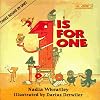
This counting book is a diminutive eye-opener to the recursive style that math & language share in echo of the infinite. It is 1 himself, lean, tall & svelt in his blue bow tie, who opens the work by juggling a few digits. Later, 8 sits at dinner but "leaves peas on his plate." A palm-size book in an envelope on the inside back cover continues the tale. But wait! A third book, the size of a postage stamp, is tucked into the smaller book.
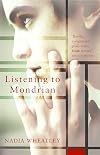
This collection of excellent short stories is testament to a writer who understands the power of words. In this collection, Wheatley explores basic human concerns of family, relationships and our place in the world, while also making insightful comments about society in general. Her work is sophisticated, offering a rich reading experience for those who take the time to engage with her writing.
As a collection, these stories share some common themes but each stands alone as an exploration of show more the pain and beauty of the human condition. show less
As a collection, these stories share some common themes but each stands alone as an exploration of show more the pain and beauty of the human condition. show less
Lists
Awards


You May Also Like


Associated Authors
Statistics
- Works
- 29
- Also by
- 5
- Members
- 1,163
- Popularity
- #22,093
- Rating
- 3.5
- Reviews
- 21
- ISBNs
- 91
- Languages
- 2