
David Rawlings
Author of The Baggage Handler
Works by David Rawlings
Woodland 1 copy
Tagged
Common Knowledge
Members
Reviews
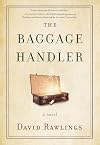
I had heard a lot of great things about The Baggage Handler by David Rawlings, so I was thrilled to get the chance to read this debut novel. The buzz said it is a parable, and it certainly is. This book made me dig deep into my own attitudes, expectations, experiences, and insecurities — the baggage that is part and parcel of who I am. Insightful, thought-provoking, and a real conversation starter, this book gets a very highly recommended rating from me.
It all begins with three people with show more lost baggage. Each is facing struggles at the end of their plane rides, and the experience of searching out their lost baggage is not pleasant. Add an enigmatic baggage handler who forces them to face their real selves, and you have a riveting look into what people carry around with them and their inept means of dealing with it. The characters Rawlings created are well-developed, not the stereotypes often found in parables. They were very real and relatable from the opening chapters. Did I see myself in any of them? Maybe. 😉 The baggage they carry, often unrecognized or not of their choice, includes envy, unforgiveness, and unworthiness. The doubts and fears each exhibit come from the depths of the human experience. And that is what makes The Baggage Handler so powerful — its universal message. A light is shown on what we all need to deal with. The setting of the baggage facility is masterfully depicted — you’ll see when you read the book. Not everything is resolved in the way I would have liked, leaving me feeling both hopeful and sad. But isn’t that how it is in real life as well?
Perfect for a book club discussion ( you will want to talk about this book!), The Baggage Handler is a must-read! I cannot wait for more from Rawlings.
Very Highly Recommended.
Great for Book Clubs.
Audience: adults.
(Thanks to Thomas Nelson for a complimentary copy. All opinions expressed are mine alone.) show less
It all begins with three people with show more lost baggage. Each is facing struggles at the end of their plane rides, and the experience of searching out their lost baggage is not pleasant. Add an enigmatic baggage handler who forces them to face their real selves, and you have a riveting look into what people carry around with them and their inept means of dealing with it. The characters Rawlings created are well-developed, not the stereotypes often found in parables. They were very real and relatable from the opening chapters. Did I see myself in any of them? Maybe. 😉 The baggage they carry, often unrecognized or not of their choice, includes envy, unforgiveness, and unworthiness. The doubts and fears each exhibit come from the depths of the human experience. And that is what makes The Baggage Handler so powerful — its universal message. A light is shown on what we all need to deal with. The setting of the baggage facility is masterfully depicted — you’ll see when you read the book. Not everything is resolved in the way I would have liked, leaving me feeling both hopeful and sad. But isn’t that how it is in real life as well?
Perfect for a book club discussion ( you will want to talk about this book!), The Baggage Handler is a must-read! I cannot wait for more from Rawlings.
Very Highly Recommended.
Great for Book Clubs.
Audience: adults.
(Thanks to Thomas Nelson for a complimentary copy. All opinions expressed are mine alone.) show less
Thank you in advance to the publisher, Thomas Nelson/TNZ Fiction, as well as Prism Book Tours for providing an advanced review copy. A positive review was not required and all words are my own.
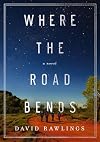
The cover is one of the striking things about this novel, other than the blurb. The stars above and the red dirt road of the Australian outback feature four people on a journey. Immediately questions come to mind – what are they looking for, what will they find, will they like what they find?
This is show more one of those “spiritual journey” novels that begins with graduation from college, culminating in a “15 years later trip” to Australia for four friends – Lincoln, Andy, Eliza, and Bree. Due to life experiences they are obviously not the same people they were when they arrive. Are they even who they want to be, or are meant to be?
But “how” did they arrive there – that is the key question in this novel and the entire premise. In addition – where are they going? What do they want next?
To be honest, this was a brilliant idea. I truly loved where the author went with this story. Yet, the execution has several weaknesses – some that truly affect how well the novel works, or could work. The stunning and brilliant writing saves this novel. The amount of imagination and passion the writer has are indeed strengths and you can read it in every page.
For the reunion, Lincoln has planned a camping trip to the Australian Outback. Basically being dropped in the middle of nowhere – or so it seems right then.
For Eliza, the trip is “significant”. Bree is hiding a secret, and Andy is just trying to hide.
The characters were indeed flawed, unique, and realistic. I couldn’t relate to the characters but I honestly understood some of them. I was drawn to the story to see how it was all going to play out. As someone who skipped her 10 year high school reunion (for more than one reason), it was an interesting plot to see how these people would have fared 15 years down the road of life’s experiences. How close would they be considering how they were in the beginning.
That is quickly established.
Eliza mentions a term – “walkabout” – which is a journey of self-discovery. From the way the characters are at the beginning of this reunion, they could definitely benefit from it. However, their “tour” guides, particularly Eddie, mention they don’t exploit culture and don’t use the term anymore because it has been misunderstood and used to explain something that it wasn’t and painted to describe a picture of people who weren’t like that. He refers to the trek as a “journey with a purpose”.
According to one finding, ‘go walkabout – (of an Australian Aboriginal) wander into the bush away from white society in order to live in the traditional manner”. Which is why the two men, Eddie and Sloaney, say “it’s not appropriate to exploit cultural heritage for tourists” almost at the end.
In a later campfire session, Eddie is playing a yidaki which Eliza thinks calls a didgeridoo. Again, Eddie is quick to point out the original name. This was definitely an interesting look into an unknown part of the Australian culture. It was definitely fascinating to read and learn about.
Of course what happens at that campsite changes the four friends and causes them to reevaluate the current course they’re on. That doesn’t happen until about halfway through the novel though.
They start off camping and learning about the area – everything seems to be going great, but each one with their own baggage they don’t want to unpack. But, the longer they are together, there is something that threatens them – mainly their own issues in their lives and how they feel about each other.
It starts with a campfire argument and the four people yelling at each other. One interesting note is that Andy blames Lincoln for how his life turns out. This is a result of a “gambling” tip in college that then sets about Andy’s downward path in life, as well as where he his at this point in life. The tip was actually successful, however as most gamblers know – even one small success can be dangerous and lead to a darker path.
The argument culminates with a rare storm that forces them into taking cover which scatters them in different directions. They each wake up in a different area and try to find their way back to the campsite, or civilization – only after they’ve completed their “journey”.
The lessons/guides are simple:
1st – Lincoln. He is LOCKED in a train station with no train that comes by. He can’t find his way out until a woman asks to be let in.
2nd – Andy. It is his problem that is the most bizarre and readers at the end will be left wondering “what happened”, perhaps even in a scary way. This was perhaps the most disturbing part of the novel itself.
3rd – Eliza. She meets a guide, Grace, who quickly surmises what Eliza knew – she is missing something in her life; but what exactly? Was it a failed chance with Lincoln?
4th – Bree. Her biggest “demon” is self-doubt due to a failed attempt at a major event just after college, while happy, she still wrestles with the “am I good enough?” question.
This is a great story that really takes the reader on more than a journey in self-discovery. Told in third (3rd) person; the POV switches from Lincoln, Eliza, Bree, to Andy.
I honestly couldn’t put it down; I thoroughly enjoyed reading this and couldn’t wait to find out what was going to happen to them.
Through their individual “guide” journeys; most of the group learn purpose, healing, redemption, and what is wrong in their lives. They also learn that their story isn’t what they do, so much as how they got where they are. Something we all need to take in and reflect on. What was interesting is how they had to “go away” to find themselves. They had to be lost in order to be found.
They learn to re-think their story or their path on life. The journey acts as a course-correction to direct them into being who they are supposed to be, not who they ended up being.
For example, despite her success, Eliza was definitely unhappy. While she did seemingly “have everything”, it was really nothing to her. Same as her ex-finance from college, Lincoln. This mesmerizing tale gives one a harsh lesson in the value of success. This is one of those novels that gets the reader to thinking – actually reflecting on their lives.
Other issues, particularly surrounding Andy, were the questions of personal accountability, responsibility, and owning up to one’s mistakes.
It also begs the question of second chances – if given one, would we take them? What would be the consequences? How far do we fall before we don’t even deserve one?
Each journey was a variation of the same story.
While I am not sure I would call them plot holes, the ending left me wanting SO much more. I wanted to know what happened to these characters. Chapter one does start with the police involvement or rather investigation as one of the characters never seemingly “resurfaces”.
Where did the fourth (4th) person end up?
Were the remaining three going to be charged in the disappearance?
How where they going to change their lives going forward?
What was going to happen?
Was this how it was going to end for them?
There were a LOT of questions in that area – those are some of the major ones. And, that was the big let-down in this otherwise superb book. I’m hoping that because I read an ARC, there was more at the end that didn’t make it in. If not, it is a disappointment as this story deserves a more satisfying ending or rather an end with decent closure. I did re-read the ending to check to see if I missed anything.
As this is “magical realism”, there is no “realistic” basis for what happens in this novel. So, the reader needs to keep that in mind. This is a “hard to describe” kind of read; and best to “give it a try” one.
While I was left disappointed, confused, and even perplexed by the ending, I was also left with reflecting on the questions being asked of the characters.
I think this is geared more for fans of the author, and those of the genre; maybe even those who are “searching” for something in their lives. The discussion questions are great, and a theme for this book – how did you get to the point you are in your life; what shaped your journey; what events shaped it. Does clinging to the past really hold us back?
What about exploring a road not taken?
That was an interesting one as it was the topic of a J*A*G episode (“What If”) when the characters were pondering that same thing over fortune cookies – explore the road not taken, take it. Harm, Mac, Harriet, Bud, and Sturgis each had a view of the road not taken – each time it led them, in a way, towards where they were supposed to be, only by a different road. That was another thing that also stood out for me.
But, the reader also learns through this book that leaving old habits and thoughts behind is sometimes best so we can move forward.
This is definitely a LOWER 4 star read – more like a 3.8/3.9. As some websites don’t do partial stars, I did round it up.
Christy Award winning Australian author, David Rawlings, is a new-to-me author despite hearing about some of his releases last year – “The Baggage Handler” and “The Camera Never Lies”. While disappointed about the ending, the author does accomplish the main goal set out in the story.
While distributed through TNZ Fiction/Thomas Nelson, which is a Christian and faith themed publisher, I found no real Christian references at all. However, it was a clean read with no sex scenes or foul language. show less
The cover is one of the striking things about this novel, other than the blurb. The stars above and the red dirt road of the Australian outback feature four people on a journey. Immediately questions come to mind – what are they looking for, what will they find, will they like what they find?
This is show more one of those “spiritual journey” novels that begins with graduation from college, culminating in a “15 years later trip” to Australia for four friends – Lincoln, Andy, Eliza, and Bree. Due to life experiences they are obviously not the same people they were when they arrive. Are they even who they want to be, or are meant to be?
But “how” did they arrive there – that is the key question in this novel and the entire premise. In addition – where are they going? What do they want next?
To be honest, this was a brilliant idea. I truly loved where the author went with this story. Yet, the execution has several weaknesses – some that truly affect how well the novel works, or could work. The stunning and brilliant writing saves this novel. The amount of imagination and passion the writer has are indeed strengths and you can read it in every page.
For the reunion, Lincoln has planned a camping trip to the Australian Outback. Basically being dropped in the middle of nowhere – or so it seems right then.
For Eliza, the trip is “significant”. Bree is hiding a secret, and Andy is just trying to hide.
The characters were indeed flawed, unique, and realistic. I couldn’t relate to the characters but I honestly understood some of them. I was drawn to the story to see how it was all going to play out. As someone who skipped her 10 year high school reunion (for more than one reason), it was an interesting plot to see how these people would have fared 15 years down the road of life’s experiences. How close would they be considering how they were in the beginning.
That is quickly established.
Eliza mentions a term – “walkabout” – which is a journey of self-discovery. From the way the characters are at the beginning of this reunion, they could definitely benefit from it. However, their “tour” guides, particularly Eddie, mention they don’t exploit culture and don’t use the term anymore because it has been misunderstood and used to explain something that it wasn’t and painted to describe a picture of people who weren’t like that. He refers to the trek as a “journey with a purpose”.
According to one finding, ‘go walkabout – (of an Australian Aboriginal) wander into the bush away from white society in order to live in the traditional manner”. Which is why the two men, Eddie and Sloaney, say “it’s not appropriate to exploit cultural heritage for tourists” almost at the end.
In a later campfire session, Eddie is playing a yidaki which Eliza thinks calls a didgeridoo. Again, Eddie is quick to point out the original name. This was definitely an interesting look into an unknown part of the Australian culture. It was definitely fascinating to read and learn about.
Of course what happens at that campsite changes the four friends and causes them to reevaluate the current course they’re on. That doesn’t happen until about halfway through the novel though.
They start off camping and learning about the area – everything seems to be going great, but each one with their own baggage they don’t want to unpack. But, the longer they are together, there is something that threatens them – mainly their own issues in their lives and how they feel about each other.
It starts with a campfire argument and the four people yelling at each other. One interesting note is that Andy blames Lincoln for how his life turns out. This is a result of a “gambling” tip in college that then sets about Andy’s downward path in life, as well as where he his at this point in life. The tip was actually successful, however as most gamblers know – even one small success can be dangerous and lead to a darker path.
The argument culminates with a rare storm that forces them into taking cover which scatters them in different directions. They each wake up in a different area and try to find their way back to the campsite, or civilization – only after they’ve completed their “journey”.
The lessons/guides are simple:
1st – Lincoln. He is LOCKED in a train station with no train that comes by. He can’t find his way out until a woman asks to be let in.
2nd – Andy. It is his problem that is the most bizarre and readers at the end will be left wondering “what happened”, perhaps even in a scary way. This was perhaps the most disturbing part of the novel itself.
3rd – Eliza. She meets a guide, Grace, who quickly surmises what Eliza knew – she is missing something in her life; but what exactly? Was it a failed chance with Lincoln?
4th – Bree. Her biggest “demon” is self-doubt due to a failed attempt at a major event just after college, while happy, she still wrestles with the “am I good enough?” question.
This is a great story that really takes the reader on more than a journey in self-discovery. Told in third (3rd) person; the POV switches from Lincoln, Eliza, Bree, to Andy.
I honestly couldn’t put it down; I thoroughly enjoyed reading this and couldn’t wait to find out what was going to happen to them.
Through their individual “guide” journeys; most of the group learn purpose, healing, redemption, and what is wrong in their lives. They also learn that their story isn’t what they do, so much as how they got where they are. Something we all need to take in and reflect on. What was interesting is how they had to “go away” to find themselves. They had to be lost in order to be found.
They learn to re-think their story or their path on life. The journey acts as a course-correction to direct them into being who they are supposed to be, not who they ended up being.
For example, despite her success, Eliza was definitely unhappy. While she did seemingly “have everything”, it was really nothing to her. Same as her ex-finance from college, Lincoln. This mesmerizing tale gives one a harsh lesson in the value of success. This is one of those novels that gets the reader to thinking – actually reflecting on their lives.
Other issues, particularly surrounding Andy, were the questions of personal accountability, responsibility, and owning up to one’s mistakes.
It also begs the question of second chances – if given one, would we take them? What would be the consequences? How far do we fall before we don’t even deserve one?
Each journey was a variation of the same story.
While I am not sure I would call them plot holes, the ending left me wanting SO much more. I wanted to know what happened to these characters. Chapter one does start with the police involvement or rather investigation as one of the characters never seemingly “resurfaces”.
Where did the fourth (4th) person end up?
Were the remaining three going to be charged in the disappearance?
How where they going to change their lives going forward?
What was going to happen?
Was this how it was going to end for them?
There were a LOT of questions in that area – those are some of the major ones. And, that was the big let-down in this otherwise superb book. I’m hoping that because I read an ARC, there was more at the end that didn’t make it in. If not, it is a disappointment as this story deserves a more satisfying ending or rather an end with decent closure. I did re-read the ending to check to see if I missed anything.
As this is “magical realism”, there is no “realistic” basis for what happens in this novel. So, the reader needs to keep that in mind. This is a “hard to describe” kind of read; and best to “give it a try” one.
While I was left disappointed, confused, and even perplexed by the ending, I was also left with reflecting on the questions being asked of the characters.
I think this is geared more for fans of the author, and those of the genre; maybe even those who are “searching” for something in their lives. The discussion questions are great, and a theme for this book – how did you get to the point you are in your life; what shaped your journey; what events shaped it. Does clinging to the past really hold us back?
What about exploring a road not taken?
That was an interesting one as it was the topic of a J*A*G episode (“What If”) when the characters were pondering that same thing over fortune cookies – explore the road not taken, take it. Harm, Mac, Harriet, Bud, and Sturgis each had a view of the road not taken – each time it led them, in a way, towards where they were supposed to be, only by a different road. That was another thing that also stood out for me.
But, the reader also learns through this book that leaving old habits and thoughts behind is sometimes best so we can move forward.
This is definitely a LOWER 4 star read – more like a 3.8/3.9. As some websites don’t do partial stars, I did round it up.
Christy Award winning Australian author, David Rawlings, is a new-to-me author despite hearing about some of his releases last year – “The Baggage Handler” and “The Camera Never Lies”. While disappointed about the ending, the author does accomplish the main goal set out in the story.
While distributed through TNZ Fiction/Thomas Nelson, which is a Christian and faith themed publisher, I found no real Christian references at all. However, it was a clean read with no sex scenes or foul language. show less
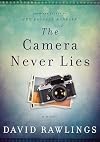
“No matter what you think you might see, the camera never lies.”
Because I heard so many positive remarks about “The Baggage Handler”, I decided to give “The Camera Never Lies” a try. Photography doesn’t really interest me, although I do enjoy looking at nature and wildlife photos, and I have never been a fan of having my picture taken. To be honest, I wasn’t thrilled when I skimmed the synopsis, either. Had I not read so many favorable reviews when this author’s previous show more book toured with CelebrateLit, I likely wouldn’t have signed up to review this one, and I’m glad that I did!
Blending elements of magical realism and allegory, David Rawlings’ “The Camera Never Lies” explores the secrets that we hide and the consequences to which they lead. This story reminds me of Rod Serling’s “The Twilight Zone” television series, and I can easily envision it as an episode; likewise, if this book had a theme song, I think that Natalie Grant’s “The Real Me” would be a perfect fit. Rawlings offers great insight into the human psyche and how one lie leads to a cascade effect, even subtle lies such as pretending that things are fine when they’re not. Using a camera to develop the ideas in the narrative is brilliantly apropos because “[t]he camera reveals how our lives truly are. We can’t trick it, even if sometimes we think we can trick ourselves and everyone around us.” Furthermore, “Truth cannot simply be avoided, covered up, or ignored, and the camera chooses the truth it shows.” The symbolism also works well, as with the fictional prescription drug Mendacium, which references the term “mendacious” and its Latin etymology from words meaning “lying” and “fault.” The revelations from the storyline filter through the lens of truth, exposing the lies.
One aspect of this book that I did struggle with was the characters. I didn’t particularly like any of them, with the occasional exception of Simon, nor did I feel a personal connection with any of them. I found myself groaning and rolling my eyes a bit with David, in particular, but to be fair, his reactions are believable and his approach to life is essential to the plot’s execution. Also, although there is no direct mention of faith, there are easy parallels to Christianity throughout the text and in the theme of uprightness vs. deceitfulness. Sometimes we, like Kelly, might think that honesty doesn’t always work, but as Simon tells her, “Well, sometimes your honesty doesn’t produce results you can see with your eyes. Sometimes the results are about your own integrity.” This immediately brought to mind Hebrews 11:1: “Now faith is the substance of things hoped for, the evidence of things not seen.” It all comes down to trust. We have to decide who or what we are going to trust in, ourselves or the Lord, and when we choose to trust in Jesus, we find the truth, the way, and the life. “Then you will know the truth, and the truth will set you free” (John 8:32).
I received a complimentary copy of this book through CelebrateLit and was not required to post a favorable review. All opinions are my own. show less
Because I heard so many positive remarks about “The Baggage Handler”, I decided to give “The Camera Never Lies” a try. Photography doesn’t really interest me, although I do enjoy looking at nature and wildlife photos, and I have never been a fan of having my picture taken. To be honest, I wasn’t thrilled when I skimmed the synopsis, either. Had I not read so many favorable reviews when this author’s previous show more book toured with CelebrateLit, I likely wouldn’t have signed up to review this one, and I’m glad that I did!
Blending elements of magical realism and allegory, David Rawlings’ “The Camera Never Lies” explores the secrets that we hide and the consequences to which they lead. This story reminds me of Rod Serling’s “The Twilight Zone” television series, and I can easily envision it as an episode; likewise, if this book had a theme song, I think that Natalie Grant’s “The Real Me” would be a perfect fit. Rawlings offers great insight into the human psyche and how one lie leads to a cascade effect, even subtle lies such as pretending that things are fine when they’re not. Using a camera to develop the ideas in the narrative is brilliantly apropos because “[t]he camera reveals how our lives truly are. We can’t trick it, even if sometimes we think we can trick ourselves and everyone around us.” Furthermore, “Truth cannot simply be avoided, covered up, or ignored, and the camera chooses the truth it shows.” The symbolism also works well, as with the fictional prescription drug Mendacium, which references the term “mendacious” and its Latin etymology from words meaning “lying” and “fault.” The revelations from the storyline filter through the lens of truth, exposing the lies.
One aspect of this book that I did struggle with was the characters. I didn’t particularly like any of them, with the occasional exception of Simon, nor did I feel a personal connection with any of them. I found myself groaning and rolling my eyes a bit with David, in particular, but to be fair, his reactions are believable and his approach to life is essential to the plot’s execution. Also, although there is no direct mention of faith, there are easy parallels to Christianity throughout the text and in the theme of uprightness vs. deceitfulness. Sometimes we, like Kelly, might think that honesty doesn’t always work, but as Simon tells her, “Well, sometimes your honesty doesn’t produce results you can see with your eyes. Sometimes the results are about your own integrity.” This immediately brought to mind Hebrews 11:1: “Now faith is the substance of things hoped for, the evidence of things not seen.” It all comes down to trust. We have to decide who or what we are going to trust in, ourselves or the Lord, and when we choose to trust in Jesus, we find the truth, the way, and the life. “Then you will know the truth, and the truth will set you free” (John 8:32).
I received a complimentary copy of this book through CelebrateLit and was not required to post a favorable review. All opinions are my own. show less
I found myself doing some real introspection as I read this modern day parable. The author has taken three travelers that clearly are carrying baggage that doesn't belong to them or shall we say, appears to be incorrectly assigned. Are you trying to live out someone else's dream, or is it really your own? Perhaps by not always looking for more, enjoyment and love will grow for the people and life we have already been given. Removing the wrong bag from the baggage carousel of life will show more possibly send you down a path that is not preferred. Are you ready for the results?
I received an ARC through CelebrateLit. All impressions and opinions are my own. show less
I received an ARC through CelebrateLit. All impressions and opinions are my own. show less
Awards

Statistics
- Works
- 6
- Members
- 153
- Popularity
- #136,479
- Rating
- 3.9
- Reviews
- 34
- ISBNs
- 23