
Trina Rathgeber
Author of Lost at Windy River: A True Story of Survival
Works by Trina Rathgeber
Tagged
Common Knowledge
There is no Common Knowledge data for this author yet. You can help.
Members
Reviews
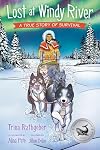
It's 1944, and Ilse Schweder (Lady of the Thunderbird in Cree) lives with her father and siblings in Windy River; she's out with her brothers and their dogs when a storm hits and she's separated from the others. For nine days, Ilse survives the elements using the knowledge and (scant) resources at her disposal; she sets her dogs loose, sleeps in snow caves, and makes her own set of eye protectors to keep from going snow-blind. At last, she reaches a neighbor, who helps her get dry, warm, and show more hydrated, and brings her back to her desperate family. A doctor recommends amputating her badly frostbitten feet, but her father decides against it, and in seven months, she's walking again.
An older Ilse tells her story to a classroom of students, reclaiming it from an unauthorized retelling by Farley Mowat (People of the Deer, 1952). The author of this graphic novel is Ilse's granddaughter, telling her story with her permission.
Brief but telling references are made to the residential schools, and Ilse's older sister's death there; Ilse's father was a German immigrant, her mother was Cree.
Quotes
Without an understanding of traditional knowledge and the land, how could he know what it took for her to survive? (3)
"That's why I say that Stella couldn't have done what I did. She didn't know the things I knew. Old Mowat's Stella wouldn't have lasted the night." (86) show less
An older Ilse tells her story to a classroom of students, reclaiming it from an unauthorized retelling by Farley Mowat (People of the Deer, 1952). The author of this graphic novel is Ilse's granddaughter, telling her story with her permission.
Brief but telling references are made to the residential schools, and Ilse's older sister's death there; Ilse's father was a German immigrant, her mother was Cree.
Quotes
Without an understanding of traditional knowledge and the land, how could he know what it took for her to survive? (3)
"That's why I say that Stella couldn't have done what I did. She didn't know the things I knew. Old Mowat's Stella wouldn't have lasted the night." (86) show less
This is really wonderful. What a gift to hear this story from the granddaughter of the woman who experienced it. The book itself is sensitively and thoughtfully written -- I appreciate so much that it includes some very hard truths, including the devastating loss of a child at a Residential School and the terrifying question of amputation as a medical necessity -- and it does this with grace and clarity. Enough information for children to be able to start a conversation, but not so much as show more to be overwhelming. It does a wonderful job of setting up the context of life in the far North, the ways that Ilse survived and how her entire life set her up with the skills to do so, and even the need to reclaim stories that are presented by others without permission. It's also an appealing graphic novel, and a short format, which is such a wonderful way to reduce barriers for young people as they begin to become confident readers. Fantastic. show less
The author reclaims and tells the story of her grandmother Ilse's survival while lost in a snowstorm when she was a girl. Ilse was lost for nine days in the sub-freezing temperatures of Northern Canada but relied on her indigenous knowledge of the land and nature to keep herself alive. A local trapper finds her and brings her home; severe frostbite of her feet meant months of healing and relearning how to walk. Ilse's story is a slim 90 pages but it evokes the harshness of the environment show more and the practical mindset needed to live there. No self-pity for Ilse; she knew what she had to do to take care of herself. Ilse's story was an inspiration for a book chapter written by Farley Mowat but here Ilse's granddaughter reclaims the story through an indigenous point of view. Eye-opening and inspiring. show less
In a Nutshell: A middle-grade graphic novel based on a true survival story. Great intent, decent plot execution, amazing information about indigenous beliefs and life in the cold North.
~~~~~~~~~~~~~~~~~~~~~~~~~~~~
Plot Preview:
A Canadian author had documented a version of Ilse’s survival story in his 1952 book, ‘[b:People of the Deer|72530|People of the Deer|Farley Mowat|https://i.gr-assets.com/images/S/compressed.photo.goodreads.com/books/1328076084l/72530._SX50_.jpg|1353903]’. Ilse wasn’t happy with it as she felt that it wasn’t his story to tell, and that the character he wrote simply wouldn’t have survived the snowy wilderness without having the indigenous knowledge Ilse did. Ilse’s granddaughter decided to pen the authentic version down, even though her grandma is no longer alive to see this book. Trina conducted extensive interviews with Ilse before the latter’s death in 2018, and also researched the story from archives. Her efforts are evident in this graphic novel.
Ilse’s story is one of courage and determination. After she is lost and alone in the snowstorm, it would have been easy to give up hope. But she shows grit, and doesn’t allow negative thoughts to enter her mind for the most part. She uses the knowledge she has of the terrain, the survival skills taught to her by her father, and the faith in nature spirits ingrained in her by her late mother, to try anything that could help her survive. Her lasting for so long in that desolate and dangerous locale also has an element of luck, but mere luck is never enough, and Ilse’s story proves it.
While the book is successful in showing her inspiring experience, it could have done with some finetuning in storyboarding. The plot swerves back and forth too much without a smooth transition. The tricky structure might be a bit challenging to younger middle-graders. The background of the family should have been established much beyond mere introductions before jumping into the main sequence. Some dialogues feel a little forced and unnatural. That is to say, they don’t make sense in the conversation at all, but seem to be inserted for the benefit of younger readers to provide them some information about indigenous practices or a survival skill.
The author, the illustrator, and the colourist of this graphic novel are all indigenous. As a team, they offer a wonderful ode to indigenous culture through the text and the graphics. There are many intercepts where a specific cultural practice or belief is mentioned to offer greater clarity on the actions of the characters. While the plot-based conversational bubbles and captions come in a white-coloured background, the factual indigenous info comes in yellow textboxes, which is visually helpful to distinguish.
The story also highlights the life in the cold North and the struggles of daily living. It shows the close bond shared by Ilse and all her siblings, and how each of them contributes towards chores. Their routine life is hard, but they go about their work with a spirit of togetherness and joy. That said, the writing glosses over a few important details. For instance, the ages of the other siblings aren’t mentioned, even though there is a page introducing the Schweders. I am not sure why the first chapter that comes from 1953 shows Ilse as old, when she must have been just in her early twenties then. The family business is supposedly fur trade, but (thankfully for little readers), there is nothing about how they obtain the fur and the cruelties of the task.
The one thing that I genuinely didn’t understand was why the story stressed so much on Ilse’s being an indigenous girl rather than biracial. (Her father was a white German who had emigrated to Canada for work.) The book mentions that her father was a strict disciplinarian who taught her many survival skills for life in the North. But when it comes to depicting what helped Ilse in the aftermath of the storm, we see more focus on the indigenous beliefs such as the spirits of the ancestors and the caribou than on the life lessons taught by her dad. It was almost as if the story was trying to dilute the white part of her identity and credit her survival mainly to her indigenous blood. It doesn’t seem fair.
The illustrations are decent, not exactly in my kind of art style or colour palette, but they do the job. The focus is more on functionality than on artistic flamboyance, which goes with the tone of the story. There are many actual photos of Ilse and her family as well, which I really appreciate.
All in all, I loved Ilse’s story, but I wish the execution had been a bit smoother, especially considering that it is written for middle graders. This doesn’t take away from the bravery of the young protagonist, whose ordeal has many life lessons to offer.
Definitely recommended. This OwnVoices work would be an interesting addition to homes as well as classroom libraries, and would offer several interesting points of discussion.
3.5 stars, rounding up for Ilse.
My thanks to Orca Book Publishers for providing the DRC of “Lost at Windy River” via Edelweiss . This review is voluntary and contains my honest opinion about the book.
~~~~~~~~~~~~~~~~~~~~~~~~~~~~
Connect with me through:
My Blog || The StoryGraph || Instagram || X/Twitter || Facebook || show less
~~~~~~~~~~~~~~~~~~~~~~~~~~~~
Plot Preview:
In 1944, thirteen-year-old Ilse Schweder, who stayed with her father and her siblings near the Windy River Trading Post in northern Canada, was lost in a snowstorm. She survived in the wintry white for nine days using sheer grit and her indigenous knowledge of theshow more
terrain, until she was finally rescued.
This is her survival story, written by her granddaughter.
A Canadian author had documented a version of Ilse’s survival story in his 1952 book, ‘[b:People of the Deer|72530|People of the Deer|Farley Mowat|https://i.gr-assets.com/images/S/compressed.photo.goodreads.com/books/1328076084l/72530._SX50_.jpg|1353903]’. Ilse wasn’t happy with it as she felt that it wasn’t his story to tell, and that the character he wrote simply wouldn’t have survived the snowy wilderness without having the indigenous knowledge Ilse did. Ilse’s granddaughter decided to pen the authentic version down, even though her grandma is no longer alive to see this book. Trina conducted extensive interviews with Ilse before the latter’s death in 2018, and also researched the story from archives. Her efforts are evident in this graphic novel.
Ilse’s story is one of courage and determination. After she is lost and alone in the snowstorm, it would have been easy to give up hope. But she shows grit, and doesn’t allow negative thoughts to enter her mind for the most part. She uses the knowledge she has of the terrain, the survival skills taught to her by her father, and the faith in nature spirits ingrained in her by her late mother, to try anything that could help her survive. Her lasting for so long in that desolate and dangerous locale also has an element of luck, but mere luck is never enough, and Ilse’s story proves it.
While the book is successful in showing her inspiring experience, it could have done with some finetuning in storyboarding. The plot swerves back and forth too much without a smooth transition. The tricky structure might be a bit challenging to younger middle-graders. The background of the family should have been established much beyond mere introductions before jumping into the main sequence. Some dialogues feel a little forced and unnatural. That is to say, they don’t make sense in the conversation at all, but seem to be inserted for the benefit of younger readers to provide them some information about indigenous practices or a survival skill.
The author, the illustrator, and the colourist of this graphic novel are all indigenous. As a team, they offer a wonderful ode to indigenous culture through the text and the graphics. There are many intercepts where a specific cultural practice or belief is mentioned to offer greater clarity on the actions of the characters. While the plot-based conversational bubbles and captions come in a white-coloured background, the factual indigenous info comes in yellow textboxes, which is visually helpful to distinguish.
The story also highlights the life in the cold North and the struggles of daily living. It shows the close bond shared by Ilse and all her siblings, and how each of them contributes towards chores. Their routine life is hard, but they go about their work with a spirit of togetherness and joy. That said, the writing glosses over a few important details. For instance, the ages of the other siblings aren’t mentioned, even though there is a page introducing the Schweders. I am not sure why the first chapter that comes from 1953 shows Ilse as old, when she must have been just in her early twenties then. The family business is supposedly fur trade, but (thankfully for little readers), there is nothing about how they obtain the fur and the cruelties of the task.
The one thing that I genuinely didn’t understand was why the story stressed so much on Ilse’s being an indigenous girl rather than biracial. (Her father was a white German who had emigrated to Canada for work.) The book mentions that her father was a strict disciplinarian who taught her many survival skills for life in the North. But when it comes to depicting what helped Ilse in the aftermath of the storm, we see more focus on the indigenous beliefs such as the spirits of the ancestors and the caribou than on the life lessons taught by her dad. It was almost as if the story was trying to dilute the white part of her identity and credit her survival mainly to her indigenous blood. It doesn’t seem fair.
The illustrations are decent, not exactly in my kind of art style or colour palette, but they do the job. The focus is more on functionality than on artistic flamboyance, which goes with the tone of the story. There are many actual photos of Ilse and her family as well, which I really appreciate.
All in all, I loved Ilse’s story, but I wish the execution had been a bit smoother, especially considering that it is written for middle graders. This doesn’t take away from the bravery of the young protagonist, whose ordeal has many life lessons to offer.
Definitely recommended. This OwnVoices work would be an interesting addition to homes as well as classroom libraries, and would offer several interesting points of discussion.
3.5 stars, rounding up for Ilse.
My thanks to Orca Book Publishers for providing the DRC of “Lost at Windy River” via Edelweiss . This review is voluntary and contains my honest opinion about the book.
~~~~~~~~~~~~~~~~~~~~~~~~~~~~
Connect with me through:
My Blog || The StoryGraph || Instagram || X/Twitter || Facebook || show less
Awards


Statistics
- Works
- 2
- Members
- 27
- Popularity
- #483,026
- Rating
- 4.1
- Reviews
- 5
- ISBNs
- 5