
Stefano Gaudiano
Author of The Walking Dead: Compendium Three
About the Author
Image credit: via ComicVine
Works by Stefano Gaudiano
Associated Works
The Walking Dead [2003] #159 - The Whisperer War Part 3 of 6 (2016) — Illustrator — 16 copies, 1 review
The Walking Dead [2003] #128 - After All This Time, She Should Be More Prepared (2014) — Illustrator — 11 copies
The Walking Dead [2003] #129 - Even Now, They Find New Ways to Dispose of the Dead (2014) — Illustrator — 10 copies
The Walking Dead [2003] #130 - There Were Whispers and I Was Afraid (2014) — Illustrator — 10 copies
Dark Horse Presents, Issue 137 [Vol 1] — Illustrator, some editions — 4 copies
The Walking Dead 3 copies
Bitch in heat / by Giovanna Casotto ; [translation by Stefano Gaudiano] — Translator, some editions — 1 copy
Tagged
Common Knowledge
- Birthdate
- 1966
- Occupations
- comic book illustrator
Members
Reviews

Finally our long national nightmare is at an end. Finally no one has to read anymore Walking Dead comics.
I found this a volume of two halves. The first half was enlivened by the "Negan reforms" subplot, Negan being one of basically two characters I have ever given a shit about in this series.
But then Negan departs the series and it goes on to be more "Rick waffles about a thing." Rick's community discovers a massive society out in Ohio, but they are dystopian. I found a lot of this show more improbable. The first journey to the other society was very lengthy and protracted over weeks; by the end of the book, it felt like the characters were zipping back and forth in hours. (There's one bit where a group of characters comes to the rescue of another by coming a day later. Why would you decide one day after someone left to follow them in the case they needed help at the end of their weeks-long journey? And how come you couldn't get one group member to run a little faster and catch them up?) The new society has a rule that everyone automatically gets the same social status as they had before the zombie apocalypse... but like, why? And how would that be enforced? Why would everyone buy into it?
There's potential in finding a new group of survivors who did things differently than Rick and thus were more successful (usually they only find less successful groups), but as always Kirkman manages to strip the debate of all nuance by making the people with a different perspective slatheringly evil. And as always Rick seems like he's going to face a moral dilemma, but doesn't have to make an actual hard choice because events take it out of his hands.
The epilogue issue is dumb, too. Everyone venerates Rick, but I don't know why, because what useful thing did Rick ever actually do? In his final issue, Rick talks about how they can create a new society with potential to undue the mistakes of the old one... when we actually see the new society, it's just as shitty as ours. Well done, mate, you sure showed how good your values were.
Plus the revelation that the series's back cover blurb is an in-universe inscription on a statue of Rick is staggeringly stupid.
Anyway, I don't know why I staggered all the way to the end even though I never really liked this series except in short spurts, but it was always a quick read at least. You couldn't pay me to start watching the tv show, though. show less
I found this a volume of two halves. The first half was enlivened by the "Negan reforms" subplot, Negan being one of basically two characters I have ever given a shit about in this series.
But then Negan departs the series and it goes on to be more "Rick waffles about a thing." Rick's community discovers a massive society out in Ohio, but they are dystopian. I found a lot of this show more improbable. The first journey to the other society was very lengthy and protracted over weeks; by the end of the book, it felt like the characters were zipping back and forth in hours. (There's one bit where a group of characters comes to the rescue of another by coming a day later. Why would you decide one day after someone left to follow them in the case they needed help at the end of their weeks-long journey? And how come you couldn't get one group member to run a little faster and catch them up?) The new society has a rule that everyone automatically gets the same social status as they had before the zombie apocalypse... but like, why? And how would that be enforced? Why would everyone buy into it?
There's potential in finding a new group of survivors who did things differently than Rick and thus were more successful (usually they only find less successful groups), but as always Kirkman manages to strip the debate of all nuance by making the people with a different perspective slatheringly evil. And as always Rick seems like he's going to face a moral dilemma, but doesn't have to make an actual hard choice because events take it out of his hands.
The epilogue issue is dumb, too. Everyone venerates Rick, but I don't know why, because what useful thing did Rick ever actually do? In his final issue, Rick talks about how they can create a new society with potential to undue the mistakes of the old one... when we actually see the new society, it's just as shitty as ours. Well done, mate, you sure showed how good your values were.
Plus the revelation that the series's back cover blurb is an in-universe inscription on a statue of Rick is staggeringly stupid.
Anyway, I don't know why I staggered all the way to the end even though I never really liked this series except in short spurts, but it was always a quick read at least. You couldn't pay me to start watching the tv show, though. show less

After some of the lackluster stories of the previous volumes, Gotham Central goes out on the top of its game. Unfortunately, writer Ed Brubaker leaves early in the volume, and longtime artist Michael Lark isn't here at all, but that doesn't dampen these excellent stories. The first is one of those Batman's-relationship-with-the-police tales I love so much, "Dead Robin." The G.C.P.D. finds a corpse wearing a Robin outfit-- but he couldn't be the Robin, could he? They're forced to confront show more just how little they know about the Batman and his "family," and their already sour relationship is further tested when Romy Chandler shoots the Batman, still on edge after the death of her partner in the previous volume. There's even an appearance by the Teen Titans, which is fun if a bit dissonant, and Robin himself puts in his only appearances in the series, with some nice scenes between him and Stacy, the Major Crime Unit's temp. And the climax of the mystery was just great; Kano and Gaudiano draw an amazingly frightening Batman.
The story I wasn't expecting to like here was "Sunday Bloody Sunday," which tells what effect the Infinite Crisis had on Gotham. Though I know that things like that have to affect the city, it just seemed like the multiverse being remade would be so tonally inconsistent with this series. To my surprise, it wasn't-- the whole story is told first-person from the perspective of Crispus Allen, and he doesn't understand what's going on one tiny bit, but he still knows he has to do his duty getting Montoya to safety and finding his family, even if he did just run into Captain Marvel and the Spectre. It's the story of Allen's faith, as he begins by ruminating on how he doesn't believe in God anymore... and ends by praying with his family. I don't think the story of the Infinite Crisis could have been told in Gotham better than this.
The last story is "Corrigan 2," and it follows up on the events of the Corrigan story of the previous volume. The focus of the story is again on Renee Montoya and Crispus Allen, as Allen tries to stem Montoya's descent into anger and violence, with disastrous consequences for them both. This is completely a traditional cop story, with no Batman elements at all, but it really works here, with many of the character elements seeded throughout the series coming into play. The story is riveting and moving, a fantastic end to what had been a strong concept.
My only complaint is that there are some character threads from earlier volumes we'll never get to see now, not unless Sarge gets a larger part in your average Batman comic than I suspect he actually does. It's a real shame this series came to an end. But this was a great way to go out-- though I preferred "Soft Targets" in Jokers and Madmen, this is the most consistently strong of all the installments.
Gotham Central: « Previous in sequence | Next in sequence » show less
The story I wasn't expecting to like here was "Sunday Bloody Sunday," which tells what effect the Infinite Crisis had on Gotham. Though I know that things like that have to affect the city, it just seemed like the multiverse being remade would be so tonally inconsistent with this series. To my surprise, it wasn't-- the whole story is told first-person from the perspective of Crispus Allen, and he doesn't understand what's going on one tiny bit, but he still knows he has to do his duty getting Montoya to safety and finding his family, even if he did just run into Captain Marvel and the Spectre. It's the story of Allen's faith, as he begins by ruminating on how he doesn't believe in God anymore... and ends by praying with his family. I don't think the story of the Infinite Crisis could have been told in Gotham better than this.
The last story is "Corrigan 2," and it follows up on the events of the Corrigan story of the previous volume. The focus of the story is again on Renee Montoya and Crispus Allen, as Allen tries to stem Montoya's descent into anger and violence, with disastrous consequences for them both. This is completely a traditional cop story, with no Batman elements at all, but it really works here, with many of the character elements seeded throughout the series coming into play. The story is riveting and moving, a fantastic end to what had been a strong concept.
My only complaint is that there are some character threads from earlier volumes we'll never get to see now, not unless Sarge gets a larger part in your average Batman comic than I suspect he actually does. It's a real shame this series came to an end. But this was a great way to go out-- though I preferred "Soft Targets" in Jokers and Madmen, this is the most consistently strong of all the installments.
Gotham Central: « Previous in sequence | Next in sequence » show less
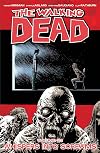
What could have easily ended up as a novel twist has instead turned into an interesting question of morality. Do you interfere with others because you believe their way of life is wrong, or do you simply let them be to hold the peace? At what point are you simply protecting someone because you care about them, and putting others at risk? What if people only suspect you're doing so, when indeed people they care about are in the wrong... but they refuse to see it?
You can't please everyone, show more but can you hold the peace?
This volume introduced us formally to the Whisperers, a group who believes the proper way to live in this post-apocalyptic world is to accept that the old way of life is dead. You can't rebuild, you can't make it better, so you join with the dead. They wear the skins of zombies to move among them, and live off the land, moving with the herds. Is it right? Is it wrong? Is living with the dead you will soon become a step too far?
Questions, questions, questions. And then young Carl Grimes gets involved. Carl's character development is some of the best in the series, and this volume truly shows his mixed upbringing with Rick and Negan, to a certain extent, coming to its full fruition. His development just fascinates me because it's so believable. He didn't have the luxury of childhood, and he's had to go through so much to stay alive. Here, as it previously has, these hardships come to haunt him...
What will happen next? show less
You can't please everyone, show more but can you hold the peace?
This volume introduced us formally to the Whisperers, a group who believes the proper way to live in this post-apocalyptic world is to accept that the old way of life is dead. You can't rebuild, you can't make it better, so you join with the dead. They wear the skins of zombies to move among them, and live off the land, moving with the herds. Is it right? Is it wrong? Is living with the dead you will soon become a step too far?
Questions, questions, questions. And then young Carl Grimes gets involved. Carl's character development is some of the best in the series, and this volume truly shows his mixed upbringing with Rick and Negan, to a certain extent, coming to its full fruition. His development just fascinates me because it's so believable. He didn't have the luxury of childhood, and he's had to go through so much to stay alive. Here, as it previously has, these hardships come to haunt him...
What will happen next? show less
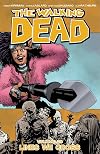
This is a housekeeping volume, mopping up after the last major story arc while setting up elements for the next, but damn if it wasn't one of my favorite volumes in a while. For so long, we've just seen the characters reacting in the moment to awful, sudden and violent acts. It was refreshing to actually see the characters processing the consequences of recent developments and interacting with one another in conversations aren't shouted while under attack from zombies or other enemies. It show more helped me remember that I actually like some of these people. I wouldn't mind another volume of the same before the next Big Bad comes down the road. show less
Lists
Awards


You May Also Like
Associated Authors
Statistics
- Works
- 20
- Also by
- 87
- Members
- 5,228
- Popularity
- #4,768
- Rating
- 4.1
- Reviews
- 184
- ISBNs
- 165
- Languages
- 11