
Steve Solomon
Author of Gardening When It Counts: Growing Food in Hard Times
About the Author
Steve Solomon is the author of several landmark gardening books including Gardening When it Counts and Growing Vegetables West of the Cascades. The founder of the Territorial Seed Company, he has been growing most of his familys food for over 35 years.
Works by Steve Solomon
Growing Vegetables West of the Cascades: The Complete Guide to Natural Gardening (1981) 305 copies, 1 review
Tagged
Common Knowledge
- Birthdate
- 1942
- Gender
- male
- Places of residence
- California, USA
Oregon, USA
Canada
Tasmania, Australia
Members
Reviews
Gardening When It Counts: Growing Food in Hard Times (Mother Earth News Wiser Living Series) by Steve Solomon
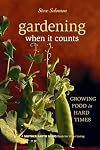
The purpose of this book is to ensure you get something to eat from your garden this year.“I assume you are reading my book because you seriously need to make a food garden, starting as soon as you can put some seeds or seedlings into the earth.I assume you can't afford costly mistakes and wasted efforts”.[pg 13] In a chart on page 16 and in the chapter where he gives growing advice by crop he lists vegetables by level of care needed. Advice is also given on a sliding scale – what to show more grow and how to grow it based on how dire your straits are.
Solomon initially subscribed to John Jeavon's Biointensive method, but now rejects it. While growing plants for seed trials for Territorial he found that wider spacing led to less irrigation, larger plants, and better taste.[pg 2] He rails against the Biointensive method off and on throughout the book (to the point that it gets a bit old, if you ask me). Now that I've read both books here's what I have to say: neither method is bad, but they can't both be right for your situation. If you have access to soil improvers and a steady water supply but only a postage stamp of land from which to feed your family, go Biointensive. If you have a whole lotta land but a restricted water supply (or you are utterly reliant on rain) and little or no soil improvers, go with Solomon's system of inducing the plants to get their own water.
The author is an organic gardener of the truest type: soil-obsessed. Logically, you can't get more out of your soil that you put into it, but when you start to really (pun intended) dig into soil science you come to see that you get out of it exactly what you put into it. Solomon makes a compelling case for perfectly balanced soil by explaining that if you're short on any one component your plants are limited by that weak link. He gives the image of a barrel. All your soil components are barrel staves and the barrel is full of liquid plant potential. If one component is deficient, that stave is shorter than the rest and the plant's potential pours out through this low spot and is lost – no matter how tall the other staves you can only grow your plant to the point that the short stave allows. Perfectly balanced soils also yield the most nutritious plants. This is another thing I've heard time and again, but Solomon drives it home with a factual example: records of physical exams from the WWII draft. “In Missouri, the prairie soils are far more fertile than the once thickly forested soils in the southeast of that state . . . Accordingly, approximately 200 men out of 1,000 examined from the northeast of Missouri were found to be unit for military service, while 400 young men out of 1,000 from the southeast of the state were unfit.”[pg 19]
Solomon espouses the important organic tenet that many plant diseases and insect pests act like predators “like a wolf pack bringing down a sick, old animal” [pg 217] and that healthy plants can fight off or survive most attacks, but also points out something I hadn't considered – you could be up against a veritable plague of treatment-resistant diseases or pests because of a nearby commercial grower's enormous monoculture. [pg 218] Nonetheless, fertilize before you fight and your plants may be able to resist the offensive without you having to go on the defensive.
I do see why Solomon is not universally loved – when he's not being cantankerous he can be contentious or just plain difficult. The watering chapter is quite complicated and involves a surprising amount of math. On page 23 he says “I suggest that you forget about pH . . . In fact, the whole concept of soil pH is controversial.” He gives harsh criticism of widely-held composting beliefs and practices in Chapter 7.
Despite disagreeing with Solomon on a few key points, this was one of those books where I feel like I'm being reeducated – every other paragraph I have an “Aha” moment. I have to have a lot of “why” with my “how” and this guy gives it. show less
Solomon initially subscribed to John Jeavon's Biointensive method, but now rejects it. While growing plants for seed trials for Territorial he found that wider spacing led to less irrigation, larger plants, and better taste.[pg 2] He rails against the Biointensive method off and on throughout the book (to the point that it gets a bit old, if you ask me). Now that I've read both books here's what I have to say: neither method is bad, but they can't both be right for your situation. If you have access to soil improvers and a steady water supply but only a postage stamp of land from which to feed your family, go Biointensive. If you have a whole lotta land but a restricted water supply (or you are utterly reliant on rain) and little or no soil improvers, go with Solomon's system of inducing the plants to get their own water.
The author is an organic gardener of the truest type: soil-obsessed. Logically, you can't get more out of your soil that you put into it, but when you start to really (pun intended) dig into soil science you come to see that you get out of it exactly what you put into it. Solomon makes a compelling case for perfectly balanced soil by explaining that if you're short on any one component your plants are limited by that weak link. He gives the image of a barrel. All your soil components are barrel staves and the barrel is full of liquid plant potential. If one component is deficient, that stave is shorter than the rest and the plant's potential pours out through this low spot and is lost – no matter how tall the other staves you can only grow your plant to the point that the short stave allows. Perfectly balanced soils also yield the most nutritious plants. This is another thing I've heard time and again, but Solomon drives it home with a factual example: records of physical exams from the WWII draft. “In Missouri, the prairie soils are far more fertile than the once thickly forested soils in the southeast of that state . . . Accordingly, approximately 200 men out of 1,000 examined from the northeast of Missouri were found to be unit for military service, while 400 young men out of 1,000 from the southeast of the state were unfit.”[pg 19]
Solomon espouses the important organic tenet that many plant diseases and insect pests act like predators “like a wolf pack bringing down a sick, old animal” [pg 217] and that healthy plants can fight off or survive most attacks, but also points out something I hadn't considered – you could be up against a veritable plague of treatment-resistant diseases or pests because of a nearby commercial grower's enormous monoculture. [pg 218] Nonetheless, fertilize before you fight and your plants may be able to resist the offensive without you having to go on the defensive.
I do see why Solomon is not universally loved – when he's not being cantankerous he can be contentious or just plain difficult. The watering chapter is quite complicated and involves a surprising amount of math. On page 23 he says “I suggest that you forget about pH . . . In fact, the whole concept of soil pH is controversial.” He gives harsh criticism of widely-held composting beliefs and practices in Chapter 7.
Despite disagreeing with Solomon on a few key points, this was one of those books where I feel like I'm being reeducated – every other paragraph I have an “Aha” moment. I have to have a lot of “why” with my “how” and this guy gives it. show less
Gardening When It Counts: Growing Food in Hard Times (Mother Earth News Wiser Living Series) by Steve Solomon
I love this book. I have heard Steve Solomon called arrogant but I did not find him to be that way. He is however a glass is half empty kind of guy. I appreciate it. So many gardening books are so unrealistic leading people to believe they can grow anything if they only do a simply X.Y and Z. It rarely works out that way. This is the best gardening book I have read in a while and I have read a lot.
I appreciate him breaking down vegetables into how demanding they are to grow. I love his show more recipe for COF or complete organic fertilizer. I can't wait to put more of his suggestions into practice. I definitely took his advice as a former owner of a seed company into practice with my most recent seed company choices. I will be pulling this book out over and over again. I can't recommend it enough. I will also not be doing any more French intensive gardening. He just confirmed what I had experienced over the years. I hate to say I just needed someone to point out that just because "everyone" says this is what is best doesn't mean it's so! show less
I appreciate him breaking down vegetables into how demanding they are to grow. I love his show more recipe for COF or complete organic fertilizer. I can't wait to put more of his suggestions into practice. I definitely took his advice as a former owner of a seed company into practice with my most recent seed company choices. I will be pulling this book out over and over again. I can't recommend it enough. I will also not be doing any more French intensive gardening. He just confirmed what I had experienced over the years. I hate to say I just needed someone to point out that just because "everyone" says this is what is best doesn't mean it's so! show less
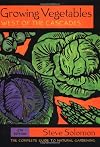
Reading this book, you can tell that Solomon is something of a personality, but the book is packed full of detailed information about growing vegetables in the Pacific Northwest.
I appreciate how this book takes a scientific approach to gardening. In addition to telling readers what to do, Solomon tells readers why they should do them. He clearly believes that readers should have the background information to adapt their gardening practices to their particular location and problems.
There are show more many reasons why it is useful to have a book that focuses specifically on growing vegetables west of the Cascades. Because of our climate, we face a combination of gardening challenges that differ from the rest of the country (although any given problem is likely to be experienced elsewhere).
Our frequent rain fall washes nutrients out of our soil, so we need to use different soil amendments and fertilizers than in other parts of the country. Our summers are not as long or as hot as elsewhere, so growing heat loving plants such as egg plants, melons, and tomatoes takes greater care. We do not have long freezes in the winter so pests that are killed by winter in the east survive over winter here. Solomon addresses all of these difficulties.
One way that Solomon's book differs from other gardening books is that he does not advocate intensive gardening practices. He believes that these gardening methods, if used too long, will deplete the nutrients in the soil and effect the growth of vegetables. Solomon instead encourages giving vegetables lots of space to grow so that you harvest fewer vegetables that are larger and healthier. He also strongly recommends rotating between garden plots periodically to allow the land to rest and recover from vegetable gardening.
If you are serious about vegetable gardening in the Pacific Northwest, this book is a must read. It is full of practical advice, educational background material, and some good ol' gardening philosophy. Now I cannot wait until I have enough room to start a real vegetable garden. =) show less
I appreciate how this book takes a scientific approach to gardening. In addition to telling readers what to do, Solomon tells readers why they should do them. He clearly believes that readers should have the background information to adapt their gardening practices to their particular location and problems.
There are show more many reasons why it is useful to have a book that focuses specifically on growing vegetables west of the Cascades. Because of our climate, we face a combination of gardening challenges that differ from the rest of the country (although any given problem is likely to be experienced elsewhere).
Our frequent rain fall washes nutrients out of our soil, so we need to use different soil amendments and fertilizers than in other parts of the country. Our summers are not as long or as hot as elsewhere, so growing heat loving plants such as egg plants, melons, and tomatoes takes greater care. We do not have long freezes in the winter so pests that are killed by winter in the east survive over winter here. Solomon addresses all of these difficulties.
One way that Solomon's book differs from other gardening books is that he does not advocate intensive gardening practices. He believes that these gardening methods, if used too long, will deplete the nutrients in the soil and effect the growth of vegetables. Solomon instead encourages giving vegetables lots of space to grow so that you harvest fewer vegetables that are larger and healthier. He also strongly recommends rotating between garden plots periodically to allow the land to rest and recover from vegetable gardening.
If you are serious about vegetable gardening in the Pacific Northwest, this book is a must read. It is full of practical advice, educational background material, and some good ol' gardening philosophy. Now I cannot wait until I have enough room to start a real vegetable garden. =) show less
Gardening When It Counts: Growing Food in Hard Times (Mother Earth News Wiser Living Series) by Steve Solomon

The first half of the book was so interesting I read it thru quickly, despite the many ways he challenges my gardening habits. He does support my lifelong approach of extensive gardening (tho I didn't know it's label before). I appreciate the concept of setting up a garden in a way that can be sustained no matter what happens to our energy supply, yet Solomon's approach is limited by his experiences in Oregon and Tasmania. For instance, he scoffs at mulching as being only for the handicapped show more and elderly but allows that it could be useful in areas with freezing winters and hot summers. That sounds like my home area in Wisconsin to me.
Not a stickler for the standard organic approaches, Solomon challenges us to look logically at plant and soil processes rather than following Everybody Else. No references are given for his nutrient cycling explanations, so I can only take his word that plants will not grow well without a precise 12:1 carbon:nitrogen ratio. I can't help but think that nature is a bit more complex--and forgiving--than that. He makes no mention of the role of fungi in releasing nutrients. I know that our modern gardens are primarily driven by bacterial processes, but I suspect that fungi will need to be re-established for long-term sustainability. He gives a clue in his suspicion that Native Americans mulched between their corn hills with forest leaves--a source of fungal input. I will just have to wait for someone else to write the definitive Vegetable Gardening With Fungi book.
The most informative chapters are those dealing with modern seed production and seed companies. Drawing heavily on his experience as former owner of Territorial Seed Company, he gives advice on purchasing reliable seeds. Apparently not all problems with growing vegetables can be blamed on home-grower error.
The last chapter goes over 41 of the most common vegetables, describing the best method for growing for high nutritional value and taste. This includes methods for saving your own seeds which is somewhat inconsisttent with his previous assertion that plant genetics deteriorate unless a large enough planting is made.
While his opening chapters state that irrigation will be too costly under energy and water shortages, he devotes a lengthy chapter to setting up an irrigation system. I suppose he wanted to be sure he passes on the best practices that he has gleaned over the years and didn't have any other book planned where it would make more sense to include. show less
Not a stickler for the standard organic approaches, Solomon challenges us to look logically at plant and soil processes rather than following Everybody Else. No references are given for his nutrient cycling explanations, so I can only take his word that plants will not grow well without a precise 12:1 carbon:nitrogen ratio. I can't help but think that nature is a bit more complex--and forgiving--than that. He makes no mention of the role of fungi in releasing nutrients. I know that our modern gardens are primarily driven by bacterial processes, but I suspect that fungi will need to be re-established for long-term sustainability. He gives a clue in his suspicion that Native Americans mulched between their corn hills with forest leaves--a source of fungal input. I will just have to wait for someone else to write the definitive Vegetable Gardening With Fungi book.
The most informative chapters are those dealing with modern seed production and seed companies. Drawing heavily on his experience as former owner of Territorial Seed Company, he gives advice on purchasing reliable seeds. Apparently not all problems with growing vegetables can be blamed on home-grower error.
The last chapter goes over 41 of the most common vegetables, describing the best method for growing for high nutritional value and taste. This includes methods for saving your own seeds which is somewhat inconsisttent with his previous assertion that plant genetics deteriorate unless a large enough planting is made.
While his opening chapters state that irrigation will be too costly under energy and water shortages, he devotes a lengthy chapter to setting up an irrigation system. I suppose he wanted to be sure he passes on the best practices that he has gleaned over the years and didn't have any other book planned where it would make more sense to include. show less
You May Also Like


Statistics
- Works
- 12
- Members
- 1,033
- Popularity
- #24,927
- Rating
- 4.2
- Reviews
- 16
- ISBNs
- 38