

David Weitzman
Author of Pharaoh's Boat
About the Author
David Weitzman lives in Covelo, California. He was awarded a medal at the Leipzig International Book Design Exhibition for his book Superpower
Works by David Weitzman
Tagged
Common Knowledge
- Birthdate
- 1936-11-24
- Gender
- male
- Education
- Art Institute of Chicago
Purdue University
Northwestern University
University of California, Berkeley - Occupations
- writer
illustrator - Nationality
- USA
- Birthplace
- Chicago, Illinois, USA
- Associated Place (for map)
- Illinois, USA
Members
Reviews

Worst Ikea order ever. More than 1,000 pieces and delivered over 4,500 years late.
But who knew pharaoh's were DIY boatwrights? ("Oh no, I'm dead. Better start building a boat. Now where did I leave the instructions?")
Proof that history is fun and archeology demands the world's most patient puzzlers.
But who knew pharaoh's were DIY boatwrights? ("Oh no, I'm dead. Better start building a boat. Now where did I leave the instructions?")
Proof that history is fun and archeology demands the world's most patient puzzlers.
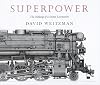
Manufacturing nostalgia. Author David Weitzman writes and illustrates in the tradition of David Macaulay and Eric Sloane; accounts of activities from the past with line drawings. In this case the activity is the design and construction of a Berkshire class steam locomotive at the Lima Locomotive Works in 1925. This is probably best described as a “young adult book”; after starting with a prologue with an engineer and fireman taking a Berkshire out of the Selkirk, New York yards of the show more Boston and Albany, the focal point character is Ben (we never learn his last name), 18 years old when he starts work at the plant as a helper; as such he gets to see all the elements of locomotive construction: design, pattern making, foundry, forge, machine shop, boiler shop, erection hall. The meticulous drawings of the machinery are most impressive and the explanations of how they worked are well handled; and there’s a sense of the satisfaction and even joy that the workers get out contribution to the production of an impressive machine.
Still nostalgia isn’t what it used to be. Ben never meets a company executive (although he does have brief encounters with the head mechanical engineer and the plant manager). There are no women in the plant – the only woman in the whole book is Ben’s mom, who isn’t even named, and no blacks (although plenty of Serbs and Italians and other ethnics). There’s no mention of a worker’s union at the plant, and no workers with missing fingers or patched eyes from industrial accidents (and OSHA would go ballistic at seeing the lack of safety equipment in the illustrations). To be fair, Weitzman is being historically accurate; that’s the way things were in 1925.
And alas, there’s the whole yearning for the “America that used to build things”. I did an environmental site assessment on a metal works in Englewood, Colorado; precision machine tools were rusting under the sky in a now unroofed building and the rotary furnaces had been left with their last batch of steel frozen solid inside. But the reality is that sort of work is going the way of flint knapping and harness making and gas manufacture and probably soon coal mining and truck driving. Sad, perhaps, but inevitable. show less
Still nostalgia isn’t what it used to be. Ben never meets a company executive (although he does have brief encounters with the head mechanical engineer and the plant manager). There are no women in the plant – the only woman in the whole book is Ben’s mom, who isn’t even named, and no blacks (although plenty of Serbs and Italians and other ethnics). There’s no mention of a worker’s union at the plant, and no workers with missing fingers or patched eyes from industrial accidents (and OSHA would go ballistic at seeing the lack of safety equipment in the illustrations). To be fair, Weitzman is being historically accurate; that’s the way things were in 1925.
And alas, there’s the whole yearning for the “America that used to build things”. I did an environmental site assessment on a metal works in Englewood, Colorado; precision machine tools were rusting under the sky in a now unroofed building and the rotary furnaces had been left with their last batch of steel frozen solid inside. But the reality is that sort of work is going the way of flint knapping and harness making and gas manufacture and probably soon coal mining and truck driving. Sad, perhaps, but inevitable. show less
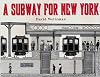
A fascinating introduction to the building of the New York City subway system in the first decade of the 20th century. The text is informative, but the cross-section drawings of the construction techniques and final product are what will keep you lingering over this book.
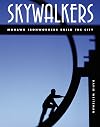
My wife and I enjoyed reading together the picture book To Walk the Sky: How Iroquois Steelworkers Helped Build Towering Cities by Patricia Morris Buckley and E. B. Lewis. She wanted a little more information about the subject, so she sought out this book at the library. And since it was in the house already, I read it too after her.
The prose is a little dry at times, but I appreciated learning all the information packed into this slim volume.
FOR REFERENCE:
Contents: Introduction -- 1. People show more of the Flint -- 2. A Bridge to the Future -- 3. Connections: Wood, Iron, and Steel -- 4. The Bridge at Quebec -- 5. Booming Out -- 6. Skyscrapers -- 7. Mohawk Myths and Realities -- Author's Note -- Glossary -- Sources -- Excerpt Notes -- Photo Credits/Acknowledgments -- Index show less
The prose is a little dry at times, but I appreciated learning all the information packed into this slim volume.
FOR REFERENCE:
Contents: Introduction -- 1. People show more of the Flint -- 2. A Bridge to the Future -- 3. Connections: Wood, Iron, and Steel -- 4. The Bridge at Quebec -- 5. Booming Out -- 6. Skyscrapers -- 7. Mohawk Myths and Realities -- Author's Note -- Glossary -- Sources -- Excerpt Notes -- Photo Credits/Acknowledgments -- Index show less
Lists
Awards


You May Also Like


Associated Authors
Statistics
- Works
- 23
- Members
- 1,351
- Popularity
- #19,035
- Rating
- 3.8
- Reviews
- 40
- ISBNs
- 40
- Languages
- 1