
Garry Leach
Author of Miracleman Book One: A Dream of Flying
Works by Garry Leach
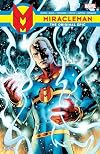
Miracleman [2014] #2 — Illustrator — 4 copies
A1 #00 2 copies
Associated Works
Miracleman [2014] #16 — Cover artist, some editions — 3 copies
Judge Dredd Vol. 1, No. 16 — Illustrator — 1 copy
Tagged
Common Knowledge
There is no Common Knowledge data for this author yet. You can help.
Members
Reviews

Many years ago now, I got interested in Alan Moore's 1980s comic Miracleman (a.k.a. Marvelman) as part of a project about superheroes, violence, and utopia; analysis of the series by Peter Paik in his excellent monograph From Utopia to Apocalypse made it sound very relevant. Unfortunately, rights issues meant the book was long out-of-print, and copies of the collected editions so rare, I couldn't get any via interlibrary loan except for the Neil Gaiman–penned follow-up. But, some years show more later, Marvel acquired and sorted out the rights, eventually reprinting Moore's run in a series of three deluxe hardcovers (with new coloring and lettering) that I picked up as they came out, and some years after that, that I am finally getting around to reading.
Clearly one of the things Alan Moore did to the superhero genre that he came along and asked, "What if superheroes were real?" Now, he was not the first to do this, nor the last; I would argue that a great many important works of superhero fiction, at least as early as Amazing Fantasy #15, were premised on this question. But with his work on Watchmen, Moore was the one who asked this question for the 1980s. In the first book of Miracleman, A Dream of Flying, Moore asks the same question in a different way. While Watchmen looks at what kind of people would do something like become a superhero, and what real people would do with that kind of power, and what the real effects of using violence to change the world would be (a theme Moore comes back to a lot; see also V for Vendetta), A Dream of Flying comes at it from the opposite direction.
Instead of taking heroic figures and making them sordid and realistic, A Dream of Flying asks how could a heroic figure exist in a real world. Back in the 1950s and '60s, Mick Anglo wrote the adventures of Marvelman and his friends; Moore imagines that those stories sort of really happened—in the head of Michael Moran and his friends. Moran was abducted for an experiment as a child by a depraved scientist, who used alien technology to give Moran superpowers and held him in a dreamlike state, pumping crudely written superhero stories into his brain to develop him into the weapon he wanted. Eventually things went horribly wrong, Moran lost him memories, and by the 1980s was a fortysomething adult with no idea he had a superpowered alter ego. Miracleman is, both in story and in reality, based on Captain Marvel, and Moore manages to come up with reasonable science fiction explanations for a lot of what happens in Captain Marvel stories; I liked the explanation for body-swapping a lot.
A Dream of Flying begins with Michael's slow rediscovery of his true self, and then his discovery of how he was created and what happened to his friends. It's Alan Moore at the top of his craft, and he has strong artistic collaborators in Garry Leach and Alan Davis. The best parts usually center on Moore's appliance of grounded realism to the character, both in terms of psychology and in terms of sci-fi explanations. This kind of story has been told a lot since, but Moore is very good at it. I particularly liked the stuff about Michael's wife.
In addition to the eleven chapters of A Dream of Flying (most about seven pages), this volume includes a prologue retelling a real Mick Anglo Marvelman tale in Moore's idiom, a flashforward story (set during Book Three, I think) about Miracleman and the Warpsmiths of Phaidon doing some time travel, and two side stories about the Warpsmiths. The first of these is fun, and the flashforward is fine if a bit pointless. The Warpsmith stuff I found largely inscrutable, but I guess I'm glad its in here for completeness's sake.
There's also about sixty pages of "behind-the-scenes" stuff to pad this book out to a marketable length. Most of it is pretty interesting: contemporary house ads, art try-outs, and the like. Original artwork and variant covers are less interesting, but I'm sure some people appreciate this stuff.
I would have, however, preferred a recoloring done in a more genuine 1980s style, rather than the contemporary approach Steve Oliff took.
Overall, this is an interesting start to the Miracleman saga, and highly recommended if you are interested in Alan Moore and/or the history of the superhero genre. show less
Clearly one of the things Alan Moore did to the superhero genre that he came along and asked, "What if superheroes were real?" Now, he was not the first to do this, nor the last; I would argue that a great many important works of superhero fiction, at least as early as Amazing Fantasy #15, were premised on this question. But with his work on Watchmen, Moore was the one who asked this question for the 1980s. In the first book of Miracleman, A Dream of Flying, Moore asks the same question in a different way. While Watchmen looks at what kind of people would do something like become a superhero, and what real people would do with that kind of power, and what the real effects of using violence to change the world would be (a theme Moore comes back to a lot; see also V for Vendetta), A Dream of Flying comes at it from the opposite direction.
Instead of taking heroic figures and making them sordid and realistic, A Dream of Flying asks how could a heroic figure exist in a real world. Back in the 1950s and '60s, Mick Anglo wrote the adventures of Marvelman and his friends; Moore imagines that those stories sort of really happened—in the head of Michael Moran and his friends. Moran was abducted for an experiment as a child by a depraved scientist, who used alien technology to give Moran superpowers and held him in a dreamlike state, pumping crudely written superhero stories into his brain to develop him into the weapon he wanted. Eventually things went horribly wrong, Moran lost him memories, and by the 1980s was a fortysomething adult with no idea he had a superpowered alter ego. Miracleman is, both in story and in reality, based on Captain Marvel, and Moore manages to come up with reasonable science fiction explanations for a lot of what happens in Captain Marvel stories; I liked the explanation for body-swapping a lot.
A Dream of Flying begins with Michael's slow rediscovery of his true self, and then his discovery of how he was created and what happened to his friends. It's Alan Moore at the top of his craft, and he has strong artistic collaborators in Garry Leach and Alan Davis. The best parts usually center on Moore's appliance of grounded realism to the character, both in terms of psychology and in terms of sci-fi explanations. This kind of story has been told a lot since, but Moore is very good at it. I particularly liked the stuff about Michael's wife.
In addition to the eleven chapters of A Dream of Flying (most about seven pages), this volume includes a prologue retelling a real Mick Anglo Marvelman tale in Moore's idiom, a flashforward story (set during Book Three, I think) about Miracleman and the Warpsmiths of Phaidon doing some time travel, and two side stories about the Warpsmiths. The first of these is fun, and the flashforward is fine if a bit pointless. The Warpsmith stuff I found largely inscrutable, but I guess I'm glad its in here for completeness's sake.
There's also about sixty pages of "behind-the-scenes" stuff to pad this book out to a marketable length. Most of it is pretty interesting: contemporary house ads, art try-outs, and the like. Original artwork and variant covers are less interesting, but I'm sure some people appreciate this stuff.
I would have, however, preferred a recoloring done in a more genuine 1980s style, rather than the contemporary approach Steve Oliff took.
Overall, this is an interesting start to the Miracleman saga, and highly recommended if you are interested in Alan Moore and/or the history of the superhero genre. show less
Ah, The Original Writer...I mean...Alan Moore. I think he's trying to be as spiteful and tempermental as Harlan Ellison, but no one can out-Harlan Harlan.
I have to admit, I have a love/hate relationship with Moore, and it typically rears both heads within the same series.
- Watchmen? Loved most of it, hated the ending.
- From Hell? Well researched, not bad, but Moore truly defecates on the mattress at the end. Completely ruined it.
- League of Extraordinary Gentlemen? Absolutely loved show more this...until Moore decided to test the patience of his readers by getting more and more ridiculous.
I could go on, but you get the drift. It feels like Moore starts out with a great idea, and is gung-ho, pedal to the medal with writing like we've never seen before, being taken places we've never been before...
...and then...
...and then it feels like Moore either thinks, something along the lines of, "well, I got away with all of that, let's see exactly how much they'll take before the project falls apart" or else it's simply the case of, "no idea how to end this, so let's just through in some unexplained/really bizarre/left field stuff and walk away from the smoking ruins."
This starts out very well. It doesn't bring comics into a more dark, adult sphere of storytelling, it takes the entire genre and pretty much upends it. Which is good. And then Moore unleashes the darkest, unholiest hell imaginable with a truly unrepentant villain. Also good, though it's something can only be done occasionally.
And then, Moore gets weird. The Warpsmiths. The weird talking aliens. The long long long long long long long screeds of quasi-poetic word jumbles that really add nothing to the plot, but they fill pages.
And then Moore decides to paint in his new world as gods would remake it, which goes really hard with the heavy-handedness.
I guess what I'm saying is, in the beginning, Moore is there to show you his chops, and to entertain the heck out of you. But then he turns into that homeowner who's held a party but now decides he wants everyone out so he starts acting obnoxious and petty and loses all interest in entertaining you. Instead, he'll just annoy you until you leave.
So, yes, this was absolutely the game-changer everyone says it was, but then Moore...well, I guess the best way to say it is, he got Moored to the idea that he could do anything he wanted and we'd love it.
Some probably even do, but not this kid.
Four stars for the game-changing bits. And one star off for all the bits I had to basically skip over because they were dumb. show less
I have to admit, I have a love/hate relationship with Moore, and it typically rears both heads within the same series.
- Watchmen? Loved most of it, hated the ending.
- From Hell? Well researched, not bad, but Moore truly defecates on the mattress at the end. Completely ruined it.
- League of Extraordinary Gentlemen? Absolutely loved show more this...until Moore decided to test the patience of his readers by getting more and more ridiculous.
I could go on, but you get the drift. It feels like Moore starts out with a great idea, and is gung-ho, pedal to the medal with writing like we've never seen before, being taken places we've never been before...
...and then...
...and then it feels like Moore either thinks, something along the lines of, "well, I got away with all of that, let's see exactly how much they'll take before the project falls apart" or else it's simply the case of, "no idea how to end this, so let's just through in some unexplained/really bizarre/left field stuff and walk away from the smoking ruins."
This starts out very well. It doesn't bring comics into a more dark, adult sphere of storytelling, it takes the entire genre and pretty much upends it. Which is good. And then Moore unleashes the darkest, unholiest hell imaginable with a truly unrepentant villain. Also good, though it's something can only be done occasionally.
And then, Moore gets weird. The Warpsmiths. The weird talking aliens. The long long long long long long long screeds of quasi-poetic word jumbles that really add nothing to the plot, but they fill pages.
And then Moore decides to paint in his new world as gods would remake it, which goes really hard with the heavy-handedness.
I guess what I'm saying is, in the beginning, Moore is there to show you his chops, and to entertain the heck out of you. But then he turns into that homeowner who's held a party but now decides he wants everyone out so he starts acting obnoxious and petty and loses all interest in entertaining you. Instead, he'll just annoy you until you leave.
So, yes, this was absolutely the game-changer everyone says it was, but then Moore...well, I guess the best way to say it is, he got Moored to the idea that he could do anything he wanted and we'd love it.
Some probably even do, but not this kid.
Four stars for the game-changing bits. And one star off for all the bits I had to basically skip over because they were dumb. show less
A reread in anticipation of finally reading the rest of the Neil Gaiman story I've been waiting on since 1993 after reading Miracleman #24. I didn't know at the time that the finished material for issue #25 would not show up in comic book stores for decades, mired in a twisted and frustrating legal battle over IP ownership.
I'd forgotten how short the original serialized chapters were, causing the plot to unfold so quickly and abruptly. Still, it's amazing to take this in again and remember show more how exciting it was to see everything you thought you knew about comic books permanently changed in real time. So many shocking turns, so many indelible lines and images.
I have all the Eclipse issues and some of the original Warrior magazines, but it was easier to get this new collection from my local library instead of moving around all those boxes in my basement looking for them in the many boxes in which they are probably scattered. I was sorry to see this collection cuts out all but one of the Mick Anglo stories that were embedded in the story in the original comics -- though keeping the framing sequences that surrounded them -- so it's not a complete collection, but good enough.
A PORTION OF A REVIEW I WROTE IN THE 1990s:
One of Eclipse's shining jewels was the MIRACLEMAN comic. Back in the eighties, writer Alan Moore revived the 1950's British comic book character Marvelman for a British magazine called WARRIOR. Marvelman was a transatlantic rip-off of our own Captain Marvel (the SHAZAM! guy, not the Kree warrior). Eclipse Comics brought Marvelman to the states and rechristened him Miracleman to avoid a lawsuit with Marvel Comics. We were thus treated to one of Alan Moore's deconstructions of the superhero mythology. Miracleman was no Superman. In MIRACLEMAN, things got a bit bloody when a couple of villains set out to achieve world domination. Then things got bloody unpredictable, when the hero actually attained world domination himself. At that point, Alan Moore left the book in the hands of a minor writer named Neil Gaiman. show less
I'd forgotten how short the original serialized chapters were, causing the plot to unfold so quickly and abruptly. Still, it's amazing to take this in again and remember show more how exciting it was to see everything you thought you knew about comic books permanently changed in real time. So many shocking turns, so many indelible lines and images.
I have all the Eclipse issues and some of the original Warrior magazines, but it was easier to get this new collection from my local library instead of moving around all those boxes in my basement looking for them in the many boxes in which they are probably scattered. I was sorry to see this collection cuts out all but one of the Mick Anglo stories that were embedded in the story in the original comics -- though keeping the framing sequences that surrounded them -- so it's not a complete collection, but good enough.
A PORTION OF A REVIEW I WROTE IN THE 1990s:
One of Eclipse's shining jewels was the MIRACLEMAN comic. Back in the eighties, writer Alan Moore revived the 1950's British comic book character Marvelman for a British magazine called WARRIOR. Marvelman was a transatlantic rip-off of our own Captain Marvel (the SHAZAM! guy, not the Kree warrior). Eclipse Comics brought Marvelman to the states and rechristened him Miracleman to avoid a lawsuit with Marvel Comics. We were thus treated to one of Alan Moore's deconstructions of the superhero mythology. Miracleman was no Superman. In MIRACLEMAN, things got a bit bloody when a couple of villains set out to achieve world domination. Then things got bloody unpredictable, when the hero actually attained world domination himself. At that point, Alan Moore left the book in the hands of a minor writer named Neil Gaiman. show less

Okay, here's where I commit myself to stop picking up these Zuiker Press books about heavy teen topics. They are nothing but horribly written treacly melodramas orchestrated by co-writer Anthony E. Zuiker, creator and producer of various CSI spinoffs.
This one has Sophia Recca getting all spiritual and reversing child/parent roles as she makes her divorced parents into some ideal fractured but whole family. It's like a weird take on Parent Trap with an added angel obsession.
The most useful show more part of the book was a page of divorce advice from a lawyer named Denis Scinta. If only the rest of the book were as reasonable. show less
This one has Sophia Recca getting all spiritual and reversing child/parent roles as she makes her divorced parents into some ideal fractured but whole family. It's like a weird take on Parent Trap with an added angel obsession.
The most useful show more part of the book was a page of divorce advice from a lawyer named Denis Scinta. If only the rest of the book were as reasonable. show less
Lists
You May Also Like
Associated Authors
Statistics
- Works
- 20
- Also by
- 12
- Members
- 979
- Popularity
- #26,315
- Rating
- 4.0
- Reviews
- 21
- ISBNs
- 33
- Languages
- 5