

Damian Flanagan
Author of Yukio Mishima (Critical Lives)
Works by Damian Flanagan
Associated Works
Tagged
Common Knowledge
There is no Common Knowledge data for this author yet. You can help.
Members
Reviews
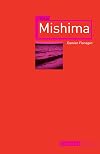
This relatively recent biography (2014) of Yukio Mishima has the virtue of concentrating on the person and the social and political conditions of his time rather than on his literary merits. The works are, of course, all covered and placed in their context but it is the person who matters.
Naturally the book has to start and end with his quixotic failed coup and 'seppuku' in 1970. This act has defined his legend (or is it myth?) ever since - of which Paul Shrader's excellent 1985 film show more 'Mishima: A Life in Four Chapters' with Philip Glass's superb music is the quintessence.
And that is the point. The film was the quintessence in the West and, while respected and honoured as a literary figure in Japan, the 'heroic' aspect is one that appeals to a certain international masculine Western desire for meaning more than it does to the Japanese themselves.
Part of the secret to Mishima lies in his complexity. He was a mass of paradoxes and it is these that make him so fascinating. The book is excellent at showing that the literary 'mask' was never quite the reality of the man who was, in some ways, more 'ordinary' than we might expect.
Japanese society and culture was Westernised to a far greater extent than we in the West often appreciate. Its literature (Tanizaki springs to mind) had long sought to square traditional forms with imported ideas from the decadent era and such writers as Dostoeveski.
Flanagan brings out the degree to which Mishima was very much part of the cultural West, He was well travelled, aware of international current trends, concerned to be respected in Western literary circles and, to the end, was never a 'fascist'.
Even at the end, his Emperor-worship was allied to overt support for liberal democracy and to the American alliance as barrier to communism. In some respects, he was a neo-conservative 'avant la lettre'. Fascists who appropriate him have got it rather wrong.
What he did have was a sophisticated Heideggerian vision of what the Emperor should be as an idea (an idea as much derivative of European as Japanese thought) regardless of what he actually was, something many Catholics understand when they speak of the Pope.
He wanted a sense of dynamism around him (his criticism of young radical Left activists was that they had proved men of straw when it came to action in the streets) although the more one looks into him, the more one realises that he had become more than a little unhinged by the end.
But let's go back to the beginning of the story and understand that Mishima, possibly because of his early hot-house upbringing, was and knew himself to be dysfunctional. He wrote to make himself functional through an imaginative world not always connected with his real self in the world.
Much of his implicit autobiography in his work is invented. His stories tell a version of his reality and not the reality of his actual conduct in the world as he drove himself hard for literary and social success in a world of high cultural Tokyo 'snobbisme'.
In fact, the authenticity of Mishima is hard to find before he discovers his invented militaristic side and even that is clearly a form of performance art - made authentic because (I believe) he placed himself in a position where he had to go through with something or be 'shamed'.
He is clearly more bisexual than homosexual and yet he postures in literary terms as exclusively homosexual. He postures as traditionalist and yet his home life and connections were modelled on Western modern forms.
A constant theme is his own sexual impotence or sense of impotence and the confusion this creates. This impotence is probably not unimportant when it comes to his final act. It is (I believe) central to an underlying depression that must ultimately express itself in 'action' in the world.
Flanagan emphasises the notion of time as an important way into understanding Mishima with macro-time (social change and career) being constantly calibrated with micro-time (personal chronological obsessions) but somehow he is not entirely persuasive.
Deeper than this, Flanagan presents a man who is fundamentally depressed, insecure and ashamed of himself and who seeks resolution through performance - being the literary lion, acting, being photographed, performing, being, in fact, quintessentially, inauthentic.
What happened in 1970 is perhaps best understood as an exceptionally dramatic mid-life crisis that builds up to a crescendo as a man who knows he is inauthentic (the wearer of 'masks') seizes hold of an invented authenticity with some form of coherence and then just 'goes for it'.
This crisis appears to have started with his fascination with hopeless Japanese pre-Meiji Japanese rebels in the mid-1960s and resulted in a parallel existence in which he ran an intense 'literary lion' life alongside a deepening engagement with a form of existential historicism.
Flanagan points out that he poured his final energies into the four volume 'Sea of Fertility' series of novels which he finished precisely before the events of November 1970 and into an increasingly cultic military unit to the point where something had to happen to resolve his crisis.
Japan is famously a shame and not a guilt society. Mishima had by this time spent years playing a particular role to cover up an inherent hollowness of the soul. He had reached the point where he would have to reinvent himself again or go through with the play he had created for himself.
Unfortunately, he had trapped himself into a fantasy of death that had existed in some form since he was an adolescent. Unforgivably in fact, he had created a cult to pander to his narcissism that would kill another young man who believed in him. Perhaps he was just exhausted with life.
We might say that Mishima, presented in Western right wing circles as heroic, was, in fact, a narcissistic and weak man who lacked the self-knowledge to distinguish reality from fantasy and who trapped himself into suicide instead of facing life head on and seeking help.
Yet none of this detracts from his genius, true genius. The genius lies not only in his enormously prolific and fascinating literary output but precisely in Mishima as performance artist, narcissistically creating something almost greater than a person - a legend.
And of what does this legend consist of beyond the writings and the easily forgotten 'literary lion' aspects of the case? It consists of a man constructing for himself, in a meaningless world (philosophically speaking), an existentially viable mythological role that exists beyond his time.
When Mishima distinguished between the really existing Emperor (the 'sein' Emperor) and what the Emperor should be (the 'sollen' Emperor) and spoke at different times of defending and assassinating the Emperor, he was speaking of a profound existential masculine drive.
Of course, Japanese samurai culture permitted relatively recent historic models for such a mentality whereas each heroic Westerner (since the death of paganism) had to invent this mentality for himself and usually in some attenuated form. Yet all masculine cultures understand this mentality.
There was what Mishima was (or what you and I are as men) and what he should be (and what we should be) beyond the social ties imposed by contigent historical conditions. To defend and assassinate the Emperor is to say that the man who is Emperor is irrelevant to the Idea.
This is not a political mentality we can understand in the age of the House of Windsor when few if any of the British feel more than an distant allegiance to the Monarchy which we now see in terms of the high standing of a particular person - the current Queen.
However, we can understand it as an emotional drive that expresses itself, in some men, as a dissatisfaction with the socially constructed self, misses the structures of an ordered society and hankers for the do-or-die semi-suicidal mentality of the resistance or war hero.
It is the very essence of the mid-life crisis. Mishima merely did it in more style than most at the age of 45. His was an extreme expression of the death instinct where social obligation and autonomous self meet - and of the inherent implied sociopathy central to a masculinity of action.
From this perspective, he fascinates because he actually went and did what subconsciously many men feel like might like to do but instead sublimate themselves in action movies, business competition, competitive games and reading about the mafia.
It is as if this flawed and inauthentic (for the first forty years of his life) man escaped boredom and obligation into death and legend. We can choose to see this as running away from depression and himself or running towards meaning and becoming a burst of flame and light according to taste.
Flanagan does not represent all there is to be said on Mishima but he is well worth reading for providing a dense but very readable account of the 'reality' of a man who chose to spend much of his life in a state of fantasy and who made it work for him until the very end.
At the end, he was probably creatively exhausted. Whoever had been constructed out of a dysfunctional childhood in an unstable wartime Japan had said all it needed to say by 1970 and an artistic death was probably the only way out.
Mishima is explained better and not diminished by this fine analytical biography. Readers will also learn a great deal about Japan's political and cultural life. Recommended. show less
Naturally the book has to start and end with his quixotic failed coup and 'seppuku' in 1970. This act has defined his legend (or is it myth?) ever since - of which Paul Shrader's excellent 1985 film show more 'Mishima: A Life in Four Chapters' with Philip Glass's superb music is the quintessence.
And that is the point. The film was the quintessence in the West and, while respected and honoured as a literary figure in Japan, the 'heroic' aspect is one that appeals to a certain international masculine Western desire for meaning more than it does to the Japanese themselves.
Part of the secret to Mishima lies in his complexity. He was a mass of paradoxes and it is these that make him so fascinating. The book is excellent at showing that the literary 'mask' was never quite the reality of the man who was, in some ways, more 'ordinary' than we might expect.
Japanese society and culture was Westernised to a far greater extent than we in the West often appreciate. Its literature (Tanizaki springs to mind) had long sought to square traditional forms with imported ideas from the decadent era and such writers as Dostoeveski.
Flanagan brings out the degree to which Mishima was very much part of the cultural West, He was well travelled, aware of international current trends, concerned to be respected in Western literary circles and, to the end, was never a 'fascist'.
Even at the end, his Emperor-worship was allied to overt support for liberal democracy and to the American alliance as barrier to communism. In some respects, he was a neo-conservative 'avant la lettre'. Fascists who appropriate him have got it rather wrong.
What he did have was a sophisticated Heideggerian vision of what the Emperor should be as an idea (an idea as much derivative of European as Japanese thought) regardless of what he actually was, something many Catholics understand when they speak of the Pope.
He wanted a sense of dynamism around him (his criticism of young radical Left activists was that they had proved men of straw when it came to action in the streets) although the more one looks into him, the more one realises that he had become more than a little unhinged by the end.
But let's go back to the beginning of the story and understand that Mishima, possibly because of his early hot-house upbringing, was and knew himself to be dysfunctional. He wrote to make himself functional through an imaginative world not always connected with his real self in the world.
Much of his implicit autobiography in his work is invented. His stories tell a version of his reality and not the reality of his actual conduct in the world as he drove himself hard for literary and social success in a world of high cultural Tokyo 'snobbisme'.
In fact, the authenticity of Mishima is hard to find before he discovers his invented militaristic side and even that is clearly a form of performance art - made authentic because (I believe) he placed himself in a position where he had to go through with something or be 'shamed'.
He is clearly more bisexual than homosexual and yet he postures in literary terms as exclusively homosexual. He postures as traditionalist and yet his home life and connections were modelled on Western modern forms.
A constant theme is his own sexual impotence or sense of impotence and the confusion this creates. This impotence is probably not unimportant when it comes to his final act. It is (I believe) central to an underlying depression that must ultimately express itself in 'action' in the world.
Flanagan emphasises the notion of time as an important way into understanding Mishima with macro-time (social change and career) being constantly calibrated with micro-time (personal chronological obsessions) but somehow he is not entirely persuasive.
Deeper than this, Flanagan presents a man who is fundamentally depressed, insecure and ashamed of himself and who seeks resolution through performance - being the literary lion, acting, being photographed, performing, being, in fact, quintessentially, inauthentic.
What happened in 1970 is perhaps best understood as an exceptionally dramatic mid-life crisis that builds up to a crescendo as a man who knows he is inauthentic (the wearer of 'masks') seizes hold of an invented authenticity with some form of coherence and then just 'goes for it'.
This crisis appears to have started with his fascination with hopeless Japanese pre-Meiji Japanese rebels in the mid-1960s and resulted in a parallel existence in which he ran an intense 'literary lion' life alongside a deepening engagement with a form of existential historicism.
Flanagan points out that he poured his final energies into the four volume 'Sea of Fertility' series of novels which he finished precisely before the events of November 1970 and into an increasingly cultic military unit to the point where something had to happen to resolve his crisis.
Japan is famously a shame and not a guilt society. Mishima had by this time spent years playing a particular role to cover up an inherent hollowness of the soul. He had reached the point where he would have to reinvent himself again or go through with the play he had created for himself.
Unfortunately, he had trapped himself into a fantasy of death that had existed in some form since he was an adolescent. Unforgivably in fact, he had created a cult to pander to his narcissism that would kill another young man who believed in him. Perhaps he was just exhausted with life.
We might say that Mishima, presented in Western right wing circles as heroic, was, in fact, a narcissistic and weak man who lacked the self-knowledge to distinguish reality from fantasy and who trapped himself into suicide instead of facing life head on and seeking help.
Yet none of this detracts from his genius, true genius. The genius lies not only in his enormously prolific and fascinating literary output but precisely in Mishima as performance artist, narcissistically creating something almost greater than a person - a legend.
And of what does this legend consist of beyond the writings and the easily forgotten 'literary lion' aspects of the case? It consists of a man constructing for himself, in a meaningless world (philosophically speaking), an existentially viable mythological role that exists beyond his time.
When Mishima distinguished between the really existing Emperor (the 'sein' Emperor) and what the Emperor should be (the 'sollen' Emperor) and spoke at different times of defending and assassinating the Emperor, he was speaking of a profound existential masculine drive.
Of course, Japanese samurai culture permitted relatively recent historic models for such a mentality whereas each heroic Westerner (since the death of paganism) had to invent this mentality for himself and usually in some attenuated form. Yet all masculine cultures understand this mentality.
There was what Mishima was (or what you and I are as men) and what he should be (and what we should be) beyond the social ties imposed by contigent historical conditions. To defend and assassinate the Emperor is to say that the man who is Emperor is irrelevant to the Idea.
This is not a political mentality we can understand in the age of the House of Windsor when few if any of the British feel more than an distant allegiance to the Monarchy which we now see in terms of the high standing of a particular person - the current Queen.
However, we can understand it as an emotional drive that expresses itself, in some men, as a dissatisfaction with the socially constructed self, misses the structures of an ordered society and hankers for the do-or-die semi-suicidal mentality of the resistance or war hero.
It is the very essence of the mid-life crisis. Mishima merely did it in more style than most at the age of 45. His was an extreme expression of the death instinct where social obligation and autonomous self meet - and of the inherent implied sociopathy central to a masculinity of action.
From this perspective, he fascinates because he actually went and did what subconsciously many men feel like might like to do but instead sublimate themselves in action movies, business competition, competitive games and reading about the mafia.
It is as if this flawed and inauthentic (for the first forty years of his life) man escaped boredom and obligation into death and legend. We can choose to see this as running away from depression and himself or running towards meaning and becoming a burst of flame and light according to taste.
Flanagan does not represent all there is to be said on Mishima but he is well worth reading for providing a dense but very readable account of the 'reality' of a man who chose to spend much of his life in a state of fantasy and who made it work for him until the very end.
At the end, he was probably creatively exhausted. Whoever had been constructed out of a dysfunctional childhood in an unstable wartime Japan had said all it needed to say by 1970 and an artistic death was probably the only way out.
Mishima is explained better and not diminished by this fine analytical biography. Readers will also learn a great deal about Japan's political and cultural life. Recommended. show less
Statistics
- Works
- 2
- Also by
- 3
- Members
- 18
- Popularity
- #630,788
- Rating
- 3.8
- Reviews
- 1
- ISBNs
- 3