
Sandra Hope
Author of Flashpoint
Series
Works by Sandra Hope
Justice League (2016-) #24 2 copies
Associated Works
9-11: The World's Finest Comic Book Writers & Artists Tell Stories to Remember (2002) — Illustrator — 256 copies, 1 review
Tagged
Common Knowledge
There is no Common Knowledge data for this author yet. You can help.
Members
Reviews
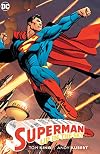
At first , this reminded me a lot of Brian Michael Bendis' Batman: Universe, as it is basically a Superman team-up book, with Supes bouncing around the universe on a quest. But King's short stories really got to the heart of Superman as a character and the closing chapters really resonated for me emotionally.
This is probably the best Superman book I've read in decades.
This is probably the best Superman book I've read in decades.

Access a version of the below that includes illustrations on my blog.
After five thick volumes of build-up-- not to mention my own extradiegetic knowledge of how this book changed DC's continuity-- did Flashpoint live up to it all? Not really. The Flash wakes up in a world that I already knew the basics of, having read all the World of Flashpoint tie-ins (the Wonder Woman and Batman ones were probably the most relevant in the end). He spends a lot of time being baffled why he doesn't have show more powers and why his mom is still alive, he goes to talk to Batman, he electrocutes himself, he blames Professor Zoom the Reverse Flash for it all but discovers it's his own work, and he fixes his mistake. Given the large, complicated world the tie-ins introduced, the events of the main story are distressingly straightforward. (And some of them never really tied in at all, like Kid Flash's role in the Flash volume.)
There's some potential in the idea that the Flash blames his enemy for messing with time, but it turns out to be his own work, but Geoff Johns doesn't really exploit that here. It should send your world shuddering to a halt, instead it just feels like a minor road bump on the way to the climax. That Barry Allen, not just the fastest man alive but often the nicest, could create a world so horrific seems worth delving into, but Johns doesn't. That he did it in his sleep, apparently, is a big copout. There's a good story about parents and expectations somewhere in here, given that the biggest character other than the Flash is a version of Batman who is a Thomas Wayne that watched his son die, but Johns doesn't do anything with these themes or ideas. Even at five issues (compare to Crisis on Infinite Earth's twelve-plus!), this story feels stretched out, with Barry electrocuting himself to regain his powers twice for no obvious narrative reason.
Crisis on Infinite Earths is a good metric here: Marv Wolfman and George Perez made something epic. Then, when Wolfman novelized it and told it from the perspective of Barry Allen, it became something impressively personal. Flashpoint is neither as epic nor as personal as it wants to be.
DC Comics Crises: « Previous in sequence | Next in sequence » show less
After five thick volumes of build-up-- not to mention my own extradiegetic knowledge of how this book changed DC's continuity-- did Flashpoint live up to it all? Not really. The Flash wakes up in a world that I already knew the basics of, having read all the World of Flashpoint tie-ins (the Wonder Woman and Batman ones were probably the most relevant in the end). He spends a lot of time being baffled why he doesn't have show more powers and why his mom is still alive, he goes to talk to Batman, he electrocutes himself, he blames Professor Zoom the Reverse Flash for it all but discovers it's his own work, and he fixes his mistake. Given the large, complicated world the tie-ins introduced, the events of the main story are distressingly straightforward. (And some of them never really tied in at all, like Kid Flash's role in the Flash volume.)
There's some potential in the idea that the Flash blames his enemy for messing with time, but it turns out to be his own work, but Geoff Johns doesn't really exploit that here. It should send your world shuddering to a halt, instead it just feels like a minor road bump on the way to the climax. That Barry Allen, not just the fastest man alive but often the nicest, could create a world so horrific seems worth delving into, but Johns doesn't. That he did it in his sleep, apparently, is a big copout. There's a good story about parents and expectations somewhere in here, given that the biggest character other than the Flash is a version of Batman who is a Thomas Wayne that watched his son die, but Johns doesn't do anything with these themes or ideas. Even at five issues (compare to Crisis on Infinite Earth's twelve-plus!), this story feels stretched out, with Barry electrocuting himself to regain his powers twice for no obvious narrative reason.
Crisis on Infinite Earths is a good metric here: Marv Wolfman and George Perez made something epic. Then, when Wolfman novelized it and told it from the perspective of Barry Allen, it became something impressively personal. Flashpoint is neither as epic nor as personal as it wants to be.
DC Comics Crises: « Previous in sequence | Next in sequence » show less

Access a version of the below that includes illustrations on my blog.
Wildstorm was an independent comics publisher founded in 1993; in 1999, it was purchased by DC Comics, and in 2011's Flashpoint event, DC merged the two continuities into one. That means that from 1999 to 2011, DC was publishing stories set in two separate superhero universes, and they occasionally took advantage of that by having characters cross from one to the other. In this case, that character was Captain Atom; show more Armageddon reveals that though he was apparently killed in an explosion at the end of Superman Batman: Public Enemies, he actually crossed over in the Wildstorm universe. But his atomic structure is incompatible with this universe, and he's going to explode and destroy it if something can't be done to stop it.
I don't know what the Wildstorm universe was originally like, but by 2005 it was a dark place, thanks to books like The Authority, where a group of superheroes decide to use murder to remake Earth as a better place. Will Pfeifer does a good job of contrasting this with the main DC universe: while in DC, Captain Atom is a bit of an also-ran, in Wildstorm he's the most standup guy there is, surrounded by antiheroes like the Authority, the WildC.A.T.s (including freakin' Grifter), and Mister Majestic, none of whom exactly aspire to virtuous altruism. They'll do whatever it takes, but Captain Atom has lines he won't cross.
In some ways, Armageddon is a tour of the Wildstorm universe, I suspect designed to hook DC readers who followed Captain Atom into the crossover, hence Atom's encounters with all the heavy hitters of this reality (minus, I suppose, Gen¹³). I don't know much a new-to-Wildstorm reader really gets out of it, though; I'd already read The Authority so I followed those bits fine, but part of the book seems to assume you know more about WildC.A.T.s than I did-- who or what is the Void? And who cares about Grifter anyway?
At nine issues, it's probably about three too long, as the fights Atom always manages to get into feel repetitive. The fact that the Authority matter-of-factly take him him through a series of universes, including one where they casually murder Hitler, was probably my favorite part. I also liked that Captain Atom's corrupted by the universe almost at a moral level, as he begins murdering his opponents in the final battle, something he wouldn't have countenanced at the book's start. (It ties in well with the ideas of a cosmological morality advanced by Marv Wolfman in the Crisis on Infinite Earths novelization.) This reality is an intrinsically terrible place, and there's nothing Captain Atom can do about it.
The book actually hooks up with Infinite Crisis at the end, with Captain Atom materializing in a devastated city; The Battle for Blüdhaven would inform us that this was Blüdhaven post-Chemo, and Atom ends up irradiating the city and if I remember right also captured by bad guys. It's a tough few weeks for him from Public Enemies to Armageddon to Battle for Bludhaven.
I didn't really care for Giuseppe Camuncoli's art, which seemed like the most generic sub-Jim Lee Image-style stuff... but I guess in the context of this book, that's not a bug but a feature. show less
Wildstorm was an independent comics publisher founded in 1993; in 1999, it was purchased by DC Comics, and in 2011's Flashpoint event, DC merged the two continuities into one. That means that from 1999 to 2011, DC was publishing stories set in two separate superhero universes, and they occasionally took advantage of that by having characters cross from one to the other. In this case, that character was Captain Atom; show more Armageddon reveals that though he was apparently killed in an explosion at the end of Superman Batman: Public Enemies, he actually crossed over in the Wildstorm universe. But his atomic structure is incompatible with this universe, and he's going to explode and destroy it if something can't be done to stop it.
I don't know what the Wildstorm universe was originally like, but by 2005 it was a dark place, thanks to books like The Authority, where a group of superheroes decide to use murder to remake Earth as a better place. Will Pfeifer does a good job of contrasting this with the main DC universe: while in DC, Captain Atom is a bit of an also-ran, in Wildstorm he's the most standup guy there is, surrounded by antiheroes like the Authority, the WildC.A.T.s (including freakin' Grifter), and Mister Majestic, none of whom exactly aspire to virtuous altruism. They'll do whatever it takes, but Captain Atom has lines he won't cross.
In some ways, Armageddon is a tour of the Wildstorm universe, I suspect designed to hook DC readers who followed Captain Atom into the crossover, hence Atom's encounters with all the heavy hitters of this reality (minus, I suppose, Gen¹³). I don't know much a new-to-Wildstorm reader really gets out of it, though; I'd already read The Authority so I followed those bits fine, but part of the book seems to assume you know more about WildC.A.T.s than I did-- who or what is the Void? And who cares about Grifter anyway?
At nine issues, it's probably about three too long, as the fights Atom always manages to get into feel repetitive. The fact that the Authority matter-of-factly take him him through a series of universes, including one where they casually murder Hitler, was probably my favorite part. I also liked that Captain Atom's corrupted by the universe almost at a moral level, as he begins murdering his opponents in the final battle, something he wouldn't have countenanced at the book's start. (It ties in well with the ideas of a cosmological morality advanced by Marv Wolfman in the Crisis on Infinite Earths novelization.) This reality is an intrinsically terrible place, and there's nothing Captain Atom can do about it.
The book actually hooks up with Infinite Crisis at the end, with Captain Atom materializing in a devastated city; The Battle for Blüdhaven would inform us that this was Blüdhaven post-Chemo, and Atom ends up irradiating the city and if I remember right also captured by bad guys. It's a tough few weeks for him from Public Enemies to Armageddon to Battle for Bludhaven.
I didn't really care for Giuseppe Camuncoli's art, which seemed like the most generic sub-Jim Lee Image-style stuff... but I guess in the context of this book, that's not a bug but a feature. show less
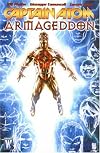
I've been a fan of Captain Atom from way back. When I first heard he was going to be spending some time in the Wildstorm Universe, I wasn't too sure what to make of it. When I heard the word "Armageddon" I suddenly had images of Monarch and shook my head. I decided to wait for the inevitable trade paperback and I'm glad I did.
Lots of things happen in this mini series that starts off with Cap's sacrifice (from a storyline in Batman/ Superman) and begins in the Wildstorm Universe shortly show more thereafter. Atom meets up with Majestic, the Wildcats, and eventually The Authority in a storyline that's really... not bad. Come on, what did you expect me to think? We're talking a crossover here. Of course the first time two heroes meet, they fight. Typical. Okay, but even Captain Atom realizes this and at least he tries to get home. His interactions with this other universe is interesting in its extreme differences to the DCU but I will admit to really having enjoyed the issues with the Authority in them.
Ultimately, it is the piece of Void that was stuck in him that was the catalyst for the reboot/ relaunch of the Wildstorm Universe and supposedly throws Cap back to his own world. I could have done without the graphic violence in the last issue, though.
For a book set at $27 Canadian, there's a lot to live up to. That's a lot of money to dish out, even with my discount. Did I enjoy it? Yes. Did it take me "away" for a couple of hours? Truthfully... yes. Was it worth the money? That's a bit more of a tough call and the answer will depend on who you are and how much you like these characters. I personally would have liked a bit more of a wrap-up to Captain Atom, if not a return to a bit more "greatness" from him. But, it is a start and hopefully something more will come of it. In the end... yes, it was worth it for me. show less
Lots of things happen in this mini series that starts off with Cap's sacrifice (from a storyline in Batman/ Superman) and begins in the Wildstorm Universe shortly show more thereafter. Atom meets up with Majestic, the Wildcats, and eventually The Authority in a storyline that's really... not bad. Come on, what did you expect me to think? We're talking a crossover here. Of course the first time two heroes meet, they fight. Typical. Okay, but even Captain Atom realizes this and at least he tries to get home. His interactions with this other universe is interesting in its extreme differences to the DCU but I will admit to really having enjoyed the issues with the Authority in them.
Ultimately, it is the piece of Void that was stuck in him that was the catalyst for the reboot/ relaunch of the Wildstorm Universe and supposedly throws Cap back to his own world. I could have done without the graphic violence in the last issue, though.
For a book set at $27 Canadian, there's a lot to live up to. That's a lot of money to dish out, even with my discount. Did I enjoy it? Yes. Did it take me "away" for a couple of hours? Truthfully... yes. Was it worth the money? That's a bit more of a tough call and the answer will depend on who you are and how much you like these characters. I personally would have liked a bit more of a wrap-up to Captain Atom, if not a return to a bit more "greatness" from him. But, it is a start and hopefully something more will come of it. In the end... yes, it was worth it for me. show less
Lists
Art of Reading (1)
You May Also Like
Associated Authors
Statistics
- Works
- 5
- Also by
- 15
- Members
- 587
- Popularity
- #42,722
- Rating
- 3.6
- Reviews
- 24
- ISBNs
- 24
- Languages
- 4