
Katherine S. Newman
Author of No Shame in My Game: The Working Poor in the Inner City
About the Author
Katherine S. Newman is the James Knapp Dean of the Krieger School of Arts and Sciences and professor of sociology at Johns Hopkins University. The author of ten books on middle-class economic instability, urban poverty, and the sociology of inequality, Newman has taught at the University of show more California-Berkeley, Columbia, Harvard, and Princeton. show less
Image credit: Still from Ford School video: "Katherine Newman: Portraits of the Near Poor in America" https://youtu.be/YEQLGyb3ubQ
Series
Works by Katherine S. Newman
After Freedom: The Rise of the Post-Apartheid Generation in Democratic South Africa (2014) 17 copies, 8 reviews
The Accordion Family: Boomerang Kids, Anxious Parents, and the Private Toll of Global Competition (2012) 16 copies
Who Cares?: Public Ambivalence and Government Activism from the New Deal to the Second Gilded Age (2010) 12 copies
Laid Off, Laid Low: Political and Economic Consequences of Employment Insecurity (A Columbia / SSRC Book (Privatization of Risk)) (2008) 6 copies
Blocked by Caste: Economic Discrimination and Social Exclusion in Modern India (2010) — Editor — 3 copies
Associated Works
Race, Class, and Gender in the United States: An Integrated Study (1992) — Contributor, some editions — 561 copies
Tagged
Common Knowledge
- Birthdate
- 1953-02-21
- Gender
- female
- Occupations
- teacher
university administrator - Nationality
- USA
- Associated Place (for map)
- USA
Members
Reviews
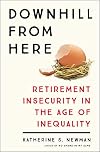
The United States ranks 17th (of 30) in provision for retirement, at about the level of Colombia or Chile. This scandal leaves millions upon millions scrambling to have enough food or meet monthly overhead. But the book Downhill From Here isn’t really about that. It’s mostly about people who contributed to pension funds all their working lives, only to have the pensions slashed, changed from defined benefit to defined contribution, or just eliminated completely. There are even cases of show more clawbacks, where employers change the rules and force retirees to pay back what they already received. Katherine Newman has made poverty her specialty, and this latest attempt get out the truth is very sad. It is a depressing read, which devolves to infuriating when it becomes obvious it all can be avoided.
Instead, it gets worse. One third of US retirees have no savings at all. Most Americans are forced to take social security at 62, leaving 60% of their check on the table. And an ever-decreasing minority gets any kind of company pension at all. Newman calls it pension erosion, but that’s like calling WWII a bit of a scrap.
The book breaks into chapters of method of pension destruction:
-There is bankruptcy, as in the city of Detroit, where civil servants simply lost their contributions and most of their pensions to Wall Street finagling and skimming. Blacks in particular, looked on the civil service as their ticket out of poverty and precarity. They, of course, suffered the most, as their homes became worthless too.
-There is corporate malfeasance, such as Verizon spinning off its Yellow Pages into its own company, which declared bankruptcy less than two years later, crippling the retirements of everyone (below a certain level). This allowed Verizon to avoid paying these (former) employees their pensions. The deviousness is shocking, as more companies find ways to raid the pension fund, fail to make contractual contributions, or invent creative ways of not paying out. One worker said “If I had made such a suggestion, I would have been terminated on the spot.” But when it comes from the top, it’s sound management.
-There is government–forced restructuring, as in deregulating trucking and airlines, where competition suddenly mushroomed into a race to the bottom, forcing employers out of providing pensions. At first, employees were asked to make the sacrifice of lower wages, which they would recoup in a solid retirement plan. Then the plan collapsed – double jeopardy.
-There is the precarity of the right-to-work states, where hours, wages and benefits are minimal, and state governments are stingy – even with (free) federal money. It all adds up to a sad litany of suffering , as Newman profiles people from coast to coast, from all walks of middle class life. What most have in common is an inability to make ends meet just living day to day. When they can retire at all.
-Verizon comes in for particular criticism for its extraordinary callousness towards it employees. They thought they had careers for life, working at the phone company. Instead, they found Verizon transferring them all over its territory for what turned out to be just a two month stint. Not enough to settle in. Then they’d be sent back, only to be transferred out again – for another couple of months. Eventually, people quit this torture, and forfeited their pensions. Verizon avoided paying and got to hire cheaper labor.
-United Airlines employees became ashamed of what became of their company. They actually bought it out of bankruptcy. But it screwed them anyway.
-The gig economy, outsourcing, and perma-temps all contribute to an inability to put away savings, to provide for retirement, or have any kind of job security.
-The forced decline of unions leaves workers with low pay, no benefits and no recourse. Management has a free hand, and clearly relishes it.
The chapter on welfare is also very disturbing. Government, the final backstop and the bargain everyone makes in living in a cohesive nation, fails to help. Worse, it is actually behind much of the damage. And it doesn’t support the people it damages. Newman talks to people who receive ten dollars a month in food stamps, and whose states put all kinds of bureaucratic barriers in the way of applying for anything at all. They make their lives miserable for being clients of the state.
Again and again, Newman narrates stories of people who worked and planned al their lives to live carefully within their means. They sacrificed during their working years, in order not to be destitute in their retirement years.
Of course, it doesn’t have to be this way. Newman examines the top three pension-providing countries, Denmark, the Netherlands, and Australia, which all have remarkably different systems and approaches. But they do have one thing in common: citizens do not worry about poverty or healthcare in retirement. Being a citizen has its rewards as well as sacrifices. Not so in the USA.
There are things even the US government could do, such as forcing companies to put retirement plans beyond their own reach, assuring payouts. Lifting the extraordinarily low maximum for social security taxes would make the whole system solvent (according to economist Paul Krugman). Lowering the eligibility age for Medicare to 55 would bridge a huge, expensive gap that laid-off middle-aged workers face when they are unable to find new work - because of their age. Even the city of Las Vegas has lessons for the country, as the gambling industry protects its own investment by investing in the wellbeing of its employees.
Sadly, the political will is not there. America is all about everyone for themselves. Being American confers no thanks for a life of hard work. Any help via labor protection laws or income supplements is classified as Socialism, un-American and out of the question. Newman says a lot of states are mean. She singles out Louisiana in particular. But it’s much more than that. It’s a mean, nasty country for 99% of its people.
The book suffers from a depressing sameness. Everyone has a similar story, it seems. Hard work and, sacrifice, to have a worry-free retirement. Then betrayal. And no recourse. Only the sources of the betrayal are different. There is a hopelessness to it in the American political context. Unfortunately, Downhill From Here is a truth that needs this kind of exposure.
David Wineberg show less
Instead, it gets worse. One third of US retirees have no savings at all. Most Americans are forced to take social security at 62, leaving 60% of their check on the table. And an ever-decreasing minority gets any kind of company pension at all. Newman calls it pension erosion, but that’s like calling WWII a bit of a scrap.
The book breaks into chapters of method of pension destruction:
-There is bankruptcy, as in the city of Detroit, where civil servants simply lost their contributions and most of their pensions to Wall Street finagling and skimming. Blacks in particular, looked on the civil service as their ticket out of poverty and precarity. They, of course, suffered the most, as their homes became worthless too.
-There is corporate malfeasance, such as Verizon spinning off its Yellow Pages into its own company, which declared bankruptcy less than two years later, crippling the retirements of everyone (below a certain level). This allowed Verizon to avoid paying these (former) employees their pensions. The deviousness is shocking, as more companies find ways to raid the pension fund, fail to make contractual contributions, or invent creative ways of not paying out. One worker said “If I had made such a suggestion, I would have been terminated on the spot.” But when it comes from the top, it’s sound management.
-There is government–forced restructuring, as in deregulating trucking and airlines, where competition suddenly mushroomed into a race to the bottom, forcing employers out of providing pensions. At first, employees were asked to make the sacrifice of lower wages, which they would recoup in a solid retirement plan. Then the plan collapsed – double jeopardy.
-There is the precarity of the right-to-work states, where hours, wages and benefits are minimal, and state governments are stingy – even with (free) federal money. It all adds up to a sad litany of suffering , as Newman profiles people from coast to coast, from all walks of middle class life. What most have in common is an inability to make ends meet just living day to day. When they can retire at all.
-Verizon comes in for particular criticism for its extraordinary callousness towards it employees. They thought they had careers for life, working at the phone company. Instead, they found Verizon transferring them all over its territory for what turned out to be just a two month stint. Not enough to settle in. Then they’d be sent back, only to be transferred out again – for another couple of months. Eventually, people quit this torture, and forfeited their pensions. Verizon avoided paying and got to hire cheaper labor.
-United Airlines employees became ashamed of what became of their company. They actually bought it out of bankruptcy. But it screwed them anyway.
-The gig economy, outsourcing, and perma-temps all contribute to an inability to put away savings, to provide for retirement, or have any kind of job security.
-The forced decline of unions leaves workers with low pay, no benefits and no recourse. Management has a free hand, and clearly relishes it.
The chapter on welfare is also very disturbing. Government, the final backstop and the bargain everyone makes in living in a cohesive nation, fails to help. Worse, it is actually behind much of the damage. And it doesn’t support the people it damages. Newman talks to people who receive ten dollars a month in food stamps, and whose states put all kinds of bureaucratic barriers in the way of applying for anything at all. They make their lives miserable for being clients of the state.
Again and again, Newman narrates stories of people who worked and planned al their lives to live carefully within their means. They sacrificed during their working years, in order not to be destitute in their retirement years.
Of course, it doesn’t have to be this way. Newman examines the top three pension-providing countries, Denmark, the Netherlands, and Australia, which all have remarkably different systems and approaches. But they do have one thing in common: citizens do not worry about poverty or healthcare in retirement. Being a citizen has its rewards as well as sacrifices. Not so in the USA.
There are things even the US government could do, such as forcing companies to put retirement plans beyond their own reach, assuring payouts. Lifting the extraordinarily low maximum for social security taxes would make the whole system solvent (according to economist Paul Krugman). Lowering the eligibility age for Medicare to 55 would bridge a huge, expensive gap that laid-off middle-aged workers face when they are unable to find new work - because of their age. Even the city of Las Vegas has lessons for the country, as the gambling industry protects its own investment by investing in the wellbeing of its employees.
Sadly, the political will is not there. America is all about everyone for themselves. Being American confers no thanks for a life of hard work. Any help via labor protection laws or income supplements is classified as Socialism, un-American and out of the question. Newman says a lot of states are mean. She singles out Louisiana in particular. But it’s much more than that. It’s a mean, nasty country for 99% of its people.
The book suffers from a depressing sameness. Everyone has a similar story, it seems. Hard work and, sacrifice, to have a worry-free retirement. Then betrayal. And no recourse. Only the sources of the betrayal are different. There is a hopelessness to it in the American political context. Unfortunately, Downhill From Here is a truth that needs this kind of exposure.
David Wineberg show less
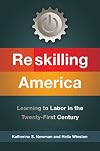
This book makes a persuasive case for the need for more flexibility in how we prepare students for life in adulthood, discussing a number of programs where students learn professional skills rather than being confined to an academic track. Of course, there is a pervasive fear of students' getting shunted into tracks that do not allow them to pursue a full education, but for many students who are motivated toward learning a trade, this different type of education is fulfilling and leads to a show more successful future. The book is at its most interesting when it follows individual schools and students; overall, I enjoyed it. show less
 This review was written for LibraryThing Early Reviewers.
After Freedom reads more like a movie documentary than a narrative book. This perspective allows for a look into the lives of people the first post-apartheid generation. The book moves between South Africans of different political persuasions, class, and backgrounds to provide a narrative that is complicated and informative. The authors do not try to unify or gloss over differences and contradictions but rather allows them to exist and be seen. This provides a narrative that leaves the show more reader struggling to understand modern South Africa. This struggle is not a weakness however, but allows the reader to see the complexities that exist in contemporary South Africa. show less
This review was written for LibraryThing Early Reviewers.Normally I follow a standard schematic for my reviews - short summary, personal opinion and finally, reader recommendtion and rating. In the case of this book, I'm just going to cut to the chase and give my opinion.
This is an important book. Youth unemployment is at 10% at this time and jobs are going begging for skilled workers. Obviously something is broken and needs to be fixed. Authors Katherine S. Newman and Hella Winston present eminently doable programs and ideas (increased high show more school/vocational interface, apprenticeships, greater community college involvement) that would go far in fixing this problem. Yet the problem isn't that we don't know how to fix it or cannot. It lies more in the idea that vocational education is somehow less worthy than a college degree. And in the frenzied quest to keep everyone 'equal' education seems to forget that part of its job is to help students learn to provide for themselves. This prejudice is wrong and damaging - not everyone is suited to go to college or even wants to. I have seen what a well run apprenticeship will do - several family members have gone through these types of programs and my father was a German Meister Machinist (this credential translated to an engineering job in the US). These programs and the jobs they lead to are sources of pride and prestige in Europe, there is no reason that this would not work in the US other that the notion that a college degree for everyone should be the ideal. The highest endorsement I can give this book is that I wish that the programs Newman and Winston advocate had been implemented when my own children were making career decisions; I would have strongly encouraged them to take advantage of them. It high time our young people were given an honest shot. Do your part - read the book. show less
This is an important book. Youth unemployment is at 10% at this time and jobs are going begging for skilled workers. Obviously something is broken and needs to be fixed. Authors Katherine S. Newman and Hella Winston present eminently doable programs and ideas (increased high show more school/vocational interface, apprenticeships, greater community college involvement) that would go far in fixing this problem. Yet the problem isn't that we don't know how to fix it or cannot. It lies more in the idea that vocational education is somehow less worthy than a college degree. And in the frenzied quest to keep everyone 'equal' education seems to forget that part of its job is to help students learn to provide for themselves. This prejudice is wrong and damaging - not everyone is suited to go to college or even wants to. I have seen what a well run apprenticeship will do - several family members have gone through these types of programs and my father was a German Meister Machinist (this credential translated to an engineering job in the US). These programs and the jobs they lead to are sources of pride and prestige in Europe, there is no reason that this would not work in the US other that the notion that a college degree for everyone should be the ideal. The highest endorsement I can give this book is that I wish that the programs Newman and Winston advocate had been implemented when my own children were making career decisions; I would have strongly encouraged them to take advantage of them. It high time our young people were given an honest shot. Do your part - read the book. show less
This review was written for LibraryThing Early Reviewers.Lists
Awards


You May Also Like


Associated Authors
Statistics
- Works
- 19
- Also by
- 2
- Members
- 658
- Popularity
- #38,342
- Rating
- 3.8
- Reviews
- 34
- ISBNs
- 52
