
Bettina Renz
Author of Russia's Military Revival
About the Author
Bettina Renz is Associate Professor of Politics International Relations at the University of Nottingham
Works by Bettina Renz
Tagged
Common Knowledge
There is no Common Knowledge data for this author yet. You can help.
Members
Reviews
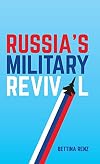
This was a very interesting and for me (considering that the book was written by western author that has expressed same let us call them "western" arguments I came over and over again, more on that below) very surprising work.
So first let us say what this book is and what it is not, or better yet what book does well and where it still keeps up with the stereotypes so common for western books on topic.
Author presents arguments in five very concise chapters that show that things do not exist show more in vacuum but happen due to specific cause and effect law. Using various sources (book has excellent bibliography) author gives a layout of the events that escalated in the 2014 (and later gave us to 2022 and present day events). What comes out is that Russia never accepted West's view of itself - country defeated after the Cold War that was supposed to learn its place at the margins of history (akin to Germany and Japan in previous wars) and was not meant to enter "civilized" world until it went through political changes that would make the country re-modeled on western concept of the state. Russia did accept that they lost the Cold War (Communist party was done with as ruling body) but it never accepted that it is put on list of third world countries. You might call it nationalism but people did not want to lose what they were left with. They went defending their country in state as it was but they always expected they will be back to the international stage as world power. Of course this did not happen outright, one of the reasons being that West (emerging in 1990's as a coalition to rule New World) just did not consider new Russia as anything but a local power, economically not much better than third world countries.
So what happens when you ignore a very large country with developed industry and means of production and energy resources? And you start to encroach in what it sees as its sphere of influence? You will give birth to rebellion and sooner or later it will kick you back.
One of the sources author quotes says a very interesting thing - Russia soon transformed, from the feeling on inferiority they went to nationalism and started confronting West on international stage. The very fact West miscalculated this dearly is mind blowing. But they let it happen because even when Russia's relations with West started to go cold they still treated the Russia as rebellious but country on the fringe, what you might call dog that constantly barks but rarely bites. Because hey, West won, right? Who can ever put this dominance in danger?
And then two things happened - air campaign against Yugoslavia in 1999 and war against terror following attacks in USA in 2001.
First was first ever flexing of muscles of NATO led by USA without UN support. It was a precedent, a huge turning point because it showed that UN unfortunately is pushed aside, marginalized except for talks on international laws when others are judged, because Coalition of the Willing with the higher destiny now holds primacy on the world stage. This was basically a point where US and its allies decided they can do whatever is required, that they are now force to decide what is wrong or good. Of course Russia was shaken by this (and let us not forget China whose embassy was acidentaly obliterated).
Second was beginning of period of starting wars of assassins. It was start of use of highly trained and deadly special forces troops with high tech support in forms of air drones and cruise missiles. They operated behind the smoke screen of standard army units that invaded numerous countries again with no UN support - NATO found its raison d'etre post Cold War and nobody was to take that from it.
Russia, that never dropped the idea of having powerful military even in 1993, now saw that they need to rebuild a lot to be able to withold the NATO and US combined push East and the numerous attempts to create unrest in the Russia itself and in its own courtyard.
Author shows how strong military is something Russia sees as a sign of state vitality and also as an instrument for internal control and stability (there is an excellent chapter on law enforcement and paramilitary forces). Also interesting are various hot spots where Russians intervened during the bloody 1990s and managed to de-escalate tensions. Did they use this to enforce their presence? Absolutely, but death toll in all these conflict zones would be thousands, tens of thousands more if they did not intervene (first Nagorno Karabah war being of the bloodiest) - these were/are all areas with very flammable etnical tensions that just blew up after the fall of Soviet Union. Russians acted and prevented entire region from getting drowned in blood. Of course no country acts without some goals of their own and Russia's was to strengthen its position and prevent its own breakdown - wars in Chechnya are testament to this - but in sum of things all areas were left in functioning state and later they were able to pursue their own paths (even if they went against the Russia's interests). This is more than it can be said about the legacy of West in Iraq, Afghanistan (where after 20 years everything went back) and Lybia. All war torn and in case of Lybia never to recover, destined to remain Mad Max territory for years if not decades.
Very fact that author so specifically links military with state internal security is weird - of course for Russia this is always for regime (keyword) security. Like USMC and National guard do not play exactly the same role in US, or Gendarmes in France (with its own myriad of goverment paramilitary forces) or spanish National Guard and Italian Carabineri. But you know, bias.
Chapters on development of strategy and military thought is also very very interesting. Chapter on what west constantly calls "hybrid war", "specific only for Russians", is great. If you call everything "hybrid war" then you basically tie yourself into the knot and you will always twitch and overcompensate - thus creating very bad conditions that can escalate without control.
When it comes to army modernization I disagree with the author on many points. Presence of ultra high modern weapons does not resolve anything. If weapons that work are present and constantly modernised that is very cost effective way of modernizing armed forces and making them effective in the field. Also Western advantage in combat equipment (as we are constantly shown since 2022) is not that significant. And this is especially true in area of missiles where Russians are ahead of West in many categories. Navy does remain the weak point of Russia's overall capabilities but this was always the case, even in Soviet times when it comes to surface ships. In field of submarines though I do not think west is that much ahead. Russian air force, especially tactical, close support aviation, remains very strong and advanced as ever arm of the service. What Syria and Ukraine have provided (thanks to the West) is accumulation of hours of combat sorties and training under fire that just brought this arm of the service to its peak.
When it comes to army, decision to go to brigade structure proved to be a short-sighted approach and Russia is now going back to division and corps level formation because war in Ukraine proved that from big army you can build specialized smaller troops but you cannot do anything the other way around. Liddell Hart 's and Fuller's constant push for small armies in case of large territorial areas does not make any sense (also proved by Poland building divisions of their own).
What author continues to keep as a constant are statements that are so common to western way of thinking that you cannot just get rid of it I guess. In Russia it is always regime and fight to keep it alive (although recent outbreak and 2016 has shown how regime and its protection seems to be very much alive even in the West including control of information and stifling so venerated freedom of speech). Russia always perceives threats while its neghbors have reason to be afraid - unfortunately even this was debunked by Merkel's and Holland's interviews and statements (a unwise as these were) and also NATO Secretary General's statements that no peace accord signed after 2014 was meant to be followed (although they were listed as a requirement for re-establishment of West-East communication) because they planned for bigger war. Russia is using statements like protection of all Russians in neighboring countries as an excuse (while US does not? Panama, Grenada anybody? UK fighting over the ridiculous Falklands or France intervening all over the Africa?). Russian occupation of Crimea is violation of international law - question here is what law? US base in Cuba is not built with approval from Cuba. Right? And what international law when all NATO led military operations were against UN decisions, from Afghanistan, Iraq, Lybia, Yemen and Syria, just to mention public wars. So basically if migth makes right, then are we to be surprised when other nations decide to use their might to make their own rights?
For some weird reason West has identified itself with whole world - and this backfired significantly in last two years.
As I said all these remarks can be applied to almost any analytical work coming from the West, so it is not unexpected.
But even with these book is very informative and highly recommended. Bibliography section is truly good for finding follow up reads.
One of the comments I have seen says book is just lots of opinions but not much proof. I am not sure what proof are required except reading various sources and trying to see what gets repeated and confirmed. Truths about the world politics are never known immediately, it takes time and reading not just about the period but before and after the events. Hope is just that people will learn which seems not to be case here. West vastly overestimated itself and underestimated the opponent. In an ever shortening reaction loop we have come into situation that West just does not apply any de-escalating approaches (even if they are bent to have a conflict) but just keep pushing and pushing. Hopefully this will not mean the end for everyone caught in the middle of the conflict.
Highly recommended. show less
So first let us say what this book is and what it is not, or better yet what book does well and where it still keeps up with the stereotypes so common for western books on topic.
Author presents arguments in five very concise chapters that show that things do not exist show more in vacuum but happen due to specific cause and effect law. Using various sources (book has excellent bibliography) author gives a layout of the events that escalated in the 2014 (and later gave us to 2022 and present day events). What comes out is that Russia never accepted West's view of itself - country defeated after the Cold War that was supposed to learn its place at the margins of history (akin to Germany and Japan in previous wars) and was not meant to enter "civilized" world until it went through political changes that would make the country re-modeled on western concept of the state. Russia did accept that they lost the Cold War (Communist party was done with as ruling body) but it never accepted that it is put on list of third world countries. You might call it nationalism but people did not want to lose what they were left with. They went defending their country in state as it was but they always expected they will be back to the international stage as world power. Of course this did not happen outright, one of the reasons being that West (emerging in 1990's as a coalition to rule New World) just did not consider new Russia as anything but a local power, economically not much better than third world countries.
So what happens when you ignore a very large country with developed industry and means of production and energy resources? And you start to encroach in what it sees as its sphere of influence? You will give birth to rebellion and sooner or later it will kick you back.
One of the sources author quotes says a very interesting thing - Russia soon transformed, from the feeling on inferiority they went to nationalism and started confronting West on international stage. The very fact West miscalculated this dearly is mind blowing. But they let it happen because even when Russia's relations with West started to go cold they still treated the Russia as rebellious but country on the fringe, what you might call dog that constantly barks but rarely bites. Because hey, West won, right? Who can ever put this dominance in danger?
And then two things happened - air campaign against Yugoslavia in 1999 and war against terror following attacks in USA in 2001.
First was first ever flexing of muscles of NATO led by USA without UN support. It was a precedent, a huge turning point because it showed that UN unfortunately is pushed aside, marginalized except for talks on international laws when others are judged, because Coalition of the Willing with the higher destiny now holds primacy on the world stage. This was basically a point where US and its allies decided they can do whatever is required, that they are now force to decide what is wrong or good. Of course Russia was shaken by this (and let us not forget China whose embassy was acidentaly obliterated).
Second was beginning of period of starting wars of assassins. It was start of use of highly trained and deadly special forces troops with high tech support in forms of air drones and cruise missiles. They operated behind the smoke screen of standard army units that invaded numerous countries again with no UN support - NATO found its raison d'etre post Cold War and nobody was to take that from it.
Russia, that never dropped the idea of having powerful military even in 1993, now saw that they need to rebuild a lot to be able to withold the NATO and US combined push East and the numerous attempts to create unrest in the Russia itself and in its own courtyard.
Author shows how strong military is something Russia sees as a sign of state vitality and also as an instrument for internal control and stability (there is an excellent chapter on law enforcement and paramilitary forces). Also interesting are various hot spots where Russians intervened during the bloody 1990s and managed to de-escalate tensions. Did they use this to enforce their presence? Absolutely, but death toll in all these conflict zones would be thousands, tens of thousands more if they did not intervene (first Nagorno Karabah war being of the bloodiest) - these were/are all areas with very flammable etnical tensions that just blew up after the fall of Soviet Union. Russians acted and prevented entire region from getting drowned in blood. Of course no country acts without some goals of their own and Russia's was to strengthen its position and prevent its own breakdown - wars in Chechnya are testament to this - but in sum of things all areas were left in functioning state and later they were able to pursue their own paths (even if they went against the Russia's interests). This is more than it can be said about the legacy of West in Iraq, Afghanistan (where after 20 years everything went back) and Lybia. All war torn and in case of Lybia never to recover, destined to remain Mad Max territory for years if not decades.
Very fact that author so specifically links military with state internal security is weird - of course for Russia this is always for regime (keyword) security. Like USMC and National guard do not play exactly the same role in US, or Gendarmes in France (with its own myriad of goverment paramilitary forces) or spanish National Guard and Italian Carabineri. But you know, bias.
Chapters on development of strategy and military thought is also very very interesting. Chapter on what west constantly calls "hybrid war", "specific only for Russians", is great. If you call everything "hybrid war" then you basically tie yourself into the knot and you will always twitch and overcompensate - thus creating very bad conditions that can escalate without control.
When it comes to army modernization I disagree with the author on many points. Presence of ultra high modern weapons does not resolve anything. If weapons that work are present and constantly modernised that is very cost effective way of modernizing armed forces and making them effective in the field. Also Western advantage in combat equipment (as we are constantly shown since 2022) is not that significant. And this is especially true in area of missiles where Russians are ahead of West in many categories. Navy does remain the weak point of Russia's overall capabilities but this was always the case, even in Soviet times when it comes to surface ships. In field of submarines though I do not think west is that much ahead. Russian air force, especially tactical, close support aviation, remains very strong and advanced as ever arm of the service. What Syria and Ukraine have provided (thanks to the West) is accumulation of hours of combat sorties and training under fire that just brought this arm of the service to its peak.
When it comes to army, decision to go to brigade structure proved to be a short-sighted approach and Russia is now going back to division and corps level formation because war in Ukraine proved that from big army you can build specialized smaller troops but you cannot do anything the other way around. Liddell Hart 's and Fuller's constant push for small armies in case of large territorial areas does not make any sense (also proved by Poland building divisions of their own).
What author continues to keep as a constant are statements that are so common to western way of thinking that you cannot just get rid of it I guess. In Russia it is always regime and fight to keep it alive (although recent outbreak and 2016 has shown how regime and its protection seems to be very much alive even in the West including control of information and stifling so venerated freedom of speech). Russia always perceives threats while its neghbors have reason to be afraid - unfortunately even this was debunked by Merkel's and Holland's interviews and statements (a unwise as these were) and also NATO Secretary General's statements that no peace accord signed after 2014 was meant to be followed (although they were listed as a requirement for re-establishment of West-East communication) because they planned for bigger war. Russia is using statements like protection of all Russians in neighboring countries as an excuse (while US does not? Panama, Grenada anybody? UK fighting over the ridiculous Falklands or France intervening all over the Africa?). Russian occupation of Crimea is violation of international law - question here is what law? US base in Cuba is not built with approval from Cuba. Right? And what international law when all NATO led military operations were against UN decisions, from Afghanistan, Iraq, Lybia, Yemen and Syria, just to mention public wars. So basically if migth makes right, then are we to be surprised when other nations decide to use their might to make their own rights?
For some weird reason West has identified itself with whole world - and this backfired significantly in last two years.
As I said all these remarks can be applied to almost any analytical work coming from the West, so it is not unexpected.
But even with these book is very informative and highly recommended. Bibliography section is truly good for finding follow up reads.
One of the comments I have seen says book is just lots of opinions but not much proof. I am not sure what proof are required except reading various sources and trying to see what gets repeated and confirmed. Truths about the world politics are never known immediately, it takes time and reading not just about the period but before and after the events. Hope is just that people will learn which seems not to be case here. West vastly overestimated itself and underestimated the opponent. In an ever shortening reaction loop we have come into situation that West just does not apply any de-escalating approaches (even if they are bent to have a conflict) but just keep pushing and pushing. Hopefully this will not mean the end for everyone caught in the middle of the conflict.
Highly recommended. show less
Statistics
- Works
- 2
- Members
- 20
- Popularity
- #589,234
- Rating
- 4.5
- Reviews
- 1
- ISBNs
- 3