
José Luis García-López
Author of Batman: Venom
About the Author
Disambiguation Notice:
(por1) Jose Luis Garcia-Lopez (1): Spanish comic book artist
Image credit: Back Issue Magazine #15, page 7, (TwoMorrows Publishing), published in 2006.
Series
Works by José Luis García-López
Teen Titans/Outsiders: The Death and Return of Donna Troy (2006) — Illustrator — 106 copies, 5 reviews
The Return of Donna Troy — Illustrator — 1 copy
The Joker #2 (1975) — Illustrator — 1 copy
DC Special Series #11 (The Flash Spectacular) — Illustrator — 1 copy
The Joker [1000-Piece Puzzle] — Illustrator — 1 copy
Superman Novaro 1134 1 copy
Superman Novaro 1138 1 copy
Associated Works
9-11: The World's Finest Comic Book Writers & Artists Tell Stories to Remember (2002) — Illustrator — 256 copies, 1 review
Wonder Woman by George Pérez Omnibus (2015) — Artist (Annual 1 "The First Statue") — 85 copies, 3 reviews
Jonah Hex: Kaksintaistelu Murphytownissa! — Illustrator — 2 copies
DC Sampler (1983—1984) #2 — Illustrator — 2 copies
Tagged
Common Knowledge
- Canonical name
- García-López, José Luis
- Birthdate
- 1948-03-26
- Gender
- male
- Birthplace
- Lalín, Spain
- Disambiguation notice
- Jose Luis Garcia-Lopez (1): Spanish comic book artist
- Associated Place (for map)
- Lalín, Spain
Members
Reviews

Access a version of the below that includes illustrations on my blog.
The story is set in June 1942 on Earth-Two, and involves Superman and Wonder Woman independently discovering the existence of the Manhattan Project, as well as an effort by the Axis powers to steal its secrets. Though both don't want the bomb in Nazi hands, Wonder Woman doesn't want it in any human hands, while Superman has greater faith in America to do the right thing, and in the end, the two come to blows over it all-- show more though of course, they set their differences aside to punch some Nazis.
The story, to be honest, is not the point. The point of this is to see Superman and Wonder Woman battling rendered in the beautiful art of José Luis García-López at an enormous size. In this regard, the book utterly delivers. Superman fights robot planes; Wonder Woman throws cars at Nazis; Diana Prince sneaks into military file rooms; Superman and Wonder Woman fight each other in Chicago and then on the moon. It all looks great.
Perhaps for this reason, the book fudges some Earth-Two details. Superman and Wonder Woman are drawn how their Earth-One versions looked in the 1970s, not how their Earth-Two versions looked in the 1940s. But given García-López created the style guide all DC merchandise was beholden to in the 1980s, why would you have him draw anything other than these characters' most iconic forms? The book also has things like Clark Kent working for Perry White at the Daily Planet, not-- as would be the case on Earth-Two-- him working for George Taylor at the Daily Star. On the other hand, it features Earth-Two villain Baron Blitzkrieg, and even includes a footnote referencing the Earth-Two-set World's Finest vol. 1 #246 for those who want to know his origin. So I think writer Gerry Conway is trying to have his Earth-Two cake and eat it too; use the iconic Earth-One versions of the characters because this is a story with broad appeal, but slip in some Earth-Two references for the dedicated comics nerds who worry about how such a story can exist in continuity. (Conway was at the time the writer of the adventures of the Earth-Two Wonder Woman in her self-titled comic and in World's Finest.) As far as weird continuity details go, we also learn that the moon of Earth-Two is home to the ruins of an extinct civilization, one that destroyed itself with the atomic bomb. Did any other comics writers pick up that weird nugget?
While the story doesn't need to be very good, it actually has some nice touches that elevate it. It's framed as a series of declassified reports, the moral conflict is a good one, the appearance by Albert Einstein is fun, the way Diana Prince infiltrates military records is a great sequences, and the ending has a sharp piece of irony with President Roosevelt declaring to both superheroes, "As long as I am president... America will never use the bomb to kill. Never." Ouch. I understand that Roy Thomas depicted a post-Crisis version of these events in the Young All-Stars storyline Atom and Evil (as of this writing, I am on YA-S #14, and Atom and Evil begins in issue #21), but I would have liked to have seen him weave the pre-Crisis version of All-Star Squadron into these events, which I'm sure was his long-term plan.
Anyway, if you are at all interested in this story, this oversized reprint is a gorgeous way to experience it, and I highly recommend it.
The Justice Society and Earth-Two: « Previous in sequence | Next in sequence » show less
The story is set in June 1942 on Earth-Two, and involves Superman and Wonder Woman independently discovering the existence of the Manhattan Project, as well as an effort by the Axis powers to steal its secrets. Though both don't want the bomb in Nazi hands, Wonder Woman doesn't want it in any human hands, while Superman has greater faith in America to do the right thing, and in the end, the two come to blows over it all-- show more though of course, they set their differences aside to punch some Nazis.
The story, to be honest, is not the point. The point of this is to see Superman and Wonder Woman battling rendered in the beautiful art of José Luis García-López at an enormous size. In this regard, the book utterly delivers. Superman fights robot planes; Wonder Woman throws cars at Nazis; Diana Prince sneaks into military file rooms; Superman and Wonder Woman fight each other in Chicago and then on the moon. It all looks great.
Perhaps for this reason, the book fudges some Earth-Two details. Superman and Wonder Woman are drawn how their Earth-One versions looked in the 1970s, not how their Earth-Two versions looked in the 1940s. But given García-López created the style guide all DC merchandise was beholden to in the 1980s, why would you have him draw anything other than these characters' most iconic forms? The book also has things like Clark Kent working for Perry White at the Daily Planet, not-- as would be the case on Earth-Two-- him working for George Taylor at the Daily Star. On the other hand, it features Earth-Two villain Baron Blitzkrieg, and even includes a footnote referencing the Earth-Two-set World's Finest vol. 1 #246 for those who want to know his origin. So I think writer Gerry Conway is trying to have his Earth-Two cake and eat it too; use the iconic Earth-One versions of the characters because this is a story with broad appeal, but slip in some Earth-Two references for the dedicated comics nerds who worry about how such a story can exist in continuity. (Conway was at the time the writer of the adventures of the Earth-Two Wonder Woman in her self-titled comic and in World's Finest.) As far as weird continuity details go, we also learn that the moon of Earth-Two is home to the ruins of an extinct civilization, one that destroyed itself with the atomic bomb. Did any other comics writers pick up that weird nugget?
While the story doesn't need to be very good, it actually has some nice touches that elevate it. It's framed as a series of declassified reports, the moral conflict is a good one, the appearance by Albert Einstein is fun, the way Diana Prince infiltrates military records is a great sequences, and the ending has a sharp piece of irony with President Roosevelt declaring to both superheroes, "As long as I am president... America will never use the bomb to kill. Never." Ouch. I understand that Roy Thomas depicted a post-Crisis version of these events in the Young All-Stars storyline Atom and Evil (as of this writing, I am on YA-S #14, and Atom and Evil begins in issue #21), but I would have liked to have seen him weave the pre-Crisis version of All-Star Squadron into these events, which I'm sure was his long-term plan.
Anyway, if you are at all interested in this story, this oversized reprint is a gorgeous way to experience it, and I highly recommend it.
The Justice Society and Earth-Two: « Previous in sequence | Next in sequence » show less

Access a version of the below that includes illustrations on my blog.
In the late 1980s and early 1990s, the done thing was to take moribund DC properties and release a miniseries of three double-length issues featuring a darker take on them. Green Arrow: The Longbow Hunters, Adam Strange: The Man of Two Worlds, Hawkworld, and Twilight were all instances of this move. But while my first three examples all feel like set-ups for ongoings (even if, such as in the case of Adam Strange, those show more ongoings didn't always actually happen), Twilight was different: this isn't an engine for an ongoing series, but a complete epic in itself, charting the rise and fall of a number of different DC space characters across a vast temporal and spatial canvas. All those guys who haven't amounted to much since the 1960s (but Keith Giffen also revived for Threshold twenty years later), they're all here: Tommy Tomorrow, the Star Rovers, Manhunter 2070, Star Hawkins and Ilda, even Space Cabbie.
Howard Chaykin's story, though, is a dark one of manifest destiny in outer space. When Twilight opens, humanity is wrapping up a genocide of sapient animals that it itself is responsible for creating, at the same time it chases down the remnants of an alien race who it also wiped out-- but may hold the secret to eternal life. These characters' heroic personas are all the creation of PR by Homer Glint, one of the Star Rovers, covering up their worst aspects. Soon the last of the Methuseloids are dead, gifting humanity immortality, but of course it's a curse, as humankind is split between warring factions of fascists and religious fanatics. It's a dark story, brutal and full of depravity, but not without humor, mostly in the form of the narration by Glint, and his interactions with his seeing-eye cat. (Raised to sapience, the cat is named F'Tatateeta, in what I assume is a tribute to Cordwainer Smith's naming system for elevated animals, like C'Mell. The "C" in "C'Mell" stands for "cat"; presumably Chaykin's "F" stands for "feline.")
It's a difficult story to read and to love. José Luis García-López's art is technically accomplished as always. It's interesting to see him draw something like this; I associate him with more straightforward superheroics, I guess because of how good he was at drawing Superman. I think the aesthetic of Twilight is a good example of what Darren Franich calls "all-encompassing techno-fascism."
The beginning, though, is tough going, as Chaykin and García-López dump a huge cast of characters on you without much scaffolding, and it took me most of the first issue to figure out who all the players were and how they related (and, to be honest, there are a couple bits I'm still uncertain about). The story covers a vast canvas, which is a strength and a weakness. We see so many centuries where humanity screws up, clearly playing into a theme for Chaykin, but because of the time skips needed, it seems like these big social movements that dominate the story appear and disappear arbitrarily, sort of undermining that theme. How does Tommy Tomorrow become a worshipped space fascist god? Who knows exactly.
The key to the book is to be found in Homer's statement that when he thought it was the end of the story (the collapse of civilization), it was actually the middle. According to Twilight, human history has been and will be a history of atrocity and violence, and not even transcendence will change that.
Brenda Tomorrow is pretty great, though. Everything you could want out of a badass space woman. Well, except that her actions doomed the human race, but I guess you can't have everything.
DC Comics Space Heroes: « Previous in sequence | Next in sequence » show less
In the late 1980s and early 1990s, the done thing was to take moribund DC properties and release a miniseries of three double-length issues featuring a darker take on them. Green Arrow: The Longbow Hunters, Adam Strange: The Man of Two Worlds, Hawkworld, and Twilight were all instances of this move. But while my first three examples all feel like set-ups for ongoings (even if, such as in the case of Adam Strange, those show more ongoings didn't always actually happen), Twilight was different: this isn't an engine for an ongoing series, but a complete epic in itself, charting the rise and fall of a number of different DC space characters across a vast temporal and spatial canvas. All those guys who haven't amounted to much since the 1960s (but Keith Giffen also revived for Threshold twenty years later), they're all here: Tommy Tomorrow, the Star Rovers, Manhunter 2070, Star Hawkins and Ilda, even Space Cabbie.
Howard Chaykin's story, though, is a dark one of manifest destiny in outer space. When Twilight opens, humanity is wrapping up a genocide of sapient animals that it itself is responsible for creating, at the same time it chases down the remnants of an alien race who it also wiped out-- but may hold the secret to eternal life. These characters' heroic personas are all the creation of PR by Homer Glint, one of the Star Rovers, covering up their worst aspects. Soon the last of the Methuseloids are dead, gifting humanity immortality, but of course it's a curse, as humankind is split between warring factions of fascists and religious fanatics. It's a dark story, brutal and full of depravity, but not without humor, mostly in the form of the narration by Glint, and his interactions with his seeing-eye cat. (Raised to sapience, the cat is named F'Tatateeta, in what I assume is a tribute to Cordwainer Smith's naming system for elevated animals, like C'Mell. The "C" in "C'Mell" stands for "cat"; presumably Chaykin's "F" stands for "feline.")
It's a difficult story to read and to love. José Luis García-López's art is technically accomplished as always. It's interesting to see him draw something like this; I associate him with more straightforward superheroics, I guess because of how good he was at drawing Superman. I think the aesthetic of Twilight is a good example of what Darren Franich calls "all-encompassing techno-fascism."
The beginning, though, is tough going, as Chaykin and García-López dump a huge cast of characters on you without much scaffolding, and it took me most of the first issue to figure out who all the players were and how they related (and, to be honest, there are a couple bits I'm still uncertain about). The story covers a vast canvas, which is a strength and a weakness. We see so many centuries where humanity screws up, clearly playing into a theme for Chaykin, but because of the time skips needed, it seems like these big social movements that dominate the story appear and disappear arbitrarily, sort of undermining that theme. How does Tommy Tomorrow become a worshipped space fascist god? Who knows exactly.
The key to the book is to be found in Homer's statement that when he thought it was the end of the story (the collapse of civilization), it was actually the middle. According to Twilight, human history has been and will be a history of atrocity and violence, and not even transcendence will change that.
Brenda Tomorrow is pretty great, though. Everything you could want out of a badass space woman. Well, except that her actions doomed the human race, but I guess you can't have everything.
DC Comics Space Heroes: « Previous in sequence | Next in sequence » show less

Access a version of the below that includes illustrations on my blog.
This is a licensed story based on Atari videogames! As you might expect of a space adventure story from 1983, it's very Star Wars: it opens with a space battle over a desert planet, there's a hotshot pilot, a wise old man, an evil empire, a heroic resistance, and cute alien animals. The basic premise is that the insectoid Zylons control the galaxy; the pilot (Jed) and navigator (Tomorrow "Tommy" Hardtack) of a star cruiser show more come to a devastated planet where they find an immortal librarian (Zeke) and an old spaceship, the Star Raider. Jed and Tommy repair the Star Raider with Zeke's guidance, recruit more rebels, and have a couple run-ins with the Zylons. (There's also a bit of Battlestar Galactica in it, I guess.)
It's fun enough. Jed arguing with Zeke is a little overdone, and everyone goes off half-cocked and has to be rescued by someone else at some point. I liked Tommy (a riff in name if nothing else on the DC character Tommy Tomorrow of the Planeteers) the most; she's sublimely 1980s-- just look at those shoulderpads and that hair band-- and feels the least like a Star Wars character. The beautiful art by José Luis García López is probably the real selling point of this book; this story didn't deserve art this good, but it got it anyway! The only thing to not like about it is that Jed and Tommy's original ship has a confusingly similar design to the Star Raider. (But I would guess this has something to do with the original videogame on which the graphic novel is based.)
The set-up is good, but the ending feels rushed-- a significant connection between a minor character and the Zylon queen comes out of nowhere, allowing everything to be wrapped up easily. It felt like Maggin was setting up an ongoing series (there are a number of characters introduced who end up not doing much) and had to swerve to wrap everything up in twenty pages at the last minute. Still, if you want some 1980s spectacular space action, this is a quick, enjoyable read. Too bad there's no more adventures for these characters, because I'd read them. show less
This is a licensed story based on Atari videogames! As you might expect of a space adventure story from 1983, it's very Star Wars: it opens with a space battle over a desert planet, there's a hotshot pilot, a wise old man, an evil empire, a heroic resistance, and cute alien animals. The basic premise is that the insectoid Zylons control the galaxy; the pilot (Jed) and navigator (Tomorrow "Tommy" Hardtack) of a star cruiser show more come to a devastated planet where they find an immortal librarian (Zeke) and an old spaceship, the Star Raider. Jed and Tommy repair the Star Raider with Zeke's guidance, recruit more rebels, and have a couple run-ins with the Zylons. (There's also a bit of Battlestar Galactica in it, I guess.)
It's fun enough. Jed arguing with Zeke is a little overdone, and everyone goes off half-cocked and has to be rescued by someone else at some point. I liked Tommy (a riff in name if nothing else on the DC character Tommy Tomorrow of the Planeteers) the most; she's sublimely 1980s-- just look at those shoulderpads and that hair band-- and feels the least like a Star Wars character. The beautiful art by José Luis García López is probably the real selling point of this book; this story didn't deserve art this good, but it got it anyway! The only thing to not like about it is that Jed and Tommy's original ship has a confusingly similar design to the Star Raider. (But I would guess this has something to do with the original videogame on which the graphic novel is based.)
The set-up is good, but the ending feels rushed-- a significant connection between a minor character and the Zylon queen comes out of nowhere, allowing everything to be wrapped up easily. It felt like Maggin was setting up an ongoing series (there are a number of characters introduced who end up not doing much) and had to swerve to wrap everything up in twenty pages at the last minute. Still, if you want some 1980s spectacular space action, this is a quick, enjoyable read. Too bad there's no more adventures for these characters, because I'd read them. show less
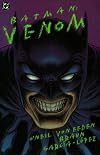
Wow. Dennis O'Neil knows how to write a Batman story. Venom is about responding to failure and the consequence of taking drugs for the "easy out." Rarely is Batman depicted with such emotional depth (or as a psychopath for that matter), and it makes the character very engaging.
The art doesn't seem particularly striking on first glance, but is actually quite excellent. It enhances the text rather than distract from it. And man is it eerie when the Dark Knight cackles! My only nitpick is a show more scene where Bruce Wayne goes from clean cut to caveman in one month. What, is there Rogaine in those pills?
It should be noted that DC Comics advertises this as an origin for Bane. Well, only kind of. The villain of the Chris Nolan flick is nowhere to be found, but the guy is addicted to the same strength-enhancing venom introduced here.
But even if DC's marketing for this book is a bit misleading, this is a great comic. Trust me: You'll be happy to be misled. show less
The art doesn't seem particularly striking on first glance, but is actually quite excellent. It enhances the text rather than distract from it. And man is it eerie when the Dark Knight cackles! My only nitpick is a show more scene where Bruce Wayne goes from clean cut to caveman in one month. What, is there Rogaine in those pills?
It should be noted that DC Comics advertises this as an origin for Bane. Well, only kind of. The villain of the Chris Nolan flick is nowhere to be found, but the guy is addicted to the same strength-enhancing venom introduced here.
But even if DC's marketing for this book is a bit misleading, this is a great comic. Trust me: You'll be happy to be misled. show less
Lists
Awards

You May Also Like


Associated Authors
Statistics
- Works
- 74
- Also by
- 39
- Members
- 970
- Popularity
- #26,549
- Rating
- 3.6
- Reviews
- 36
- ISBNs
- 54
- Languages
- 7
- Favorited
- 2