
Otto von Pivka
Author of An Illustrated Encyclopedia of Uniforms of the Napoleonic Wars
About the Author
Disambiguation Notice:
A thorough investigation will prove that Digby George Smith and Otto von Pivka are in fact the same person, so please don't separate.
Series
Works by Otto von Pivka
Napoleon's Regiments Battle Histories of the Regiments of the French Army 1792-1815 (2000) 47 copies, 1 review
Armies of the Seven Years War: Commanders, Equipment, Uniforms and Strategies of the 'First World War' (2012) 27 copies
Armies of 1812: The Grand Armee and the Armies of Austria, Prussia, Russia and Turkey (2002) 22 copies
The Decline and Fall of Napoleon's Empire: How the Emperor Self-Destructed (2005) 13 copies, 1 review
Associated Works
The Napoleon Options : Alternate Decisions of the Napoleonic Wars (2000) — Author — 71 copies, 1 review
Tagged
Common Knowledge
- Legal name
- Smith, Digby George
- Other names
- Pivka, Otto
- Birthdate
- 1935-01-15
- Gender
- male
- Short biography
- Smith was born 15 January 1935, at the Louise Margaret Military Hospital in Aldershot, Hampshire. His father, George Frederick Smith, was a corporal in the 2nd Infantry Division Signals regiment. In 1937, he posted to India in the 9th Infantry Division (India) Signals Regiment on the Afghan border in Quetta, Baluchistan. A 1935 earthquake had devastated the area, and the family lived in a tent. At the outbreak of war in 1939, his father was commissioned and posted to Malaya, where, in 1941, he took part in the fighting near Kota Baru. Eventually he was captured at Singapore, and was one of the 60,000 Allied POWs who built the Burma-Siam railway.
Returning in 1942 to Aldershot, Digby Smith was sent, first, to East End Primary School, where he won a Scholarship to Farnborough Grammar School. After the war, in another stint in India and Pakistan, the family journeyed to Rawalpindi, Pakistan. George Smith, now a major, was seconded to the Pakistan Signal Corps. In the absence of adequate schools, 13-year-old Digby attended the Pakistan School of Signals near the Lalkurti Bazaar, where he received his first training in electronics.
In 1950, he returned to England and school, but left Farnborough Grammar School at the age of 16 to the army as an apprentice telecommunications technician.He received additional training at Minden in 1954 as a Technician III Class. After a six-month stint at the Pintsch Electro Radio Factory in Constance, and Smith returned to Duisburg, where he met his wife.
In 1960 the war office selection board sent him to Mons Officer Cadet School at Aldershot, and he received his commission as a Lieutenant in 10th Signal Regiment, posted in Krefeld, in North Rhine-Westphalia, Germany. Here he was a Troop Commander using the same Pintch equipment he had studied in Constance. In 1961, he received a commission into the Royal Corps of Signals, and served in the British Army of the Rhine. While in service there, he studied German, and explored his growing interest in the military history of the old German states of the Holy Roman Empire. Smith's first foray into the realm of Napoleonic history occurred by chance at Bradbury Barracks in Krefeld. As a qualified linguist, he was asked to research the history of the Barrack's original German regiment, part of the Signal's 20th anniversary at the location. His research led him to the 2nd Westphalian Hussars, who in turn were descended from the green- and purple-clad Cheaveau Legers Uhlanen of Duchy of Berg. This colourful regiment had as its founder the equally colourful Joachim Murat, King of Naples and a Marshal of France under Napoleon.
In 1965, he transferred to the Royal Army Ordnance Corps, where he worked in computers and logistics and the study of work. From 1970–1972, he had a stint at the German Armed Forces Command and Staff College, located at Blankenese, near Hamburg.
After serving a brief stint at the Ministry of Defense, Whitehall, he retired from the military to start a new career, selling body armour to the German police, who were at that time combating the Baader Meinhof and other urban terrorist groups. In 1981, high tech logistics and customer services markets drew him into international computer and telecommunications companies located in Germany, Saudi Arabia and Moscow. During his assignment to Moscow, where he spent four years, he made several trips to the battlefield at Borodino, and continued developing the material for his compendium, Napoleonic Wars Data Book.
Since 1995, he has concentrated full-time on the writing of military history, some of which he wrote for Osprey Military Publishing under the nom de plume of Otto von Pivka.
http://en.wikipedia.org/wiki/Digby_Sm... - Nationality
- United Kingdom
- Map Location
- United Kingdom
- Disambiguation notice
- A thorough investigation will prove that Digby George Smith and Otto von Pivka are in fact the same person, so please don't separate.
Members
Reviews
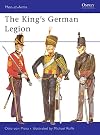
This is one of the Direct KGL Osprey's and therefor covers that corps in welcome detail. The pictures are the chief value, and do cover the appearance well. There's not as much detail on their exploits as I would like, but that is the usual failing of this company's format. Worth having if you can't get Beamish on the KGL.
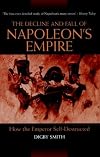
Reasonable, and many good points made, but a hindsight catalogue of errors is easy to make. His insights on French command limitations (everything passes through Napoleon) are interesting. The tone of writing makes one wonder how selective the author is with sources, regardless of the merits of his case.
This is my first Men-at arms book. It cost me four bucks. I actually have an older edition. It is a super book for the wargamer or anyone else interested in the KGL. In addition to sketching the unit's history, there is considerable information about uniforms and unit organization. The subject is focused on a small enough body that Pivka can do justice to the unit. Alas, if only all Ospreys were as smart.

You May Also Like


Associated Authors
Statistics
- Works
- 44
- Also by
- 1
- Members
- 1,324
- Popularity
- #19,418
- Rating
- 3.7
- Reviews
- 8
- ISBNs
- 69
- Languages
- 5
- Favorited
- 1