
W. Heath Robinson (1872–1944)
Author of The Little Mermaid and Other Fairy Tales
About the Author
Image credit: W. Heath Robinson
Works by W. Heath Robinson
Contraptions: a timely new edition by a legend of inventive illustrations and cartoon wizardry (2021) 8 copies
Heath Robinson's book of goblins : a collection of folk-lore and fairy tales. First Edition 2 copies
Wonderlijke Bedenksels 1 copy
Radio-sorg och radio-fröjd 1 copy
Weighing an Elephant 1 copy
Associated Works
The Incredible Adventures of Professor Branestawm (1933) — Illustrator, some editions — 452 copies, 8 reviews
Shakespeare Illustrated: Art by Arthur Rackham, Edmund Dulac, Charles Robinson and Others (Dover Fine Art, History of Art) (2011) — Illustrator — 25 copies
Stories from the Iliad or the Siege of Troy told to the children (1907) — Illustrator, some editions — 12 copies
The Illustrators: The British Art of Illustration 1800-2008 (2008) — Front endpaper illustrator — 8 copies
The illustrators : the British art of illustration 1900-2016 (2016) — Front endpaper illustrator — 2 copies
Topsy-Turvy Tales — Illustrator, some editions — 1 copy
Tagged
Common Knowledge
- Canonical name
- Robinson, W. Heath
- Legal name
- Robinson, William Heath
- Birthdate
- 1872-05-31
- Date of death
- 1944-09-13
- Gender
- male
- Occupations
- cartoonist
illustrator - Relationships
- Robinson, Charles (brother)
Robinson, T.H. (brother) - Nationality
- UK
- Birthplace
- 25 Ennis Road, Stroud Green, Middlesex, England, UK
- Place of death
- 25 Southwood Avenue, Highgate, Middlesex, England, UK
- Burial location
- East Finchley Cemetery, East End Road, East Finchley, Barnet, London, England
- Associated Place (for map)
- England, UK
Members
Reviews
Aladdin and Other Tales from the Arabian Nights (Everyman's Library Children's Classics) by W. Heath Robinson
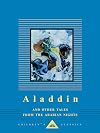
Aladdin and Other Tales from The Arabian Nights is a children’s classic that will entertain children as well as adult readers. It is based on the original folklore tales of Arabian Nights which dates back to an oral tradition. One of the main characters is Aladdin’s Genie which is a supernatural being who is able to grant Aladdin wishes. I found this story to be incredibly complex with many twists and turns. In fact, it is a collection of different narratives that incorporate many fairy show more tale motifs such as magical objects, trickery, and the granting of wishes.
In addition, Walt Disney has also produced a variant on this fairy tale and edited the story by producing their Western version of the story. This element lends the story to comparative literature since the original version would represent the ideals of the Islamic culture, while Walt Disney variant would incorporate beliefs that are valued by Western culture. For example, the original story is not romantic in that it’s “author” was apparently a new bride who had to entertain the king, her new husband, by reading him stories since he planned to consummate the marriage and then have her killed so that he was free to marry another. Certainly, this new bride had to earn her right to the thrown by the excellence of her literary compositions. One boring night of storytelling would end in her demise. This is certainly not any woman’s dream come true; in Cinderella, it was enough to wed royalty. In addition, Aladdin is a young ruffian whose adventures take him to outwit pirate like characters starting with a magician. His abilities to survive in an unfriendly world by his cunning behavior make him the hero of the story. In fact, like Cinderella, he falls in love with the Sultan’s daughter and gains entrance into the royal family by an advantageous marriage. Aladdin, like the Cinderella, is initially a financially impoverished character who in the end use supernatural beings to marry into politically established families. Cinderella uses the Fairy Godmother while Aladdin uses his Genie.
Age group: 8 and up show less
In addition, Walt Disney has also produced a variant on this fairy tale and edited the story by producing their Western version of the story. This element lends the story to comparative literature since the original version would represent the ideals of the Islamic culture, while Walt Disney variant would incorporate beliefs that are valued by Western culture. For example, the original story is not romantic in that it’s “author” was apparently a new bride who had to entertain the king, her new husband, by reading him stories since he planned to consummate the marriage and then have her killed so that he was free to marry another. Certainly, this new bride had to earn her right to the thrown by the excellence of her literary compositions. One boring night of storytelling would end in her demise. This is certainly not any woman’s dream come true; in Cinderella, it was enough to wed royalty. In addition, Aladdin is a young ruffian whose adventures take him to outwit pirate like characters starting with a magician. His abilities to survive in an unfriendly world by his cunning behavior make him the hero of the story. In fact, like Cinderella, he falls in love with the Sultan’s daughter and gains entrance into the royal family by an advantageous marriage. Aladdin, like the Cinderella, is initially a financially impoverished character who in the end use supernatural beings to marry into politically established families. Cinderella uses the Fairy Godmother while Aladdin uses his Genie.
Age group: 8 and up show less

A very interesting selection: the first part contains book illustrations, which are quite attractive (though one isn't sure of the context of the cartoons). The second part is more familiar territory, a mixture of Rube Goldberg and Dr. Seuss, containing a lot of the machines that made a "Heath Robinson" a common phrase in England. Indeed, comparisons to Goldberg are inevitable, given that Robinson also uses similar ideas in presentation. Speaking of presentation, there are some faults in show more this book -- for obscure editorial reasons, certain drawings are presented in "negative" format, which rather spoils the line work. If you're not familiar with Heath Robinson's work, you might be a little lost, here. Still, a nice collection. Recommended, but really for cartoon lovers. show less

As a kid, I really, really liked the cartoon illustrations that are the real substance of this book, and when my parents decided to discard it I cabbaged onto it. Many years later, after reading through it again, all I can think is ... "that's it?" If I had the habit of recording "household names, notes, and numbers" by writing them in a book, I might well keep this for the experience of occasional mild amusement when writing something in it or looking something up. But because I have no show more such habit, the question of whether it's worth keeping around rests entirely on the illustrations, and they're not that funny. show less

Alarmingly sexist, with the constant assumption of women's inferiority and somewhat disturbing references to domestic violence. Still, even if we make the leap that it's all tongue in cheek, the undertone of this book throws a glass of cold water over the comic intent.
Even W. Heath Robinson's whimsical illustrations are not at his madcap best.
This may have been funny in 1937, but I hardly cracked a smile. Not a keeper.
Even W. Heath Robinson's whimsical illustrations are not at his madcap best.
This may have been funny in 1937, but I hardly cracked a smile. Not a keeper.
Lists
You May Also Like


Associated Authors
Statistics
- Works
- 70
- Also by
- 27
- Members
- 1,114
- Popularity
- #23,058
- Rating
- 3.9
- Reviews
- 10
- ISBNs
- 91
- Languages
- 4
- Favorited
- 2
