
Londa Schiebinger
Author of Nature's Body: Gender in the Making of Modern Science
About the Author
Londa Schiebinger is the John L. Hinds Professor of History of Science at Stanford University. She is the author of the award-winning Plants and Empire: Colonial Bioprospecting in the Atlantic World (2004), among many other works.
Works by Londa Schiebinger
Secret Cures of Slaves: People, Plants, and Medicine in the Eighteenth-Century Atlantic World (2017) 35 copies, 1 review
Women and Gender in Science and Technology (Critical Concepts in Historical Studies) (2014) 2 copies
"The Loves of the Plants" 1 copy
Associated Works
The Cambridge History of Science, Volume 4: Eighteenth-Century Science (2003) — Contributor — 78 copies
Tagged
Common Knowledge
- Canonical name
- Schiebinger, Londa
- Other names
- Schiebinger, Londa L. (fuller name)
- Birthdate
- 1952-05-13
- Gender
- female
- Education
- University of Nebraska (BA|English|1974)
Harvard University (MA|History|1977)
Harvard University (PhD|History|1984) - Occupations
- Professor of the History of Science
- Organizations
- Stanford University (The John L. Hinds Professor of History of Science)
Michelle R. Clayman Institute for Gender Research (The Barbara D. Finberg Director)
Pennsylvania State University - Awards and honors
- Alexander von Humboldt Research Prize (1999)
- Relationships
- Swan, Claudia (co-editor)
Proctor, Robert N. (husband)
Members
Reviews

In The Mind Has No Sex?: Women and the Origins of Modern Science, Londa Schiebinger analyzes “the rise of modern science in Europe in the seventeenth and eighteenth centuries, focusing especially on the circumstances that led to the exclusion of women” (pg. 3). Schiebinger works primarily through summary, picking out examples of men and women scientists and examining their work against the backdrop of the scientific revolution. In this way, The Mind Has No Sex? is largely a synthesis of show more other historians’ work with her own addition of change over time through her expanded scope.
In seeking to dispel the idea that science was always associated with masculinity, Schiebinger writes, “It would be a mistake the see the exclusion of women from subsequent institutions of science as a foregone conclusion. The landscape was a varied one, rolling with peaks of opportunity and valleys of disappointment. Traditions that to some twentieth-century academicians seemed inevitable had, in fact, been crafted through a process of conflict and negotiation in previous centuries” (pg. 11). Prior to the seventeenth century, women were encouraged to learn a variety of subjects. Schiebinger writes, “Learned discourse was not only a feminine pastime but one favorable to women” (pg. 19). Women fostered that pastime through the salon, a network for discussing scientific ideas without the adversarial nature of publication or the university. In this period, “natural philosophy remained a part of elite literary culture. Noblewomen were able to insinuate themselves into networks of learned men by exchanging patronage or public recognition for tutoring from men of lesser rank but of intellectual stature” (pg. 65). Beyond the salon, Schiebinger argues that certain sciences practiced by women remained under their control during the early scientific revolution.
Through the eighteenth century, the practice of midwifery and herbal medicines largely remained in women’s control. Schibinger describes them as “examples of arts developed by women most often for the benefit of other women” (pg. 104). Eventually, however, even these fell under men’s control. Early attempts to limit midwives’ influence stemmed from an attempt to limit access to birth control, of which they possessed knowledge. Schiebinger writes, “The ascendancy of the male expert had consequences far more serious than symbolic disputes over priority. The replacement of women midwives by male gynecologists changed the development of gynecological practices. Women lost control not only over their own health care, but over definitions of their own minds and bodies as well” (pg. 118).
Images played a key role as well. Schiebinger describes how images portraying Scientia as female acted as a compliment or opposite to the male scientist (pg. 134). This complimentary concept fostered ideas of separate spheres based on biology. Sciebinger writes, “Even in this age [the late eighteenth century] where males and females were considered essentially perfect in their difference, difference was arranged hierarchically” (pg. 191). While Schiebinger does not examine race in her monograph, she does reference it as part of this hierarchy. These hierarchies of difference helped to justify removing women from the scientific world. Schiebinger writes, “The private, caring woman emerged as a foil to the public, rational man. As such, women were thought to have their own part to play in the new democracies – as mother and nurturers” (pg. 217). All of this culminated in the professionalization of science and the privatization of the home, which barred women’s access to science (pg. 245). show less
In seeking to dispel the idea that science was always associated with masculinity, Schiebinger writes, “It would be a mistake the see the exclusion of women from subsequent institutions of science as a foregone conclusion. The landscape was a varied one, rolling with peaks of opportunity and valleys of disappointment. Traditions that to some twentieth-century academicians seemed inevitable had, in fact, been crafted through a process of conflict and negotiation in previous centuries” (pg. 11). Prior to the seventeenth century, women were encouraged to learn a variety of subjects. Schiebinger writes, “Learned discourse was not only a feminine pastime but one favorable to women” (pg. 19). Women fostered that pastime through the salon, a network for discussing scientific ideas without the adversarial nature of publication or the university. In this period, “natural philosophy remained a part of elite literary culture. Noblewomen were able to insinuate themselves into networks of learned men by exchanging patronage or public recognition for tutoring from men of lesser rank but of intellectual stature” (pg. 65). Beyond the salon, Schiebinger argues that certain sciences practiced by women remained under their control during the early scientific revolution.
Through the eighteenth century, the practice of midwifery and herbal medicines largely remained in women’s control. Schibinger describes them as “examples of arts developed by women most often for the benefit of other women” (pg. 104). Eventually, however, even these fell under men’s control. Early attempts to limit midwives’ influence stemmed from an attempt to limit access to birth control, of which they possessed knowledge. Schiebinger writes, “The ascendancy of the male expert had consequences far more serious than symbolic disputes over priority. The replacement of women midwives by male gynecologists changed the development of gynecological practices. Women lost control not only over their own health care, but over definitions of their own minds and bodies as well” (pg. 118).
Images played a key role as well. Schiebinger describes how images portraying Scientia as female acted as a compliment or opposite to the male scientist (pg. 134). This complimentary concept fostered ideas of separate spheres based on biology. Sciebinger writes, “Even in this age [the late eighteenth century] where males and females were considered essentially perfect in their difference, difference was arranged hierarchically” (pg. 191). While Schiebinger does not examine race in her monograph, she does reference it as part of this hierarchy. These hierarchies of difference helped to justify removing women from the scientific world. Schiebinger writes, “The private, caring woman emerged as a foil to the public, rational man. As such, women were thought to have their own part to play in the new democracies – as mother and nurturers” (pg. 217). All of this culminated in the professionalization of science and the privatization of the home, which barred women’s access to science (pg. 245). show less
Secret Cures of Slaves: People, Plants, and Medicine in the Eighteenth-Century Atlantic World by Londa Schiebinger
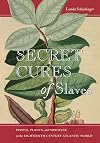
In the natural course of events, humans fall sick and die. The history of medicine bristles with attempts to find new and miraculous remedies, to work with and against nature to restore humans to health and well-being. In this book, Londa Schiebinger examines medicine and human experimentation in the Atlantic World, exploring the circulation of people, disease, plants, and knowledge between Europe, Africa, and the Americas. She traces the development of a colonial medical complex from the show more 1760s, when a robust experimental culture emerged in the British and French West Indies, to the early 1800s, when debates raged about banning the slave trade and, eventually, slavery itself.
Massive mortality among enslaved Africans and European planters, soldiers, and sailors fueled the search for new healing techniques. Amerindian, African, and European knowledges competed to cure diseases emerging from the collision of peoples on newly established, often poorly supplied, plantations. But not all knowledge was equal. Highlighting the violence and fear endemic to colonial struggles, Schiebinger explores aspects of African medicine that were not put to the test, such as Obeah and vodou. This book analyzes how and why specific knowledges were blocked, discredited, or held secret. show less
Massive mortality among enslaved Africans and European planters, soldiers, and sailors fueled the search for new healing techniques. Amerindian, African, and European knowledges competed to cure diseases emerging from the collision of peoples on newly established, often poorly supplied, plantations. But not all knowledge was equal. Highlighting the violence and fear endemic to colonial struggles, Schiebinger explores aspects of African medicine that were not put to the test, such as Obeah and vodou. This book analyzes how and why specific knowledges were blocked, discredited, or held secret. show less

An unconventional scholarly tactic is put to good use in this book: Schiebinger asks not why do we know something, but rather why don't we know something (in this case, why does widespread knowledge about the medicinal properties of certain plants not get transmitted from the Americas back to Europe). A bit dense for the casual reader, perhaps, but if you want to take the time to dig in, you'll be well rewarded.
“Modern science, arising outside of and in opposition to the medieval university, was fostered in academies, princely courts, Parisian salons, and the artisanal workshop—that is, in a social landscape expansive enough to include a number of women….In this period it was not at all obvious that women would be excluded from the new institutions of science….Not until…the eighteenth century did scientists…undertake a thorough-going reform of definitions of sexuality; the resulting show more “theory of sexual complementarity justified purging both women and what came to be defined as the feminine from the public world of science.“ show less
Lists
Awards


You May Also Like


Associated Authors
Statistics
- Works
- 12
- Also by
- 2
- Members
- 700
- Popularity
- #36,172
- Rating
- 3.7
- Reviews
- 6
- ISBNs
- 36
- Languages
- 3
- Favorited
- 1

