
Donna J. Haraway
Author of Simians, Cyborgs, and Women: The Reinvention of Nature
About the Author
Donna J. Haraway is Distinguished Professor Emerita in the History of Consciousness Department at the University of California, Santa Cruz, and the authoi of several books, most recently, Manifestly Haraway.
Image credit: Photograph of Donna Haraway and Cayenne by Rusten Hogness
Works by Donna J. Haraway
Primate Visions: Gender, Race, and Nature in the World of Modern Science (1989) 281 copies, 2 reviews
Modest_Witness@Second_Millennium.FemaleMan©_Meets_OncoMouse™: Feminism and Technoscience (1997) 275 copies, 2 reviews
The Companion Species Manifesto: Dogs, People, and Significant Otherness (2003) 268 copies, 4 reviews
A Cyborg Manifesto: Science, Technology, and Socialist-Feminism in the Late Twentieth Century (1994) 149 copies
Situated Knowledges: The Science Question in Feminism and the Privilege of Partial Perspective 5 copies
La conexión infinita: Una conversación entre Donna Haraway y Ursula K. Le Guin: 54 (La pasión de Mary Read) (2024) 3 copies
Situeret viden : videnskabsspørgsmålet i feminismen og det partielle perspektivs forrang (2018) 1 copy
El mundo que necesitamos: Donna Haraway dialoga con Marta Segarra (señales) (Spanish Edition) 1 copy
Testigo_Modesto @Segundo_Milenio.HombreHembra©_Conoce_OncoRata® : feminismo y tecnociencia / Donna Haraway 1 copy, 1 review
Gossip Haraway 1 copy
Associated Works
Arts of Living on a Damaged Planet: Ghosts and Monsters of the Anthropocene (2017) — Contributor — 173 copies, 2 reviews
Anthropocene or Capitalocene? Nature, History, and the Crisis of Capitalism (2016) — Contributor — 110 copies
The Feminist Standpoint Theory Reader: Intellectual and Political Controversies (2004) — Contributor, some editions — 69 copies
Remaking Life & Death: Toward an Anthropology of the Biosciences (School of American Research Advanced Seminar Series) (2003) — Contributor — 16 copies
Tagged
Common Knowledge
- Birthdate
- 1944-09-06
- Gender
- female
- Education
- Yale University
Colorado College
Fondation Teilhard de Chardin - Occupations
- university professor emerita
historian of science
scholar of feminist studies - Organizations
- University of California, Santa Cruz
University of Hawaii
Johns Hopkins University
Society for Social Studies of Science - Awards and honors
- J. D. Bernal Award (2000)
- Nationality
- USA
- Birthplace
- Denver, Colorado, USA
- Associated Place (for map)
- Colorado, USA
Members
Reviews
The Companion Species Manifesto: Dogs, People, and Significant Otherness (Paradigm) by Donna Haraway
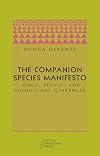
It's especially hard to be disappointed by your idols. The sense of revelatory joy I felt after reading Haraway's Cyborg Manifesto left me desperate to read everything I could of hers. But where the Cyborg Manifesto succeeds, in deep, complex, critical engagement with her subject, this fails. Biased is perhaps the mildest way to put it. Haraway is bizarrely unable to examine her own perspective here, instead using her considerable intellect to justify her clearly pre-determined positions, show more positions on the value of dogs and particular kinds of relationships with them that just happen to closely mirror her own dogs and relationships with dogs. The comical reference to dog-training as "agility training", the uncritical abelism (humans) and "breed-ism" (dogs), and her default to the worst kind of superior liberal irony to disguise her unwillingness to change or even address her own complicity in these harmful systems are just some examples of how this falls short of its potential.
The last few chapters are especially hard to read, failing on every level of intersectional feminism and resorting to ethical contortions and rhetorical sleights-of-hand of the worst kind to attempt to maintain the veneer of radical leftism while in fact defending neo-liberal capitalism.
This whole tract is steeped in her uncritical wealthy white cis USAmerican privlege. She helpfully tells us that Puerto Rico is a colony-!!-in the chapter where she tries to point out how ethically complex it is to rescue street dogs after two chapters of uncritical celebration (and no mention of ethical complications) of breeding "pure" dogs. Work undertaken by working-class women of color from colonized cultures is disparaged and undermined by her rhetorical strategy, while the work of wealthy white women in Europe and the US mainland is wholeheartedly celebrated in the previous two chapters.
Infuriating would be an understatement. I was enraged by the end of this, mostly because I felt betrayed by her pretense to radical intersectional feminism. show less
The last few chapters are especially hard to read, failing on every level of intersectional feminism and resorting to ethical contortions and rhetorical sleights-of-hand of the worst kind to attempt to maintain the veneer of radical leftism while in fact defending neo-liberal capitalism.
This whole tract is steeped in her uncritical wealthy white cis USAmerican privlege. She helpfully tells us that Puerto Rico is a colony-!!-in the chapter where she tries to point out how ethically complex it is to rescue street dogs after two chapters of uncritical celebration (and no mention of ethical complications) of breeding "pure" dogs. Work undertaken by working-class women of color from colonized cultures is disparaged and undermined by her rhetorical strategy, while the work of wealthy white women in Europe and the US mainland is wholeheartedly celebrated in the previous two chapters.
Infuriating would be an understatement. I was enraged by the end of this, mostly because I felt betrayed by her pretense to radical intersectional feminism. show less

Donna Haraway makes a peculiar choice in coining "Chthulucene" for use in this book. The difference in spelling from H.P. Lovecraft's notorious dreaming god is deliberate, and she insists that the etymology is from khthon-; but then why not "Chthonocene?" The fact is that she is deliberately evoking Cthulhu, who "shall soon rule where man rules now," as the Necronomicon admonishes. But her sympathies, unlike those of (the conscious) Lovecraft are not with the "rulers" coded out as Anthropos show more or Capital or Plantation Owner, or any future value of that function. Her principal slogan for advancing a Chthulucene agenda is "Make kin, not babies," and she proposes a "tentacular" program of what an Anthropocentric thinker might regard as species treason--not to mention its profound antagonism to Capital.
Haraway's program of "staying with the trouble" is an imagining of futures that resists utopianism and dismal forecasting. It reminds me more than a little of the anti-capitalist bolo'bolo (by P.M., 1983--whatever happened to my paperback copy?), which was much more sanguine. The chief difference in gravity probably stems from Haraway's attention to the damage already done to human and non-human biomes. The final chapter of the book is an SF narrative implementing these visions over the period 2025-2425. Throughout the various essays, Haraway construes SF multivalently as "speculative feminism," "string figures," "speculative fabulation," "science fantasy," and the more customary "science fiction," and asserts it as part of her resources and method. Previous SF works that receive her special attention include Ursula Le Guin's Always Coming Home (and others), Orson Scott Card's Speaker for the Dead, and Hayao Miyazaki's Nausicaä of the Valley of the Wind.
The species that participate in her Cthulucene imaginings notably include pigeons, squid, orchids, coral, horses, and butterflies. And SF reflections even recruit the Ood from Doctor Who (the subverted Cthulhu again). Some of these are models to overcome the paradigm of organisms, in favor of holobionts. Others illustrate extant and/or possible relationships among "critters" (Haraway's preferred term, embracing and exceeding all biotic kingdoms) including humans.
Staying with the Trouble is a chewy read, full of accounts of activist art and the results of late-breaking scientific inquiry (not capital-S "Science" Haraway hastens to add). The body text is about half of the total book, and many of the sixty pages of small-type end notes are worth investigating for their further discussion of sources and inspiration. There are black-and-white illustrations throughout. I made slow progress through it, but it was worth my effort, and although I read a borrowed copy, I would be willing to make space for it on my own shelves. show less
Haraway's program of "staying with the trouble" is an imagining of futures that resists utopianism and dismal forecasting. It reminds me more than a little of the anti-capitalist bolo'bolo (by P.M., 1983--whatever happened to my paperback copy?), which was much more sanguine. The chief difference in gravity probably stems from Haraway's attention to the damage already done to human and non-human biomes. The final chapter of the book is an SF narrative implementing these visions over the period 2025-2425. Throughout the various essays, Haraway construes SF multivalently as "speculative feminism," "string figures," "speculative fabulation," "science fantasy," and the more customary "science fiction," and asserts it as part of her resources and method. Previous SF works that receive her special attention include Ursula Le Guin's Always Coming Home (and others), Orson Scott Card's Speaker for the Dead, and Hayao Miyazaki's Nausicaä of the Valley of the Wind.
The species that participate in her Cthulucene imaginings notably include pigeons, squid, orchids, coral, horses, and butterflies. And SF reflections even recruit the Ood from Doctor Who (the subverted Cthulhu again). Some of these are models to overcome the paradigm of organisms, in favor of holobionts. Others illustrate extant and/or possible relationships among "critters" (Haraway's preferred term, embracing and exceeding all biotic kingdoms) including humans.
Staying with the Trouble is a chewy read, full of accounts of activist art and the results of late-breaking scientific inquiry (not capital-S "Science" Haraway hastens to add). The body text is about half of the total book, and many of the sixty pages of small-type end notes are worth investigating for their further discussion of sources and inspiration. There are black-and-white illustrations throughout. I made slow progress through it, but it was worth my effort, and although I read a borrowed copy, I would be willing to make space for it on my own shelves. show less

This volume collects revised versions of ten essays by Donna Haraway: most famous, of course, is the “Cyborg Manifesto," on which I have no doubt I could spend this entire review and only begin to scratch the surface. I, however, found “Situated Knowledges: The Science Question in Feminism and the Privilege of Partial Perspective” to be the most interesting of the essays here. Analysing scientific objectivity, Haraway begins by claiming that academics and feminists discussing show more objectivity “have used a lot of toxic ink and trees processed into paper decrying what they have meant and how it hurts us. The imagined ‘they’ constitute a kind of invisible conspiracy of masculinist scientists and philosophers replete with grants and laboratories; and the imagined ‘we’ are the embodied others… a few thousand readers composed mostly of science haters” (183). (There’s definitely some resonance here with the Victorian critiques of science I study; see, for example, Wilkie Collins’s Heart and Science.) Haraway goes on, however, to claim that when this perspective is “lurking underneath” her own work, it consists of “paranoid fantasies and academic resentments” (183).
After discussing various forms of feminist response to claims of scientific objectivity, Haraway posits, “So, I think my problem and ‘our’ problem is how to have simultaneously an account of radical historical contingency for all knowledge claims and knowing subjects, a critical practice for recognizing our own ‘semiotic technologies’ for making meanings, and a no-nonsense commitment to faithful accounts of a ‘real’ world” (187). Science must acknowledge the existence of other knowledges that cannot be considered objectively while at the same time still being able to make claims about the functioning of the universe that apply to more than one person. Haraway wants her female successor to science to have “a no-nonsense commitment to faithful accounts of a ‘real’ world” even if they do not lean on scientific means of understanding per se.
Haraway’s essay—almost a manifesto for feminist objectivity—provides a strong framework for analyzing gender in science. Haraway’s description of the gender dynamics of scientific vision says that women can possess scientific detachment, but only if the old fantasy of “disembodied vision” is discarded: “The eyes have been used to signify a perverse capacity – honed to perfection in the history of science tied to militarism, capitalism, colonialism, and male supremacy – to distance the knowing subject from everybody and everything in the interests of unfettered power” (188). This happens, Haraway claims, because the gaze possesses the “unmarked positions of Man and White” (188).
Her description of the disembodied eye is attention-grabbing: “Vision in this technological feast becomes unregulated gluttony; all perspective gives way to infinitely mobile vision, which no longer seems just mythically about the god-trick of seeing everything from nowhere, but to have put the myth into ordinary practice. And like the god-trick, this eye fucks the world to make techno-monsters” (189). Though Haraway does not directly mention women as victims in this instance, the claim that the disembodied eye rapes the world certainly creates that impression
Finally Haraway’s analysis gives way to presenting an alternative form of feminine science. She claims that “our insisting metaphorically on the particularity and embodiment of all vision… and not giving in to the tempting myths of vision as route to disembodiment and second-birthing, allows us to construct a usable, but not an innocent, doctrine of objectivity” (189). Haraway calls for a new form of vision where the theoretical is connected to the physical and embodied practices of sight. Her final vision is of “the joining of partial views and halting voices into a collective subject position that promises a means of ongoing finite embodiment, of living within limits and contradictions, i.e., of views from somewhere” (196).
Of course I like Haraway, because I think she calls for what the best of the nineteenth-century scientist novels were calling for. Her distillation of the stereotypical feminist response to science reminds me of Heart and Science, and Heart and Science is terrible. But her own position reminds me of Middlemarch, and Middlemarch is magnificent. show less
After discussing various forms of feminist response to claims of scientific objectivity, Haraway posits, “So, I think my problem and ‘our’ problem is how to have simultaneously an account of radical historical contingency for all knowledge claims and knowing subjects, a critical practice for recognizing our own ‘semiotic technologies’ for making meanings, and a no-nonsense commitment to faithful accounts of a ‘real’ world” (187). Science must acknowledge the existence of other knowledges that cannot be considered objectively while at the same time still being able to make claims about the functioning of the universe that apply to more than one person. Haraway wants her female successor to science to have “a no-nonsense commitment to faithful accounts of a ‘real’ world” even if they do not lean on scientific means of understanding per se.
Haraway’s essay—almost a manifesto for feminist objectivity—provides a strong framework for analyzing gender in science. Haraway’s description of the gender dynamics of scientific vision says that women can possess scientific detachment, but only if the old fantasy of “disembodied vision” is discarded: “The eyes have been used to signify a perverse capacity – honed to perfection in the history of science tied to militarism, capitalism, colonialism, and male supremacy – to distance the knowing subject from everybody and everything in the interests of unfettered power” (188). This happens, Haraway claims, because the gaze possesses the “unmarked positions of Man and White” (188).
Her description of the disembodied eye is attention-grabbing: “Vision in this technological feast becomes unregulated gluttony; all perspective gives way to infinitely mobile vision, which no longer seems just mythically about the god-trick of seeing everything from nowhere, but to have put the myth into ordinary practice. And like the god-trick, this eye fucks the world to make techno-monsters” (189). Though Haraway does not directly mention women as victims in this instance, the claim that the disembodied eye rapes the world certainly creates that impression
Finally Haraway’s analysis gives way to presenting an alternative form of feminine science. She claims that “our insisting metaphorically on the particularity and embodiment of all vision… and not giving in to the tempting myths of vision as route to disembodiment and second-birthing, allows us to construct a usable, but not an innocent, doctrine of objectivity” (189). Haraway calls for a new form of vision where the theoretical is connected to the physical and embodied practices of sight. Her final vision is of “the joining of partial views and halting voices into a collective subject position that promises a means of ongoing finite embodiment, of living within limits and contradictions, i.e., of views from somewhere” (196).
Of course I like Haraway, because I think she calls for what the best of the nineteenth-century scientist novels were calling for. Her distillation of the stereotypical feminist response to science reminds me of Heart and Science, and Heart and Science is terrible. But her own position reminds me of Middlemarch, and Middlemarch is magnificent. show less
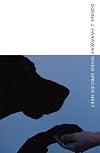
In When Species Meet, Donna J. Haraway asks two questions, “(1) Whom and what do I touch when I touch my dog? and (2) How is ‘becoming with’ a practice of becoming worldly?” (pg. 3). She examines the interaction between humans and other species, predominantly focusing on domestic species such as dogs for their historically close relationship to humanity. She works to undo concepts of human exceptionalism, “the premise that humanity alone is not a spatial and temporal web of show more interspecies dependencies. Thus, to be human is to be on the opposite side of the Great Divide from all the others and so afraid of – and in bloody love with – what goes bump in the night” (pg. 11). Her work intersects not only with posthumanism, but also with discourses of race and gender, especially in the exceptionalism blended with eugenics that is the concept of purebreds.
Haraway writes, “Canis lupis familiaris, indeed; the familiar is always where the uncanny lurks. Further, the uncanny is where value becomes flesh again, in spite of all the dematerializations and objectifications inherent in market valuation” (pg. 45). This examination of the uncanny recalls the concept of the uncanny valley, something not-quite-human, yet almost so. With the manner in which humans, and Haraway in particular, anthropomorphize their dogs, these subjects are both familiar and novel simultaneously the more we think about our interactions with them. Discussing the role of healthcare in “humanizing” animals, Haraway writes, “Dogs in capitalist technoculture have acquired the ‘right to health,’ and the economic (as well as legal) implications are legion” (pg. 49). As consumers in a marketplace increasingly catering to their unique needs, the pet-parent concept so popular in the blogosphere no longer accurately describes the role of animals in the economy. Dogs, especially, are not just subjects/patients, but also commodities in a Marxist system (pg. 52).
Discussing the role of humanity in the world, Haraway suggests “that it is a misstep to separate the world’s beings into those who may be killed and those who may not and a misstep to pretend to live outside killing” (pg. 79). While she is not trying to reduce the world to the view of Alfred, Lord Tennyson’s In Memoriam A.H.H., she does encourage empathy in the laboratory setting. After all, “the puppies had to become patients if they were to become technologies and models” (pg. 59). Even this concept of certain animals as having a unique place in society is relatively recent. Haraway writes, “In the United States, dogs became ‘companion animals’ both in contrast and in addition to ‘pets’ and ‘working and sporting dogs’ around the late 1970s in the context of social scientific investigations into the relations of animals such as dogs to human health and well-being” (pg. 134). This idea, however, still privileges humanity.
In one of her strongest conclusions, Haraway writes, “Ways of living and dying matter” (pg. 88). The traditional humans-only method does not do justice to the reality of the world. Like Azetbur, the Klingon Ambassador in Star Trek VI: The Undiscovered Country (1991, dir. Nicholas Meyer) critiqued the United Federation of Planets, an anthropocentric view is “little better than a Homo sapiens only club.” Interestingly, Haraway finds the most prescient comparisons to these cross-species encounters in the realm of science fiction. She concludes, “Animals are everywhere full partners in worlding, in becoming with. Human and nonhuman animals are companion species, messmates at table, eating together, whether we know how to eat well or not” (pg. 301). show less
Haraway writes, “Canis lupis familiaris, indeed; the familiar is always where the uncanny lurks. Further, the uncanny is where value becomes flesh again, in spite of all the dematerializations and objectifications inherent in market valuation” (pg. 45). This examination of the uncanny recalls the concept of the uncanny valley, something not-quite-human, yet almost so. With the manner in which humans, and Haraway in particular, anthropomorphize their dogs, these subjects are both familiar and novel simultaneously the more we think about our interactions with them. Discussing the role of healthcare in “humanizing” animals, Haraway writes, “Dogs in capitalist technoculture have acquired the ‘right to health,’ and the economic (as well as legal) implications are legion” (pg. 49). As consumers in a marketplace increasingly catering to their unique needs, the pet-parent concept so popular in the blogosphere no longer accurately describes the role of animals in the economy. Dogs, especially, are not just subjects/patients, but also commodities in a Marxist system (pg. 52).
Discussing the role of humanity in the world, Haraway suggests “that it is a misstep to separate the world’s beings into those who may be killed and those who may not and a misstep to pretend to live outside killing” (pg. 79). While she is not trying to reduce the world to the view of Alfred, Lord Tennyson’s In Memoriam A.H.H., she does encourage empathy in the laboratory setting. After all, “the puppies had to become patients if they were to become technologies and models” (pg. 59). Even this concept of certain animals as having a unique place in society is relatively recent. Haraway writes, “In the United States, dogs became ‘companion animals’ both in contrast and in addition to ‘pets’ and ‘working and sporting dogs’ around the late 1970s in the context of social scientific investigations into the relations of animals such as dogs to human health and well-being” (pg. 134). This idea, however, still privileges humanity.
In one of her strongest conclusions, Haraway writes, “Ways of living and dying matter” (pg. 88). The traditional humans-only method does not do justice to the reality of the world. Like Azetbur, the Klingon Ambassador in Star Trek VI: The Undiscovered Country (1991, dir. Nicholas Meyer) critiqued the United Federation of Planets, an anthropocentric view is “little better than a Homo sapiens only club.” Interestingly, Haraway finds the most prescient comparisons to these cross-species encounters in the realm of science fiction. She concludes, “Animals are everywhere full partners in worlding, in becoming with. Human and nonhuman animals are companion species, messmates at table, eating together, whether we know how to eat well or not” (pg. 301). show less
Lists
Awards


You May Also Like


Associated Authors
Statistics
- Works
- 31
- Also by
- 16
- Members
- 2,941
- Popularity
- #8,701
- Rating
- 3.8
- Reviews
- 32
- ISBNs
- 108
- Languages
- 13
- Favorited
- 4