
Bruno Latour (1947–2022)
Author of We Have Never Been Modern
About the Author
Bruno LaTour was born in the French province of Burgundy, where his family has been making wine for many generations. He was educated in Dijon, where he studied philosophy and Biblical exegesis. He then went to Africa, to complete his military service, working for a French organization similar to show more the American Peace Corps. While in Africa he became interested in the social sciences, particularly anthropology. LaTour believes that through his interests in philosophy, theology, and anthropology, he is actually pursuing a single goal, to understand the different ways that truth is built. Throughout the 1980s and 1990s, LaTour has written about the philosophy and sociology of science in an original, insightful, and sometimes quirky way. Works that have been translated to English include The Pasteurization of France; Laboratory Life; Science in Action: How to Follow Scientists and Engineers through Society; We Have Never Been Modern; and Aramis, or the Love of Technology. LaTour is a professor at the Center for the Sociology of Innovation, a division of the Ecole Nationale Superieure des Mines, in Paris. (Bowker Author Biography) show less
Disambiguation Notice:
The following books are distinct and should not be combined: the books Reassembling the Social, Making Things Public, Pandora's Hope, Aramis, The Pasteurization of France, and We Have Never Been Modern are 6 distinct works.
Works by Bruno Latour
Science in Action: How to Follow Scientists and Engineers Through Society (1987) 496 copies, 3 reviews
The Science of Passionate Interests: An Introduction to Gabriel Tarde's Economic Anthropology (2008) 41 copies
Zur Entstehung einer ökologischen Klasse: Ein Memorandum | Wie gelingt politisches Handeln in Zeiten des Klimawandels? (edition suhrkamp) (2022) 7 copies
Le dialogue des cultures : Actes des rencontres inaugurales du musée du quai Branly ( 21 juin 2006 ) (2007) 6 copies
La Vie de laboratoire : La production des faits scientifiques (Sciences et société) (1988) 5 copies
Habiter la Terre 2 copies
Nous ne vivons pas sur la même planète ; Un conte de Noël: Imaginer les gestes barrières contre le retour à la production d'avant-crise (2020) 2 copies
Dónde aterrizar (Spanish Edition) 2 copies
COMO HABITAR LA TIERRA 1 copy
mode d'emploi 1 copy
Misli na izložbi 1 copy
HACIENDO LA ‘RES PÚBLICA’ 1 copy
Onde estou?: Lições do confinamento para uso dos terrestres (#Mundojunto) (Portuguese Edition) (2021) 1 copy
Associated Works
Tagged
Common Knowledge
- Legal name
- Latour, Bruno Paul Louis
- Birthdate
- 1947-06-22
- Date of death
- 2022-10-09
- Gender
- male
- Education
- Ecole des Hautes Etudes en Sciences Sociales (Habilitation à la direction des recherches, 19 87)
Université de Tours (Doctorat de 3e cycle, Philosophie, Thèse "Exégèse et Ontologie", 19 75)
Agrégation de philosophie (Rang 1, 19 72)
Université de Bourgogne (Théologie, Philosophie, 19 66 | 19 72
Lycée Saint-Louis-de-Gonzague - Occupations
- philosopher
sociologist of science
anthropologist
professor - Organizations
- Ecole nationale supérieure des mines
Sciences Po Paris - Awards and honors
- Honorary Doctorate (University of Goteborg)
Recipient of the Siegfried Unseld Prize for his life achievements (Frankfurt)
Medal of Honor Institute of Advanced Studies, University of Bologna.
Légion d'Honneur (2012)
Holberg International Memorial Prize (2013) - Relationships
- Vieillard-Baron, Jean-Louis (Directeur de thèse)
- Short biography
- Bruno Latour est un sociologue, anthropologue et philosophe des sciences.
À la fin des années 1970, il est assistant de Jean-Jacques Salomon au Conservatoire national des arts et métiers, avant d'être nommé à l'École des mines de Paris, où il restera en poste de 1982 à 2006.
En septembre 2006, alors en pleine gloire, il est nommé professeur à l'Institut d'études politiques de Paris, dont il devient directeur scientifique en septembre 2007. En 2010, il initie au sein de Sciences-Po, le programme d'expérimentation en arts et politique (SPEAP).
Agrégé de philosophie, Latour a été profondément influencé par la pensée de Michel Serres. Il s'intéresse à l'anthropologie et entreprend une enquête de terrain dans un laboratoire de l'ORSTOM en Côte d'Ivoire à Abidjan dont le résultat est une brève monographie sur la décolonisation, la notion de race et les relations industrielles. Parallèlement, il mène une recherche sur l'exégèse biblique des textes portant sur la résurrection pour une thèse de troisième cycle.
En 1979, il publie avec Steve Woolgar "Laboratory Life: the Social Construction of Scientific Facts" (traduit en français en 1988 sous le titre "La Vie de laboratoire : la Production des faits scientifiques"). Après un projet de recherche sur la sociologie des primatologues, Latour poursuit ses recherches entreprises dans "La Vie de laboratoire" avec "Les Microbes : Guerre et paix" (1984).
Latour se tourne ensuite vers des travaux plus théoriques et programmatiques. À la fin des années 1980, il devient un des principaux défenseurs de la théorie de l'acteur-réseau aux côtés notamment de Michel Callon et de John Law.
Ses ouvrages les plus connus sont "La vie de laboratoire" (1979), "La science en action" (1987), "Nous n'avons jamais été modernes" (1991) et "Politiques de la nature" (1999). - Nationality
- France (birth)
- Birthplace
- Beaune, France
- Place of death
- 13e arrondissement, Paris, Île-de-France, France
- Disambiguation notice
- The following books are distinct and should not be combined: the books Reassembling the Social, Making Things Public, Pandora's Hope, Aramis, The Pasteurization of France, and We Have Never Been Modern are 6 distinct works.
- Associated Place (for map)
- France
Members
Reviews
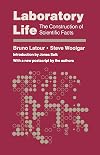
Latour manages a book that is both highly theoretical and intensely detailed. Written at one of the high points of the post-modern turn in STS, and deeply involved in the Strong Programme to explain successful and unsuccessful science in the same way, Laboratory Life shows how abstruse theory and ethnography can mutually support each other. Latour spent 21 months as a participant-observer in a neuro-endocrinology lab, and from his time develops a comprehensive picture of the scientific show more process as an act of rhetorical destruction--eliminating alternatives until only one is left, scientists as economic-strategic actors seeking to increase their stock of 'credit' in the community, and science as a difficult struggle to make Order out of Chaos.
It's interesting seeing the evolution of Latour's thought from Laboratory Life to Science in Action to We Have Never Been Modern. You see facticity as an historical construct assembled out of a whole textus of inscriptions, but the later Latour dropped the idea of 'credit' as a reward (perhaps it is not analytic enough, but to me, it does describe the difference between a decent scholar and great one), and the whole notion of We Have Never Been Modern, that the Enlightenment goal of separating the world of science from the world of politics, and the world of humans from the world of nature is doomed to failure, is not yet evident. Though Latour still makes it very clear how contextual science is, in this book at least, he seems to believe that the work of science might yet succeed in making the entire world legible. show less
It's interesting seeing the evolution of Latour's thought from Laboratory Life to Science in Action to We Have Never Been Modern. You see facticity as an historical construct assembled out of a whole textus of inscriptions, but the later Latour dropped the idea of 'credit' as a reward (perhaps it is not analytic enough, but to me, it does describe the difference between a decent scholar and great one), and the whole notion of We Have Never Been Modern, that the Enlightenment goal of separating the world of science from the world of politics, and the world of humans from the world of nature is doomed to failure, is not yet evident. Though Latour still makes it very clear how contextual science is, in this book at least, he seems to believe that the work of science might yet succeed in making the entire world legible. show less
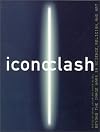
Iconoclash: Beyond the Image Wars in Science, Religion and Art is “an archaeology of hatred and fanaticism” within the Western tradition. In the destruction of one image, many new images may emerge, like a hydra. When an image is destroyed, a vacuum is created; when we close our eyes after seeing an image, there remains an after effect. If an idol or sacred statue needs to be destroyed to show that it is without power, that it is meaningless, what is the meaning of its power over the show more destroyer?
A fascinating and very important subject, ambitiously conceived but not always well executed. Some loss is due to translation issues, perhaps. I would have liked the editors to adequately synthesize the information for a discussion re “what’s next” or to present sections in more lucid debate, but understandably this would present a tremendous challenge. A first rate contribution via individual essays, but they missed the mark as a whole due to a lack of coherence in sections.
For those essays written with an academic audience in mind, a common problem arises in effective linking of ideas. Even if a reader is unfamiliar with certain terms or supporting material amongst the book’s vast array of diverse subject matter, that in itself is not problematic: few people have a background in everything and that is what Google and Wikipedia are for — even if one suspects one hasn’t grasped every nuance it is very enjoyable and thought provoking. The issue is when authors do not employ clear links between suppositions, showing how they moved from point A to point B. It occasionally reads as if some parts have been inadvertently left out of the equation. We can all be guilty of this: it’s easier to write for colleagues than for the public as so much (terminology, history, current critiques) can be assumed; this why a hardline editor is necessary, to make sure the finished essay is a stand-alone piece that is fully supported by its own progressive logic.
When it’s good, it’s very, very good, and when it’s bad, it can be awkward and fragmented.
Favorite essayists include:
William Pietz — Iconoclasm is at once the crime and it’s absolution, but only if nothing remains. But something always remains. p65
Dario Gamboni — However, as far as art and cultural heritage are concerned, a certain amount of unease and dissent never totally disappeared, fed by spectacular increases in financial value and physical protection. The attribution of resources to their preservation could be resented as an expression of materialism and passé-ism, privileging objects over human life, tradition over living experience. p94
Peter Galison — We cannot ever speak (or paint, or calculate) without metaphysical abstraction. At the same time the abstract is never completely so; even in the coldest reaches of mathematical physics we will always (borrowing from Luther), find the image of our face in still water. Not abstract against the concrete, but rather shifting historical realizations of concrete-abstraction or abstract-concreteness. p323
Caroline Jones — The internal iconoclasm of modernism cancels the conventional representation of objects in order that the artist (and, by implication, the viewer) might become more truly a subject.” p414
Simon Schaffer on Bacon, Hobbes and Newton who identified as iconoclasts while generating new images for reform in the sciences, politics and religion — All used complex optical devices to understand the origin of idolatry and its cure. All projected new forms of social order to secure their world. p500
Adam Lowe — The main reason that Islam is seen as an iconoclastic religion is not that there is a dislike of images, but rather that it keeps trying to elevate them onto a different level – to aspire to universal truths and not subjective and transient perceptions from the perspective of the street (or the market place). When this becomes doctrine, it becomes iconoclastic (as all things do). Yet the line really reflects a love of images and a respect for them that understands the conceits involved in their making and the artifice of the artist; a profoundly iconophilic world view. p558
Peter Weibel — Bahktin emphasizes interpretation as the origin of the text, which is equal to the creation of a text. Therefore, the reader is equal to the author, as later will be the case with the observer creating the artwork by interaction. The closed object and the closed text start to become an open practice. Applying Bahktin’s theory to painting would actually ensure the continuity of the last painting. p635 show less
A fascinating and very important subject, ambitiously conceived but not always well executed. Some loss is due to translation issues, perhaps. I would have liked the editors to adequately synthesize the information for a discussion re “what’s next” or to present sections in more lucid debate, but understandably this would present a tremendous challenge. A first rate contribution via individual essays, but they missed the mark as a whole due to a lack of coherence in sections.
For those essays written with an academic audience in mind, a common problem arises in effective linking of ideas. Even if a reader is unfamiliar with certain terms or supporting material amongst the book’s vast array of diverse subject matter, that in itself is not problematic: few people have a background in everything and that is what Google and Wikipedia are for — even if one suspects one hasn’t grasped every nuance it is very enjoyable and thought provoking. The issue is when authors do not employ clear links between suppositions, showing how they moved from point A to point B. It occasionally reads as if some parts have been inadvertently left out of the equation. We can all be guilty of this: it’s easier to write for colleagues than for the public as so much (terminology, history, current critiques) can be assumed; this why a hardline editor is necessary, to make sure the finished essay is a stand-alone piece that is fully supported by its own progressive logic.
When it’s good, it’s very, very good, and when it’s bad, it can be awkward and fragmented.
Favorite essayists include:
William Pietz — Iconoclasm is at once the crime and it’s absolution, but only if nothing remains. But something always remains. p65
Dario Gamboni — However, as far as art and cultural heritage are concerned, a certain amount of unease and dissent never totally disappeared, fed by spectacular increases in financial value and physical protection. The attribution of resources to their preservation could be resented as an expression of materialism and passé-ism, privileging objects over human life, tradition over living experience. p94
Peter Galison — We cannot ever speak (or paint, or calculate) without metaphysical abstraction. At the same time the abstract is never completely so; even in the coldest reaches of mathematical physics we will always (borrowing from Luther), find the image of our face in still water. Not abstract against the concrete, but rather shifting historical realizations of concrete-abstraction or abstract-concreteness. p323
Caroline Jones — The internal iconoclasm of modernism cancels the conventional representation of objects in order that the artist (and, by implication, the viewer) might become more truly a subject.” p414
Simon Schaffer on Bacon, Hobbes and Newton who identified as iconoclasts while generating new images for reform in the sciences, politics and religion — All used complex optical devices to understand the origin of idolatry and its cure. All projected new forms of social order to secure their world. p500
Adam Lowe — The main reason that Islam is seen as an iconoclastic religion is not that there is a dislike of images, but rather that it keeps trying to elevate them onto a different level – to aspire to universal truths and not subjective and transient perceptions from the perspective of the street (or the market place). When this becomes doctrine, it becomes iconoclastic (as all things do). Yet the line really reflects a love of images and a respect for them that understands the conceits involved in their making and the artifice of the artist; a profoundly iconophilic world view. p558
Peter Weibel — Bahktin emphasizes interpretation as the origin of the text, which is equal to the creation of a text. Therefore, the reader is equal to the author, as later will be the case with the observer creating the artwork by interaction. The closed object and the closed text start to become an open practice. Applying Bahktin’s theory to painting would actually ensure the continuity of the last painting. p635 show less
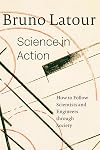
Science in Action is one of the most influential books in STS, and for good reason. Actor Network Theory as laid out here is a powerful description of how scientists make claims about reality, using technical rhetoric to shift claims between 'true' facts and 'falsified' artefacts. Latour moves smoothly from the level of the scientific paper, to researchers, labs, disciplines, and the immense network of technoscience that girdles and organizes the world. Rarely is a theory so useful at every show more scale.
For high theory, this is a relatively accessible book (relative being a relative term). I'd recommend it to everybody, if I thought they had the stomach for it, and if I thought they wouldn't use post-modern theory for evil. show less
For high theory, this is a relatively accessible book (relative being a relative term). I'd recommend it to everybody, if I thought they had the stomach for it, and if I thought they wouldn't use post-modern theory for evil. show less
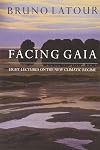
Facing Gaia collects the lectures that the French philosopher Bruno Latour delivered at Edinburgh University in 2013 for their Gifford lectures series. Across eight lengthy essays Latour, a well known figure in the field of Science Studies and the Environmental Humanities, offers a sustained critique of the scientific and cultural discourse around climate change. In opposition to the dominant idea of "Nature" that is it at the heart of most environmental ideals, Latour argues for the concept show more of Gaia, which, rather than presupposing a natural state of affairs, instead attempts to describe the earth through systems analysis. Latour's defence of the Gaia concept (which historically has not really been taken seriously by many in either the sciences or the humanities) is spirited and convincing. Having said that, I remain unconvinced that an anthropomorphised, highly gendered, Greek goddess is going to provide the cultural symbol that can change society's ideas about the planet. While Latour takes into account the cultural valences of Gaia, this is perhaps the least convincing aspect of his argument.
Over the course of the book Latour discusses the history of both science and religion, the limitations to seeing the world as full of deanimated "things", why we need apocalypse but not the Apocalypse and the necessity for science to get political. His argumentation is rigorous and provocative. The writing is engaging, although some might find the tone of the book distracting. At times, the tone borders on flippancy and imprecision (the metaphor of "madness" in the introduction is, for instance, pretty ill considered). There are places, too, where more conceptual clarity would have been welcome. That said, these are minor quibbles and across the book's three hundred plus pages there is more than enough sustenance, new ideas and radical thinking to make it essential reading for anyone interested in what the consequences of climate change might be for the humanities. show less
Over the course of the book Latour discusses the history of both science and religion, the limitations to seeing the world as full of deanimated "things", why we need apocalypse but not the Apocalypse and the necessity for science to get political. His argumentation is rigorous and provocative. The writing is engaging, although some might find the tone of the book distracting. At times, the tone borders on flippancy and imprecision (the metaphor of "madness" in the introduction is, for instance, pretty ill considered). There are places, too, where more conceptual clarity would have been welcome. That said, these are minor quibbles and across the book's three hundred plus pages there is more than enough sustenance, new ideas and radical thinking to make it essential reading for anyone interested in what the consequences of climate change might be for the humanities. show less
Lists
Awards


You May Also Like


Associated Authors
Statistics
- Works
- 112
- Also by
- 4
- Members
- 4,953
- Popularity
- #5,063
- Rating
- 3.9
- Reviews
- 37
- ISBNs
- 292
- Languages
- 21
- Favorited
- 11


